

Can You Build SaaS With FlutterFlow in 2026? | Expert Guide
16 min
read
Learn if FlutterFlow can truly build SaaS products, including limitations, architecture, cost, and real decision criteria. Practical answers, no fluff.


Quick Answer — Yes, You Can Build SaaS with FlutterFlow
Yes, you can build SaaS with FlutterFlow. But whether you should depends on your product complexity, user scale, and long-term roadmap. FlutterFlow is strong for launching structured SaaS products fast.
It is not ideal for deeply complex, infrastructure-heavy systems. The right answer depends on what you are building and how far you plan to scale.
- Strong for MVP and early-stage SaaS
If you are validating an idea, onboarding early users, or testing pricing, FlutterFlow lets you launch faster without hiring a full Flutter engineering team. - Works well with Firebase-based backends
SaaS products that rely on authentication, subscriptions, dashboards, and role-based access integrate smoothly with Firebase and Stripe inside FlutterFlow. - Limited for heavy backend logic or complex architecture
If your SaaS requires deep custom microservices, advanced performance optimization, or very custom infrastructure control, pure Flutter may give more flexibility. - Best for structured, workflow-driven products
Internal tools, niche SaaS platforms, marketplace-style systems, and operational dashboards are realistic and scalable use cases.
If your goal is speed with structured architecture, FlutterFlow is a practical SaaS builder. If your goal is deep technical control from day one, you may need a different path.
How FlutterFlow Works for SaaS
If you’re building SaaS with FlutterFlow, you’re really choosing how much structure you want handled visually versus coded manually. FlutterFlow covers frontend well and connects cleanly to modern backends. The real decision is how complex your SaaS logic will become over time.
Frontend Capabilities of FlutterFlow for a SaaS
Your SaaS frontend must handle dashboards, onboarding flows, billing screens, and user roles smoothly. FlutterFlow is strong here.
- Visual UI builder with structured components
You design dashboards, forms, and user flows using drag-and-drop while keeping responsive layout control for real SaaS interfaces, not simple landing pages. - Cross-platform from day one
You can launch web, iOS, and Android apps from one project, which is useful if your SaaS targets both desktop users and mobile operators. - Exportable Flutter code for long-term flexibility
If you outgrow visual development, you can export Flutter code and move toward deeper customization without rebuilding your entire SaaS from scratch.
For many early and mid-stage SaaS products, this frontend control is more than enough. The constraint usually appears in backend complexity, not UI.
Read more | Can You Build a Web App with FlutterFlow?
Backend & Logic Options in FlutterFlow for a SaaS
A SaaS product lives or dies by its backend logic, permissions, billing rules, and automation layers. FlutterFlow does not lock you into one backend path.
- Native Firebase integration
Built-in support for Firebase Auth and Firestore makes it easy to manage users, subscriptions, and role-based dashboards without building backend infrastructure manually. - Custom API connections
You can connect to Stripe, AI services, or external systems through REST APIs, which allows SaaS logic to extend beyond basic database operations. - External backend compatibility
If Firebase is not enough, you can integrate Supabase or even custom servers to handle advanced processing, reporting engines, or complex SaaS workflows.
For most structured SaaS platforms, this flexibility is enough. If your product depends on heavy backend computation or highly customized infrastructure, you may need deeper engineering control.
Read more | How to build a FlutterFlow AI-powered app
What SaaS You Can Build With FlutterFlow
FlutterFlow works best when your SaaS product is structured, workflow-driven, and user-based. If your goal is to launch a functional product with real users, subscriptions, and dashboards, it is a practical choice. It is not about “any SaaS.” It is about the right kind of SaaS.
- SaaS MVP with secure user authentication
You can launch SaaS MVPs with login, signup, password reset, and role-based access using Firebase Auth, which is enough for most early-stage SaaS validation. - Dashboard-driven SaaS products
FlutterFlow handles reusable components, charts, lists, and structured layouts well, which makes it suitable for analytics tools, internal systems, and niche B2B platforms. - Subscription and billing integration
You can connect Stripe or PayPal through APIs to manage recurring payments, plan upgrades, and user access control tied to subscription status. - Basic admin and management panels
You can create internal admin views to manage users, content, reports, and permissions without building a separate backend dashboard from scratch. - Workflow automation via Make or Zapier
For operational SaaS products, you can trigger email flows, CRM updates, and AI tasks using external automation tools instead of building complex backend logic internally.
If your SaaS focuses on structured workflows, user roles, and subscription logic, FlutterFlow is a practical and scalable choice. However, if it relies on heavy computation or highly customized backend systems, you might encounter limitations sooner. Check out these FlutterFlow app examples for more inspiration.
Read more | Top FlutterFlow agencies
Limitations of FlutterFlow SaaS
FlutterFlow SaaS can scale if you build it using best practices, but it's important to know where it starts to struggle. FlutterFlow SaaS development works well for structured products, but not every SaaS architecture fits within a visual builder.
The risk is not that it fails. The risk is building something that later needs a rewrite.
Technical Limitations of FlutterFlow SaaS
Technical constraints usually appear when your SaaS grows in complexity, not during early validation.
- Complex business logic requires external backend support
If your SaaS product depends on advanced rules, financial calculations, AI processing, or multi-step workflows, you will likely need custom backend services outside FlutterFlow. - Firestore performance and query limitations
Firebase Firestore works well for standard SaaS apps, but large datasets and poorly structured queries can create performance bottlenecks as user traffic increases. - Multi-tenant SaaS architecture is not native
Building a proper multi-tenant SaaS model with isolated company-level data requires careful database structuring. It is possible, but not built-in or automatic. - Heavy real-time features add complexity
Real-time collaboration tools, complex live dashboards, or multiplayer-style SaaS systems can become difficult to optimize without deeper backend control.
If your SaaS roadmap includes complex scaling and deep backend logic, you should plan architecture carefully from the beginning.
Read more | Top FlutterFlow experts
Business & Product Risks in FlutterFlow SaaS
Beyond technical limits, there are product-level risks that affect long-term SaaS strategy.
- Vendor lock-in risk without code export strategy
FlutterFlow allows code export, but if you never plan for it, you may rely too heavily on the visual builder and delay architectural decisions. - Higher platform tiers for SaaS functionality
Advanced features like API calls, custom domains, and scaling often require higher subscription plans, which affects your SaaS development cost structure. - Backend expertise still required for scalability
FlutterFlow simplifies frontend SaaS development, but scaling a subscription-based app still demands understanding of databases, performance tuning, and secure architecture.
FlutterFlow is not a shortcut to avoid product thinking. It is a faster way to build, but long-term SaaS success still depends on architecture and strategic planning.
Read more | Build Mental Health App With FlutterFlow
Best Architecture Patterns for SaaS With FlutterFlow
If you want to build SaaS with FlutterFlow and avoid rebuilding later, architecture matters more than the tool itself. FlutterFlow works best when you treat it as a frontend engine, not your entire SaaS infrastructure. The smart move is separating UI speed from backend depth.
FlutterFlow for UI + Firebase for Auth & Core Data
For many SaaS applications, this is the cleanest starting point.
- FlutterFlow as the frontend layer
Use FlutterFlow to build dashboards, onboarding flows, subscription screens, and role-based UI without writing frontend code manually. - Firebase Auth for user management
Handle login, signup, password reset, and role-based access through Firebase, which works well for early and mid-stage SaaS products. - Firestore for structured application data
Store user data, company records, and basic SaaS content in Firestore, keeping your database model simple and performance-aware.
This setup works well for MVP SaaS platforms and early traction stages where speed matters more than infrastructure depth.
External Backend for Complex Logic & Multi-Tenant SaaS Design
When your SaaS product grows, separating the logic becomes crucial. You can integrate an external backend with FlutterFlow SaaS.
- Custom backend for advanced business rules
Move financial calculations, AI processing, reporting engines, and complex workflows to a separate server to avoid frontend performance strain. - Proper multi-tenant architecture design
Isolate company data at the backend level instead of relying only on Firestore rules, especially for B2B SaaS platforms with sensitive data. - Clear API layer between UI and logic
Use REST APIs so your FlutterFlow SaaS app remains clean while backend services handle scaling and processing securely.
This hybrid approach protects you from technical debt as your SaaS user base grows.
Hosted Backend & Cloud Functions for Scalability
As usage increases, performance becomes a business risk.
- Hosted backend for performance control
Deploy custom servers or scalable backend platforms to handle heavy queries, analytics, and growing SaaS workloads. - Cloud Functions for workflow automation
Use Firebase Cloud Functions to trigger business workflows, subscription checks, email automation, and background processing securely. - Separation of UI and processing layers
Keep FlutterFlow focused on presentation while backend services manage scaling, ensuring your SaaS application remains stable under load.
The best SaaS architecture with FlutterFlow is layered. Use it for what it does best: fast, structured UI. Move heavy logic and scaling responsibilities to dedicated backend systems when your product demands it.
Read more | Bubble vs FlutterFlow for AI App Development
Cost & Team Considerations for FlutterFlow SaaS
Understanding FlutterFlow platform pricing, backend infrastructure, and team investment helps you decide whether this path fits your SaaS budget.
- FlutterFlow subscription costs
Paid plans suitable for production SaaS apps typically range from $30–$70 per month per builder, especially if you need API access, code export, and advanced integrations. - Backend hosting and infrastructure costs
Firebase usage can start around $25–$100 per month for small SaaS apps but can grow to $300–$1,000+ monthly depending on traffic, storage, and real-time activity. - Third-party services and integrations
Stripe fees (2.9% + 30¢ per transaction), email tools, AI APIs, and automation platforms like Make or Zapier add variable operational expenses. - Development investment to build a real SaaS product
A simple SaaS MVP may cost $8,000–$20,000 to build, while structured multi-tenant or B2B SaaS systems often range from $20,000–$60,000+ depending on scope. - Ongoing maintenance and iteration costs
Budget 10–20% of your initial build cost annually for updates, feature expansion, backend optimization, and scaling improvements.
If you want clarity before investing, partnering with a specialized FlutterFlow product team can reduce long-term waste. Instead of experimenting with architecture, you build with a structured roadmap from day one.
When FlutterFlow Is the Right Choice for SaaS
FlutterFlow is not the right tool for every SaaS product. But in the right situation, it gives you speed, control, and flexibility without heavy engineering overhead. The key is matching the platform to your stage and product scope, not just your budget.
- You need a fast MVP launch
If your goal is validating product-market fit, onboarding early users, or testing pricing quickly, FlutterFlow accelerates SaaS development without waiting months for frontend engineering. - You are a budget-conscious early startup
When you cannot justify a full in-house Flutter team, FlutterFlow reduces upfront development costs while still allowing structured SaaS architecture. - Cross-platform UI is a priority
If your SaaS needs web, iOS, and Android access from day one, FlutterFlow helps you ship a unified cross-platform SaaS application without separate builds. - You plan to export Flutter code later
If long-term flexibility matters, you can treat FlutterFlow as a launch engine and export the Flutter code when deeper customization or enterprise scaling is required.
FlutterFlow is the right choice when speed, structured UI, and controlled costs are more important than deep backend engineering on day one. Read more about the pros and cons of FlutterFlow before making your decision.
When FlutterFlow Might Not Be the Best for SaaS
FlutterFlow SaaS development is powerful, but it is not universal. Some SaaS products demand deep backend control, advanced infrastructure, and strict compliance from day one.
In these cases, traditional development or a custom backend-first approach may reduce long-term risk.
- Enterprise SaaS with deeply complex business logic
If your product depends on advanced financial engines, regulatory workflows, AI-heavy processing, or layered permission systems, a fully custom backend may provide stronger control. - Heavy real-time collaboration features
Tools similar to live editing platforms, complex chat systems, or high-frequency data syncing can become difficult to optimize purely through Firebase-based architecture. - Large datasets with strict compliance requirements
Healthcare, fintech, or regulated enterprise SaaS often require advanced audit logging, encryption standards, and data isolation beyond simple Firestore rules. - You want a fully custom backend from day one
If your SaaS strategy includes microservices, container orchestration, or fine-grained infrastructure control, starting with pure Flutter and custom backend engineering may align better.
If your product requires complete control over infrastructure from the beginning, a custom engineering approach might be safer in the long run. Read more about what you can and cannot build on FlutterFlow.
FlutterFlow Alternatives for SaaS
If you’re deciding whether to build SaaS with FlutterFlow, you should compare it against realistic alternatives to FlutterFlow. Not theory. Real architectural paths. The right choice depends on how much control, speed, and scalability you need at your current stage.
FlutterFlow + Firebase vs. Custom Backend
This is the most common SaaS decision: managed backend simplicity versus full infrastructure control.
- FlutterFlow + Firebase (faster, structured start)
You get built-in authentication, database hosting, and rapid frontend deployment, which is ideal for MVP SaaS apps and early traction. - Custom backend architecture (maximum control)
You control data models, scaling logic, security layers, and performance tuning, which is better for enterprise SaaS or highly complex multi-tenant systems. - Trade-off in complexity and cost
Firebase reduces infrastructure overhead early, while custom backend systems require higher upfront investment but provide deeper long-term flexibility.
If speed and validation are your top priorities, using FlutterFlow with Firebase is practical. If owning the infrastructure is crucial from the start, a custom backend is the better choice. If you are non-technical and can't integrate an external backend, you might consider hiring FlutterFlow developers.
FlutterFlow vs. Other No-code Tools for SaaS
Not all no-code platforms handle SaaS architecture the same way.
- Glide (simpler internal tools and lightweight SaaS)
Works well for operational dashboards and internal systems but offers less frontend design flexibility for complex SaaS products. Compare Glide and FlutterFlow on more detailed features. - Bubble (stronger backend logic within the platform)
Bubble enables more complex logic building directly in the platform, making it powerful for web-first SaaS platforms, though it is less mobile-native. Compare Bubble and FlutterFlow on more detailed features. - Supabase frontend stacks (developer-oriented flexibility)
Pairing Supabase with custom frontend frameworks gives backend control but requires more engineering experience.
FlutterFlow sits between speed and flexibility. It offers more design control than Glide and cleaner mobile output than Bubble but less backend depth than developer-first stacks.
FlutterFlow vs High-code Development
This is the real strategic decision.
- FlutterFlow (accelerated SaaS launch)
Ideal for launching a subscription-based app quickly, validating demand, and iterating features without hiring a large engineering team. - High-code development (full architectural ownership)
Gives complete control over performance, infrastructure, microservices, and scaling, which is critical for large enterprise SaaS systems. - Risk versus speed trade-off
FlutterFlow reduces time to market. High-code reduces architectural limitations but increases time, cost, and coordination complexity.
If your SaaS priority is speed and structured growth, FlutterFlow makes sense. If your priority is deep technical control from day one, high-code development may be the better long-term investment.
Real World Examples of SaaS Built With FlutterFlow
Seeing real SaaS products built with FlutterFlow reduces uncertainty. It proves the platform is not just for prototypes. These are production-grade systems handling real users, real data, and real revenue operations.
- RedZone — Field Operations SaaS (FlutterFlow + ERP integration)
RedZone is a sewer inspection and maintenance SaaS app built with FlutterFlow. It works offline, syncs with ERP systems, and reduced work order time by 40% while improving data accuracy by 80%. This shows FlutterFlow can support operational SaaS platforms with structured workflows and real-time status tracking. - SuperQueer — Global Community SaaS Platform
SuperQueer scaled from a local MVP to a global SaaS platform supporting 440+ partners and 300,000+ data rows. Built with FlutterFlow across web, iOS, and Android, it demonstrates that cross-platform SaaS architecture is realistic when structured properly. - Juiced — Creator Collaboration SaaS
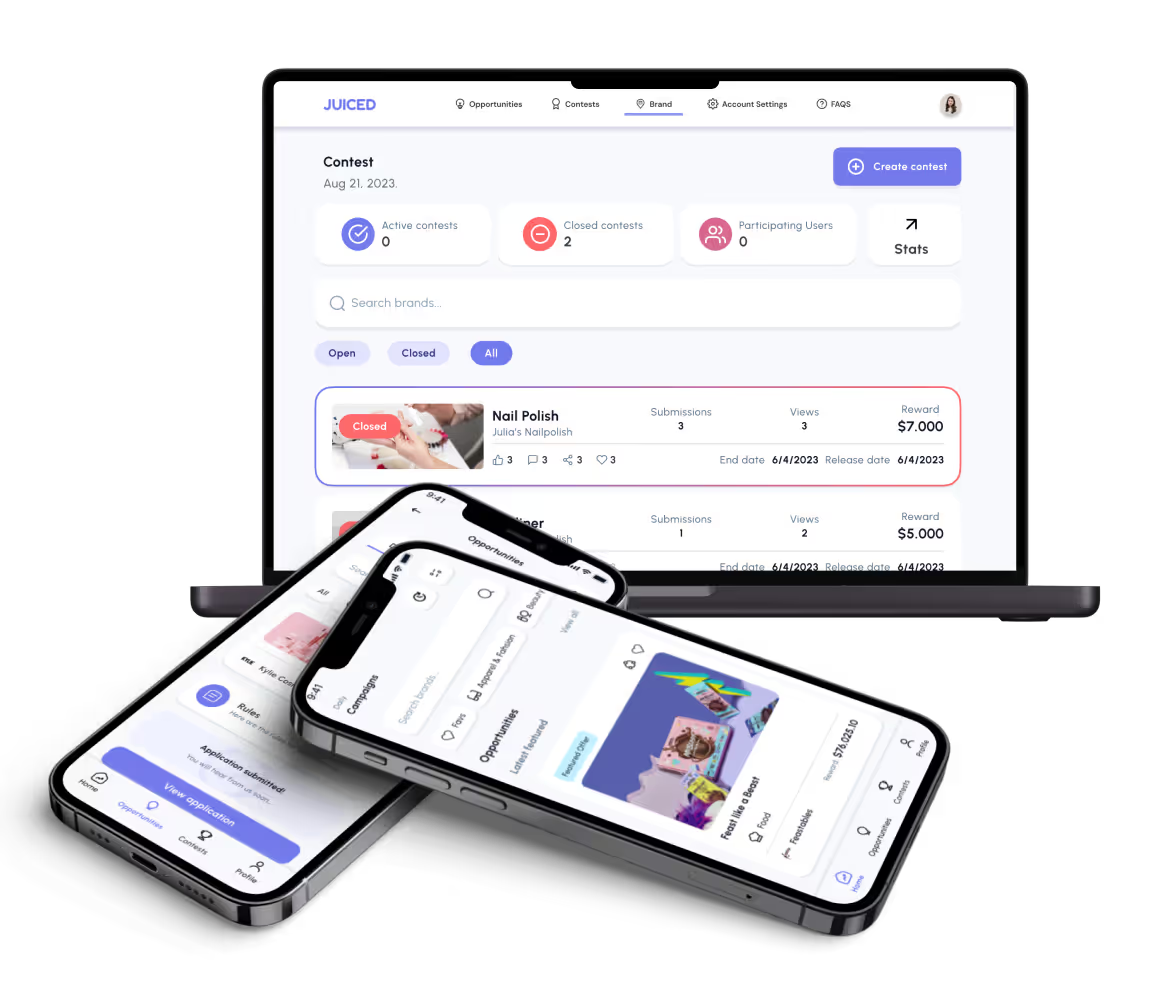
Juiced connects TikTok influencers with brands through automated campaign management and verification systems. Built with FlutterFlow, it achieved 60% user growth and 40% brand expansion after launch, proving that marketplace-style SaaS systems can run on structured FlutterFlow architecture.
These examples show that building SaaS with FlutterFlow works when the product is workflow-driven and clearly structured. The success comes from architecture decisions, not just the tool itself.
Final Recommendation from LOW/CODE Agency
If you are asking whether you can build SaaS with FlutterFlow, the real answer depends on your stage. From our experience building SaaS platforms across industries, FlutterFlow works best as a structured launch engine, not a full infrastructure replacement.
- Use FlutterFlow for MVP and early-stage SaaS
If speed to market, validation, and controlled development cost matter most, FlutterFlow is a practical way to launch a subscription-based SaaS product quickly. - Separate frontend speed from backend depth
Treat FlutterFlow as your UI layer while planning scalable backend architecture early, especially for multi-tenant SaaS and performance-heavy systems. - Design for future scaling from day one
Even if you launch fast, structure your data model, permissions, and workflows carefully to avoid expensive rebuilds later.
Founder to founder, FlutterFlow is powerful when used intentionally. It helps you move fast without sacrificing structure. But long-term SaaS success always depends on architecture, not just the builder.
SMBs do not need a no-code tool. They need an AI product team. At LOW/CODE Agency, we build custom web apps, mobile apps, chatbots, and AI agents — software that actually scales with your business. We’re a strategic product team. We’ve built 450+ custom apps, SaaS platforms, internal systems, and AI-powered tools for teams that needed clarity before code.
If you’re serious about building a scalable SaaS product, we’ll help you structure it the right way from the start.

Related Articles
Last updated on
September 3, 2026
.

Jesus is a visionary entrepreneur and tech expert. After nearly a decade working in web development, he founded LOW/CODE Agency to help businesses optimize their operations through custom software solutions.


FAQs
Is backend logic difficult when building SaaS with FlutterFlow?
Can you handle payment processing in FlutterFlow SaaS apps?
Are advanced database queries hard in FlutterFlow?
Is it hard to switch from Bubble to FlutterFlow?
How do you manage complex workflows in FlutterFlow SaaS apps?
Should you hire a team to build scalable SaaS with FlutterFlow?
Related Articles

FlutterFlow
11 FlutterFlow Best Practices (for Building Scalable Apps)
Discover 11 FlutterFlow best practices to build scalable apps, avoid common mistakes, improve performance, and structure FlutterFlow projects correctly.

FlutterFlow
How to Build Beauty and Wellness Apps with FlutterFlow
Learn how to create beauty and wellness apps using FlutterFlow with step-by-step guidance and best practices.

FlutterFlow
How to Build a Downtime Tracking App with FlutterFlow
Learn how to create a downtime tracking app using FlutterFlow with step-by-step guidance and best practices for efficient app development.

FlutterFlow
What You Can and Can’t Do with FlutterFlow (2026 Guide)
See what you can and can’t do with FlutterFlow in 2026. Learn real capabilities, limits, use cases, and when FlutterFlow is the right fit.


Why customers trust us for no-code development


