Case Study
Rising Ground Fleet Portal

$40K
Reallocated to operations each year
1,500
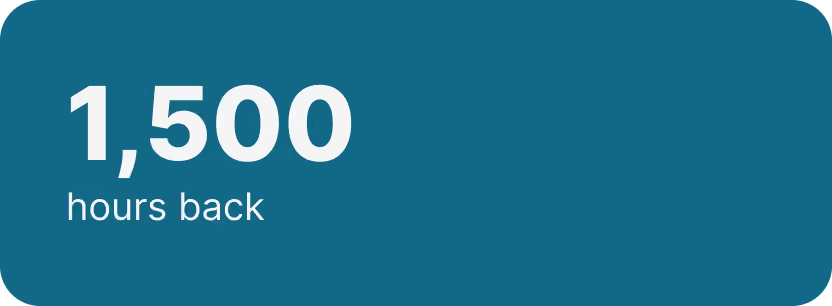
Hours recovered per year
75%
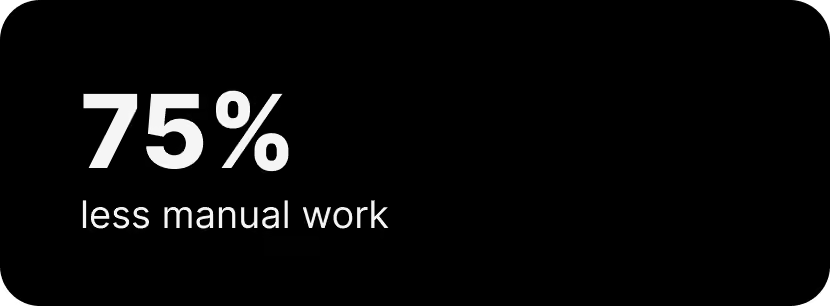
Less manual work

Jordan Katon
,
Vice President of Operations at Rising Ground


Introduction
Six hundred eleven drivers, 174 vehicles, roughly 2,800 toll transactions a month, plus fuel logs, maintenance records, inspections, and accident reports, more than 30,000 operational records in motion. That's the daily reality behind Rising Ground, a New York human services organization whose work depends on people driving: transport, pickups, and deliveries across the city, every day.
Every one of those drivers represents a license to verify, a vehicle to inspect, tolls and fuel to reconcile, and when things go wrong an accident to document and report to insurance under time pressure. When Jordan Katon and his team brought us in, the ask was focused: a portal to manage everything related to their drivers. What began as a three-section app is now the operational backbone that holds all of it in one system, and continues to expand in its third year of continuous development.

When every driver is a folder somewhere
Before the Rising Ground Fleet Portal, the information was fragmented across emails and spreadsheets; licenses, tickets, and accident reports handled manually and reactively.
Onboarding meant manually transcribing license data. Nobody had a reliable way to know whose license was about to expire, which meant compliance risks were high: an expired license could go unnoticed, and critical incident reports took days to assemble for insurance.
Accidents were the sharpest pain. When a driver had an incident, someone had to collect the details, assemble a report, and get it to the insurance company, a manual process where every delay and every missing field had a cost. Traffic tickets followed their own scattered trail: who got one, was it paid, is it still open?
Then there's the invisible volume: 174 vehicles operating across New York generate tolls at roughly 93 transactions per day which means 2,800 per month, plus thousands of fuel logs, maintenance records, and daily inspections, all previously tracked manually in Excel.
Maintaining those spreadsheets required the equivalent of one full-time administrator considering 2,080 hours per year devoted exclusively to reconciling and updating fleet data. At an internal cost of about $55,000 annually, Rising Ground was spending the salary of an additional employee just to keep records current, before even factoring in the cost of delays, incomplete reports, or compliance risks from missed entries.
Across 611 drivers, the workload scaled faster than the team could manage, turning routine operations into an unsustainable administrative drag.
What we built
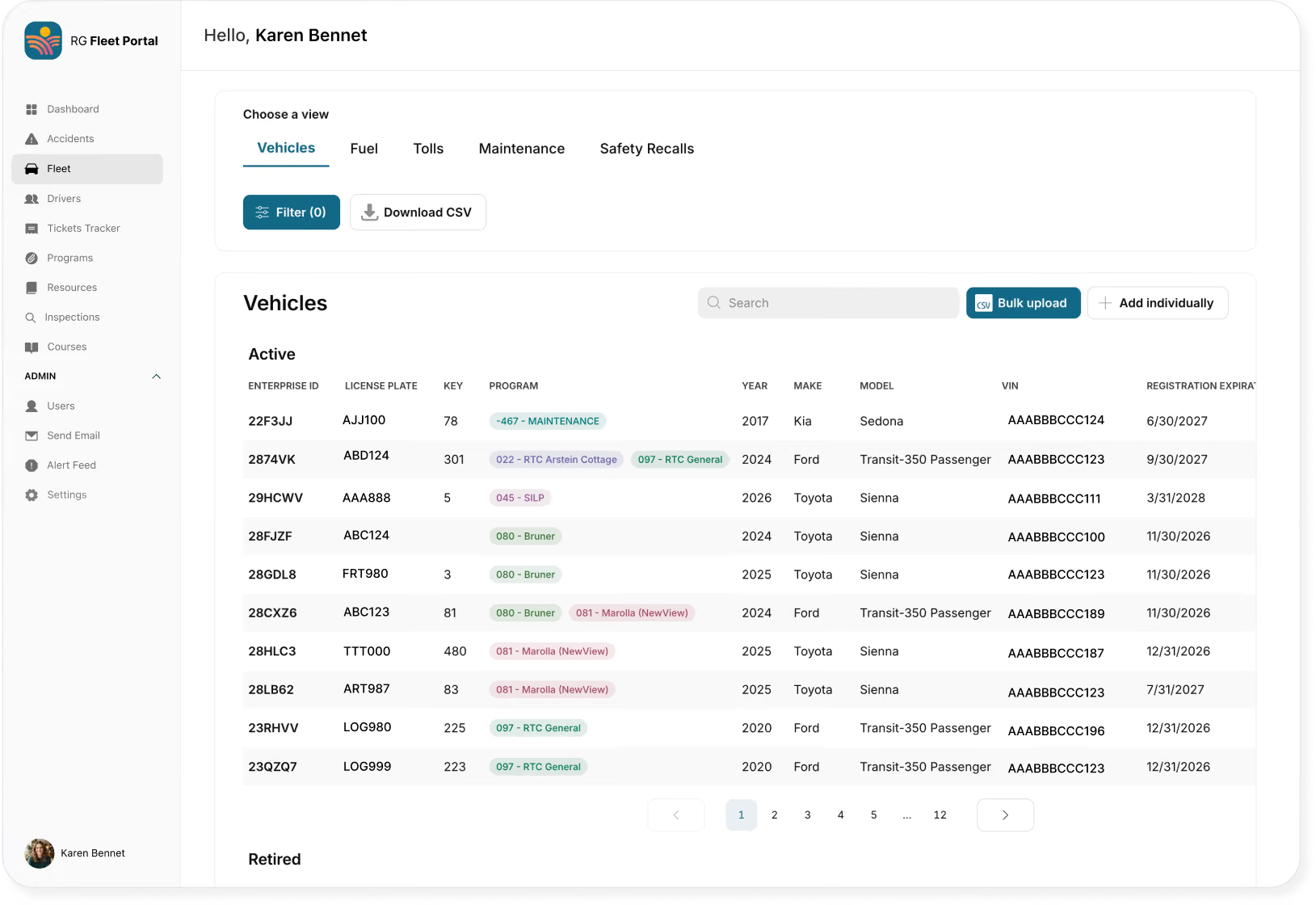
The Fleet Portal streamlines driver and vehicle management into a single, Glide-built hub that eliminates manual reporting and puts compliance on autopilot.
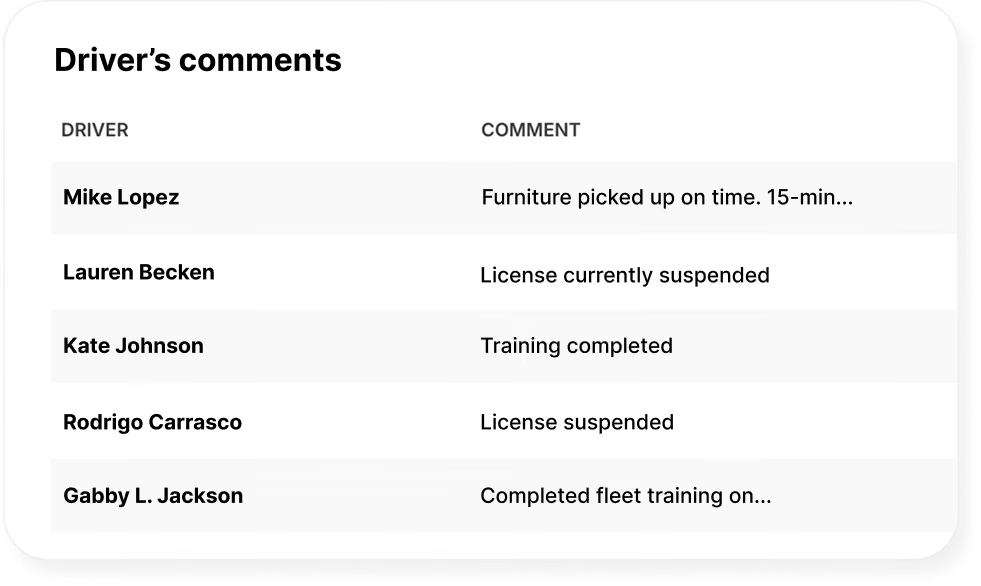
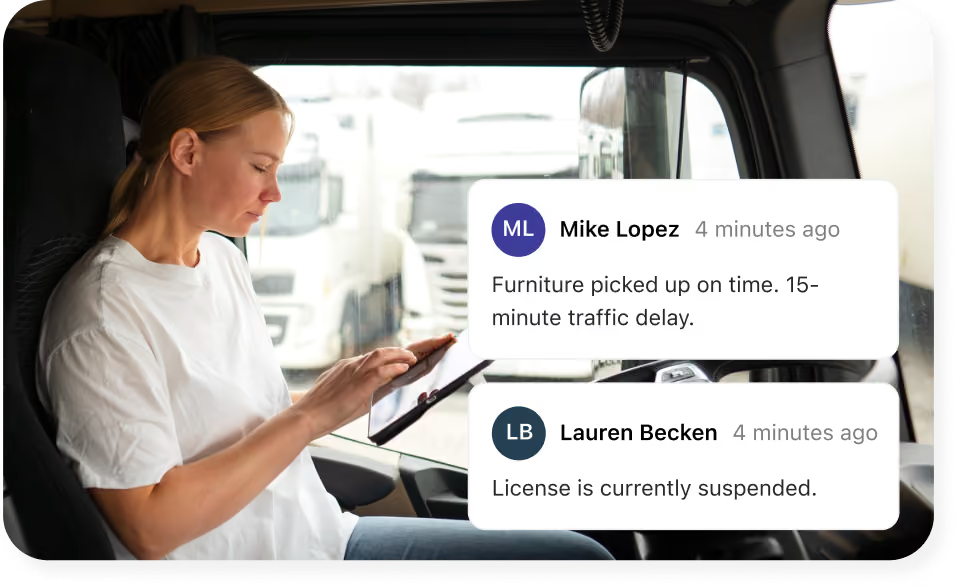
- Driver Database with Built-In Compliance. Every driver profile includes contact and program data, license images, and status tracking. Compliance dashboards flag expiring licenses before they become violations.
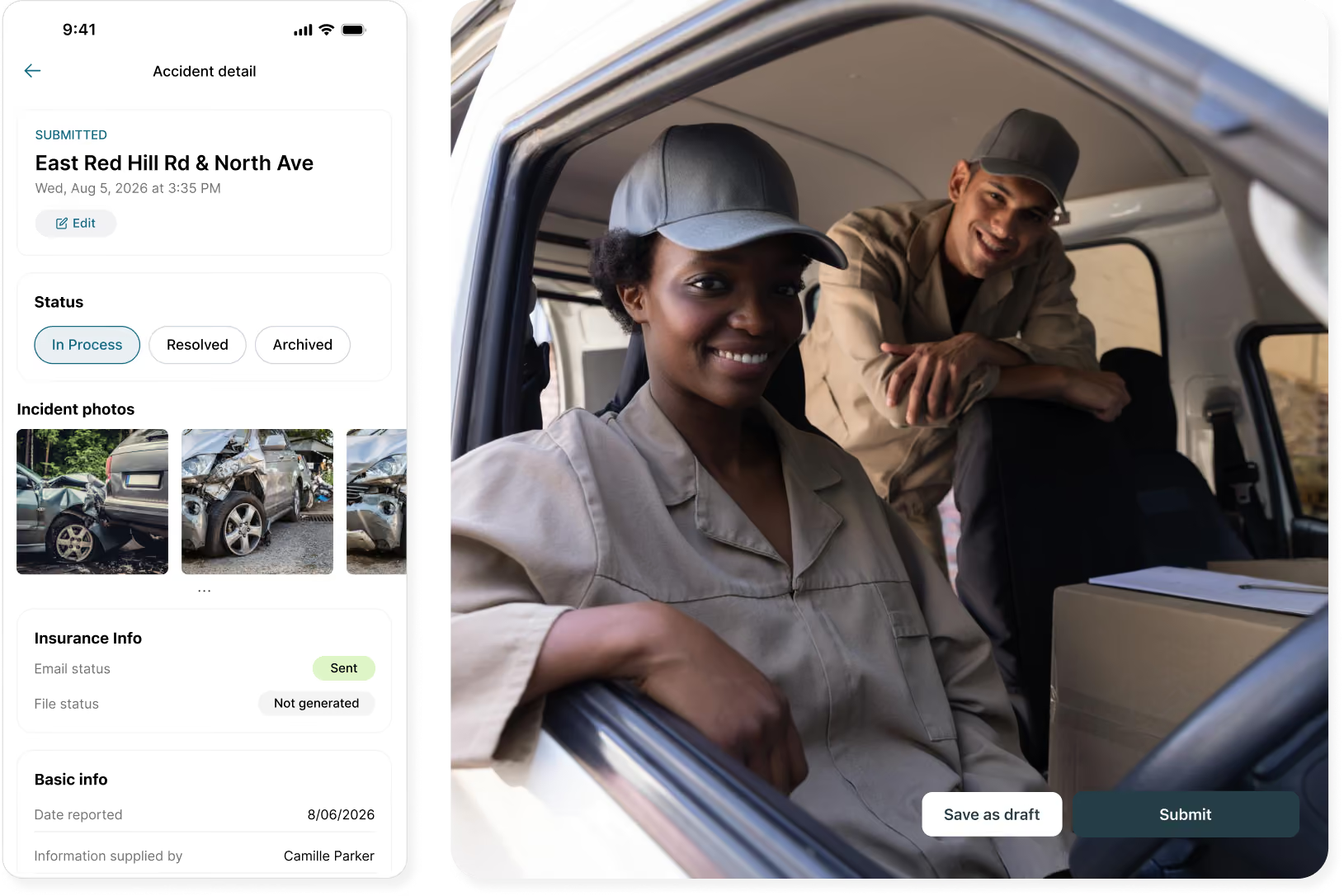
- Accident and Ticket Reporting. Structured incident and violation forms generate PDF reports and insurance-ready emails instantly. Ticket statuses (open, paid, closed) update transparently across the system.
- Vehicle Inspection Flows. Each handoff records mileage, fuel levels, condition photos, and signatures to create a clear chain of custody.
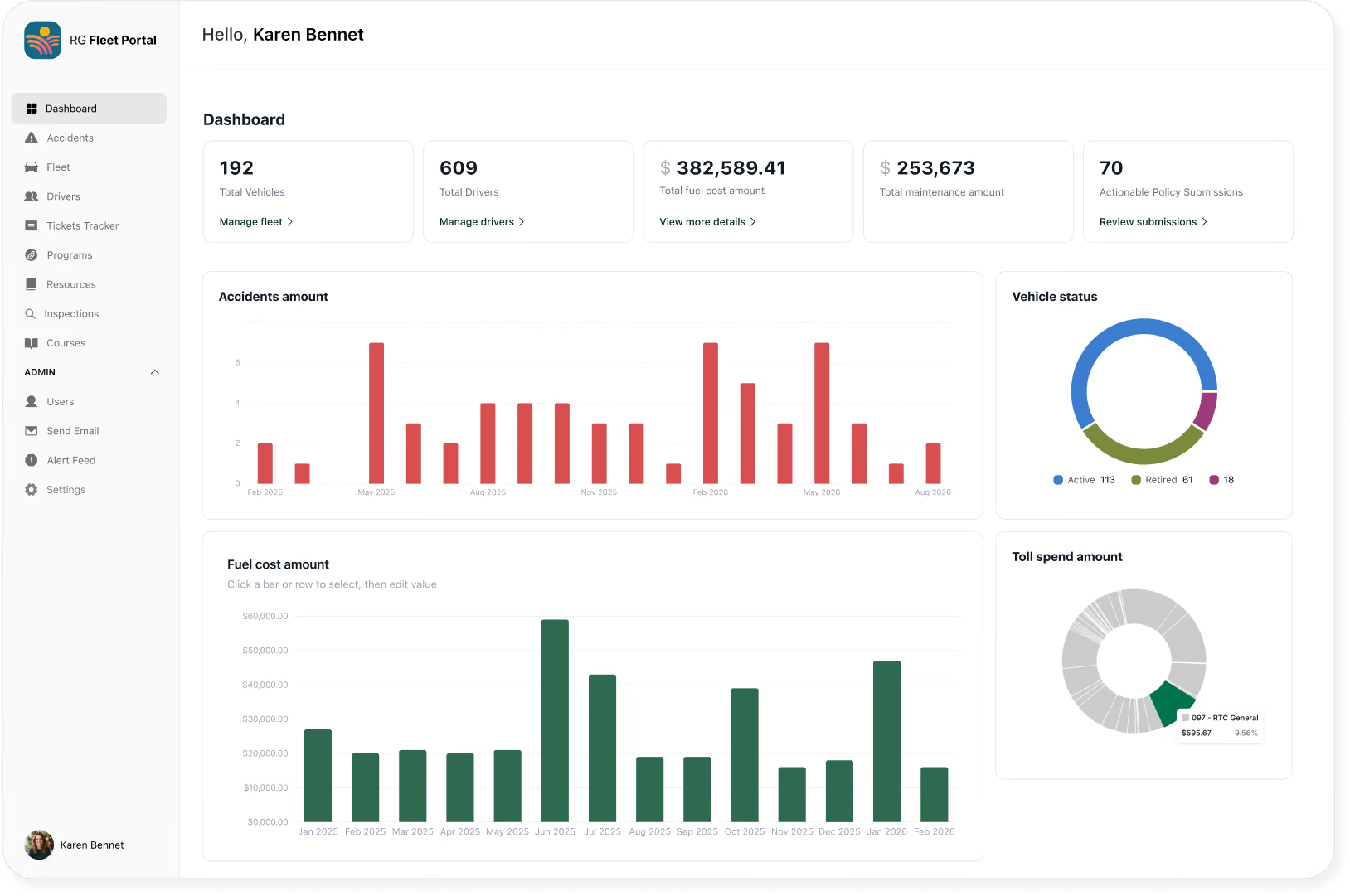
- Operational Dashboards. Fleet leaders see accidents by month, vehicle status, license alerts, tickets, and cost data in a single view, with course resources and driver training modules accessible in the same app.
Technical decisions that enabled 10x growth
The app started with three sections. Two years later it runs onboarding, compliance, accidents, tickets, inspections, costs, and training, and the architecture had to grow with it.
- Glide for speed of iteration. The app has shipped new sections continuously for two years without a rebuild. When Jordan's team needs a new capability, multi-vehicle accident support, a courses module, bulk data uploads, it's added to the system they already use, not bolted on beside it.
- MySQL when the data outgrew the app. High-volume tables, tolls, fuel, maintenance, course assignments, grew past what standard in-app storage is designed for. We migrated them to Glide Big Tables, which query the server for only the records a user needs instead of downloading the full history to every device. The result: capacity for years of growth and a faster app for everyone, with zero data loss during migration.
- Bulk ingestion via API. Toll and fuel data flows in at thousands of records per month. We upgraded the import pipeline from one-record-at-a-time calls to bulk submissions, hundreds of records per call, which lets the system scale data volume without a proportional increase in platform costs.
- Supabase as the reporting layer. For exports and filtered reports across the full dataset, 13,000+ toll records and counting, we mirror high-volume tables to a PostgreSQL database in real time. Users select filters in the app and receive a complete CSV by email within a minute, with no row limits. Glide stays the system of record; Supabase does the heavy lifting for reporting.
- Integration with the tools around the fleet. The system connects to Samsara and to Rising Ground's other applications through a shared data foundation, a driver in the Fleet Portal is the same person in their delivery routing and asset issuance systems.
What changed after the launch?
Before
- 3–4 staff manually reconciling driver and vehicle data in Excel
- License renewals tracked in separate sheets, expirations caught late, or not at all
- Accident reports pieced together and emailed manually, with every delay and missing field carrying a cost
- Little visibility into toll and fuel spending
- Data errors causing insurance claim delays and compliance gaps
After
- One system runs the entire fleet; drivers, vehicles, costs, incidents, training. All of it.
- Toll and fuel data lands automatically. Nobody types transactions anymore.
- Accident reports: minutes, not days. Insurance-ready the moment they're submitted.
- Expired licenses can't hide, the system flags them before they become violations.
- Every fleet metric, live, on one dashboard.
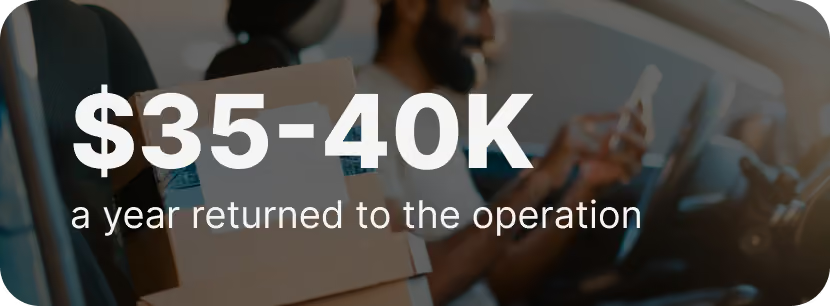
- 75% less manual work. 1,500 hours back. $35–40K a year returned to the operation.
The Fleet Portal became the anchor app for Rising Ground's digital ecosystem, one of five applications we've built together in a partnership now in its third year.
What this means for operations-heavy organizations
Fleet management is rarely one broken process, it's many small manual processes quietly taxing the team every day. Rising Ground didn't fix them one tool at a time. They built one system and let it grow section by section as the operation demanded, and when the data volume outgrew the original architecture, the architecture evolved instead of the team starting over.
If your operation runs on drivers, vehicles, and paperwork that lives in too many places, we can build the system that puts it in one, and keep building it as you grow. Let's talk about your operation.
Are you ready to transform your ideas into reality?
We're here to make it happen!
With our expertise and the power of low-code solutions, we can simplify your processes and help your business thrive.
Free discovery callDiscover your savings with automation
Is your team doing repetitive tasks? Stop wasting money, and get a custom solution that not only saves you time, but also reducesmistakes and makes your team more productive!
More Case Studies
using
Glide