Case Study
Activate Experiential
INDUSTRY
Brand Activation & Experiential Marketing
PLATFORM
Webflow
PRODUCT TYPE
Web Design
TIMELINE
3
Weeks
2x
Search surfaces covered
3 Weeks
Pages indexed and linked
4x
Organic traffic growth

,


From structurally broken to search-ready: rebuilding a brand activation agency's digital foundation in three weeks
When your clients include some of the largest brands in the world, your website needs to say that before anyone picks up the phone. For one of the leading brand activation agencies in the country, it wasn't even showing up.
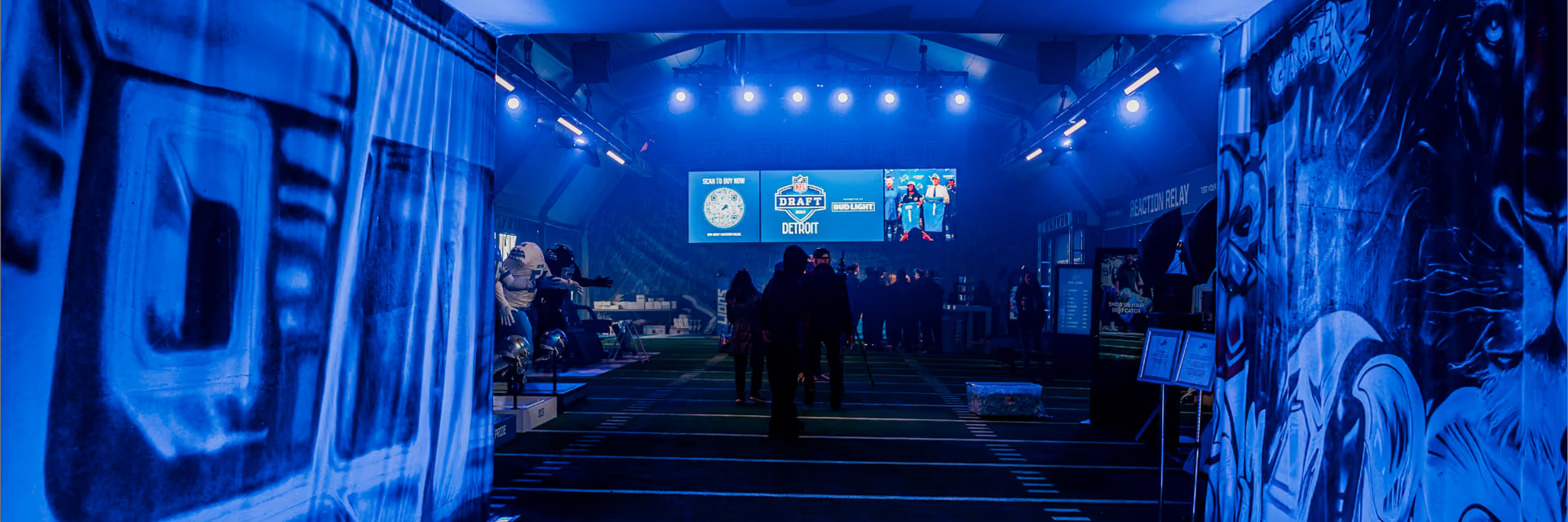
The agency designs and executes full experiential programs for enterprise clients, concepts, logistics, production, end to end. The work was world-class. But the digital presence had a problem that no redesign alone would fix: the site was structurally broken at its foundation, and both Google and AI systems were treating it as a result.
Orphaned pages. Missing titles. Broken heading hierarchy. Multiple H1 tags competing on the same page. Each one a signal to search engines that the site couldn't be trusted. The content was there. The credibility wasn't, not technically, not structurally, not in the way that determines whether a site ranks or disappears.
We rebuilt it from the ground up in three weeks.


The real problem was underneath the surface
The previous site wasn't just outdated, it was architecturally unsound in ways that compounded over time. The issues weren't visible to a casual visitor, but they were visible to every crawler that touched the site:
- Orphaned pages with no internal links pointing to them, effectively invisible to search engines.
- Multiple H1 tags on the same page, sending conflicting signals about content hierarchy.
- Missing page titles across key sections, leaving Google nothing meaningful to index.
- Broken semantic structure throughout, headings used for visual styling rather than content hierarchy, making the site difficult for crawlers to interpret and trust.
The cumulative effect was a site that search engines treated as unreliable. Rankings suffered because the foundation made it impossible to rank in the first place. No amount of content investment would fix a structural problem.
Building from a clean foundation
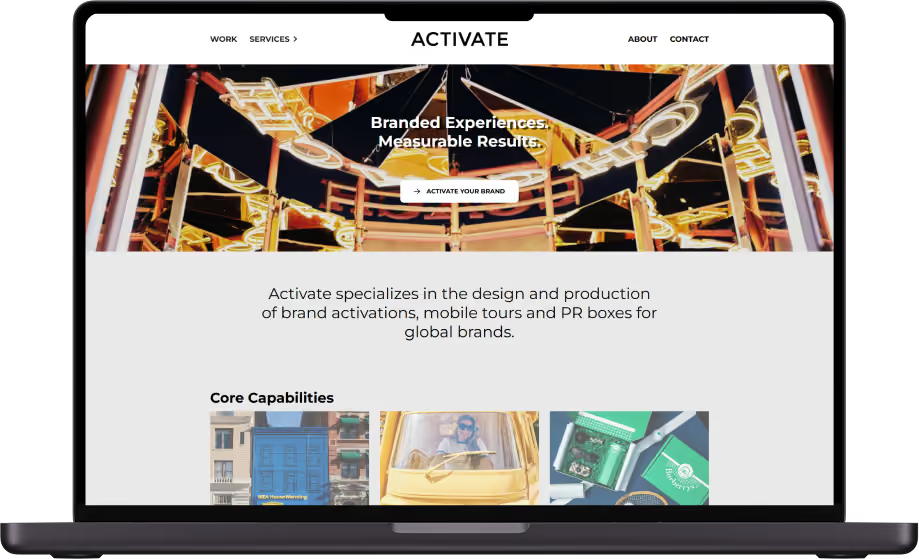
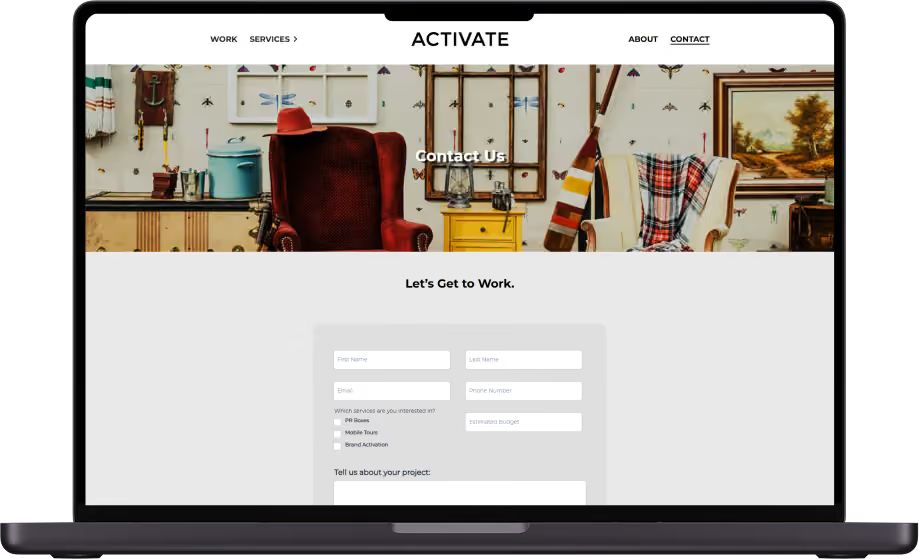
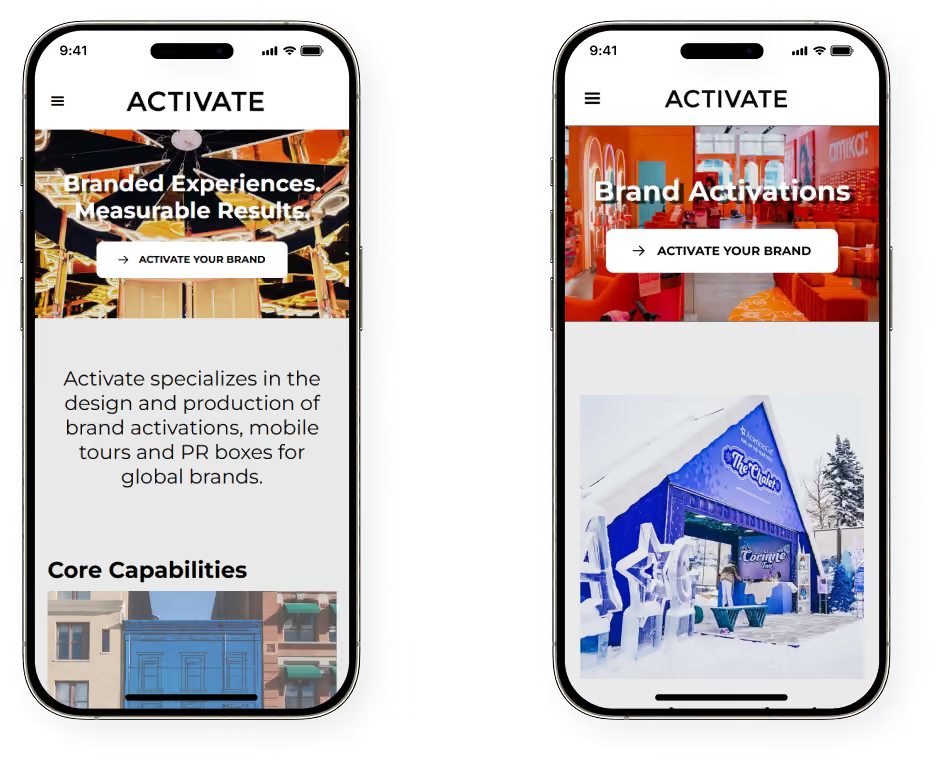
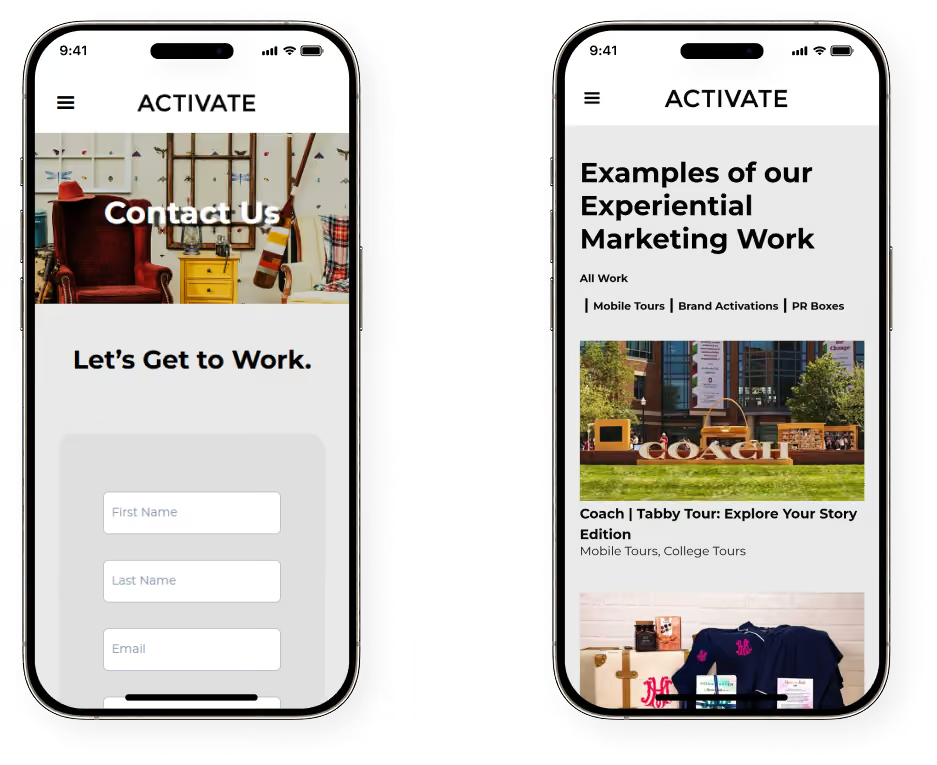
We executed the redesign in Webflow while systematically resolving every structural issue the previous site had created. We built 14 pages across a full site architecture: homepage, about, contact, careers, four services pages, a work index with filterable case studies, individual work templates via CMS, a blog index, individual blog templates via CMS, and privacy and IP policy pages.
Every page was built with semantic structure as a non-negotiable, one H1 per page, correct heading hierarchy throughout, descriptive titles and meta descriptions on every template, and a deliberate internal linking structure that ensures no page sits isolated from the rest of the site.
The CMS architecture for work and blog entries means the agency can publish new case studies and content directly through Webflow's editor, filling in structured fields on the page itself rather than navigating a disconnected backend. Content that previously required developer involvement now happens independently, and every new piece inherits the correct structure automatically.
Technical decisions
Webflow was the right call for these five reasons:
- Semantic HTML as the non-negotiable foundation. Every page was built with correct heading hierarchy from the ground up, H1 through H3 used for structure, not styling. This is the baseline Google needs to understand and trust a site, and the baseline the previous site was missing entirely.
- Deliberate internal linking architecture. Pages are connected intentionally. The work index links to individual case studies. Service pages link to relevant work. The blog feeds back to service pages. Nothing sits orphaned. Every page has a path in and a path forward.
- CMS templates that enforce structure at scale. The blog and work templates are built once and scale indefinitely. Each new case study or article the team publishes inherits the correct semantic structure automatically, no room for the errors that accumulated on the previous site over time.
- Webflow Editor for team autonomy without structural risk. The agency's content team updates and publishes through Webflow's visual editor, clicking directly into page elements to edit, rather than working blind in a disconnected form. The structural integrity of the site stays intact regardless of who is publishing or how often.
- LLMS.txt for AI search visibility. Beyond traditional SEO, we implemented an LLMS.txt file, a structured document that tells AI systems like ChatGPT, Perplexity, and Claude exactly who the agency is, what they do, and what they're known for. As more prospects use AI tools to research and shortlist vendors, this ensures the agency is correctly identified and recommended in those conversations. It's a relatively small implementation with compounding long-term value as AI-assisted search becomes the default way people find service providers.
From structurally broken to search and AI-ready
The previous site had strong work to show and no structural foundation to show it from. Orphaned pages, broken hierarchy, missing titles, each one reducing the site's credibility in the eyes of the systems that determine whether it gets found. The new site resolves every one of those issues deliberately, giving the agency a platform that works for them every time a potential client searches for what they do. The LLMS.txt implementation adds a forward-looking layer on top, ensuring the agency is correctly identified and recommended as AI-assisted search becomes a standard part of how prospects research vendors.
What this means for agencies and service businesses
A well-designed website that search engines and AI systems can't read correctly is still an invisible website. Most agencies and service businesses focus on how their site looks before asking whether it's structurally sound, and the gap in organic performance between the two can be significant and silent. Traffic doesn't announce why it isn't coming.
Getting the foundation right isn't the most visible work. But it's the work that determines whether everything built on top of it compounds over time or stays flat.
If your site looks the part but isn't performing, the problem is usually underneath, let's talk.


Are you ready to transform your ideas into reality?
We're here to make it happen!
With our expertise and the power of low-code solutions, we can simplify your processes and help your business thrive.
Free discovery callDiscover your savings with automation
Is your team doing repetitive tasks? Stop wasting money, and get a custom solution that not only saves you time, but also reduces mistakes and makes your team more productive!
More Case Studies
using
Webflow