
RAG Development Services That Put Your Business Data to Work

RAG systems with sources attached, built by an OpenAI Select Partner and Claude Partner Network member.

We design, develop and integrate custom RAG solutions that retrieve information from your documents, databases and knowledge systems and deliver relevant answers. Your teams find information faster and spend less time on manual searches. We map your content first and build retrieval around the knowledge your team actually uses.

  • 450+ products shipped
  • 40 AI projects in production
  • Clutch 2026 Global Leader, Natural Language Processing
OpenAI Select PartnerClaude Partner Network

Trusted by hundreds of businesses

QCells
Whitecoat Planning
American Express
Coca-Cola
Sotheby's International Realty
Zapier
Margaritaville
Somewhere
Dataiku
medtronic
Herzig
Altriarch
Custom app mockup

What Is RAG Development?

Retrieval-Augmented Generation (RAG) development involves building AI applications that connect large language models (LLMs) to your company's documents, databases, and knowledge systems.

Instead of relying solely on a model's training data, RAG retrieves relevant business information to generate more accurate, context-aware answers with references to the original sources. This allows companies to build AI-powered knowledge assistants, improve enterprise search, automate customer support, and make internal information more accessible without continually retraining an AI model.

How Does RAG Work?

  • Retrieval: Find Relevant Information. When a user asks a question, the system searches connected knowledge sources to retrieve the most relevant information, using techniques such as semantic search, keyword search, and reranking.
  • Augmentation: Provide Business Context. The retrieved information is added to the model's prompt, giving it business-specific context to generate a more relevant response.
  • Generation: Deliver Source-Backed Answers. The language model generates a response informed by the retrieved information, with source references that help users verify the answer and trace it back to the original content.

What RAG Development Services Do We Offer?

From standalone RAG applications to AI powered features inside your existing software, we design and develop custom RAG solutions around your business data, workflows and technical requirements. Start with one document collection and one use case, or build a RAG platform across departments. We size each build to your content, your users and the accuracy you need.

RAG Strategy & Architecture

We assess your business requirements, data sources, and existing infrastructure to design the right RAG architecture. From feasibility assessments and proof-of-concept planning to retrieval strategies, model selection, and infrastructure, we define a clear development roadmap aligned with your goals and budget.

Custom RAG Application Development

We build end-to-end RAG applications that connect large language models to your proprietary knowledge. Our development covers document ingestion, retrieval, response generation, source attribution, and custom interfaces, delivering AI applications tailored to your business workflows.

RAG Integration With Existing Software

Bring RAG capabilities into the applications your teams already use. We integrate AI-powered search, knowledge retrieval, and contextual question answering into existing software, CRMs, customer support platforms, and enterprise systems without requiring a complete rebuild.

Data Ingestion & Retrieval Pipeline Development

We build custom data pipelines that prepare your business knowledge for accurate retrieval. From document extraction and processing complex PDFs, tables, and images to chunking, embeddings, hybrid search, and reranking, we structure your content around how it will be searched and used. Our pipelines also support automated synchronization to keep retrieved information aligned with your evolving knowledge sources.

Secure & Permission Aware RAG Development

We design RAG systems around your data security and access requirements. Our implementations can include role-based permissions, authenticated retrieval, sensitive data protections, and controlled access to connected knowledge sources, ensuring users only retrieve information they're authorized to access.

RAG Evaluation, Deployment & Optimization

We test RAG systems against a curated set of real business questions, measuring retrieval relevance, answer quality, and response time. Our engineers optimize chunking, embeddings, and reranking, implement confidence thresholds to flag insufficient evidence, and use in-house monitoring to track retrieval and LLM performance. We refine the system before deployment and support ongoing improvements as your data and requirements evolve.

What Types of RAG Solutions Can We Build?

From internal knowledge assistants to intelligent SaaS features and AI agents, we develop custom RAG solutions that connect AI applications to your business knowledge. We build around your data sources, workflows, and users, helping you turn information into practical AI-powered tools.

  • Enterprise Knowledge Assistants & AI Search

    Make company knowledge accessible through a single AI-powered search experience. We build RAG assistants that retrieve information across internal documents, SharePoint, Google Drive, knowledge bases, and connected business systems. Employees can ask questions in natural language, find relevant information, and verify answers through source references, while access controls protect restricted content.

  • Customer Support Assistants

    Give customer support teams and AI chatbots access to the information they need to resolve inquiries. Our RAG solutions retrieve relevant answers from product manuals, help centers, troubleshooting guides, and support documentation to generate context-aware responses. Build customer-facing assistants that provide self-service support or internal copilots that help agents investigate issues and prepare replies.

  • SaaS & Software Applications

    Add intelligent search, question answering, and contextual assistance directly to your software. We integrate RAG into SaaS platforms, customer portals, mobile apps, and enterprise applications, connecting AI features to your proprietary content and databases. From user-specific knowledge retrieval to in-app AI assistants, we develop functionality that fits your product architecture, permissions, and user experience.

  • Document Analysis & Compliance Assistants

    Turn complex document collections into searchable, source-backed knowledge. We develop RAG applications that retrieve, compare, and summarize information from contracts, policies, regulations, financial reports, and technical documentation. Teams can locate relevant clauses, investigate requirements, and trace findings to their original sources, making document reviews and compliance research more efficient while keeping human reviewers in control.

  • AI Research & Proposal Assistants

    Help teams find and reuse the knowledge behind proposals, reports, and business decisions. We build RAG solutions that search previous RFP responses, project documentation, research materials, and internal knowledge repositories to surface relevant evidence and draft supporting content. These applications help sales, consulting, and operations teams prepare proposals, conduct research, and produce informed responses with less manual information gathering.

  • Agentic RAG Systems

    Build AI agents that go beyond a single search to retrieve information through multi-step workflows. Agentic RAG systems can break down complex questions, select relevant knowledge sources, refine searches, and combine retrieved information to support more comprehensive answers. We can also connect these agents to business tools and workflows, enabling them to use retrieved knowledge when recommending decisions or performing authorized actions.

Should You Use RAG, Fine Tuning, or Prompt Engineering?

RAG, fine-tuning, and prompt engineering solve different AI challenges. RAG connects models to external knowledge, fine-tuning improves how models perform specific tasks, and prompt engineering guides their responses through instructions.

The right approach depends on your data, business requirements, and how your AI application will be used. These techniques can also work together, and prompt engineering is part of almost every RAG or fine tuned system.

Factor
RAG
Fine-Tuning
Prompt Engineering
Best for
RAGAI applications needing current, proprietary, or source-backed knowledge
Fine-TuningConsistent task performance, specialized behavior, and output formats
Prompt EngineeringDefining tasks, guiding responses, and testing AI use cases
How it works
RAGRetrieves relevant external information when needed
Fine-TuningTrains a model on curated examples to adjust its behavior
Prompt EngineeringUses instructions, examples, and context to guide the model
Data updates
RAGUpdated information becomes available after sources are synchronized or indexed
Fine-TuningChanges may require additional training
Prompt EngineeringInstructions and supplied context can be updated directly
Source references
RAGCan provide citations to retrieved documents
Fine-TuningDoesn't inherently provide citations
Prompt EngineeringCan reference documents supplied in the prompt
Main advantage
RAGAccess to maintained business knowledge without retraining
Fine-TuningMore consistent performance on specific tasks
Prompt EngineeringFast to implement and easy to iterate

Can You Combine RAG, Fine Tuning, and Prompt Engineering?

Yes. For example, a customer support assistant could use RAG to retrieve the latest product documentation, prompt engineering to define how responses should be structured, and fine-tuning to improve task-specific consistency when necessary.

At LOW/CODE Agency, we evaluate your data, workflows, and technical requirements to determine whether RAG, fine-tuning, prompt engineering, or a combination is the right fit for your application.

When Do You Need RAG Development Services?

When your business relies on information scattered across documents, databases, and internal systems, finding accurate answers can become a challenge. RAG development helps connect that knowledge to AI applications, making information easier to access, verify, and use.

Here are six signs your business could benefit from a custom RAG solution.

Business Knowledge Scattered Across Multiple Systems

Important information lives across shared drives, internal databases, knowledge bases, and business applications. Employees waste time switching between tools or relying on colleagues to find answers. RAG brings information from these sources into a unified retrieval system, making business knowledge accessible through natural-language questions.

Teams Answering the Same Questions Repeatedly

Employees repeatedly answer the same internal questions, while customer support agents search through manuals, help centers, and previous tickets to resolve issues. RAG-powered assistants retrieve relevant information and help generate source-backed responses, reducing manual research and freeing teams to focus on more valuable work.

An AI Application That Needs Your Business Knowledge

You're developing a SaaS platform, customer portal, or AI-powered application that needs access to proprietary information. RAG enables you to integrate business-specific knowledge into AI features, from intelligent search and question answering to personalized assistance and knowledge-powered AI agents.

AI Tools Giving Generic or Unreliable Answers

General-purpose AI models lack access to your company's proprietary information and may generate incomplete or incorrect responses. RAG retrieves relevant content from your approved knowledge sources before generating an answer, providing business-specific context and reducing reliance on the model's general knowledge.

Business Information That Changes Frequently

Product specifications, internal policies, technical documentation, and procedures evolve regularly. Keeping AI applications aligned with these changes can be challenging. RAG systems can use automated data synchronization and indexing pipelines to make updated information available for retrieval without repeatedly retraining the underlying language model.

Answers That Must Be Verifiable and Access Controlled

In industries handling sensitive or complex information, answers need to be traceable to reliable sources. RAG systems can provide references to original documents while enforcing user-level access permissions, helping teams verify information without exposing content they aren't authorized to access.

What Results Have Our RAG Projects Delivered?

See how we help businesses turn scattered documents, technical expertise, and proprietary knowledge into AI-powered applications that save time and make information more accessible. Each card shows the result first, then what we built.

Woox Assistant

AI-Powered Product Knowledge Base

Woox Assistant
80%reduction in time to answer technical questions

Woox relied on senior advisors to answer complex product questions, while thousands of technical product documents remained difficult to navigate. We built an AI-powered knowledge assistant that combines technical product sheets with previously undocumented employee expertise. Staff can now ask questions in natural language and receive grounded answers, reducing dependence on senior specialists.

What we built: A custom knowledge platform with document processing, vector-based retrieval, and an AI assistant.

BuildGenius

AI-Powered Construction Document Intelligence

BuildGenius
80%faster answers to project questions
45%less time retrieving documents

BuildGenius needed a better way to access construction plans, project documents, and meeting notes scattered across different systems. We integrated AI-powered document intelligence into its existing project management platform, enabling teams to ask project-specific questions and retrieve relevant information with source citations.

What we built: Vector-based document search, AI-powered question answering, and project-specific knowledge retrieval integrated into an existing application.

CHIIP

AI-Powered Research & Proposal Platform

CHIIP
40%reduction in proposal research time

CHIIP helps community innovators discover funding opportunities and develop stronger grant proposals. We built an AI-powered platform that analyzes RFP requirements, supports research, and assists with proposal development through specialized AI agents. Users can identify funding criteria, gather supporting information, and prepare proposals with less manual research.

What we built: A multi-agent research and proposal platform with RFP analysis, research integrations, and collaborative proposal development.

450+products shipped
40AI projects in production
40+experts
90%returning customers
7+years building software
OpenAI Select PartnerClaude Partner Network member

What Clients Say About Working With Us

Success Stories

Case Study

My Baby My Way

Our app went live, a dream came true. My team at LowCode Agency has been working hard with our team at My Baby My Way. Jesus has been in the lead and is a true genius. Thank you to him and his team for helping make global change with me.

50
CHWs on one shared platform
10,000
New clients onboarded monthly
Founder at My Baby My Way
Sarahyah Yisrael Adon

Read Case Study

Recognized by Clutch

Clutch named LOW/CODE Agency a 2026 Global Leader in Natural Language Processing, among the top 15 companies worldwide.

  • 2025Top Firm, 50Pros
  • 202550Pros
  • 2025Clutch 100 Fastest Growth
  • 2025Clutch Top Bubble Development
  • 2024Clutch Champion, Fall

Which Industries Use RAG Development Services?

From reducing time spent searching for information to improving customer support and simplifying compliance research, RAG helps businesses make better use of their existing knowledge.

We develop custom RAG solutions tailored to the workflows, data sources, and operational challenges of different industries.

Construction & Engineering

  • 01Reduce project delays by giving teams faster access to drawings, specifications, contracts, and meeting notes.
  • 02Minimize costly rework by helping engineers and contractors locate the latest approved documentation and revisions.
  • 03Improve project coordination with AI assistants that answer project-specific questions using source-backed information.

Manufacturing & Industrial

  • 01Reduce equipment troubleshooting time by making maintenance manuals and technical specifications easier to search.
  • 02Improve operational consistency by giving employees access to approved SOPs and work instructions.
  • 03Accelerate technical support with AI assistants that retrieve relevant product information and troubleshooting procedures.

Healthcare & Life Sciences

  • 01Reduce administrative workload by simplifying access to clinical policies, payer guidelines, and procedural documentation.
  • 02Help staff find relevant guidance faster through AI-powered search across approved medical and operational resources.
  • 03Support compliance reviews by retrieving relevant policy requirements and references for authorized professionals.

Financial Services & Fintech

  • 01Speed up compliance research by retrieving relevant regulations, policies, and supporting documentation.
  • 02Simplify audit preparation by helping teams locate the evidence and internal controls behind compliance requirements.
  • 03Improve customer support efficiency by making product terms, fees, and financial policies easier to access.

Professional Services & Consulting

  • 01Accelerate proposal development by reusing relevant insights, methodologies, and deliverables from previous engagements.
  • 02Reduce duplicated research by making institutional knowledge accessible across consulting teams.
  • 03Improve project delivery by helping consultants retrieve client-specific information while maintaining confidentiality.

Education & Training

  • 01Improve access to learning resources with AI assistants that help students find relevant course materials and academic information.
  • 02Reduce repetitive administrative inquiries by answering common questions about admissions, programs, and institutional policies.
  • 03Make research more efficient by helping students and educators locate relevant publications and supporting references.

Real Estate & Property Management

  • 01Accelerate property research by retrieving relevant lease terms, disclosures, and building documentation.
  • 02Improve tenant and client support by providing faster answers to questions about property policies and procedures.
  • 03Reduce administrative work by helping property managers locate contractual requirements and operational guidance.

Retail & Ecommerce

  • 01Improve customer self-service by providing product information, warranty details, and policy answers through AI-powered assistants.
  • 02Reduce support resolution time by helping agents retrieve relevant troubleshooting guides and return procedures.
  • 03Support better purchasing decisions by making product specifications and compatibility information easier to find.

Logistics & Supply Chain

  • 01Reduce time spent resolving shipment issues by retrieving relevant shipping procedures and escalation guidance.
  • 02Simplify contract research by making carrier rates, service terms, and contractual requirements easier to access.
  • 03Improve operational efficiency by helping logistics teams find customs requirements and approved documentation faster.

Nonprofits & Grantmaking

  • 01Accelerate funding research by identifying relevant grant opportunities, eligibility criteria, and application requirements.
  • 02Reduce proposal preparation time by retrieving organizational evidence, previous submissions, and supporting documentation.
  • 03Help teams focus on higher-value work by reducing manual research across lengthy RFPs and funding guidelines.

How Do We Build a RAG System?

We follow a six-step RAG development process, from assessing your business data to deploying and optimizing your AI application. We design each system around your existing knowledge sources, workflows, and security requirements, testing retrieval quality against real business questions before launch. A simple system launches in 4 to 8 weeks, a mid complexity build in 8 to 14, and an enterprise platform in 12 to 22. The weeks below are typical for a mid complexity build.

Book a Discovery Call
  1. 1

    Step 1Discovery & Document Assessment

    1 to 2 weeks

    We start by understanding your business goals, use cases, and data sources. Our team assesses document formats, content quality, existing systems, and preprocessing requirements to define the project scope and identify the right retrieval architecture for your needs.

  2. 2

    Step 2Data Preparation, Chunking & Embeddings

    1 week

    We prepare your documents and business data for retrieval through extraction, cleaning, chunking, and vector embeddings. For complex documents containing tables and images, we use structured processing techniques to preserve relevant information. We test different chunking and embedding strategies against representative business questions to improve retrieval quality.

  3. 3

    Step 3Retrieval Architecture & Development

    1 to 2 weeks

    We design the retrieval infrastructure, including vector database selection, indexing, hybrid search, metadata filtering, and access controls. Our architecture balances retrieval relevance, response speed, security, and infrastructure costs based on your data volume and application requirements.

  4. 4

    Step 4Generation Pipeline & LLM Integration

    1 to 2 weeks

    We connect the retrieval system to large language models to generate context-aware, source-backed responses. This includes prompt engineering, response formatting, citation generation, and confidence indicators where appropriate, ensuring retrieved information can be used effectively within your application.

  5. 5

    Step 5Testing & Optimization

    1 to 2 weeks

    We build a golden set of real business questions to evaluate retrieval quality. We test which document passages are returned, analyze similarity and reranker scores, and refine chunking, embeddings, and retrieval settings until the system meets agreed criteria. We also evaluate answer quality, response times, and fallback behavior when relevant information cannot be found.

  6. 6

    Step 6Application Integration & Deployment

    1 to 2 weeks

    We integrate the RAG system into your existing software or develop the interfaces, APIs, and administrative tools your team needs. After deployment, we configure performance and quality monitoring, validate integrations, and prepare the system for ongoing maintenance and optimization.

Which Tools and Technologies Power Our RAG Systems?

We select the right technologies for each RAG project based on your data sources, existing infrastructure, security requirements, and performance needs. Our approach prioritizes custom retrieval pipelines, proven technologies, and architectures that give us greater control over system performance and reliability.

AI Models & APIs

  • Claude
  • OpenAI
  • Gemini
  • OpenRouter

Vector Storage & Databases

  • Supabase
  • PostgreSQL
  • Ppgvector
  • PPinecone
  • CChroma

RAG Frameworks & Backend

  • FFastAPI
  • Custom Python Pipelines
  • LLlamaIndex
  • LLangChain

Document Processing

  • DDocling
  • Python Document Processing Libraries
  • OOCR

Agentic AI & Tool Integration

  • Claude Agent SDK
  • MCP

Programming Languages & Frameworks

  • TypeScript
  • Python
  • SQL
  • Hono
  • Next.js
  • React

Automation & Integrations

  • n8n
  • Make
  • Slack

Cloud & Infrastructure

  • Vercel
  • Cloudflare
  • Hetzner
  • RRailway

Our Default RAG Architecture

Our default RAG architecture uses PostgreSQL with pgvector on Supabase, keeping vector embeddings alongside application data without requiring a separate vector database service.

We favor custom retrieval pipelines built on FastAPI over framework-heavy implementations. This gives our engineers direct control over document processing, retrieval, reranking, and evaluation, while keeping the codebase easier to maintain and adapt as requirements evolve.

We've also delivered projects using frameworks and databases such as LlamaIndex, LangChain, Pinecone, and Chroma, selecting technologies according to project needs rather than committing every implementation to the same stack.

Who Builds and Reviews Your RAG Systems?

Your RAG system is built by engineers who develop AI-powered applications, retrieval pipelines, and software integrations. Our team combines specialized RAG expertise with full-stack development experience to take your solution from architecture and data preparation to testing and production deployment.

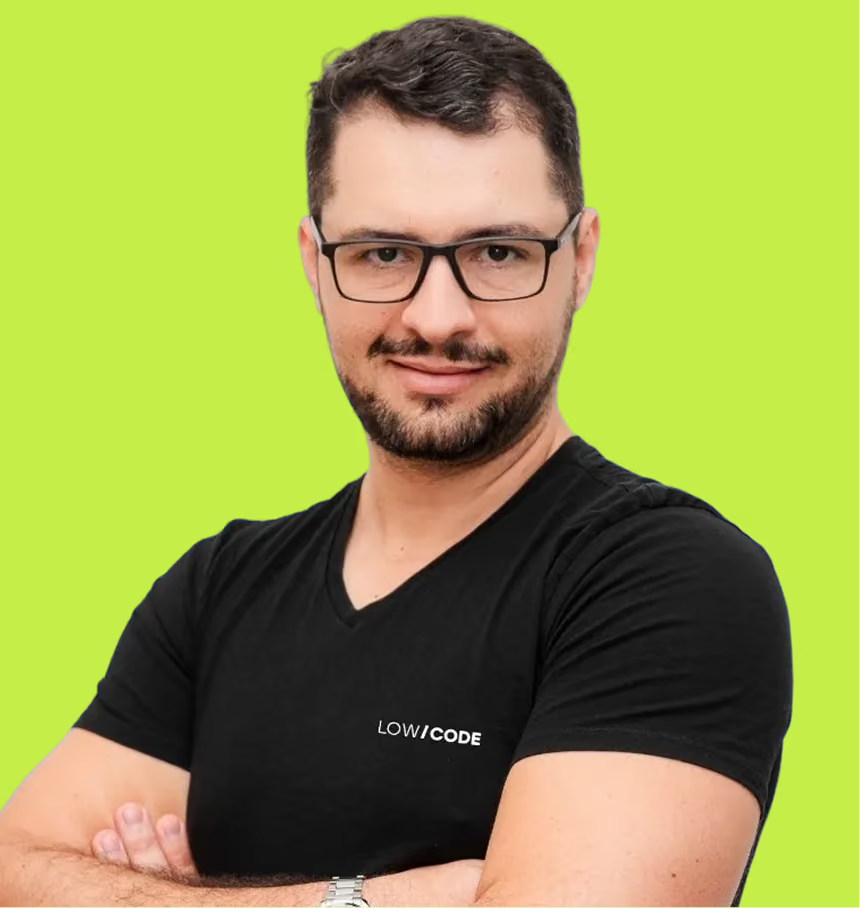
Jesus Vargas, Founder & CEO of LOW/CODE Agency

Jesus Vargas

Founder & CEO

Jesus brings 15 years of software development experience and has led LOW/CODE Agency since 2019, growing the team to 40+ people and 450+ shipped products. He focuses on identifying practical AI opportunities, translating business requirements into software solutions, and helping companies integrate AI into their existing systems and workflows.

Luiz CordeiroAI Engineer, LOW/CODE Agency
The hardest part of building a RAG system isn't getting AI to generate an answer. It's making sure it retrieves the right information, respects data permissions, and gives users answers they can actually verify. That's where the real engineering happens.
Luiz Cordeiro, AI Engineer at LOW/CODE Agency

Luiz Cordeiro

AI Engineer

Luiz specializes in RAG development, AI agents, conversational AI, memory systems, and LLM reliability. His work covers retrieval pipelines, knowledge integration, tool connectivity, and safeguards that improve response accuracy and reduce hallucinations. He is also a Claude Certified Architect.

Thinh Dinh, Developer at LOW/CODE Agency

Thinh Dinh

Developer

Thinh has 7 years of experience building business applications, automations, and operational workflows using technologies including n8n, Make, Zapier, Claude Code, and Codex. He is a Claude Certified Architect and specializes in integrating AI capabilities into existing software, tools, and business processes.

We Build With AI Because We Work With AI Every Day

Our team works alongside 17 AI Employees, which gives our engineers daily experience with how well AI finds company information and where access needs limits. We bring that experience to the retrieval systems we build for you.

  • 17AI Employees deployed
  • 90%of follow-ups automated
  • 20CEO hours/month reclaimed
  • 707leads resurfaced
  • 3×output through internal AI workflows

How Do We Keep RAG Systems Secure and Under Your Control?

Your RAG application may connect to sensitive business documents, internal knowledge, and proprietary data. At LOW/CODE Agency, we design security into the retrieval architecture, controlling how information is stored, accessed, shared with AI models, and monitored throughout the system.

Data Privacy & Secure Storage

We design RAG systems around your data hosting, privacy, and retention requirements.

  • Deploy data storage and retrieval infrastructure in approved cloud or client-controlled environments.
  • Use encrypted connections and appropriate storage security controls to protect business information.
  • Configure data retention, processing, and AI provider settings according to your requirements.
  • Limit the information shared with language models to the context needed for each task, where technically feasible.

Permission-Aware Retrieval

Your RAG system should only retrieve information users are authorized to access.

  • Integrate authentication and role-based access controls with your application's permission model.
  • Apply document-level or user-level filtering before retrieved content reaches the language model.
  • Restrict access to sensitive knowledge by department, role, client, or project.
  • Test retrieval permissions to identify and prevent unauthorized information exposure.

AI Security & Guardrails

We design controls around how your RAG application processes retrieved content and generates responses.

  • Protect API keys, credentials, and connected systems with least-privilege access.
  • Implement safeguards against prompt injection and instructions embedded in untrusted documents.
  • Configure controls for sensitive information and restrict what AI components can access or execute.
  • Validate outputs and introduce human review for sensitive or high-impact workflows where required.

Testing, Monitoring & Access Governance

Security controls need to remain effective as your documents, users, and integrations change.

  • Test access permissions, retrieval behavior, and sensitive-data handling before deployment.
  • Configure appropriate logging and monitoring to investigate errors and unusual activity without unnecessarily exposing sensitive content.
  • Document access requirements, security configurations, and agreed deployment controls.
  • Review security requirements and manage production changes according to the project's governance process.

Built for Secure, Controlled Retrieval in Production

  • Permission-Aware Retrieval
  • Client-Approved Data Hosting
  • Source-Backed Answers
  • Secure Credential Management
  • Configurable Audit Logging
  • Retrieval Quality Monitoring
  • Incident Response Procedures

How Much Do RAG Development Services Cost?

RAG development projects start at $10,000 for a simple knowledge retrieval system, run $25,000 to $60,000 for most builds, and reach $150,000+ for an enterprise-scale platform.

Your investment depends on the complexity of your data, the number of knowledge sources, retrieval requirements, software integrations, and security needs. We define the scope, architecture, and budget during discovery so you know what your project involves before development begins.

RAG Pricing at a Glance

Simple RAG System

$10K – $25K

4–8 weeks

Single document collection with basic retrieval and generation pipeline.

  • Up to 1,000 documents
  • Basic retrieval and generation
  • Simple query interface
  • Standard hosting

Enterprise RAG Platform

$60K – $150K+

12–22 weeks

Large-scale document processing with enterprise security, multiple indexes, and custom integrations.

  • Large-scale document processing
  • Multiple specialized indexes
  • Enterprise security and access controls
  • Advanced analytics and quality monitoring
  • Ongoing optimization

How Do You Calculate the ROI of a RAG System?

A RAG system can reduce the time employees spend searching for information, answering repetitive questions, and navigating disconnected knowledge sources. These efficiency gains can translate into meaningful productivity savings across your organization.

Our RAG ROI Calculator helps you estimate the potential financial impact based on your team size, time spent searching for information, and hourly labor costs. Explore projected annual productivity savings and see how they compare to your RAG development investment.

Find out what faster access to business knowledge could be worth to your team.

Discover your savings with automation

Is your team doing repetitive tasks? Stop wasting money, and get a custom solution that not only saves you time, but also reduces mistakes and makes your team more productive!

Custom app ROI calculator

Enter the total number of team members who handle a specific process.
Indicate how many hours on average it takes to finish the process once.
What is the frequency of this process?
Input the average hourly wage for employees involved in the process.
$
We have automated processes up to 90%.

Guaranteed 25% time savings

90%
Result
Ready to get started?  Book a free discovery call
Thank you! Your submission has been received!
Oops! Something went wrong while submitting the form.

Frequently Asked Questions About RAG Development

How Is a Custom RAG System Different From Using ChatGPT?

ChatGPT can work with uploaded files and connected information sources, but a custom RAG system gives your business more control over how knowledge is retrieved, which sources are used, and how the AI integrates with your software. Custom RAG development also allows you to implement application-specific permissions, retrieval strategies, and workflows tailored to your users.

What Types of Documents and Data Sources Can RAG Handle?

RAG systems can retrieve information from PDFs, Word documents, spreadsheets, presentations, websites, knowledge bases, and structured databases. They can also connect to platforms such as Google Drive, SharePoint, and internal business applications. Scanned documents and complex file formats may require additional processing, including OCR and data extraction.

How Do You Reduce Hallucinations in a RAG System?

We improve answer reliability by testing retrieval against real business questions, optimizing document chunking and search strategies, and evaluating the relevance of retrieved information. Our RAG systems track similarity and reranker scores and use confidence thresholds to recognize when sufficient information hasn't been found. Instead of generating an unsupported answer, the assistant can indicate that it couldn't find the requested information. While RAG cannot eliminate hallucinations entirely, these safeguards help reduce unreliable responses.

Is RAG Safe for Confidential Business Documents?

RAG can be designed for sensitive business information with appropriate security controls. Depending on your requirements, we implement authenticated access, permission-aware retrieval, secure data handling, and restrictions on the information shared with AI models. Hosting, provider data policies, and applicable compliance requirements are evaluated during project discovery.

Can RAG Integrate With Our Existing Software and Knowledge Sources?

Yes. We develop RAG integrations for existing web applications, enterprise software, CRMs, customer support platforms, and internal knowledge systems. Depending on the available APIs and infrastructure, RAG capabilities can be added to your current software without rebuilding the entire application.

How Does a RAG System Stay Up to Date?

RAG systems can use automated synchronization and indexing pipelines to process new, updated, or deleted content. Once changes are processed, the updated information becomes available for retrieval without retraining the underlying language model. Synchronization frequency depends on your data sources and business requirements.

Can RAG Handle Conflicting or Outdated Information?

Yes, RAG applications can be designed to identify conflicting sources and prioritize approved information using document metadata, publication dates, version history, and source ranking. When documents disagree, the system can surface the relevant references for review rather than automatically treating one answer as correct.

What About Documents in Multiple Languages?

Yes. Multilingual RAG systems can retrieve information from documents in different languages and generate responses in a user's preferred language, depending on the models and retrieval architecture. We assess your language requirements and test retrieval performance across relevant languages during development.

Do We Need a Dedicated Vector Database for RAG?

Not always. PostgreSQL with pgvector can support many RAG applications without requiring a separate vector database. We select the appropriate search infrastructure based on your document volume, retrieval requirements, performance targets, and existing technology stack. Some applications may also benefit from keyword search or hybrid retrieval.

When Is RAG Not the Right Solution?

RAG may be unnecessary if your application relies on a small amount of static information that fits within a model's context window, or if prompt engineering already produces reliable results. Tasks requiring precise, live transactional data may be better served by direct database or API integrations. We evaluate these alternatives during discovery before recommending an architecture.

How Long Does It Take to Develop a RAG System?

A typical mid-complexity RAG project takes approximately 8 to 14 weeks. Simpler implementations may take 4 to 8 weeks, while enterprise platforms with complex integrations and security requirements can take 12 to 22 weeks or longer. We establish a more precise timeline after evaluating your data, functionality, and project scope.

What Are the Ongoing Costs of Running a RAG System?

Ongoing costs depend on language model usage, query volume, hosting infrastructure, data storage, indexing frequency, and monitoring requirements. Applications with large document collections or high usage may require additional infrastructure and maintenance. We assess expected operating costs during architecture planning so you can evaluate the total cost of ownership.

How Much Do RAG Development Services Cost?

Our RAG development services start at $10,000 for a simple system, and most builds run $25,000 to $60,000. Enterprise platforms reach $150,000+. Price depends on your data, retrieval requirements, integrations, and security needs.

Relevant Articles on RAG Development

AI

Best RAG Development Firms for Healthcare

The best RAG development firms for healthcare in 2026, ranked by who actually builds HIPAA-compliant, EHR-integrated RAG systems and not just demos them.

Read more

AI

RAG development companies for financial services

The best RAG development companies for financial services in 2026; ranked by who builds compliant, production-grade retrieval systems for regulated finance environments.

Read more

AI

RAG development companies for legal

The best RAG development companies for the legal industry in 2026; ranked by who builds privilege-safe, matter-aware retrieval systems for law firms and legal departments.

Read more

AI

RAG development companies for manufacturing

The best RAG development companies for manufacturing in 2026; ranked by who builds production-ready retrieval systems for maintenance, quality control, and operations teams.

Read more

Ready to Put a RAG System to Work?

Based in Miami, LOW/CODE Agency has shipped 450+ products since 2019 for clients ranging from funded startups to Fortune 500 companies.

Your first step is a free discovery call. We learn your business goals, assess your data sources, and identify where RAG can deliver the most value. From there, we outline the right technical approach, scope, timeline, and budget before development begins.

Book a Discovery Call
OpenAI Select PartnerClaude Partner Network