AI Chatbot Consulting & Architecture
We help you identify the right chatbot use cases, choose AI models, and plan the technical architecture. We assess your data sources, integration requirements, and business workflows before development begins.
Custom AI chatbots connected to your data and systems, built by an OpenAI Select Partner and Claude Partner Network member.
Our chatbots answer questions using your business knowledge, connect to the systems your team already uses, and help customers and employees get things done. We map the conversations, data sources, and integrations first, so each chatbot fits how your business works. We have delivered 450+ digital products and use AI across our own operations, and we bring that experience to the chatbots we design, build, and deploy.

Trusted by hundreds of businesses



AI chatbot development services cover the design, development, integration, and deployment of conversational AI solutions tailored to a company's needs. AI chatbots use large language models (LLMs), natural language processing (NLP), and retrieval-augmented generation (RAG) to understand questions, maintain context, and generate relevant responses from business information.
From initial strategy to deployment and ongoing improvements, we handle every stage of custom AI chatbot development. Whether you're building a chatbot from scratch or improving an existing one, our team designs solutions around your business data, users, and systems.
We help you identify the right chatbot use cases, choose AI models, and plan the technical architecture. We assess your data sources, integration requirements, and business workflows before development begins.
We design how your chatbot interacts with users, from conversation flows and response formats to follow-up questions and human handoffs. Each interaction is built around what users need to accomplish.
We build AI-powered chatbots tailored to your business, using large language models and custom logic to handle natural conversations, answer questions, and support customer-facing or internal workflows.
We connect your chatbot to company documents, knowledge bases, and databases using retrieval-augmented generation (RAG). This allows it to retrieve relevant business information and generate grounded responses without relying solely on an AI model's training data.
We integrate chatbots with your existing CRM, ERP, helpdesk, e-commerce platforms, and internal tools. Your chatbot can retrieve information, update records, and trigger approved actions without requiring users to switch between systems.
We improve existing chatbots through prompt engineering, knowledge retrieval improvements, conversation redesign, and model fine-tuning where appropriate. We focus on fixing response quality, usability, and performance issues.
We test chatbots against real user questions, edge cases, and integration scenarios before launch. Our team evaluates response accuracy, fallback behavior, security controls, and performance, then deploys the chatbot to your selected channels.
We monitor chatbot performance, review conversation failures, update knowledge sources, and refine responses after deployment. As your business changes, we help you improve existing functionality and introduce new capabilities.
Not every chatbot needs the same technology or level of complexity. We build conversational AI solutions based on what your users need to accomplish, from answering questions and retrieving company information to completing transactions and handling voice conversations.
Built with large language models such as GPT, Claude, or Gemini, these chatbots understand natural language, handle follow-up questions, and generate context-aware responses. We configure them around your business requirements, conversation flows, and response guidelines.
These chatbots use retrieval-augmented generation (RAG) to find information in your company documents, knowledge bases, and connected data sources before generating responses. They help users access relevant business information without searching through multiple systems.
Transactional chatbots connect conversations to business workflows. They can book appointments, check order statuses, update records, create support tickets, and complete other defined actions through integrations with your existing systems.
We build voice-enabled chatbots that let users speak instead of type. By combining speech recognition, language models, and text-to-speech technology, they support natural voice interactions across phone systems, websites, and applications.
Multimodal chatbots work with more than text. Depending on your use case, they can process images, documents, and voice inputs alongside written messages, helping users share information and get assistance in different formats.
We combine predefined conversation flows with generative AI where each approach makes sense. Rule-based logic handles structured processes and predictable actions, while AI supports open-ended questions and more flexible conversations.
Our approach fits businesses that want a custom AI chatbot built on their own knowledge, connected to their CRM, helpdesk, or internal systems, and ready to hand conversations to a person when needed. We build new chatbots and improve existing ones, with testing, monitoring, and ongoing support after launch.
Projects That Fit Our Approach
AI chatbot development works well for the project types below. Each one benefits from a chatbot built around your data, users, and systems.
Whether you need an LLM-powered, RAG, transactional, or voice-enabled chatbot, we will help you choose. Bring us the conversations you want to improve, and we will design the architecture around them.
Your chatbot should work where your customers and employees already communicate. We integrate custom AI chatbots into your websites, applications, messaging channels, and business software, connecting conversations to the information and workflows behind them.
Embed AI chatbots into your website, customer portal, or mobile app to answer questions, guide users, and provide assistance without redirecting them to another platform.
Deploy chatbots across WhatsApp, Facebook Messenger, Instagram, SMS, and other supported messaging channels. Let customers ask questions, receive updates, and interact with your business through familiar platforms.
Connect chatbots to Slack, Microsoft Teams, and internal communication platforms. Employees can find information, submit requests, and access approved workflows directly from the tools they use every day.
Integrate with CRM systems such as Salesforce and HubSpot to capture leads, retrieve customer information, update records, and support sales conversations using relevant account data.
Connect your chatbot with platforms such as Zendesk, Freshdesk, and Intercom to retrieve support information, create tickets, check request statuses, and transfer conversations to human agents when needed.
Integrate chatbots with ERP, HR, and other internal applications to retrieve authorized business data, answer employee questions, and initiate predefined workflows across departments.
Connect chatbots to e-commerce systems, product catalogs, inventory data, and booking tools. Users can discover products, check availability, track orders, and schedule appointments through conversation.
Connect your chatbot to internal documents, CMS platforms, databases, and proprietary software through APIs and retrieval pipelines. This gives it access to relevant business information while respecting defined data permissions.
We build AI chatbots that go beyond predefined answers. From understanding complex questions to accessing business information and completing tasks, each chatbot is equipped with the capabilities your users and workflows require.
Your chatbot understands questions written in everyday language, recognizes user intent, and responds without requiring specific keywords or commands. It can handle different ways of asking the same question and request clarification when needed.
Keep conversations moving without making users repeat themselves. Your chatbot can follow multi-step discussions, reference earlier messages, ask relevant follow-up questions, and maintain context throughout an interaction.
Give users answers grounded in your company's information. Your chatbot can retrieve relevant content from approved documents, knowledge bases, and connected data sources, with source references where available.
Tailor conversations using relevant customer information, account details, preferences, or employee roles. With the right permissions, your chatbot can provide recommendations, guidance, and responses based on each user's context.
Support conversations across multiple languages and, where needed, spoken interactions. Users can communicate with your chatbot through text or voice, making information and assistance accessible across different audiences and channels.
Let users complete tasks directly through conversation. Your chatbot can collect information, qualify leads, schedule appointments, create support tickets, update records, and trigger approved workflows through connected systems.
Keep people involved when a conversation requires human judgment. Your chatbot can recognize requests it cannot handle, escalate sensitive issues, and transfer relevant conversation context to a support agent or team member.
Understand how your chatbot performs through conversation analytics, common user intents, resolution rates, unanswered questions, and other relevant metrics. Use these insights to identify gaps and improve the experience over time.

Knowledge Base Chatbots
Woox AssistantAn AI-powered web chat assistant that gives employees answers grounded in technical product documentation. Instead of waiting for senior advisors, staff can resolve complex product questions in seconds, and new hires can handle technical inquiries from their first day.

AI Triage & Human Handoff
My Baby My WayA maternal health app where AI starts a conversation when a daily survey flags a concerning answer. If three consecutive concerning answers remain unresolved, the system escalates the case to a human care team member.

Personalized AI Assistants
BarEssayAn AI-powered study assistant that analyzes practice essays, provides personalized feedback, and helps California Bar Exam candidates focus on the areas where they need the most improvement.
CTA buttons: Book a Discovery Call | See All Case Studies
Our app went live, a dream came true. My team at LowCode Agency has been working hard with our team at My Baby My Way. Jesus has been in the lead and is a true genius. Thank you to him and his team for helping make global change with me.

Read Case Study
Clutch named LOW/CODE Agency a 2026 Global Leader in Natural Language Processing, among the top 15 companies worldwide.
 Top Firm, 50Pros
 50Pros
 Clutch 100 Fastest Growth
 Clutch Top Bubble Development
 Clutch Champion, Fall
From customer-facing assistants to internal knowledge chatbots, we build conversational AI solutions around the questions, processes, and systems specific to your industry.
From conversation design to production deployment, we build custom AI chatbots in 2 to 8 weeks, depending on complexity, data readiness, and integrations.
Book a Discovery Call1 to 2 weeks
We map the questions users will ask, the tasks your chatbot needs to handle, and when a human should step in. We define conversation flows, user journeys, integrations, and success criteria before development begins.
1 to 2 weeks
We prepare the data and systems your chatbot needs to work with. That includes setting up RAG pipelines for company documentation, connecting APIs for live information, and configuring database access and permissions.
2 to 4 weeks
We build the chatbot's conversation logic, intent handling, context management, and response generation. We also define its tone, brand vocabulary, response guidelines, and how it handles uncertainty or questions it cannot answer.
1 week
We connect your chatbot to the platforms where people will use it, from website widgets and mobile apps to messaging platforms and internal tools. We adapt the interface, conversation formats, and workflows to each channel.
1 to 2 weeks
We test the chatbot with realistic conversations, unexpected questions, incomplete information, and integration failures. We evaluate response accuracy, retrieval quality, guardrails, and human handoffs, then refine what doesn't work.
1 week for deployment · Ongoing support
We deploy your chatbot to production, configure monitoring, and track how it performs with real users. After launch, we can update knowledge sources, improve responses, fix recurring issues, and add new capabilities as your needs evolve.
We work with leading language models, conversational AI tools, application frameworks, and data infrastructure to build custom chatbots. We select the technology based on your chatbot's capabilities, integrations, security requirements, and existing systems.
 Claude
 OpenAI
 Gemini
 OpenRouter
 PerplexityClaude Agent SDK
 MCP
 TypeScript
 Python
 JavaScript
 React
 Next.js
 Bun
 Hono
 Express
 Supabase
 PostgreSQL
 DuckDB
 SQLite
 n8n
 Make
 Zapier
 Slack
 Twilio
 Stripe
 Vercel
 Cloudflare
 Hetzner
 GitHub
Technology-agnostic by design. We choose the models, frameworks, and infrastructure that fit your chatbot's use case, business data, existing systems, and performance needs.
Your chatbot is built by the engineers and AI specialists behind LOW/CODE Agency's production AI systems. Our team brings together conversational AI, RAG, software development, and integration expertise to build chatbots that work with your business data and systems.
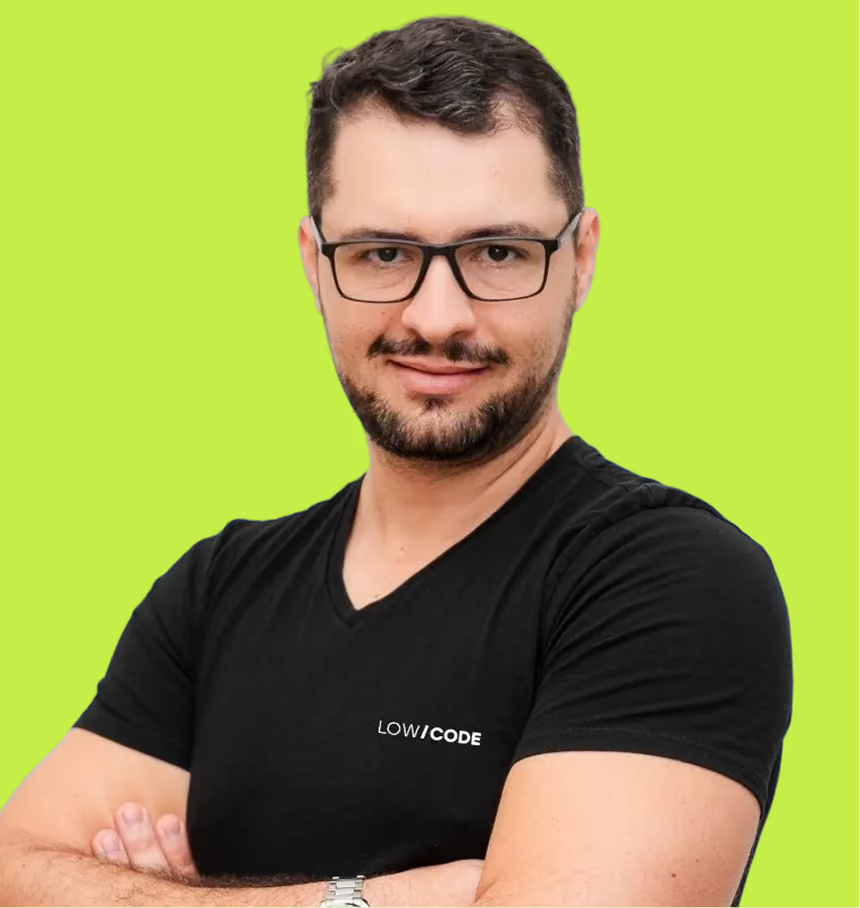
Founder & CEO
Jesus brings 15 years of software experience and has led LOW/CODE Agency since 2019, overseeing 450+ digital products. He focuses on turning business needs into practical AI solutions, from identifying use cases to defining the systems and workflows behind them.

AI Engineer
Luiz specializes in conversational AI, RAG pipelines, LLM reliability, and tool integrations. A Claude Certified Architect, he builds AI systems grounded in business knowledge, with a focus on response accuracy and reducing hallucinations.

Developer
Thinh has 7 years of experience developing business applications and automations. A Claude Certified Architect, he specializes in connecting AI systems to existing tools and workflows using n8n, Make, Zapier, and AI development tools.
We Build With AI Because We Use It Every Day
Follow-ups are conversations, and AI handles 90% of ours. Running them every day shows us when a reply needs an approved source and when a person should step in. We build those same checkpoints into your chatbot.
Every chatbot is designed with defined boundaries: what information it can access, which systems it connects to, what it can share with users, and when a conversation needs human intervention. Your business data stays in client-controlled or approved third-party environments, with access permissions and security requirements documented from the start.
Your business data remains under your control throughout the chatbot lifecycle.
Every chatbot has defined boundaries around what it can retrieve, share, and do.
Security controls extend across the AI models, knowledge sources, integrations, and infrastructure supporting your chatbot.
We test chatbot behavior before launch and monitor supported systems once they reach production.
Your team stays in control of what the chatbot can handle independently and when human intervention is required.
Improving AI Chatbot Accuracy and Reliability Your chatbot retrieves information from approved documents, knowledge bases, and connected systems using RAG where appropriate. We test responses against real questions, refine retrieval and prompts, and configure fallback behavior for questions the chatbot cannot reliably answer.
Controlling AI Chatbot Costs and Performance Not every conversation needs the most powerful AI model. We select models and architecture based on your chatbot's tasks, expected conversation volume, and response-time requirements. Usage, latency, and operating costs can be monitored after launch to guide ongoing optimization.
Measuring AI Chatbot Business Impact We define success metrics around your chatbot's purpose before development begins: questions resolved, support tickets deflected, response time reduced, leads qualified, appointments booked, or employee hours saved. After launch, these metrics help your team evaluate performance and identify improvements.
Built for Secure, Reliable Conversations in Production
We design the conversations, knowledge access, integrations, permissions, guardrails, and human handoffs your chatbot needs to deliver reliable answers and support real business workflows.
Our AI chatbot development starts at $5,000 for a simple chatbot with one purpose and reaches $100,000+ for enterprise platforms. Most business chatbots with RAG and system integrations run $15,000 to $40,000. Final price depends on complexity, knowledge base and RAG requirements, the systems and channels connected, and security requirements.
We define scope, timeline, and budget during discovery, so you know what your project involves before development begins. The table shows our typical packages.
Simple Chatbot
$5K – $15K
2–6 weeksSingle-purpose chatbot with basic knowledge base or FAQ grounding and one channel deployment.
AI Chatbot with RAG
$15K – $40K
6–12 weeksComprehensive chatbot with RAG-powered knowledge, multiple integrations, and multi-channel deployment.
Enterprise Chatbot Platform
$40K – $100K+
10–18 weeksMulti-function chatbot handling diverse use cases with deep integrations and enterprise security.
The ROI of an AI chatbot comes from the customer questions it resolves, the employee hours it saves, and the leads or bookings it helps generate, weighed against development and operating costs. Our ROI Calculator estimates potential labor savings from your team size, task time, frequency, and hourly rate.
Try the ROI Calculator | Book a Discovery Call
Is your team doing repetitive tasks? Stop wasting money, and get a custom solution that not only saves you time, but also reduces mistakes and makes your team more productive!
Traditional chatbots follow predefined rules and scripts, and AI chatbots use large language models (LLMs) to understand natural language and respond in context. AI chatbots can also connect to business data through RAG and to your systems through integrations, so they retrieve information and complete defined tasks.
A simple AI chatbot takes 2 to 6 weeks, a chatbot with RAG takes 6 to 12 weeks, and an enterprise platform takes 10 to 18 weeks. These are estimates, and the final timeline depends on complexity, data readiness, and integration requirements.
Our AI chatbot development starts at $5,000 for a simple chatbot with one purpose. Chatbots with RAG, business system integrations, and several channels typically run $15,000 to $40,000, and enterprise platforms run $40,000 to $100,000+. Final pricing depends on your project scope and technical requirements.
Yes, we connect your chatbot to internal documents, knowledge bases, databases, and business systems using retrieval-augmented generation (RAG). The chatbot retrieves relevant company information when answering, and the underlying AI model does not need retraining. We configure data access around your security and permission requirements.
An LLM chatbot generates responses from its instructions and available context, and a RAG chatbot adds a retrieval step that searches approved documents or data before answering. RAG works best when your chatbot needs proprietary, frequently updated, or specialized business information.
Yes, we build custom integrations with CRM, ERP, helpdesk, e-commerce, and other business platforms through APIs and supported connectors. Your chatbot can retrieve customer information, check order statuses, create support tickets, update records, or trigger approved workflows without users switching systems.
Yes, we build multilingual chatbots that understand and respond in different languages, depending on the selected models and language requirements. We can also add voice using speech recognition and text to speech technology, so users can talk with the chatbot on supported platforms.
We reduce incorrect answers with RAG, approved knowledge sources, prompt engineering, and response validation. We test chatbots against real questions, edge cases, and unsupported requests before deployment. When a chatbot cannot give a reliable answer, we configure it to acknowledge uncertainty or escalate to a person.
Yes, we assess your existing chatbot and improve its conversation flows, response accuracy, knowledge retrieval, integrations, and user experience. Depending on the current architecture, we can add RAG, upgrade the underlying models, add channels, or extend its capabilities, often without rebuilding it from scratch.
An AI chatbot answers questions in conversation, while an AI agent plans and completes tasks inside your tools. The two can overlap, since a chatbot can use agent capabilities to take approved actions during a conversation. AI agent development covers the agent side.
You keep control of your data and your client owned production environments. We document access requirements, manage credentials through secure processes, and leave administrative ownership with you. Code ownership and intellectual property transfer are defined in your project agreement.
Yes, we offer ongoing maintenance and optimization, including monitoring, fixing integration issues, updating knowledge sources, improving prompts, and refining conversation flows. As your business evolves, we also add new capabilities, integrations, and channels.
Custom App Development
AI
Best Chatbot Development Companies
Find the best chatbot development companies in 2026. Compare top firms by AI capabilities, pricing, and client results to choose the right partner.
15 min
read
Read more

AI
How to Build an AI Travel Chatbot That Books Trips
Learn step-by-step how to create an AI travel chatbot that efficiently books trips and enhances user experience.
10 min
read
Read more
Based in Miami, LOW/CODE Agency has shipped 450+ products since 2019 for clients ranging from funded startups to Fortune 500 companies.
Your first step is a free discovery call. We learn your business goals, identify where an AI chatbot can deliver the most value, and outline the features, integrations, timeline, and budget before development begins. If you're not sure where to start, our 2-minute AI readiness assessment can help you identify opportunities.
Book a Discovery Call Take the 2-minute AI Readiness assessment