Case Study
Woox Assistant

80%
reduction in time-to-answer
1 day
to reach full product competency

,


When your best product knowledge lives in two people’s heads, every sale is a gamble
Woox carries hundreds of paint products across coatings, primers, sealers, and specialty finishes. The technical specs are intricate: drying times shift depending on temperature and surface type, compatibility between products is non-negotiable, and application methods vary by project. For years, that knowledge lived in the heads of a handful of senior advisors, and nowhere else.
When those advisors were unavailable, the rest of the team had either to wait or improvise, resulting in customers getting inconsistent answers. New staff spent months learning enough to handle basic questions. “I’m sure I’m losing sales because of unanswered inquiries,” Woox’s founder said before the platform existed. He wasn’t guessing, he knew it.
The company had 3,000 technical product sheets. What it didn’t have was a way to make that information instantly accessible to everyone who needed it.
The knowledge trap nobody had named
The surface problem looked like a training challenge. New staff needed more time with senior advisors. Field consultants needed refresher sessions. The answer seemed to be more documentation, more onboarding, more internal workshops.
But the real constraint was different: the expertise that lived in the minds of the most experienced people on the team, the hard-won understanding of which products work on which surfaces, how humidity affects drying times, when to recommend one primer over another, had never been captured in a form anyone else could use.
Product sheets existed, but they were static, scattered, and written for technical audiences. The practical know-how that sat alongside them, the edge cases, the field observations, the answers to the questions customers actually ask, was entirely undocumented. Every time a senior advisor left a conversation, that knowledge left with them.
Before this platform, a new hire took an estimated 3–4 months before they could independently handle technical product queries with confidence. Senior advisors were fielding an estimated 60–70% of all product questions that came through the team, creating a bottleneck that scaled with every new hire and every new customer.
The founder described it directly: tips like sanding lightly between coats for a better wood finish, or testing surface humidity with a plastic sheet overnight before applying floor paint, none of that lived anywhere in the documentation. It lived in people.
From scattered PDFs to a system that actually answers questions
We built for Woox an AI-powered knowledge platform that works in two phases. Phase one is internal: a tool that gives every member of the Woox team instant access to accurate, contextual answers drawn directly from the company’s product knowledge base.
Phase two takes that same intelligence public, turning it into a customer-facing assistant embedded on the Woox website.
The foundation of the system is a structured knowledge base built from thousands of technical product sheets from multiple suppliers, all unified into a single, queryable AI system. We extracted, cleaned, and organized that documentation so the AI could reference it precisely, not just search it loosely. When a staff member asks which product to recommend for an exterior facade in a humid climate, the system doesn’t guess. It pulls from the actual technical specs and surfaces a specific, grounded answer.
The second layer is the know-how that wasn’t written down anywhere. As part of the build, we worked to capture the practical expertise of Woox’s senior advisors, the application tips, the compatibility warnings, the real-world guidance that product sheets don’t include. That undocumented knowledge was structured and embedded into the system alongside the technical documentation, turning years of accumulated experience into something the entire team could access on demand.
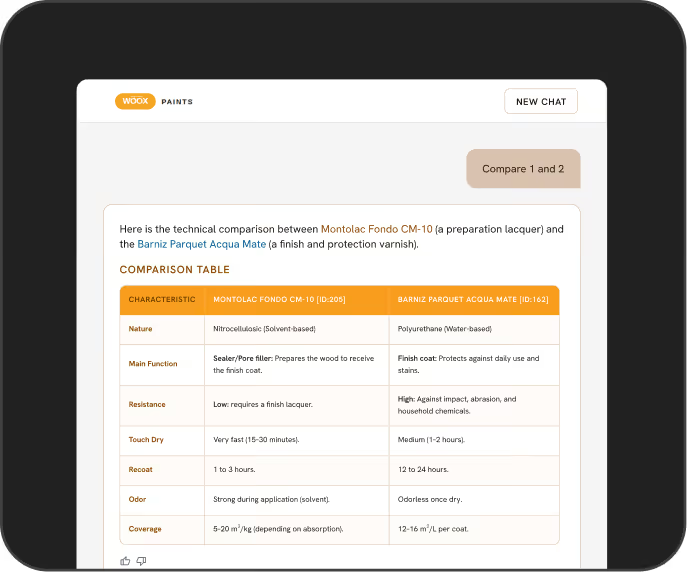
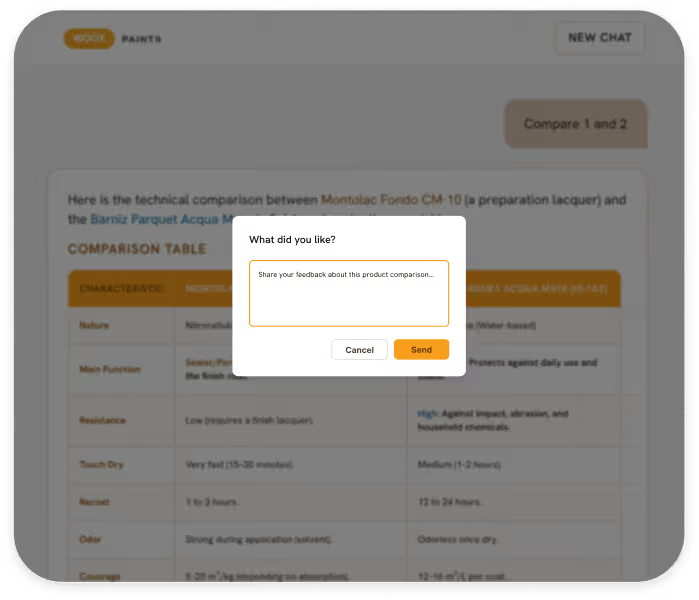
For phase two, the same system becomes a sales tool. Customers visiting the Woox website can ask technical questions and receive reliable, brand-accurate answers without waiting for someone to call or write back, directly addressing the unanswered-inquiry problem the founder had identified as a driver of lost sales, with a projected 40% reduction in inquiries that go unanswered.

Technical decisions that made the knowledge usable
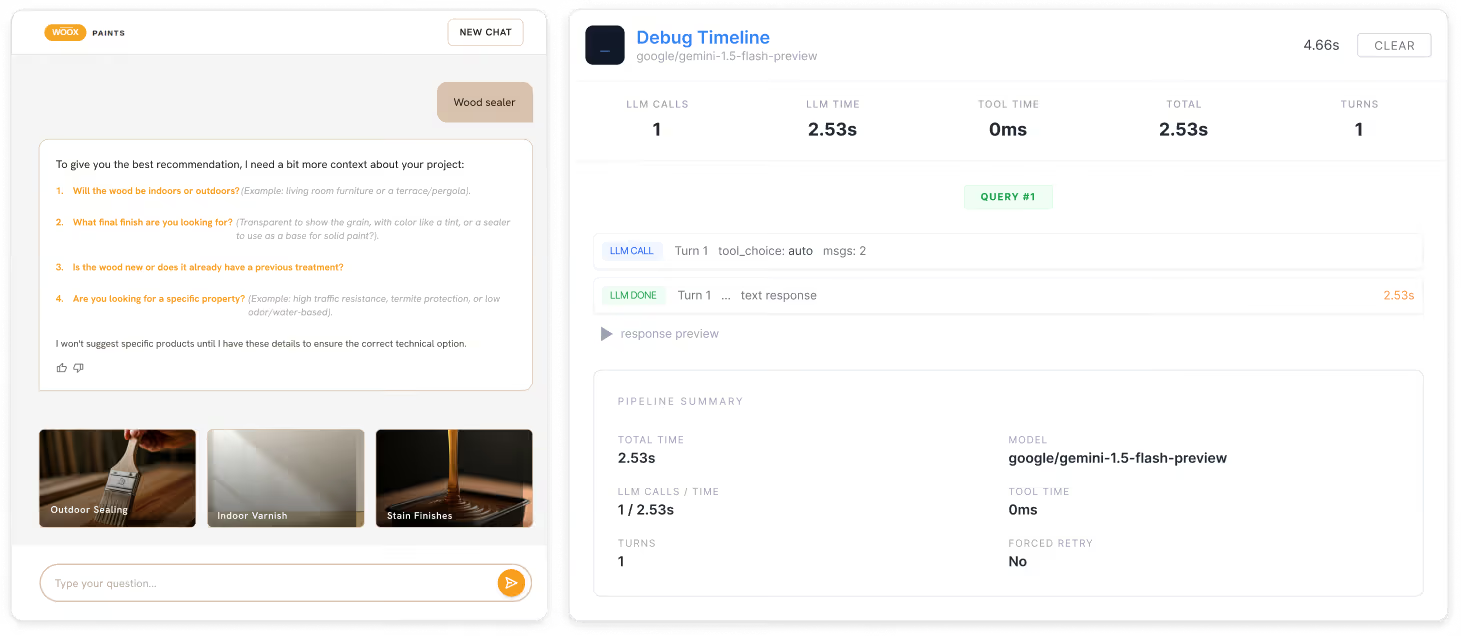
We built the platform on FastAPI and Railway. The decision to move away from a purely info-based setup and toward Python was deliberate. Python’s ecosystem for AI development is significantly richer, giving us more tools, more flexibility, and a stronger foundation for building agents that can reason over complex technical documentation.
FastAPI handles the workflow logic, the logic that takes a user’s question, routes it through the knowledge base, retrieves the most relevant technical information, and returns a structured answer. Railway provided the deployment infrastructure: stable, scalable, and straightforward to maintain without requiring a dedicated DevOps function.
The knowledge base is processed through a three-layer pipeline. The first layer preserves the full raw content of every document so the agent can access it at any time. The second converts PDF content, including tables and complex layouts, into clean, structured narrative text, improving retrieval quality and producing more meaningful results than a standard approach. The third chunks and embeds that content with rich metadata for precise, context-aware retrieval. LlamaIndex handles orchestration throughout, Claude Opus handles documents with complex layouts, tables, and visual elements.
The result is a system that goes well beyond keyword search. When a staff member asks which product to use on an exterior facade in a humid climate, the agent reasons over the actual technical content and returns a specific, grounded answer, not a list of vague matches.
The chatbot lives on the Railway server and is accessible through a custom web chat interface, making it available to the full Woox team without any additional tooling.
What changed after launch
The platform immediately did things that previously required a senior advisor. It told the difference between two products with nearly identical names, Asfaproof-tec and Asfraproof, surfacing the specific formulation differences between them. When a customer pushed back on a recommendation, it held its position, because the answer was grounded in documentation, not guesswork. When asked about exterior wood protection, it returned a three-tier recommendation, basic, intermediate, professional, drawing from three separate product sheets at once.
That’s the shift, for a Woox search tool. A system that reasons, holds a position, and gives the kind of answer that used to require years of experience to deliver.
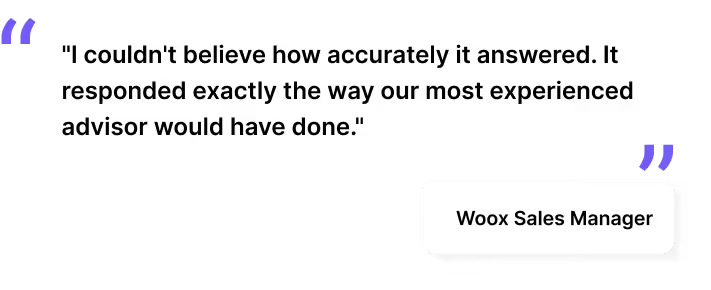
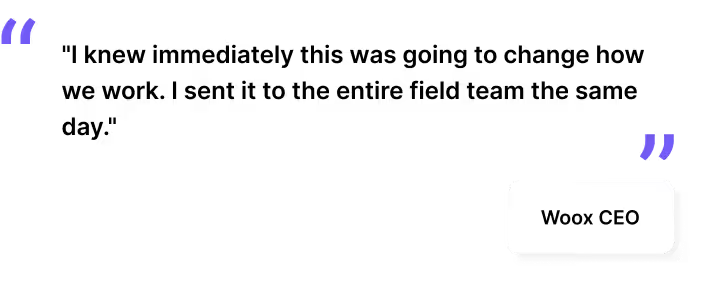
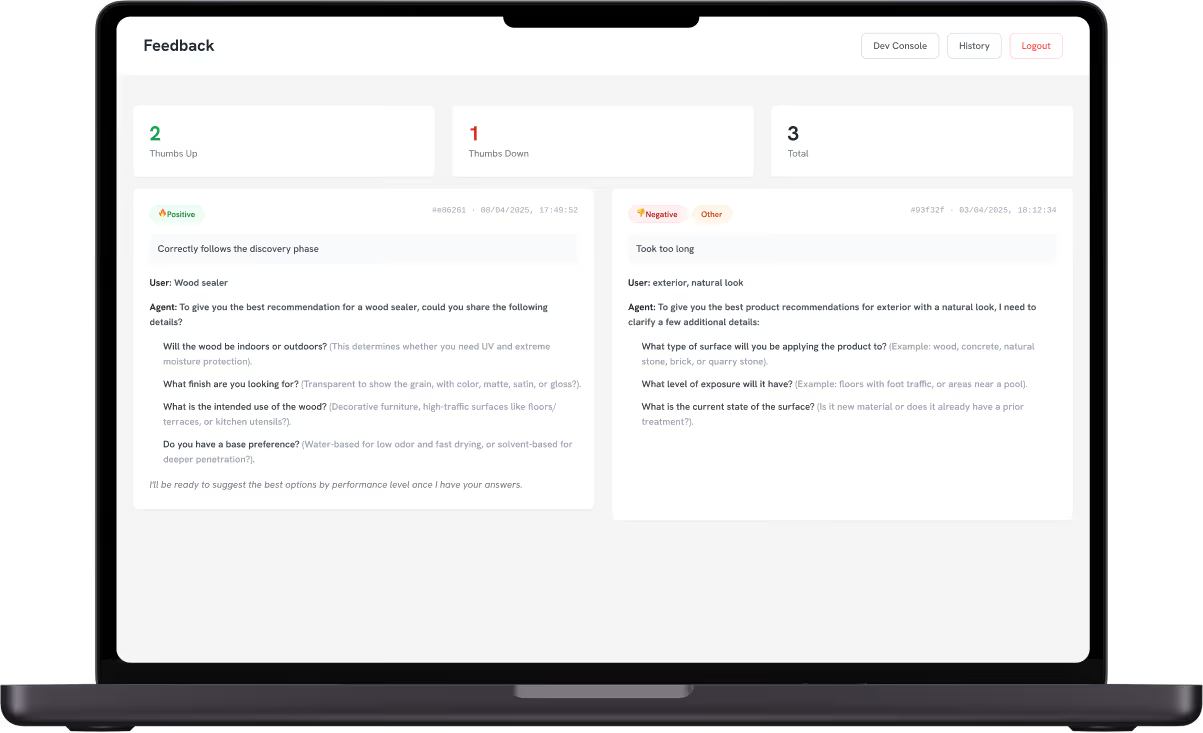
Field advisors at Woox are now using the system directly, the people closest to customers and most dependent on fast, accurate product information. What started as an internal knowledge tool is already the first place the team turns.
The operational impact is concrete:
- Technical queries that previously took 15–30 minutes to resolve, if they got resolved at all, now get answered in seconds. That’s an 80% reduction in time-to-answer.
- New staff who previously needed 3–4 months to reach independent competency can handle technical questions accurately from day one.
- Senior advisors, who were absorbing an estimated 60–70% of all incoming product questions, are no longer the bottleneck.
- Any staff member with access to the platform can now give a reliable answer. That changes who can sell, who can advise, and how the company scales without adding headcount.
What this means for product-heavy businesses
Woox’s build is a clear example of what happens when product expertise gets treated as infrastructure. Most companies in technical retail or distribution have the same problem: deep knowledge that lives in people rather than systems. When those people are busy, unavailable, or eventually gone, that knowledge disappears with them.
An AI knowledge platform doesn’t replace expertise. It makes it permanently accessible. And when the same system can be turned outward to serve customers, it stops being a training tool and becomes a revenue asset.
If your business is sitting on undocumented operational knowledge that your team can’t reliably access, we can help you turn it into a system.
Are you ready to transform your ideas into reality?
We're here to make it happen!
With our expertise and the power of low-code solutions, we can simplify your processes and help your business thrive.
Free discovery callDiscover your savings with automation
Is your team doing repetitive tasks? Stop wasting money, and get a custom solution that not only saves you time, but also reducesmistakes and makes your team more productive!