

10 Best Software Maintenance Companies
Compare 10 software maintenance companies by services, SLAs, pricing, and fit. See typical costs, contract terms, and the questions to ask before you sign.

Software does not stay finished. Bugs appear, updates break things, and security gaps open. Without an owner, small issues grow into outages. That costs real money.
Maintenance firms differ a lot. Some offer a few fixed hours each month. Others run full support teams with round-the-clock coverage. Pricing is rarely clear, and few firms publish contract terms.
We reviewed ten firms using their own published pages. We checked services, response times, pricing signals, and gaps. We also explain costs, contracts, and red flags, so you can judge any firm.
This guide is for founders and operations leaders who depend on software they did not build or can no longer maintain in-house. No deep technical background is needed.
Every entry names who it fits, where it falls short, and what to ask.
Need someone to own your software after launch? Talk to us and we will review your system and suggest the right support level.
Key takeaways
- Maintenance is more than bug fixes. Good plans also cover security patches, updates, performance, and technical debt.
- Response time is not resolution time. A fast reply means little if the fix takes days, so ask for both numbers.
- Prices vary widely. Published retainers on this list range from about $2,000 to $30,000 per month, depending on scope and coverage.
- Takeover needs onboarding. Expect two to eight weeks for a new team to learn your code before it can support it well.
- Contract terms matter. Check code ownership, notice periods, and handover help before you sign.
- Many firms publish few details. Several skip SLAs, prices, or named clients, so plan to ask for them in writing.
Who needs a software maintenance company
You need a maintenance partner when nobody owns your software day to day.
- The original team left. Nobody knows the code, and each fix feels risky.
- Your team has no spare time. Developers are busy with new features, so old bugs wait.
- Security or compliance needs an owner. Patches and audits keep slipping.
- Updates keep breaking things. Operating systems, libraries, and integrations change often.
Skip this guide if you only need a one-time fix or you are building something new from scratch.
How we selected these companies
We used five criteria. Each one comes from public pages, so you can check our work.
- Maintenance focus. The firm lists maintenance as a real service with a process, not one line in a menu.
- Published terms. We favored firms that share SLAs, support tiers, or pricing models.
- Proof of delivery. The firm shows named clients or measured results, labeled firm-reported when we could not verify them.
- Coverage. We included firms for web, mobile, SaaS, and enterprise software.
- Transparency. We noted what each firm leaves out, because missing terms are a risk.
What we could not verify
Many firms do not publish headquarters, founding years, SLAs, or prices. Where a fact was missing from the firm's own pages, we wrote "Not published" or "Not stated."
Results marked "firm-reported" come from the company's own site. We did not audit them. Ask each firm for references before you rely on a number.
Why this list is not a ranking
These firms serve different needs. A small app retainer and a 24/7 enterprise help desk should not be scored on one scale.
We list LOW/CODE Agency first because this guide is on our site. We describe our own fit and limits the same way we describe everyone else's.
Why LOW/CODE Agency is a software maintenance partner
We are a Miami-based product team, not a dev shop. We maintain custom software, and we often take over products built by other teams.
- Published plans. We list monthly retainers, hours, and response times openly, so you can budget before you call.
- Takeover experience. We audit the code, set up monitoring, and build a backlog you control.
- Built for AI. We are an Anthropic Certified Partner and an OpenAI Select Partner, so we can add AI features as the product grows.
- A team that stays. We keep improving the product after launch, and we say no to work we cannot do well.
Software maintenance companies compared at a glance
The ten firms below cover four needs: small retainers for custom apps, structured help desk support, long-term enterprise support, and mobile app upkeep. Pick the row that matches your system.
| Company | Best for | Headquarters | Pricing signal | SLA signal |
|---|---|---|---|---|
| LOW/CODE Agency | Custom apps and low-code products | Miami, FL | $2K to $15K+ per month | Next-business-day to 4-hour response |
| ScienceSoft | Tiered L1 to L4 support with ISO standards | McKinney, TX | Sample $2K to $30K per month | P1 to P4 tiers, 8x5 to 24x7 |
| Scrums.com | Subscription-style maintenance | London, UK | $4,500 per month (Core) | Critical patches in 24 to 48 hours |
| Future Processing | SLA-tiered managed support | Gliwice, Poland | Tiered retainers | Basic, Enhanced, and Premium packages |
| Andersen | Large application portfolios | Warsaw, Poland | Not published | Custom SLAs, 24/7 option |
| Simpalm | Web and mobile apps in the US | Not stated (US offices) | Fixed, time and materials, or dedicated | Hotfix in under 24 hours |
| Mobisoft Infotech | Mobile app takeover | Houston, TX and Pune | Scoped after health check | 24/7 monitoring (no terms) |
| Redwerk | Four maintenance types and audits | Kyiv and Tallinn | Hourly retainers and SLA contracts | SLA-backed (no figures) |
| Mobindustry | Mobile and web app upkeep | Not stated | Fixed, annual, or dedicated | None defined |
| Openxcell | Mobile and web maintenance with dedicated teams | Not stated | Not published | "SLA-driven" (no terms) |
Top 10 software maintenance companies
1. LOW/CODE Agency: maintenance retainers for custom and low-code products
LOW/CODE Agency is a Miami-based product team for custom software and AI apps. Our software maintenance service covers bugs, security, updates, performance, and new features.
We maintain products we built and products other teams built. Takeover onboarding takes two to four weeks, depending on code quality and documentation.
| Detail | Information |
|---|---|
| Headquarters | Miami, FL |
| Founded | 2020 |
| Core focus | Maintenance retainers for custom apps, SaaS, and low-code products |
| Delivery model | Monthly retainers with two-week sprints and monthly reviews |
| Certifications and partners | Anthropic Certified Partner, OpenAI Select Partner, 10+ CCA-F certified developers |
| Pricing signal | $2K to $4K, $4K to $8K, and $8K to $15K+ per month (firm-reported) |
| Named clients or projects | Coca-Cola, American Express, Sotheby's, Medtronic, Zapier |
What they offer
- Bug and security work. We triage bugs, track root causes, and handle patches and vulnerability checks.
- Updates and performance. We update dependencies, tune slow queries, and watch for memory and scaling issues.
- Technical debt work. We run code audits and plan debt reduction, so new features ship faster.
- Platform coverage. We maintain Bubble, FlutterFlow, React and Node, and Webflow products.
Proof and results
- GL Hunt. A 40% efficiency gain held through monitoring, bug fixes, and a dedicated retainer (firm-reported). See the GL Hunt case study.
- CareerNerds. A 75% admin reduction held with no tech hire needed (firm-reported). See the CareerNerds case study.
- The Attributes. Ongoing maintenance supports 3,000+ users with no internal technical team (firm-reported).
- Rising Ground. A fleet portal reallocated $40K per year and recovered 1,500 hours per year (firm-reported).
Who it is for
Companies whose original developers left, teams without capacity, and non-technical founders who need a technical owner.
Keep in mind
Standard retainers cover business hours, and 24/7 support is an add-on.
We do not publish uptime percentages, contract length, overage rates, or service credits, so ask for them in writing. We are not a fit for one-off fixes.
Best for
Ongoing ownership of a custom or low-code product.
2. ScienceSoft: tiered support with ISO-certified processes
ScienceSoft is based in McKinney, Texas. It claims 37 years in IT and 19 years in software support. Its page covers corrective, adaptive, perfective, and preventive maintenance.
It also publishes sample pricing, which is rare. It describes support tiers from L1 help desk to L4 development support.
| Detail | Information |
|---|---|
| Headquarters | McKinney, TX |
| Founded | Not stated (claims 37 years in IT) |
| Core focus | Software, application, and mobile maintenance, help desk, and audits |
| Delivery model | Fully outsourced, in-house, or hybrid |
| Certifications and partners | ISO 9001, ISO 27001, ISO 13485, ITIL 4 practices, Microsoft Partner, AWS Partner |
| Pricing signal | Sample estimates: L1 tickets from $14, L2 from $38, retainers $2K to $30K per month |
| Named clients or projects | GSK and AstraZeneca (via a lab software product), a restaurant supplier |
What they offer
- Four maintenance types. The firm covers corrective, adaptive, perfective, and preventive work.
- Support tiers. Tickets are ranked P1 (critical outage) to P4 (low impact), with coverage from 8x5 to 24x7.
- Setup help. It offers a six-step plan for process design, sourcing, and knowledge transfer.
- Related work. It also offers code audits, security assessments, and modernization.
Proof and results
- Pharma software. The firm reports more than 10 years of support for a lab software product (firm-reported).
- UK client. It reports no missed critical issues or recurring bugs over two years (firm-reported).
- Marketing platform. It reports 36% fewer service requests and 97% user satisfaction (firm-reported).
- Contracts. It says 62% of revenue comes from long-term contracts (firm-reported).
Who it is for
Regulated companies and teams that want formal support tiers, ISO standards, and published price guidance.
Keep in mind
Prices on the page are samples, not quotes. Most case studies are unnamed, so ask for references from your industry.
Best for
Structured, tiered support with ISO-certified processes.
3. Scrums.com: subscription-style maintenance with a published price
Scrums.com is a London-headquartered engineering firm, founded in 2012 in Johannesburg as SovTech and renamed in 2024. Its registry listing shows 384 employees.
Its maintenance page is unusually specific. It lists a Core plan price, a cancellation rule, and a patch target.
| Detail | Information |
|---|---|
| Headquarters | London, UK (offices also in New York, Cape Town, Johannesburg, Nairobi) |
| Founded | 2012 |
| Core focus | Monitoring, patching, mobile upkeep, integrations, and critical application rescue |
| Delivery model | One workstream and one delivery owner per plan |
| Certifications and partners | ISO/IEC 27001, SOC 2 (as listed), GDPR compliance |
| Pricing signal | Core plan at $4,500 per month, with 30 days' notice to cancel (firm-reported) |
| Named clients or projects | Not named |
What they offer
- 24/7 monitoring. The team triages incidents, finds root causes, and plans prevention.
- Security patching. It targets critical patches within 24 to 48 hours, tested in staging first.
- Mobile upkeep. It handles crash triage, OS updates, and store compliance.
- Code ownership. You own the code, runbooks, and documentation from day one.
Proof and results
- Onboarding. It promises first code access within 48 hours and a first deliverable in 14 days (firm-reported).
- Renewals. It claims a 94% renewal rate (firm-reported, no method shown).
- Emergency fixes. It claims a 60% drop in emergency fixes (firm-reported, no method shown).
- Clients. The page cites thousands of clients but names none.
Who it is for
Teams that want a clear monthly price, a small scope, and easy cancellation.
Keep in mind
One team works one workstream at a time, so more requests mean more months. After-hours engineer response appears to be a separate scope with no published price.
Best for
Predictable monthly maintenance with a published price.
4. Future Processing: SLA-tiered managed support
Future Processing is headquartered in Gliwice, Poland. It has offices in London and Plano, Texas, and says it has 25+ years of experience.
Its support service starts with a 4 to 8 week transition. Then it runs managed support under one of three SLA packages.
| Detail | Information |
|---|---|
| Headquarters | Gliwice, Poland (US office in Plano, TX) |
| Founded | Not stated (claims 25+ years) |
| Core focus | SLA-based managed support for business-critical applications |
| Delivery model | Starter transition, then ongoing managed support |
| Certifications and partners | Microsoft, AWS Advanced Tier Services, Google Cloud, ACORD vendor member |
| Pricing signal | Fixed transition fee and tiered SLA retainers |
| Named clients or projects | None named for support |
What they offer
- Starter phase. The team audits the system, reviews documents, shadows your staff, and sets up the SLA.
- Three packages. Basic is business-hours and reactive. Enhanced adds proactive work. Premium adds KPI management and optional 24/7 coverage.
- Change control. Bug fixes are included, while change requests are priced separately.
- Reports. You get SLA reports and service reviews.
Proof and results
- Target measures. It lists SLA compliance above 95% and an example of 99.9% availability (targets, not client results).
- Clear scope split. Its intake process separates included bug fixes from paid changes.
- Client outcomes. The page shows no verified support results.
- Partners. It lists several cloud and insurance-industry memberships.
Who it is for
Mid-market and enterprise teams that want formal SLA tiers and a structured handover.
Keep in mind
The page names no support clients and gives no prices. Ask which tier fits your incident volume.
Best for
SLA packages that scale from business hours to 24/7.
5. Andersen: large-scale application support
Andersen is a software company headquartered in Warsaw, Poland, with offices in Munich, Kraków, and London. It says it has 19 years of experience.
Its page describes L1 to L3 support, 24/7 monitoring, and preventive work such as patch and capacity management.
| Detail | Information |
|---|---|
| Headquarters | Warsaw, Poland |
| Founded | Not stated (claims 19 years) |
| Core focus | Application and IT support, monitoring, and preventive maintenance |
| Delivery model | Shared managed team, dedicated managed team, or staff augmentation |
| Certifications and partners | None named |
| Pricing signal | Not published (lists fixed fee, time and materials, and dedicated team as common models) |
| Named clients or projects | Centene, ERA, SkyCell, plus Samsung and TUI logos |
What they offer
- Support tiers. L1 end-user help, L2 application and infrastructure support, and L3 development support.
- Preventive work. The team handles patching, capacity, security, and change requests.
- Five-step setup. It covers needs assessment, planning, roles, launch, and scaling.
- SLA management. Targets follow system criticality and change over time.
Proof and results
- Scale. It says it supports 220+ applications under 150+ active contracts (firm-reported).
- Uptime. It reports 99.97% uptime for one enterprise client (firm-reported).
- Efficiency. It reports a 30% operational efficiency gain (firm-reported).
- Case studies. US cases include Centene (healthcare) and ERA (real estate).
Who it is for
Companies with many applications that want one provider across support tiers.
Keep in mind
Standard SLA figures and certifications are not published. Ask for sample SLAs and security reports.
Best for
Supporting a large application portfolio.
6. Simpalm: US-based app maintenance with stated resolution targets
Simpalm is a US app development firm with offices in Rockville, Chicago, New York, and Tysons. It does not label a headquarters on the page.
Its maintenance page lists a four-tier support model and clear resolution targets. That helps you compare it with other firms.
| Detail | Information |
|---|---|
| Headquarters | Not stated (offices in Rockville MD, Chicago IL, New York NY, Tysons VA) |
| Founded | Not stated (claims 15+ years) |
| Core focus | Web, mobile, cloud, and SaaS app maintenance |
| Delivery model | US-based teams with fixed-budget, time and materials, or dedicated models |
| Certifications and partners | None listed |
| Pricing signal | Not published (typical 15 to 20% of build cost, per its FAQ) |
| Named clients or projects | PHCC, AudiobooksNow, Bamboo Rewards, MyCollegeConnect |
What they offer
- Four-tier support. The tiers run from self-service guides to code-level fixes in a staging environment.
- Performance and security. The team handles load testing, audits, encryption, and authentication.
- Compliance audits. It lists GDPR, HIPAA, CCPA, and PCI-DSS audits.
- Refactoring. It also offers code cleanup and training for your team.
Proof and results
- Basic issues. It targets resolution in under 15 to 20 minutes (firm-reported).
- Serious incidents. It targets resolution in under 8 hours (firm-reported).
- Hotfixes. It targets rollout in under 24 hours (firm-reported).
- Client proof. Most testimonials are about builds, and there are no maintenance metrics.
Who it is for
Small and mid-sized US companies that want onshore support for a web or mobile app.
Keep in mind
Certifications are not listed, and maintenance results are not measured. Ask for a maintenance client reference.
Best for
US-based web and mobile app support.
7. Mobisoft Infotech: mobile app takeover and upkeep
Mobisoft Infotech lists offices in Houston, Texas, and Pune, India. It says it has 16+ years of post-launch maintenance experience.
It supports apps built by other teams, after a full codebase assessment. It also holds SOC 2 Type II and ISO 27001.
| Detail | Information |
|---|---|
| Headquarters | Not stated (offices in Houston, TX and Pune, India) |
| Founded | Not stated (claims 16+ years) |
| Core focus | Mobile app maintenance across Android, iOS, and cross-platform |
| Delivery model | Dedicated and scalable support teams, with 24/7 monitoring |
| Certifications and partners | SOC 2 Type II, ISO 27001, Nasscom member |
| Pricing signal | Not published, scoped after a health check |
| Named clients or projects | Baiduri Bank, OPAL Mobile, Event Transport Management |
What they offer
- App health check. It reviews the app before it plans maintenance.
- Compatibility work. It handles OS, device, API, and plugin updates.
- Store compliance. It keeps apps within App Store and Play Store rules.
- Security and performance. It covers enhancements, tuning, and monitoring.
Proof and results
- Volume. It says it has delivered 200+ maintenance projects (firm-reported).
- Security standards. It lists SOC 2 Type II and ISO 27001.
- Case studies. The page shows three, with no metrics.
- SLA terms. The meta description says "SLA-based," but no figures appear.
Who it is for
Companies with a mobile app whose original developer is gone.
Keep in mind
No SLA terms or prices are published. Logos on the page are not marked as maintenance clients.
Best for
Mobile app takeover with security certifications.
8. Redwerk: four maintenance types and long-term partnerships
Redwerk lists offices in Kyiv and Tallinn. It says it has delivered maintenance since 2005 and has 60+ maintenance experts.
Its page covers corrective, adaptive, perfective, and preventive maintenance. It also offers audits and code review.
| Detail | Information |
|---|---|
| Headquarters | Not stated (offices in Kyiv, Ukraine and Tallinn, Estonia) |
| Founded | Not stated (maintenance since 2005) |
| Core focus | Software maintenance, audits, DevOps consulting, and code review |
| Delivery model | Outsourced, as-needed, with SLA-backed contracts |
| Certifications and partners | Microsoft Silver Partner, IAOP Top 100 Outsourcing |
| Pricing signal | Support packages, SLA contracts, and hourly retainers (no rates) |
| Named clients or projects | European Parliament (EUGI platform), Project Science, Gigmit |
What they offer
- All four maintenance types. The firm covers fixes, adaptation, improvement, and prevention.
- Wide tech coverage. It supports Java, C#, .NET, Python, PHP, C++, mobile, and Node.js.
- Monitoring. It offers 24/7 monitoring for critical systems.
- Audits. It reviews code before it recommends fixes.
Proof and results
- European Parliament. It upgraded an e-voting platform in less than a month (firm-reported).
- Project Science. An API audit raised maintainability by 80% (firm-reported).
- Scale. It says maintained software reaches 773M+ end users (firm-reported).
- Partnerships. It says 75% of support clients are long-term (firm-reported).
Who it is for
Teams with older or mixed-technology systems that need audits and steady maintenance.
Keep in mind
No response times or rates are published. Ask how delivery is split across offices.
Best for
Maintenance for mixed or older technology stacks.
9. Mobindustry: mobile and web app upkeep with flexible contracts
Mobindustry does not state its headquarters on the maintenance page. Its copyright runs from 2010, and it lists a team of 40+ professionals.
It offers fixed-price scope, annual contracts, and dedicated teams, and it sends weekly reports.
| Detail | Information |
|---|---|
| Headquarters | Not stated |
| Founded | Not stated (copyright from 2010) |
| Core focus | Mobile, web, and SaaS app maintenance |
| Delivery model | Dedicated team, fixed-price scope, or annual contract |
| Certifications and partners | None listed (awards from review platforms) |
| Pricing signal | Not published |
| Named clients or projects | Contracts Rx, Amcon Soft, a European logistics company |
What they offer
- Routine upkeep. It handles bug fixes, OS and library updates, and code maintenance.
- Security and performance. It covers security management, tuning, and monitoring.
- Weekly reports. You get regular updates on work done.
- Strategy sessions. It offers expert consultation on maintenance plans.
Proof and results
- Scale. It says it has completed 160+ projects for 120+ clients (firm-reported).
- Users. It says it maintains apps serving 3M+ users (firm-reported).
- Repeat work. It says 80% of clients return for new projects (firm-reported).
- Contact time. A representative reaches out within 24 hours.
Who it is for
Startups and small teams with a mobile app and a modest budget.
Keep in mind
The page defines no SLAs, uptime targets, or resolution times. Ask for them before you sign.
Best for
Flexible contracts for smaller mobile and web apps.
10. Openxcell: software maintenance with a seven-stage process
Openxcell says it has delivered maintenance services since 2008. The page does not state headquarters or founding year.
It describes a seven-stage process, from problem analysis to delivery. It also lists four maintenance types and technical debt reduction.
| Detail | Information |
|---|---|
| Headquarters | Not stated |
| Founded | Not stated (maintenance since 2008) |
| Core focus | Mobile, web, and software maintenance and support |
| Delivery model | Dedicated team, fixed cost, or time and materials |
| Certifications and partners | None listed |
| Pricing signal | Not published |
| Named clients or projects | None named |
What they offer
- Ongoing support. It covers enhancements, backup and recovery, and performance monitoring.
- Refactoring. It can move older services to microservices.
- Technical debt work. It plans reductions and documents the code.
- Knowledge transfer. It trains your team and documents handover.
Proof and results
- Process. The page lists seven stages, including system and acceptance testing.
- Outcome numbers. The page gives no measured results.
- Clients. It refers only to unnamed brands.
- SLAs. The page mentions "SLA-driven support," with no terms.
Who it is for
Teams that want a dedicated maintenance team and a documented process.
Keep in mind
The page has no prices, SLAs, clients, or results. Treat it as a starting point and ask for everything in writing.
Best for
Dedicated maintenance teams for mobile and web apps.
Which type of software maintenance company do you need
Match the firm type to your system. A small app needs a retainer partner, a regulated system needs formal tiers and certifications, and a large portfolio needs a managed support provider.
| Your situation | Best type of partner | Examples from this list |
|---|---|---|
| Custom app, original team gone | Product team with takeover onboarding | LOW/CODE Agency, Mobisoft Infotech |
| Need a clear monthly price | Subscription-style provider | Scrums.com, LOW/CODE Agency |
| Regulated or formal SLA needs | Tiered support with certifications | ScienceSoft, Future Processing |
| Many applications | Managed support provider | Andersen, ScienceSoft |
| Small mobile or web app | Flexible app maintenance firm | Simpalm, Mobindustry, Openxcell |
| Older or mixed technology | Audit-led maintenance firm | Redwerk |
Five questions to ask any software maintenance company
- What are your response and resolution times? Ask for numbers by severity, not just a promise of quick replies.
- How do you take over our code? Look for an audit, monitoring setup, and a documented backlog.
- What is included each month? Ask about hours, requests, and what counts as extra.
- Who owns the code and documents? You should own both, with handover help if you leave.
- How do we end the contract? Ask about notice periods, exit help, and access removal.
What strong answers sound like
- Specific. The firm names hours, response times, and coverage windows.
- Honest about limits. It tells you what is not included and when extra costs apply.
- Clear on priorities. It explains how urgent bugs and new features compete for time.
- Open to a trial. It offers an audit or short first phase before a long contract.
The four types of software maintenance
Maintenance covers four kinds of work. Good plans mix all four.
| Type | What it means | Example |
|---|---|---|
| Corrective | Fix bugs and errors | A checkout page crashes on certain phones |
| Adaptive | Keep up with changes around the software | A new OS release breaks a feature |
| Perfective | Improve speed, design, or features | A slow report is rebuilt to load faster |
| Preventive | Reduce future problems | Old libraries are updated before they fail |
What a good maintenance plan includes
- Monitoring. Alerts catch errors and slowdowns before users report them.
- Security patches. Known risks are fixed on a set schedule.
- Dependency updates. Libraries and frameworks stay current and tested.
- Backups and recovery. Restores are tested, not just assumed.
- Monthly reviews. You see what was fixed and what comes next.
Support tiers and SLAs explained
Most firms use support levels from L1 to L3, or L4. The higher the level, the more technical the work.
| Level | Who handles it | Typical work |
|---|---|---|
| L1 | Help desk | Logins, how-to questions, ticket intake |
| L2 | Application support | Log checks, configuration, root cause analysis |
| L3 | Developers | Code fixes, hotfixes, and patches |
| L4 | Vendor or senior engineers | Deep design or third-party product issues |
What an SLA should say
- Severity levels. A critical outage and a cosmetic bug should not share a deadline.
- Response and resolution times. Both numbers matter, and they are not the same.
- Coverage hours. Business hours, extended hours, and 24/7 cost different amounts.
- Uptime target. Ask how it is measured and over what period.
- Service credits. Ask what happens when the firm misses a target.
SLA numbers firms publish
- Simpalm. Serious incidents in under 8 hours and hotfixes in under 24 hours.
- Scrums.com. Critical security patches in 24 to 48 hours.
- Future Processing. SLA compliance above 95% as a target.
- LOW/CODE Agency. Response times from next business day to 4 hours, depending on plan.
Taking over software built by another team
Many maintenance deals start after a developer leaves. A careful takeover protects you from surprises.
What onboarding looks like
- Access and inventory. The firm gets code, servers, accounts, and documents.
- Code and risk review. It checks quality, security gaps, and performance.
- Monitoring setup. It adds uptime, error, and performance alerts.
- Backlog creation. It lists bugs, risks, and improvements for you to rank.
Published onboarding times include two to four weeks at LOW/CODE Agency and four to eight weeks at Future Processing.
Handover and exit terms
- Code and documents. Confirm you own everything, including runbooks and scripts.
- Access control. Ask how the firm removes its access when the contract ends.
- Knowledge transfer. Ask for a written handover plan before you sign.
Security and compliance in maintenance
Security patching is one of the main reasons to pay for maintenance. Old libraries are a common way in for attackers.
| Area | What to check | Why it matters |
|---|---|---|
| Patching | How fast critical fixes ship | Known flaws are attacked quickly |
| Access | Who can reach production and data | Support staff often have broad access |
| Certifications | ISO 27001 or SOC 2 reports | They show a tested security process |
| Compliance | HIPAA, PCI-DSS, GDPR, or CCPA duties | Missed updates can break audit rules |
| Testing | Fixes tested before release | Patches can break working features |
AI in software maintenance
AI helps with alerts, code reading, vulnerability scans, and dependency updates. LOW/CODE Agency, ScienceSoft, and Andersen all mention AI-assisted tools in their maintenance work.
It speeds up routine checks. It does not replace an engineer who owns the system.
Safe-use rules for AI in maintenance
- Keep humans in charge. Engineers should review every change before release.
- Protect your code and data. Ask where the AI runs and whether your data trains any model.
- Test everything. AI fixes can look right and still break something else.
- Own the output. Your contract should say you own all code and documents.
Maintain, modernize, or rebuild
Maintenance cannot fix every problem. At some point, a rebuild costs less than endless patches.
| Option | Best when | Main risk |
|---|---|---|
| Maintain | The system works and the code is healthy | Costs creep up slowly |
| Modernize | The design is sound but the stack is old | Hidden complexity |
| Rebuild | Fixes cost more than a new product | Scope growth |
| Retire | Few people use the system | Lost data or history |
Signs it is time to rebuild
- Fixes keep breaking other parts. Every change causes new bugs.
- The stack is unsupported. Vendors no longer patch key parts.
- New features take too long. Technical debt slows every release.
- Maintenance costs rival a rebuild. You spend most of your budget on upkeep.
How much does software maintenance cost
Industry sources, including ScienceSoft and Simpalm, say yearly maintenance often costs 15 to 20% of the original build cost. Treat that as a starting point.
| Tier | Typical scope | Planning range |
|---|---|---|
| Light | Small app, bug fixes, security checks, business hours | $2,000 to $4,000 per month |
| Mid | Active product, regular updates, some feature work | $4,000 to $8,000 per month |
| Full | Dedicated team, fast response, proactive work | $8,000 to $15,000+ per month |
| Enterprise | Large system, 24/7 support, strict SLAs | $15,000 to $30,000+ per month |
These ranges match published retainers from LOW/CODE Agency and sample estimates from ScienceSoft. Scrums.com lists $4,500 per month for its Core plan.
What raises the cost
- Faster response times. A 4-hour response costs more than next business day.
- 24/7 coverage. Overnight engineers add a lot to the bill.
- Poor documentation. Teams spend more time learning the code.
- Many integrations. Each connection can break when a vendor changes something.
- Strict compliance. Audits and reports add work.
Costs beyond the retainer
- Hosting and tools. Cloud, monitoring, and licenses are often billed separately.
- Extra hours. Work above the plan may be billed case by case.
- New features. Some plans include limited feature work, and the rest costs extra.
How to lower the cost
- Pay for an audit first. It shows what is risky and what can wait.
- Fix the worst debt early. Clean code costs less to maintain.
- Pick the right tier. Do not buy 24/7 support for a tool used on weekdays.
- Review monthly. Adjust hours as the backlog shrinks or grows.
Software maintenance onboarding timeline
Plan for a short setup before steady support begins. Published ranges run from days to two months.
| Phase | What happens | Typical time |
|---|---|---|
| 1. Access and audit | Review code, servers, and risks | 1 to 4 weeks |
| 2. Monitoring setup | Add uptime, error, and performance alerts | 1 to 2 weeks |
| 3. Backlog and priorities | List bugs and rank them with you | 1 to 2 weeks |
| 4. Steady support | Fix, patch, and update on a set schedule | Ongoing |
| 5. Monthly review | Check health, hours, and priorities | Monthly |
Why software maintenance engagements fail
Most failures come from unclear scope and missing terms, not from bad code.
- Vague scope. Nobody knows what counts as a bug or a new feature.
- Slow response. The firm replies fast but fixes slowly.
- No ownership. Nobody takes charge of the whole system.
- Weak handover. Knowledge sits with one person at the vendor.
- Surprise fees. Extra hours and tools push the bill up.
How to prevent failure
- Put scope in writing. List what is included each month and what is extra.
- Ask for both response and resolution times. Do not accept only one.
- Name an owner on each side. Decisions then move faster.
- Review monthly. Check what was fixed, what is next, and what it cost.
- Plan the exit. Agree on handover steps before the first invoice.
Red flags when hiring a software maintenance company
| Red flag | Why it matters | What to do |
|---|---|---|
| No SLA numbers | You cannot hold them to anything | Ask for response and resolution times |
| "SLA-driven" with no terms | The words mean nothing without figures | Request a sample SLA |
| No audit before pricing | They cannot know your needs yet | Ask for a paid audit |
| No named references | Proof is missing | Request two client calls |
| Unclear code ownership | Lock-in risk | Confirm you own all code and docs |
| Long lock-in contracts | Hard to leave if service drops | Ask for 30 to 90 day notice terms |
| One person holds all knowledge | A single exit breaks support | Ask about backups and documentation |
Engagement models for software maintenance
| Model | How it works | Best when | Watch out for |
|---|---|---|---|
| Monthly retainer | Set hours and response times each month | Steady, predictable needs | Unused hours or overage fees |
| Time and materials | You pay for time used | Needs change often | Budget drift |
| Fixed scope | A set price for defined work | The task list is clear | Change requests |
| Dedicated team | A team works only for you | Large or fast-moving products | Cost during quiet periods |
| Per-ticket pricing | You pay for each request | Help desk style support | Costs rise with volume |
How to choose a model
- Predictable needs. Pick a retainer and review it quarterly.
- Changing needs. Pick time and materials, with a monthly cap.
- Large product. Pick a dedicated team for continuity.
Conclusion
The right maintenance partner fits your system, your risk, and your budget. A small app needs a retainer partner, a regulated system needs formal tiers, and a large portfolio needs managed support.
Ask for numbers, own your code, and review the work every month.
How to build your shortlist
- List your systems. Write down stack, users, hosting, and who maintains each one today.
- Match the type. Use the table above to find which firm type fits.
- Pick three firms. Choose one close match and two backups.
- Ask the five questions. Compare how clearly each firm answers.
Next steps
- Book an audit. Ask each firm for a short paid review with a written plan.
- Request SLA numbers. Compare response and resolution times side by side.
- Check references. Speak to a client with a similar system.
- Decide quickly. Unpatched software gets riskier every week.
Get software maintenance from LOW/CODE Agency
We are LOW/CODE Agency, a custom software and AI development company. We are a strategic product team, not a dev shop, and we say no to projects we cannot do well.
We help mid-market and enterprise teams keep their software secure, fast, and improving. We maintain products we built and products other teams built.
If your original developers are gone or your team has no spare time, we can help. For large 24/7 help desk programs, we will point you to a specialist.
What working with us looks like
- Discovery. We audit your code, servers, and risks, and we agree on goals before any work starts.
- Design. We review your user flows and fix confusing screens as part of the backlog.
- Development. We work in two-week sprints and ship fixes and features often, with testing on every release.
- AI. We add AI where it saves real time, such as monitoring, search, and summaries.
- Scalability. We tune queries, caching, and architecture, so the product handles more users without surprises.
- Delivery speed. Our onboarding takes two to four weeks, and urgent bugs and security issues jump the queue.
- Long-term partnership. We hold monthly reviews and plan the roadmap with you, so the product keeps improving.
Proof from real projects
450+ projects shipped. Clients include Coca-Cola, American Express, Sotheby's, Medtronic, and Zapier.
We keep The Attributes running for 3,000+ users with no internal technical team. We also sustained a 40% efficiency gain for GL Hunt through a dedicated retainer.
Start the conversation
Tell us what you run, who built it, and what keeps breaking. We will tell you honestly whether we are the right fit.
Contact us to book a call. You can also explore our AI app development and AI agent development services.
Last updated on
November 26, 2026
.

Jesus is a visionary entrepreneur and tech expert. After nearly a decade working in web development, he founded LOW/CODE Agency to help businesses optimize their operations through custom software solutions.

FAQs
What does a software maintenance company do?
How much does software maintenance cost?
What are the four types of software maintenance?
What is an SLA in software maintenance?
Can a new company take over my software?
Is a retainer better than hourly billing?
Related Articles
Custom App Development
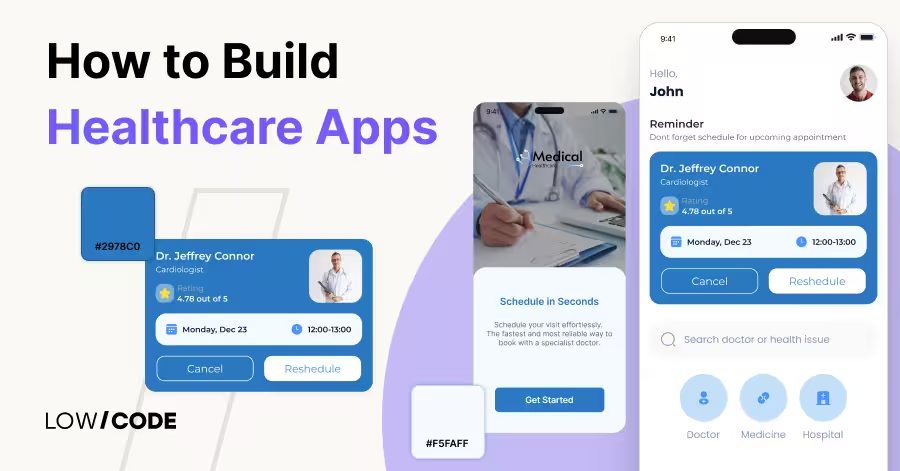
How to Build Healthcare Apps | Complete 2026 Guide
Learn how to build secure healthcare apps in 2026. Explore costs, compliance, features, and trends in our complete healthcare app development guide
Custom App Development
Webflow
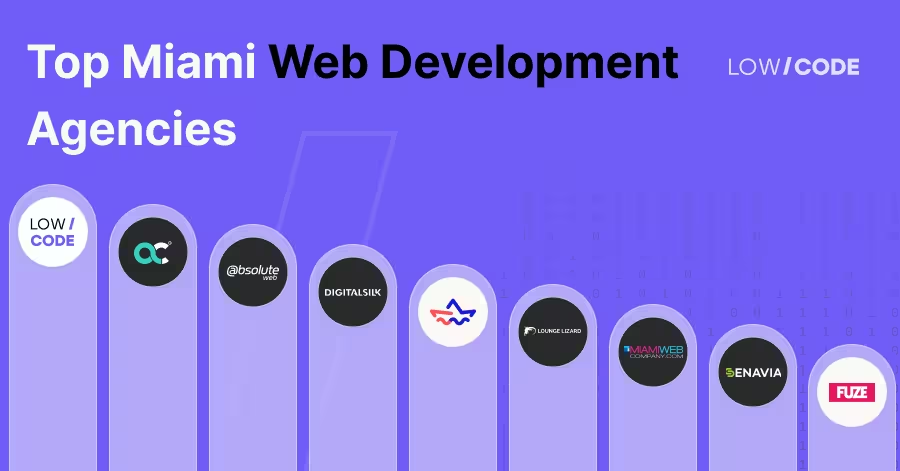
Best 9 Web Development Agencies in Miami (2026)
Find the best web development agency in Miami for your startup. Our 2026 list features fast, trusted teams that help you launch and grow fast
Custom App Development
10 Best Custom Dashboard Development Companies in 2026
Finding the right custom dashboard development company is harder than it looks; most lists blur design agencies with actual builders. Here are 10 worth evaluating.
Custom App Development
How to Build PropTech Apps using Low-code
Learn how to build PropTech apps using low-code platforms. Covers features, workflows, integrations, costs, and scaling real estate solutions.
Why businesses trust LOW/CODE Agency for custom software and AI development


