

How to Build a Peer-to-Peer Marketplace with FlutterFlow
12 min
read
Learn how to create a peer-to-peer marketplace using FlutterFlow with step-by-step guidance and best practices.


A FlutterFlow peer-to-peer marketplace is achievable, but P2P platforms carry a challenge that standard marketplaces do not: every user is simultaneously a buyer and a seller, and fraud risk is structurally higher when no curator stands between parties.
The infrastructure that enables trust on a P2P platform is entirely buildable in FlutterFlow. Getting there requires planning for identity verification, payment architecture, and dispute handling from the start, not as phase-two features.
Key Takeaways
- Dual-role users: Every registered user can list items and purchase from others; role switching is driven by action, not account type.
- Stripe Connect for payouts: Seller proceeds route through Stripe Connect after platform commission deduction on transaction completion.
- Trust mechanisms are essential: User rating systems, identity verification prompts, and review histories build the trust layer P2P platforms require.
- In-app chat is standard: Real-time buyer-seller messaging for item questions, negotiation, and coordination is a standard Firestore feature.
- Fraud risk is higher here: P2P platforms face more fraud exposure than curated marketplaces; identity verification and transaction monitoring require deliberate planning.

What Can FlutterFlow Build for a Peer-to-Peer Marketplace?
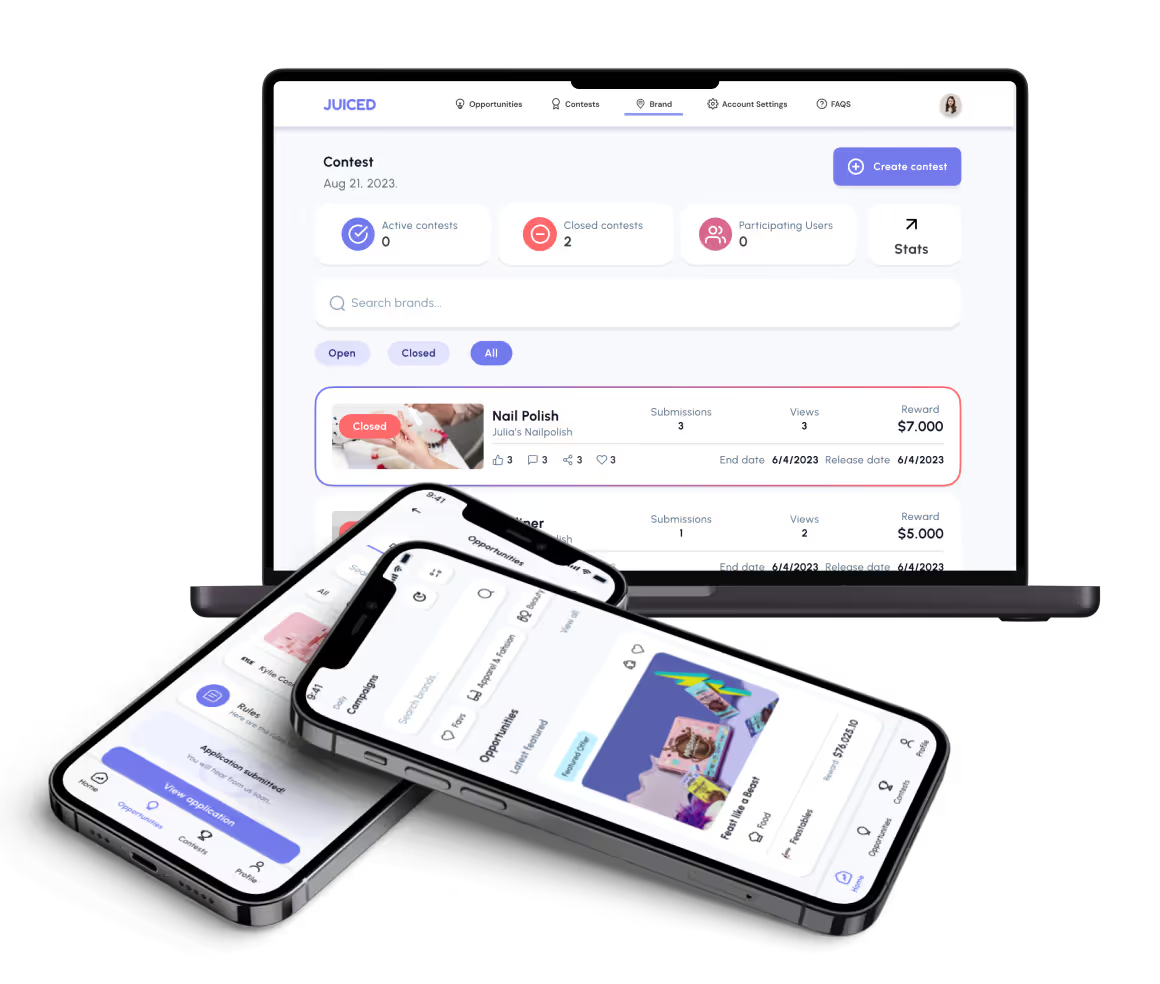
FlutterFlow can build the full P2P marketplace layer: listing creation, browse and search, offer negotiation, Stripe Connect payments, in-app messaging, identity verification prompts, ratings, and dispute escalation. Each feature depends on the right backend and payment architecture.
Whether you can build a SaaS with FlutterFlow is directly relevant here: P2P marketplaces share the same architectural patterns as multi-tenant SaaS platforms, and the answer informs what to expect.
User Listing Creation with Photos and Pricing
Any registered user creates item listings with multiple photos, description, category tags, condition rating, and asking price. Photo uploads route to Firebase Storage with compressed previews for fast listing browse.
Browse and Search by Category and Location
Buyers browse listings filtered by category, location radius, price range, condition, and keyword. Sort options by recency or price allow buyers to find relevant listings without scrolling the full catalogue.
Offer and Negotiation Flow
Buyers make offers below the listed price. Sellers accept, decline, or counter-offer through an in-app negotiation thread. Each state change triggers a push notification to the other party.
Stripe Connect Secure Payment
Accepted transactions process through Stripe Connect, holding funds until the transaction completes. Seller proceeds minus platform commission route to the seller's connected bank account on completion.
In-App Buyer-Seller Messaging
Real-time Firestore-backed chat between buyer and seller is scoped to each listing inquiry. Messaging covers item questions, pickup coordination, and post-sale support without leaving the app.
Identity Verification Prompt
Users are prompted to verify their identity via a KYC API integration before listing high-value items or completing large transactions. Verification status displays on user profiles to build trust.
Mutual Rating and Review System
After each completed transaction, buyer and seller rate each other. Aggregate ratings display on user profiles, creating a visible trust signal that influences future transaction decisions.
Dispute and Platform Escalation
Either party flags an unresolved transaction issue. The admin reviews the case with full messaging history and mediates resolution. Escalation paths and timelines are configurable for each dispute category.
These features form a complete P2P marketplace architecture. The trust layer, fraud prevention, and payment infrastructure are what separate a working platform from one that looks good in a demo.
How Long Does It Take to Build a P2P Marketplace with FlutterFlow?
A simple P2P MVP with listings, messaging, and Stripe payment takes 8-14 weeks. A full-featured platform with negotiation, identity verification, ratings, dispute resolution, and admin tools takes 18-28 weeks.
The phased approach is the right default for P2P platforms. Launch listing and payment first, validate the transaction model, then add identity verification and dispute flows in phase two.
- Simple MVP timeline: Listings, browse, in-app chat, and Stripe payment delivered in 8-14 weeks with an experienced FlutterFlow developer.
- Full platform timeline: Negotiation flow, KYC identity verification, mutual ratings, dispute escalation, and admin dashboard add 10-14 weeks to the MVP scope.
- Identity verification API choice: Persona and Onfido differ significantly in integration complexity; confirm your KYC provider before estimating the timeline.
- Negotiation flow complexity: Offer, counter-offer, expiry timers, and state management add meaningful engineering time to the transaction layer.
- Dispute resolution design: Well-defined escalation paths and resolution timelines must be designed before building the dispute UI, or the screens will need rebuilding.
- FlutterFlow speed advantage: Pre-built listing components, Firestore real-time sync, and visual UI tools reduce front-end development time by 50-60% compared to custom builds.
What Does It Cost to Build a FlutterFlow P2P Marketplace?
FlutterFlow P2P marketplace builds run $25,000-$80,000 for developer builds and $35,000-$110,000 for agency builds with fraud architecture and KYC integration included. Custom equivalents typically cost $150,000-$400,000+.
FlutterFlow pricing plans are a predictable fixed cost. The variable budget in P2P marketplace development is KYC verification and fraud management infrastructure.
- Platform cost: $0-$70/month depending on plan; production P2P marketplaces require Pro or Teams plan for custom domains and collaborative development.
- Developer cost: FlutterFlow developers charge $50-$150/hour; a full P2P marketplace build costs $25,000-$80,000 depending on KYC and negotiation complexity.
- Agency cost: Agency builds with fraud architecture review and payment compliance run $35,000-$110,000 for a full-featured P2P platform.
- Ongoing variable costs: Stripe Connect transaction fees, Firebase hosting, KYC API per-verification costs, and push notification infrastructure.
- Hidden costs to plan for: Fraud detection tooling subscription, KYC API per-verification fees at scale, dispute resolution admin support costs, and ongoing trust infrastructure maintenance.
How Does FlutterFlow Compare to Custom Development for a P2P Marketplace?
FlutterFlow delivers a functional P2P marketplace in 8-28 weeks at $25,000-$110,000. Custom development takes 24-48 months at $150,000-$400,000+. The tradeoff is AI fraud detection capability and transaction volume ceiling, not listing or payment functionality.
For niche P2P categories, community resale platforms, and MVP validation, FlutterFlow's speed and cost advantage is significant. For high-volume platforms requiring algorithmic recommendation and real-time fraud scoring, custom development closes the gap.
- Speed advantage is real: FlutterFlow delivers the listing, messaging, and payment UI in a fraction of the time required for a custom build.
- Cost advantage is substantial: FlutterFlow builds cost 25-40% of equivalent custom development for the core P2P transaction layer.
- AI fraud detection is beyond native FlutterFlow: Real-time fraud scoring, pattern detection at volume, and machine learning-based risk engines require third-party integration or custom development.
- Search at scale requires external tools: Firestore full-text search does not scale to millions of listings; Algolia or Typesense must be planned from the architecture phase.
- When FlutterFlow wins: Niche P2P categories (vintage, collectibles, local goods), community resale platforms, and MVPs validating the marketplace model.
- When custom wins: Large-scale P2P platforms requiring AI fraud detection, real-time transaction monitoring at high volume, and algorithmic recommendation engines.
If your P2P platform requires AI fraud detection or high-volume transaction monitoring, alternatives to FlutterFlow covers platforms designed for higher-complexity marketplace architectures.
What Are the Limitations of FlutterFlow for a P2P Marketplace?
FlutterFlow has specific gaps for P2P platforms: no native AI fraud detection, no built-in KYC verification, Firestore search limits at scale, and App Store scrutiny for payment-handling platforms. These require deliberate planning before the first screen is built.
Understanding FlutterFlow at scale is critical for P2P platforms where listing volume growth quickly strains Firestore's native search capabilities.
- Fraud risk is structurally higher in P2P: AI-powered fraud detection is not native to FlutterFlow; third-party services like Sift or Sardine must be integrated via API for meaningful fraud prevention.
- Identity verification requires a KYC API: Persona, Onfido, or similar services integrate via Cloud Functions, not native FlutterFlow; this integration adds cost and timeline to any identity-verified P2P platform.
- Real-time transaction monitoring: Detecting suspicious patterns across transaction data requires external tooling that operates beyond standard Firestore data monitoring capabilities.
- App Store approval scrutiny: P2P platforms with payment processing and user-generated content face additional review scrutiny and potential policy changes that can delay launch.
- Negotiation flow complexity: Offer and counter-offer flows with expiry timers are among the more complex workflows to implement correctly in FlutterFlow's visual logic editor.
- Search scale ceiling: Full-text search across millions of listings requires Algolia or Typesense; planning for this from the architecture phase is significantly cheaper than migrating after launch.
These limitations are most relevant for platforms expecting rapid growth. Niche and community P2P platforms with controlled listing volumes are far less likely to encounter them in the first 12 months.
How Do You Find the Right Team for a FlutterFlow P2P Marketplace?
The right team for a P2P marketplace build combines Stripe Connect P2P payout experience, KYC API integration capability, Firestore listing data modelling expertise, and demonstrated fraud awareness in marketplace design. Platform skills alone are not sufficient.
Choosing from top FlutterFlow agencies with P2P payment and identity verification experience is the most important hiring decision for a peer-to-peer marketplace build.
- Stripe Connect P2P experience is essential: A developer who has built seller onboarding, payout routing, and refund flows in Stripe Connect P2P context delivers reliably; one learning it on your project creates payment architecture risk.
- Freelancer vs agency: P2P fraud risk and Stripe Connect complexity warrant an agency with two-sided marketplace experience rather than a generalist freelancer.
- Red flags when hiring: No Stripe Connect P2P examples, no mention of fraud risk planning, no KYC integration in portfolio, and no live P2P marketplace to reference.
- Questions to ask: "How do you approach fraud risk in a P2P context?" and "What KYC API do you recommend and what does your integration approach look like?"
- Expected timeline from a good team: Fraud and verification architecture design in weeks 1-2, full scoping in weeks 2-4, and phased build starting in week 5 through to launch.
A team that puts trust infrastructure architecture before screen design is the distinction that determines whether your P2P platform earns user confidence or loses it in the first month.
Conclusion
FlutterFlow can build a peer-to-peer marketplace. Listings, messaging, negotiation flows, Stripe Connect payments, and trust systems are all achievable within the platform's capabilities.
The constraint is fraud risk and identity verification at scale. These require experienced developers who plan for trust infrastructure from day one, not teams who treat KYC and dispute resolution as phase-two features.
Define your fraud tolerance, identity verification requirements, and negotiation flow before scoping. Then engage a team with live P2P marketplace and Stripe Connect experience. That sequence prevents the most expensive rework.
Building a Peer-to-Peer Marketplace with FlutterFlow? Here Is How LOW/CODE Agency Approaches It.
Most P2P marketplace builds stall on fraud architecture and identity verification decisions that were left too late. By the time these gaps surface, the transaction layer is already built and the rework is expensive.
At LOW/CODE Agency, we help SMBs compete with AI-powered software built for them — custom web and mobile apps, RAG systems, chatbots, and intelligent agents delivered by a senior development team. We scope, architect, and build P2P marketplace platforms in FlutterFlow with fraud risk planning, KYC integration, and Stripe Connect payout architecture designed into the foundation from the first week.
- Fraud architecture planning: We map your P2P transaction risk model and design the fraud prevention layer before any payment screen is built or KYC provider is selected.
- Stripe Connect configuration: We implement seller onboarding, payout routing, commission logic, escrow handling, and refund flows for two-sided P2P transactions.
- KYC API integration: We integrate Persona, Onfido, or your chosen provider for identity verification, connecting verification status to listing permissions and transaction limits.
- Search architecture: We design your listing search layer with Algolia or Typesense from day one for platforms expecting meaningful listing volume, preventing post-launch migration.
- Trust system design: We build mutual rating, review aggregation, and profile verification display to create the visible trust signals P2P buyers need before transacting.
- Dispute resolution workflow: We design escalation paths, admin review interfaces, and resolution timelines before building the dispute UI, so the screens match your actual process.
- Full product team: Strategy, design, development, and QA from a single team with marketplace experience and no handoff gaps between disciplines.
We have built 350+ products for clients including Coca-Cola, American Express, and Sotheby's. We know where P2P marketplace builds fail and we address those risks before they cost you launch delays.
Related Articles
- How to Build a Physiotherapy App with FlutterFlow
- How to Build Personal Finance Apps with FlutterFlow
- How to Build a Performance Review System with FlutterFlow
- How to Build a Payroll Calculator App with FlutterFlow
- How to Build a Patient Portal with FlutterFlow
- How to Build a Partner CRM Platform with FlutterFlow
Last updated on
September 24, 2026
.

Jesus is a visionary entrepreneur and tech expert. After nearly a decade working in web development, he founded LOW/CODE Agency to help businesses optimize their operations through custom software solutions.


FAQs
What are the key steps to create a peer-to-peer marketplace in FlutterFlow?
Can FlutterFlow handle real-time messaging between users in a marketplace?
How do I implement secure payments in a FlutterFlow marketplace app?
Is FlutterFlow suitable for scaling a peer-to-peer marketplace app?
What are common challenges when building a marketplace with FlutterFlow?
How can I test and launch my FlutterFlow marketplace app effectively?
Related Articles

FlutterFlow
How to Build a Group Discussion App with FlutterFlow
Learn how to create a group discussion app using FlutterFlow with step-by-step guidance and best practices for smooth development.

FlutterFlow
How to Build an Auto Service Booking App with FlutterFlow
Learn how to create an auto service booking app using FlutterFlow with step-by-step tips and best practices for smooth development.

FlutterFlow
How to Build an AI Recommendation App with FlutterFlow
Learn how to create an AI recommendation app using FlutterFlow with step-by-step guidance and best practices for seamless integration.

FlutterFlow
How to Build a Job Marketplace App with FlutterFlow
Learn how to create a job marketplace app using FlutterFlow with step-by-step guidance and tips for a smooth development process.

Why customers trust us for no-code development


