

Enterprise Software Examples and Use Cases
9 min
read
Explore enterprise software examples across industries and functions. Learn about ERP, CRM, HR systems, and custom solutions that power large organizations.

Enterprise software encompasses the systems that run large organizations from financial management to customer relationships to human resources. Understanding examples across categories helps you recognize patterns, evaluate options, and communicate about technology needs.
This guide provides examples of enterprise software across major categories, industries, and use cases.
What Are the Major Categories of Enterprise Software?
Understanding the landscape.
What types of enterprise software exist?
Enterprise software categories include ERP, CRM, HRM, SCM, BI, collaboration tools, and industry-specific systems—each addressing different operational needs.
Major categories:
Most enterprises use software across multiple categories. If you want to understand the underlying stack behind these systems, explore the coreenterprise software development tools used to build and operate them.
ERP (Enterprise Resource Planning) Examples
Integrated business management systems.
What are major ERP platforms?
Major ERP platforms include SAP S/4HANA, Oracle Cloud ERP, Microsoft Dynamics 365, and newer cloud-native options like NetSuite and Workday.
ERP platform examples:
ERP selection depends on industry, size, and existing technology.
What do ERP systems do?
ERP systems integrate core business processes—finance, procurement, manufacturing, inventory, HR, and sales—into a unified platform with shared data.
ERP capabilities:
- Financial management: Handles general ledger, accounts payable, receivable, and reporting.
- Procurement management: Manages purchasing processes and supplier relationships centrally.
- Inventory control: Tracks stock levels, warehousing operations, and replenishment planning.
- Manufacturing planning: Supports production scheduling and shop floor coordination.
- HR modules: Integrates workforce management or connects with dedicated HR systems.
- Sales distribution: Manages order processing, fulfillment, and shipping workflows.
- Enterprise analytics: Provides cross-functional reporting and consolidated business insights.
Integration across functions is ERP's primary value.
CRM (Customer Relationship Management) Examples
Managing customer interactions.
What are major CRM platforms?
Salesforce dominates enterprise CRM, with Microsoft Dynamics, HubSpot, Oracle, and specialized players serving different market segments and needs.
CRM platform examples:
Salesforce is the most common enterprise choice.
What do CRM systems do?
CRM systems manage customer data, sales processes, marketing campaigns, service interactions, and analytics about customer relationships across the lifecycle.
CRM capabilities:
- Contact management: Centralizes customer and prospect data across departments.
- Sales automation: Manages pipeline stages, forecasting accuracy, and quote generation.
- Marketing automation: Executes campaigns and tracks lead lifecycle progression.
- Service management: Handles support cases, SLAs, and knowledge base access.
- Customer analytics: Delivers insights through reporting and performance dashboards.
- System integration: Connects CRM data with ERP and other enterprise systems.
CRM is often the customer-facing hub of enterprise technology.
HRM (Human Resource Management) Examples
Managing the employee lifecycle.
What are major HRM platforms?
Major HRM platforms include Workday for enterprise, SAP SuccessFactors, Oracle HCM, ADP for payroll-centric needs, and mid-market options like BambooHR.
HRM platform examples:
HRM selection often follows ERP or stands alone.
What do HRM systems do?
HRM systems manage recruiting, onboarding, performance, compensation, benefits, learning, and workforce analytics across the employee lifecycle.
HRM capabilities:
- Recruiting management: Manages job postings and applicant tracking workflows.
- Employee onboarding: Standardizes new hire documentation and orientation processes.
- Core HR records: Maintains employee data and organizational structure centrally.
- Performance management: Tracks goals, reviews, and structured feedback cycles.
- Compensation administration: Oversees salary structures and benefits management.
- Learning development: Coordinates training programs and skill development initiatives.
- Workforce planning: Provides analytics for succession and capacity forecasting.
Modern HRM emphasizes employee experience.
Industry-Specific Enterprise Software Examples
Vertical solutions for specific sectors.
Healthcare enterprise software examples
Healthcare enterprises use EHR systems (Epic, Cerner), revenue cycle management, clinical decision support, and specialized operational systems.
Healthcare examples:
Healthcare software faces unique regulatory requirements.
Financial services enterprise software examples
Financial services use core banking systems, trading platforms, risk management, and specialized systems for specific functions.
Financial services examples:
Financial software requires high reliability and compliance. Selecting the best debt collection software with robust compliance features can help ensure that your recovery processes adhere to legal standards while increasing efficiency.
Manufacturing enterprise software examples
Manufacturing enterprises use MES (manufacturing execution), PLM (product lifecycle), quality management, and specialized operational technology.
Manufacturing examples:
Manufacturing integrates IT with operational technology.
Retail enterprise software examples
Retail enterprises use POS systems, inventory management, e-commerce platforms, and customer engagement tools.
Retail examples:
Retail focuses on customer experience and operations.
Custom Enterprise Software Examples
Built-to-fit solutions.
What custom enterprise software do companies build?
Companies build custom software for proprietary processes, competitive differentiators, integration needs, and specialized requirements that packaged software cannot address.
Custom software examples:
- Proprietary trading systems: Support competitive algorithms for financial institutions.
- Custom CRM tools: Align sales workflows with industry-specific requirements.
- Operations platforms: Manage unique internal processes and workflow coordination.
- Customer portals: Deliver branded digital experiences and self-service access.
- Integration platforms: Connect legacy systems with modern enterprise applications.
- Industry-specific tools: Address specialized regulatory and operational demands.
Custom when the process is the competitive advantage. Many organizations choose custom solutions because of the measurablecustom enterprise software benefits around flexibility, integration, and long-term control.
What does LOW/CODE Agency build?
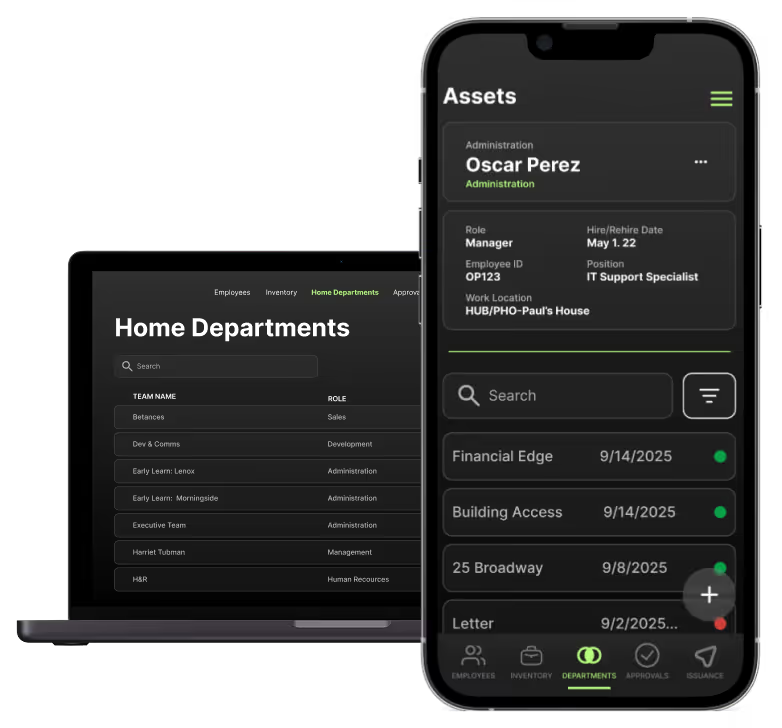
At LOW/CODE Agency, we build custom enterprise applications including internal tools, customer portals, workflow systems, and mobile apps using no-code/low-code platforms at a fraction of traditional cost.
Examples of our work:
- Internal operations apps: Build custom workflows tailored to core business processes.
- Customer-facing portals: Create branded platforms for client access and interaction.
- Field service apps: Provide mobile tools for distributed and remote teams.
- Data collection systems: Develop structured forms and automated workflow tracking.
- Integration solutions: Connect enterprise systems to ensure consistent data flow.
- MVP development: Launch rapid prototypes to validate product-market fit.
We've built 450+ applications across industries. If you’re evaluating partners, here’s what modernenterprise software development services should include — from architecture to integration to long-term scalability.
How Do You Choose Enterprise Software?
Selection guidance.
What factors drive selection?
Enterprise software selection considers functional fit, integration requirements, total cost of ownership, vendor stability, implementation complexity, and organizational readiness.
A structuredenterprise software development planning phase prevents scope creep and aligns stakeholders early.
Selection factors:
No single factor should dominate. Understanding the fullenterprise software development process helps reduce implementation risk and avoid timeline surprises.
Build, buy, or configure?
Buy and configure for standard processes with good package fit. Build custom for differentiating processes or poor package fit. Most organizations do both for different needs.
Decision framework:
- Buy standard: Choose packaged software for commodity, non-differentiating functions.
- Heavy configuration: Customize existing platforms when needs exceed default capabilities.
- Low-code custom: Build quickly when moderate differentiation and speed are priorities.
- Full custom: Develop from scratch for highly unique, strategic requirements.
Match approach to strategic importance. If you're unsure whether packaged tools are enough, this comparison ofstandard vs enterprise software development clarifies when custom makes strategic sense.
Conclusion
Enterprise software spans multiple categories: ERP, CRM, HRM, industry-specific, and custo,m each serving different organizational needs. Understanding examples across categories helps you communicate about technology needs and evaluate options.
Most enterprises use a mix of packaged and custom software, selecting based on strategic importance, functional fit, and total cost of ownership. Low-code development has expanded custom software accessibility, making custom solutions practical for more use cases.
Following provenenterprise software development best practices ensures your systems evolve with the organization instead of becoming technical debt.

Related Articles
- Cursor AI vs Amazon Q: Enterprise AI Coding Compared
- Cursor AI vs Aider: Terminal AI vs Full IDE
- Standard vs Enterprise Software Development
- Enterprise Software Development Tools & Stack
- Enterprise Software Development Tips (2026 Guide)
- Enterprise Software Development Services
Partner with our mobile app development experts to get your product to market faster.
Work with our custom app development specialists to build software that fits your workflow perfectly.
Last updated on
September 28, 2026
.

Jesus is a visionary entrepreneur and tech expert. After nearly a decade working in web development, he founded LOW/CODE Agency to help businesses optimize their operations through custom software solutions.


FAQs
What is the most common enterprise software used today?
How many enterprise systems does a typical company operate?
Is cloud or on-premise enterprise software better?
How long does an enterprise software implementation take?
What is the future of enterprise software development?
When should a company consider custom enterprise software?
Related Articles

Mobile App Development
Custom App Development
Real Estate Mobile App Development (Founder's Guide)
A comprehensive founder's guide to real estate mobile app development in 2025 — covering features, cost, and expert insights to help you build smarter

Custom App Development
How to Start an E-commerce Business Using Low-code
Learn how to start an e-commerce business using low-code platforms. Covers tools, setup steps, payments, automation, and scaling basics.

Custom App Development
How to Build a DoorDash-Like App Using Low-code
Learn how to build a DoorDash-like app using low-code. Covers features, tech stack, workflows, costs, and scaling a food delivery platform.
Custom App Development
Custom CRM Development | Full Guide for 2026
Learn how to build a custom CRM in 2026 using no-code tools. Full guide with features, cost, steps, and expert tips.
Why customers trust us for no-code development


