

Best 9 Native App Development Companies (Top Rated)
17 min
read
Find the best Native App Development Companies for your startup. Our 2026 list features fast, trusted teams that help you launch and grow fast

Why Choosing the Right Native App Partner Is a Business Decision
Choosing a native app partner is not a technical preference. It is a business decision that affects how your app performs, how users experience it, and how much it costs to maintain over time.
When native apps are built without strong platform understanding, problems appear in speed, stability, and usability. These issues grow quietly. Poor early decisions increase long-term costs, create platform risks during OS updates, and limit how the product can scale.
The right partner helps you avoid these traps by building with performance, UX, and long-term reliability in mind from day one.
 'Mobile app development with LowCode Agency' class='blog_banner_image'>
What Native App Development Actually Means
Native app development is about building apps that feel natural on the device they run on. The focus is not how the app is coded, but how it performs, behaves, and integrates with the platform from a user and business point of view.
- Built specifically for one platform
Native apps are designed to work only on one operating system at a time. This allows the app to fully follow platform rules, patterns, and behaviors without compromise. - Optimized performance and stability
Because the app is tailored to the platform, it runs faster, feels smoother, and handles complex interactions without lag or unexpected issues. - Consistent and familiar user experience
Native apps match how users expect the platform to look and behave. This reduces learning effort and improves trust, retention, and overall usability. - Full access to device capabilities
Native apps can use system features like notifications, background tasks, sensors, and security features without limitations or workarounds. - Clear difference from cross-platform apps
Unlike cross-platform apps that adapt one codebase everywhere, native apps prioritize quality and control over reuse, which matters for long-term product reliability.
In short, native app development is about outcomes. It delivers speed, reliability, and a platform-native experience that holds up as usage and expectations grow.
Read more | Best No-Code Mobile App Builders
Why Businesses Still Choose Native Apps in 2026
Even with many development options available, native apps remain the choice for companies building serious, long-term products. The reason is simple. Native apps reduce risk when performance, experience, and stability truly matter.
- Better performance and responsiveness
Native apps are faster and smoother because they are built to work directly with the platform. This matters for apps with heavy usage, real-time interactions, or complex user flows. - Stronger UX aligned with platform guidelines
Native apps follow platform design patterns closely. This creates familiar experiences that users trust, reducing friction and improving retention without extra design work. - Higher security and system-level control
Native apps offer deeper control over security features like authentication, permissions, and data handling. This is critical for apps handling sensitive or regulated data. - Stability for long-term, high-usage products
When an app is core to the business, native development provides predictable behavior as usage grows and platforms evolve.
In 2026, companies choose native apps not for trends, but for reliability. When the product must perform consistently at scale, native remains the safest foundation.
Read more | Can I Build a Mobile App with Bubble?
How We Evaluated the Best Native App Development Companies
Choosing the right native app development partner requires looking beyond marketing claims. We evaluated companies based on how well they deliver real, long-term value through native apps that are stable, usable, and built to evolve with the business.
- Proven experience in native iOS and Android projects
We looked for teams with a clear track record of shipping native apps that perform well in real-world conditions, not just demos or early-stage prototypes. - Quality of delivered products and case studies
Strong case studies show more than features. They explain problems, decisions, outcomes, and how the product improved performance, usability, or operational stability. - Product thinking and UX capability
The best companies think beyond code. They understand user behavior, platform expectations, and how UX decisions affect adoption, retention, and long-term success. - Long-term support and maintenance approach
Native apps require ongoing care. We prioritized teams that plan for updates, scaling, and platform changes instead of treating delivery as a one-time task. - Communication clarity and ownership
Clear communication and ownership reduce risk. The right partners explain trade-offs, raise concerns early, and stay accountable throughout the product lifecycle.
Together, these criteria help separate vendors from true product partners. The companies that rank highest consistently show discipline, clarity, and long-term thinking.
Read more | Cross-Platform Mobile App Development Guide
Best 9 Native App Development Companies
1. LowCode Agency
At LowCode Agency, native app development starts with product thinking, not code. We focus on how your business operates, how users interact with the app, and how the product needs to evolve over time.
The goal is to build native-quality mobile apps that support real workflows, not just ship features.
- Strategy-first native app development
Before building anything, we clarify your product vision, map operational logic, and design flows that reduce friction across devices. This ensures the app fits how teams actually work. - Native performance using low-code platforms
We use FlutterFlow to deliver native iOS and Android performance, combined with Supabase, Firebase, or Xano for scalable backend logic. This approach balances speed, control, and long-term flexibility.

- Built for operations and scalability
Our apps are designed to support daily operations, not just user interactions. Architecture decisions are made with growth, usage, and maintenance in mind. - Product partner, not a delivery vendor
With over 350 products shipped across logistics, finance, retail, and real estate, we work as an embedded product team. We stay involved as the app evolves, not just until launch.
For us, native app development is not only about speed or performance. It is about building mobile products that become a reliable part of how your business runs and grows.


Item | Details |
Read reviews | |
Tech stack | Glide, Bubble, FlutterFlow, Webflow, Make, n8n, Zapier, and Airtable |
Team Size | 40+ |
Based in | US-based (Miami) |
Total Apps Built | 350+ | LowCode Agency Case Studies |
Types of Apps Built | AI-powered apps, SaaS platforms, internal tools, marketplaces, CRMs, MVPs, mobile apps, automation tools. |
Notable Apps | CocaCola |
Founded | 2020 |
Social Media |
2. Rightpoint
Rightpoint is a digital product consultancy specializing in high-end native mobile applications for enterprise and mid-market companies.
Their work spans customer apps, employee tools, commerce experiences, and connected product ecosystems.
With deep expertise in UX, cloud architecture, and enterprise integrations, they build native applications designed for scale, complexity, and long-term reliability.
As a traditional engineering consultancy, Rightpoint delivers highly customized solutions but requires multi-disciplinary teams and multi-month development cycles.
This makes them an ideal partner for enterprise organizations seeking full-stack, deeply integrated native applications rather than rapid iteration or low-maintenance mobile tools.
Read more | Business Mobile App Development Guide
3. Sidebench
Sidebench builds native mobile apps that combine modern UX, product strategy, and advanced engineering for high-growth companies and enterprises.
Their work includes healthcare apps, social platforms, consumer mobile experiences, and operational tools requiring secure backend infrastructure.
Their strategic approach places heavy emphasis on discovery, user research, and architecture design, resulting in highly polished apps but also longer timelines and larger budgets.
Sidebench is a strong choice for organizations needing native apps with advanced functionality, though not for teams requiring fast iteration.
Read more | Ecommerce Mobile App Development Guide
4. Fueled
Fueled is a top-tier mobile development agency focused on crafting high-performance native apps for startups and large brands.
They combine strong product strategy with premium interface design, producing apps that emphasize speed, visual clarity, and retention.
Their portfolio spans eCommerce apps, subscription products, social platforms, and fintech solutions. Fueled is known for helping companies bring consumer-facing apps to market quickly while maintaining a high level of polish and commercial viability.
Read more | How to hire mobile app developers
5. ArcTouch
ArcTouch specializes in designing and developing native mobile apps for enterprise clients, focusing on reliability, scalability, and long-term support. Their expertise includes predictive mobile interfaces, IoT-driven applications, and connected device ecosystems.
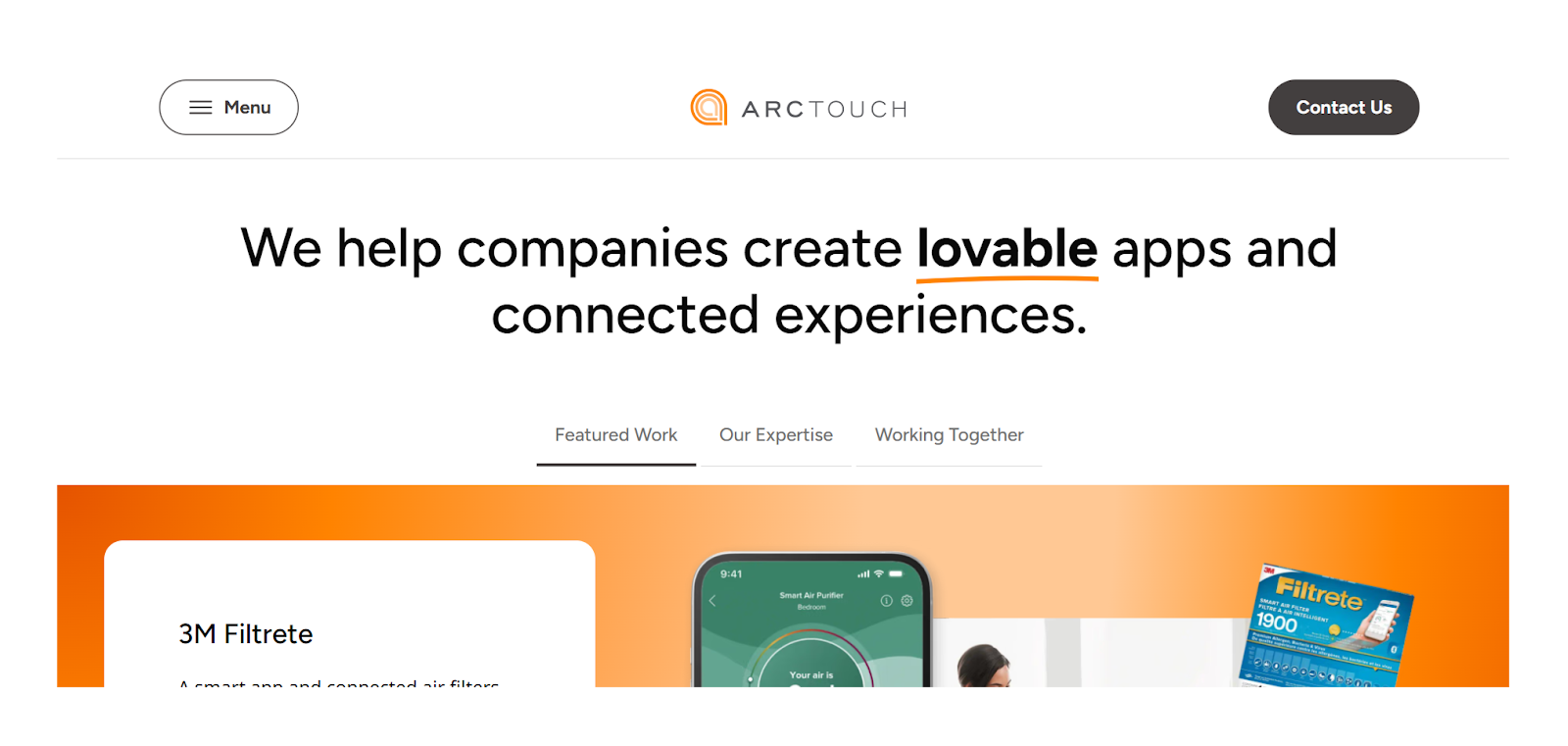
They are known for collaborating with large companies that require custom mobile solutions integrated with legacy stacks, cloud services, and multi-platform environments.
Read more | Mobile app development guide
6. STRV
STRV is a design and engineering studio building native mobile apps for funded startups and high-growth companies. Their work prioritizes sleek UI, smooth animations, and user-friendly flows, with a strong reputation in the consumer, dating, and lifestyle sectors.
They're known for partnering with fast-paced product teams and supporting ongoing mobile growth initiatives post-launch.
Read more | Mobile app MVP development guide
7. Code and Theory
Code and Theory is a global digital product agency focused on large-scale native mobile apps for enterprise and Fortune 500 clients.
After integrating Y Media Labs (YML), the team expanded its capabilities in mobile engineering, product strategy, and service design across industries like finance, retail, healthcare, and media.
They’re best suited for organizations needing deep technical integrations and multi-disciplinary teams.
Code and Theory typically works through structured discovery and architecture phases, delivering native apps built for scale, reliability, and mission-critical customer experiences.
Read more | Rapid mobile app development guide
8. Space-O Technologies
Space-O Technologies is a native app development company offering ios app development services alongside high-performance Android applications using Swift, Kotlin, and Java. Since 2010, the company has delivered 4,400+ mobile apps, including 2,800+ iOS apps and 1,600+ Android apps across healthcare, fintech, on-demand delivery, and e-commerce industries.

Their native development approach prioritizes platform-specific performance, smooth animations, and deep hardware integration. The company has extensive experience building applications across multiple categories, including 54 social networking apps, 40 medical and health apps, and 59 utility apps.
For startups and enterprises that require dedicated native applications with full platform capabilities, Space-O Technologies provides end-to-end development, from product ideation and UI/UX design to testing and deployment on the App Store and Google Play.
| Item | Details |
|---|---|
| Read Reviews | Clutch |
| Tech Stack | Swift, SwiftUI, Kotlin, Java, Xcode, Android Studio, Firebase, AWS |
| Team Size | 250+ |
| Based In | India (serving USA, UK, and the Middle East) |
| Total Apps Built | 4,400+ (iOS: 2,800+ | Android: 1,600+) |
| Types of Apps Built | Native iOS apps, native Android apps, on-demand apps, fintech apps, healthcare apps, social apps |
| Notable Projects | Glovo (50M+ downloads), Mrsool, FTcash |
| Founded | 2010 |
| Social Media | LinkedIn, YouTube, X |
9. Blue Label Labs
Blue Label Labs builds native apps for startups, consumer brands, and enterprise organizations, with a strong focus on product strategy, UX, and multi-platform consistency. Their native work spans eCommerce, social apps, marketplaces, and operational tools.
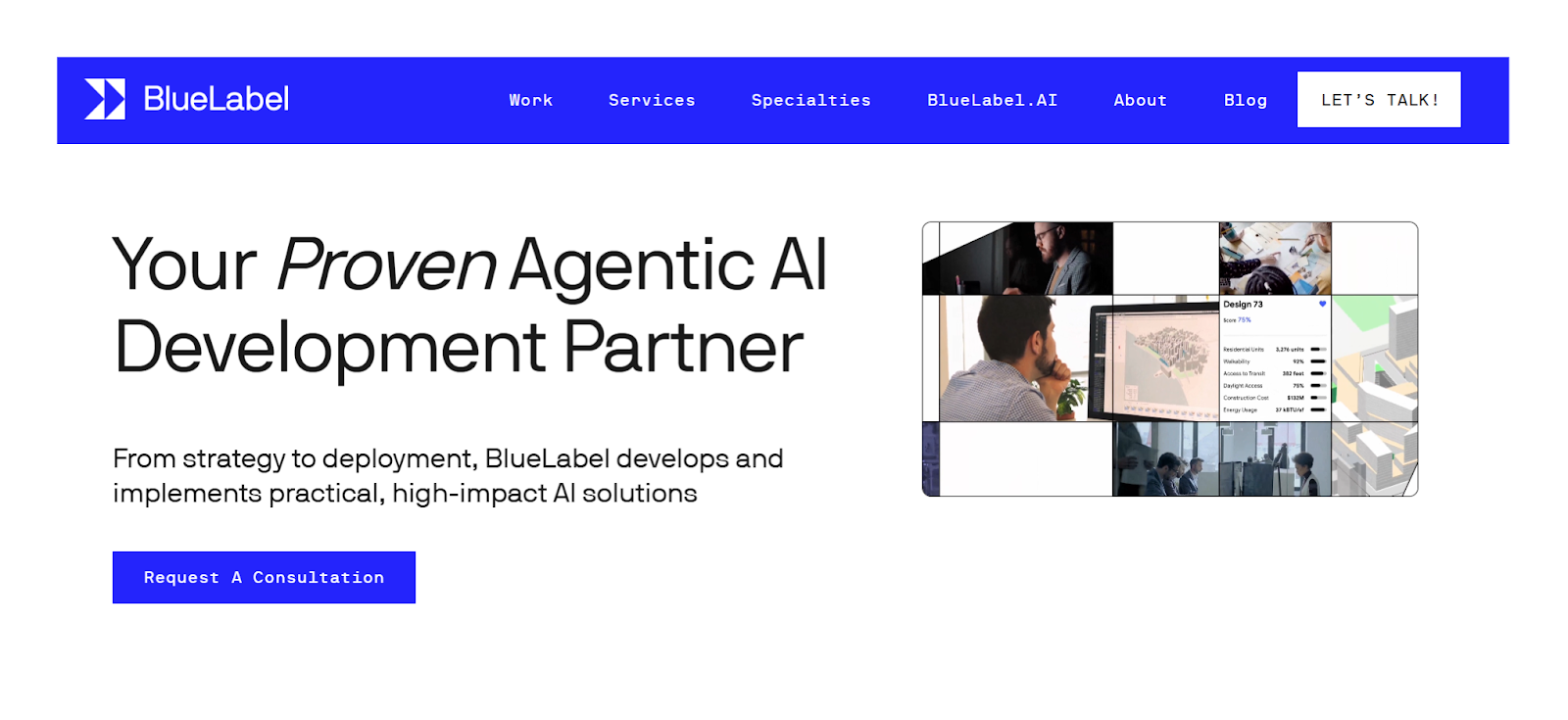
As a full-development studio, they deliver polished apps but follow traditional software lifecycles, meaning higher engineering loads and longer build times than low-code solutions. They’re best for teams with complex mobile requirements and strong product investment.
Read more | Insurance Mobile App Development Guide
10. Zco Corporation
Zco Corporation is one of the longest-running mobile development companies in the US, specializing in enterprise-grade native apps across iOS and Android.
Their engineering teams build complex mobile products involving backend integrations, AR/VR, video processing, and hardware interfacing.
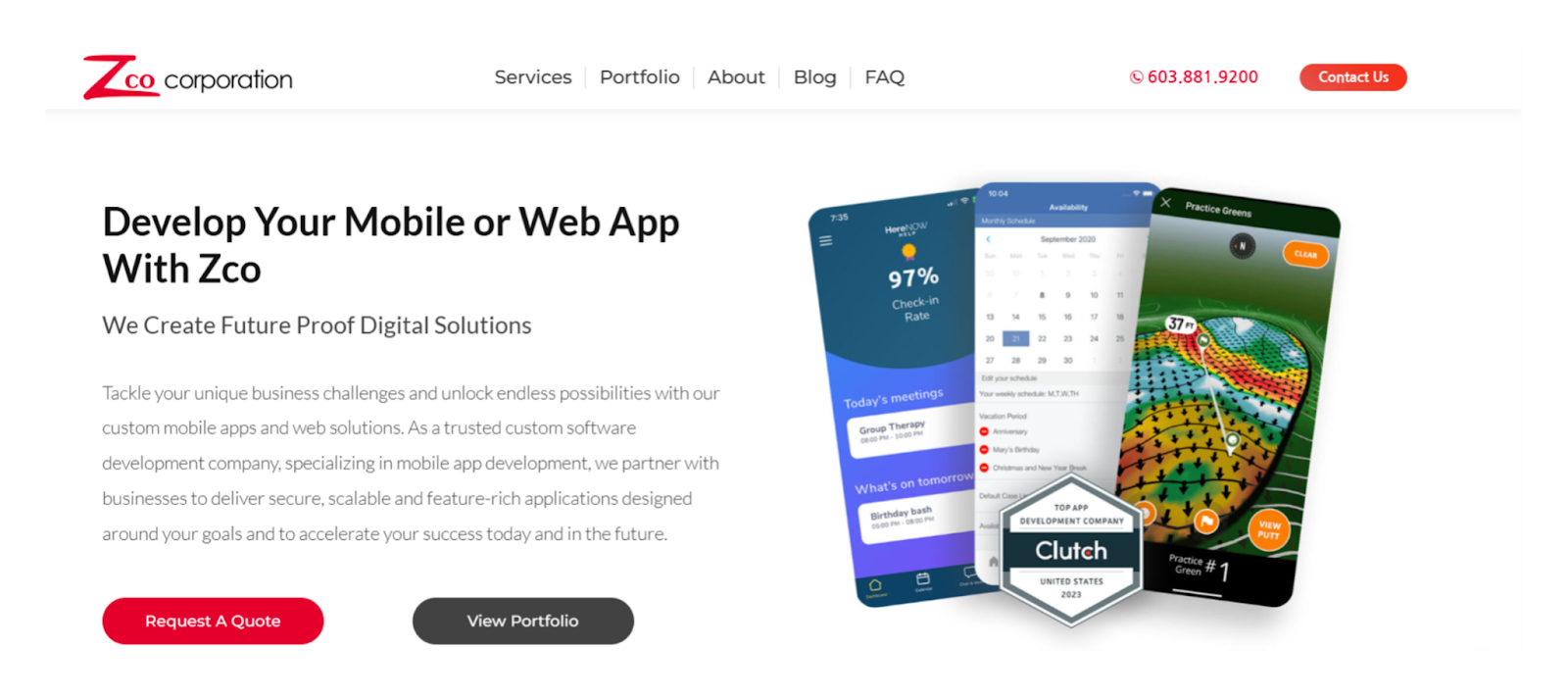
Their native development model is robust but resource-heavy, making Zco ideal for organizations with large-scale mobile needs rather than teams looking for fast iteration or flexible, lightweight mobile tooling.
Read more | Build AI-Powered Mobile Apps
11. Dynamologic Solutions
Dynamologic Solutions is a custom software and mobile app development company focused on building scalable digital products for startups, SMEs, and enterprise organizations.
Their work spans business applications, customer-facing mobile apps, enterprise platforms, eCommerce solutions, and workflow automation systems across multiple industries.
With expertise in mobile development, web technologies, UI/UX design, and cloud-based architectures, they create applications that prioritize performance, usability, and long-term business growth.
| Item | Details |
|---|---|
| Read Reviews | Clutch |
| Tech Stack | Flutter, React Native, Swift, Kotlin, React, Node.js, .NET, AWS |
| Team Size | 100+ |
| Based In | UAE, Pakistan |
| Total Apps Built | 100+ |
| Types of Apps Built | Business apps, enterprise platforms, eCommerce apps, customer-facing mobile applications |
| Notable Apps | Custom enterprise and startup solutions across multiple industries |
| Founded | 2013 |
How to Choose the Right Native App Development Company
Choosing a native app development company is about alignment, not popularity. The right partner understands what you are building, why it matters, and how it should evolve over time. Focusing on these factors helps you avoid expensive mistakes.
- Fit with your product goals and roadmap
The company should understand your long-term vision, not just the first release. Their recommendations should align with where the product is going, not only what is easiest to build now. - Choose a company that builds using low-code
Teams that use low-code responsibly can deliver native apps faster while keeping architecture clean. This reduces time to market without sacrificing performance or future flexibility. - Experience with similar app complexity
Past work should reflect apps with similar scale, usage patterns, and technical depth. This shows the team knows how to handle real-world complexity, not just simple builds. - Communication and project management style
Clear updates, realistic planning, and direct communication reduce surprises. A good partner explains progress and risks in plain language. - Transparency in timelines and costs
Reliable companies are upfront about trade-offs, scope changes, and cost impact. This builds trust and prevents last-minute budget shocks. - Willingness to say no to bad decisions
Strong partners push back when ideas increase risk or technical debt. Saying no at the right time protects the product.
The right native app development company feels like a thinking partner. They help you make better decisions, not just write code faster.
Read more | Best Mobile App Development Agencies
Cost and Timeline Expectations for Native App Development
Cost and timelines vary based on how the app is built and how much complexity is involved. The biggest difference usually appears between traditional native development and low-code based native development.
Traditional Native App Development
Traditional native development relies on manual coding and longer delivery cycles, which impacts both cost and timelines.
- Typical cost and timeline
A native MVP usually costs $70,000 to $120,000 and takes 6 to 8 months. Full-scale apps often reach $120,000 to $300,000+ with timelines extending beyond 9 to 12 months. - Maintenance and updates
Ongoing maintenance typically ranges from $10,000 to $15,000 per month, especially when frequent OS updates, bug fixes, and feature changes are required.
Low-code Native App Development
Low-code native development focuses on faster delivery while keeping native performance and flexibility.
- Typical cost and timeline
A native MVP built with low-code usually costs $25,000 to 45,000 and takes 8 to 12 weeks. Full-scale apps often fall between $70,000 to $90,000, depending on feature depth. - Maintenance and updates
Monthly maintenance is usually lower, around $6,000 to $9,000, because updates, UI changes, and workflow adjustments are easier to manage.
Other factors that affect cost and timelines include feature complexity, third-party integrations, platform-specific requirements, security needs, and how often the product is expected to evolve after launch.
Read more | Real Estate Mobile App Development Guide
Common Mistakes When Hiring Native App Development Companies
Hiring the wrong native app development company often leads to problems that appear months after launch. These mistakes usually come from focusing on short-term delivery instead of long-term product health.
- Choosing agencies without deep native expertise
Some teams claim native experience but rely heavily on wrappers or shortcuts. This leads to performance issues, platform limitations, and unstable behavior over time. - Prioritizing speed over product quality
Rushing development without proper architecture creates technical debt. Fast launches feel good early but increase bug fixes, rewrites, and costs later. - Ignoring long-term maintenance needs
Native apps require ongoing updates for OS changes and device support. Teams that ignore maintenance planning leave businesses exposed to breakage and downtime. - Treating native apps like one-time projects
Native apps are living products, not deliverables. Treating them as one-off builds prevents iteration, improvement, and long-term reliability.
Avoiding these mistakes starts with choosing a partner who thinks in products, not just projects.
Read more | Mobile App Development Challenges
Industries Where Native Apps Deliver the Most Value
Native apps create the most value in industries where performance, reliability, and deep device integration directly affect business outcomes. In these environments, small technical gaps quickly turn into user frustration, risk, or operational failure.
- Fintech and financial services
High security standards, real-time transactions, and sensitive data handling require stable performance and deep system-level control that native apps handle best. - Healthcare and regulated industries
Native apps support secure data access, device integration, and compliance needs while delivering predictable behavior across updates and environments. - E-commerce and marketplaces
Fast load times, smooth checkout flows, and reliable notifications improve conversion rates and repeat usage in high-traffic consumer apps. - Logistics, mobility, and field operations
Offline access, GPS tracking, background processes, and real-time updates work more reliably with native apps in operationally demanding environments. - Consumer products with high engagement
Apps with frequent daily use benefit from native UX patterns that feel natural, responsive, and trusted by users.
In these industries, native apps are not a preference. They are often the safest way to deliver consistent performance, security, and long-term product stability.
LowCode Agency as Native App Development Partner
Native app success depends less on raw code and more on how the product is designed, built, and evolved. That is where our approach is different.
- Native-like mobile apps built with product thinking
At LowCode Agency, we build native-quality mobile apps using FlutterFlow as our core platform. This lets us focus on product logic, UX, and scalability instead of slow, repetitive engineering work. - Focus on performance, UX, and long-term scalability
Using FlutterFlow, we create apps that compile to real native iOS and Android experiences. Performance, platform behavior, and user experience are designed upfront so the app holds up as usage grows. - Avoiding over-engineering and unnecessary complexity
Low-code allows us to move faster without cutting corners. We avoid heavy architectures that slow teams down and instead build clean systems that are easy to evolve and maintain. - Acting as a product partner, not a dev shop
We do not just ship apps and disappear. We stay involved as a product team, helping you iterate, improve, and adapt the app as your business and users change.
Our implementation approach combines native outcomes with low-code speed. The result is scalable mobile apps that feel native, perform reliably, and are built for long-term ownership.
Conclusion
Choosing a native app development company is not a short-term hiring decision. It shapes how your product performs, how long it lasts, and how costly it becomes to maintain over time.
The right partner helps you avoid technical debt, platform risk, and unnecessary complexity by making the right decisions early.
When performance, user experience, and scalability are treated as priorities from day one, the product stays stable as usage grows and platforms evolve.
📌 Check out our case studies and let’s discuss how we can turn your vision into reality.
Our custom app development team builds tailored solutions from scratch.
Last updated on
September 28, 2026
.

Jesus is a visionary entrepreneur and tech expert. After nearly a decade working in web development, he founded LOW/CODE Agency to help businesses optimize their operations through custom software solutions.


FAQs
What is a native app development company?
Are native apps better than cross-platform apps?
How much does native app development cost?
How long does it take to build a native mobile app?
How do I evaluate a native app development company?
Does LowCode Agency build native mobile apps?
Related Articles
Custom App Development
Best 8 Website Development Agencies (2026) | Hire Best One
Find the best website development agency for your startup. Our 2026 list features fast, trusted teams that help you launch and grow fast

Custom App Development
No-code/Low-code
Low-code Real Estate App Development Guide
Low-code real estate app development guide covering app types, core features, workflows, integrations, costs, and scalability for modern property platforms.
Custom App Development
SaaS Application Development Guide for Startups (2026)
Learn the full SaaS application development process, from idea to launch. Discover costs, tech stack, timelines, and best practices for startups in 2026

Custom App Development
Best Education Software Development Companies
Discover the best education software development companies in 2026. Compare top firms by expertise, pricing, and results to find the right partner.

Why customers trust us for no-code development


