

Best 9 Logistics Software Development Agencies | Hire Best One
19 min
read
Find the best Logistics Software Development agency for your startup. Our 2026 list features fast, trusted teams that help you launch and grow fast

What Is a Logistics Software Development Agency
A logistics software development agency is a team that builds digital systems for supply chain, transportation, warehousing, and last-mile delivery operations. These Logistics software development agencies understand how logistics companies move goods, manage fleets, plan routes, track orders, and coordinate teams in real time.
Their goal is to create software that improves speed, reduces errors, and brings full visibility across the logistics workflow. Strong logistics agencies support mobile apps, web dashboards, and enterprise platforms that scale with growing shipment volumes and automation needs.
- Teams specializing in logistics, supply chain, and transportation software
These teams know how dispatching works, how warehouses operate, and how real-time updates impact delivery accuracy. Their domain experience helps them design tools that match daily logistics workflows and solve operational challenges directly. - Expertise in fleet management, route planning, warehousing, and delivery systems
Logistics agencies build features like route optimization, driver apps, barcode scanning, inventory management, and automated dispatching. Their systems help reduce delivery time, cut fuel costs, and improve visibility across the supply chain. - Ability to build mobile, web, and enterprise-grade logistics platforms
They create driver apps, operations dashboards, warehouse systems, and enterprise solutions for large teams. These platforms support large data loads, multiple user roles, and complex real-world logistics operations. - Support for real-time tracking, automation, and integrations
Logistics software development agencies integrate GPS tracking, IoT devices, ERPs, CRMs, and automation workflows. This keeps deliveries updated in real time, reduces manual work, and creates smoother coordination across dispatchers, drivers, and customers.
A logistics software development agency helps businesses improve efficiency, reduce operational bottlenecks, and build scalable systems that keep up with growing shipment and fleet demands.

Read more | Top Software Development Agencies
Why Businesses Hire a Logistics Software Development Agency
Businesses hire a logistics software development agency because logistics requires speed, accuracy, and real-time coordination across many moving parts. Companies need tools that help them track shipments, optimize routes, manage fleets, and automate internal workflows.
A specialized logistics agency understands these operational pressures and builds systems that reduce delays, lower costs, and improve customer satisfaction.
Their experience with automation, integrations, and scalable architecture makes it easier for logistics teams to operate efficiently as delivery volume grows.
- Need for real-time operations visibility
Logistics teams must know where drivers, packages, and vehicles are at all times. Logistics software development agencies create dashboards and tracking tools that show live shipment status, delays, fleet movement, and delivery progress so managers can make faster decisions. - Faster dispatch, routing, and delivery workflows
Logistics software development agencies build automated dispatching tools, optimized routing engines, and driver apps that reduce manual planning. This helps companies cut delivery times, lower fuel usage, and handle more orders with the same resources. - Integration with ERPs, WMS, TMS, and third-party APIs
Logistics platforms must connect smoothly with systems like warehouse management, transport management, inventory tools, barcode scanners, and mapping services. Logistics software development agencies integrate these systems to keep data synced and operations running smoothly. - Demand for automation to reduce manual workload
Automation helps teams avoid repetitive tasks like assigning drivers, updating order status, or generating reports. Logistics software development agencies build workflows that run automatically, reducing human error and improving efficiency. - Ability to scale with growing delivery volume
As a logistics business grows, software must handle more orders, more vehicles, and more routes. Logistics software development agencies design scalable systems that manage heavy workloads without slowing down or breaking.
Hiring a logistics software development agency helps companies reduce bottlenecks, improve delivery speed, and build systems that support long-term operational growth.
Key Services Offered by Logistics Software Development Agencies
Logistics software development agencies offer a complete range of services to help companies manage transportation, warehousing, dispatching, and delivery operations with efficiency. Their systems support real-time tracking, route planning, automation, integrations, and analytics.
With strong domain knowledge, these Logistics software development agencies build mobile apps, web dashboards, and enterprise platforms that reduce delays, improve accuracy, and keep logistics teams coordinated. Their services help companies operate faster, make smarter decisions, and scale as shipment volumes grow.
- Custom logistics and supply chain software
Logistics software development agencies build platforms tailored to your workflows, such as order management, inventory tracking, dispatch tools, or end-to-end supply chain visibility systems designed around your operations. - Route optimization and dispatch systems
Dispatch tools automate driver assignment, route planning, and scheduling. Route optimization engines help reduce fuel consumption, shorten delivery times, and improve driver efficiency. - Fleet management and telematics platforms
These systems track vehicle status, driver behavior, maintenance schedules, and GPS data. Telematics improves safety, reduces downtime, and helps companies manage large fleets effectively. - Warehouse management systems (WMS)
Logistics software development agencies build tools for barcode scanning, inventory control, picking and packing workflows, and automated warehouse processes. WMS software improves accuracy and speeds up warehouse operations. - Transportation management systems (TMS)
TMS platforms help manage shipments, carrier selection, pricing, compliance, and transportation planning. They centralize logistics operations and reduce manual coordination. - Delivery tracking and proof-of-delivery apps
Driver apps support photos, signatures, timestamps, and automatic status updates. Customers and managers get real-time delivery visibility, improving trust and operational transparency. - Load planning and shipment management tools
These tools help companies optimize trailer space, assign loads, prevent overcapacity, and manage shipments from pickup to drop-off. - Logistics analytics dashboards
Dashboards show key metrics like delivery time, route efficiency, fleet performance, delays, and cost per shipment. This helps managers make data-driven decisions. - API and third-party logistics integrations
Logistics software development agencies connect your system with ERPs, WMS, TMS, payment systems, carriers, IoT devices, and mapping services. Integrations reduce manual entry and improve data flow. - Testing, QA, and performance optimization
Apps are tested under real-world logistics conditions to ensure speed, accuracy, and stability. Performance optimization helps the platform handle high order volumes. - Post-launch support and maintenance
After launch, Logistics software development agencies handle updates, bug fixes, new features, and scaling needs so the platform stays reliable as the business grows.
Logistics software development agencies help companies move goods faster, reduce errors, and build systems that scale with rising demand.
Read more | Best Cross-platform App Development Agencies
Best 9 Logistics Software Development Agencies (Updated list)
These nine logistics software development agencies stand out for building fast, scalable systems that support routing, tracking, warehousing, and automation.
They combine strong domain expertise with modern technology to help logistics companies operate with more accuracy, visibility, and efficiency across every stage of the supply chain.
1. LowCode Agency
LowCode Agency builds logistics and operations software by starting with strategy, not code. We study how your workflows move, where delays appear, and what stops your team from working at full speed.
Once we understand your operations clearly, we design simple, intuitive user experiences that remove friction and make information flow smoothly across teams. Only then do we begin development using the platforms that give the most leverage and fastest results.
- We use Bubble, FlutterFlow, Glide, and Webflow to build cross-platform logistics systems
These low-code tools let us create routing systems, driver apps, dashboards, and automation workflows much faster than traditional engineering. You get stable, scalable software without long development cycles.

- We specialize in automation and AI-driven workflows for logistics
Using tools like Make, n8n, and Zapier, we automate dispatching, reporting, notifications, and real-time updates. This reduces manual work and improves accuracy across the supply chain. - We deliver scalable internal systems built around real operational needs
Our solutions centralize data, simplify routing, support warehouse processes, and improve communication across teams. Everything is designed to grow with your delivery volume and business goals. - We offer optional ongoing support for continuous improvement
Logistics evolves every day. We help you update features, optimize workflows, and expand your system as your business grows.


At LowCode Agency, we are not just developers. We are your strategic product partner. With 350+ apps delivered across logistics, supply chain, mobility, and field operations, our low-code approach helps you move from operational chaos to clarity faster than traditional development agencies.
Reach out and let's discuss your next logistics project.
Read more | Mobile App Development Challenges
2. Intellias
Intellias is a global engineering company known for building large-scale logistics and supply chain platforms for enterprise clients. Their expertise includes transportation management systems, fleet management apps, telematics solutions, predictive analytics, and custom route optimization engines. With deep experience in automotive and mobility, they deliver robust architectures designed for high-volume operations and complex data flows.

As a full-development consultancy, Intellias offers extensive customization but typically operates on long enterprise cycles, requiring multi-team coordination, high budgets, and heavy engineering resources. This makes them a strong fit for large logistics organizations, though smaller teams may find the pace and complexity challenging compared to low-code alternatives that support faster iteration.
Read more | Lawyer Consulting App Development Guide
3. Elinext
Elinext develops logistics and supply chain software for mid-market and enterprise companies, specializing in warehouse management systems (WMS), inventory tools, barcode/QR-based apps, and ERP-connected logistics modules. Their engineering teams focus on building custom, process-heavy workflows tailored to each client’s operational environment.

Their traditional full-stack model offers depth but also leads to longer development timelines and higher maintenance requirements, especially when integrating with legacy ERP or CRM systems. Elinext is well-suited for logistics teams requiring deep customization rather than rapid, iterative updates.
Read more | Real Estate Mobile App Development Guide
4. Andersen
Andersen is a large software engineering company delivering logistics systems such as transportation management software, route optimization tools, freight tracking platforms, IoT-enabled apps, and ERP/CRM integrations. Their strength lies in complex architecture, scalability, and long-term enterprise support.

Because Andersen operates exclusively through traditional engineering models, their logistics solutions often require multi-phase engagements and substantial development teams. This makes them ideal for enterprises that need custom logistics ecosystems, though not for organizations seeking fast iteration cycles or lower technical overhead.
Read more | Best 7 Low-code Mobile App Builders
5. Softeq
Softeq focuses on IoT-driven logistics solutions, including smart warehousing, RFID tracking, telematics integrations, and sensor-based monitoring tools. They work heavily in mobility, hardware-software ecosystems, and operational intelligence for logistics-heavy industries like manufacturing and automotive.

Their engineering strength enables advanced data capture and custom hardware integration. However, this depth also results in higher costs and longer build cycles compared to low-code strategies that simplify development while still supporting logistics automation and workflow orchestration.
6. AltexSoft
AltexSoft specializes in logistics, travel, and transportation software, with strong capabilities in route optimization, booking engines, fleet management, and data analytics. Their team combines engineering with data science to build predictive systems that improve operational efficiency for logistics and travel companies.

As a traditional engineering partner, AltexSoft delivers deep customization but works on longer engagement cycles. Their solutions are well-suited for companies needing advanced optimization or analytics, though not ideal for teams requiring continuous fast iteration or flexible updates.
Read more | Insurance Mobile App Development Guide
7. Geomotiv
Geomotiv builds custom logistics, transportation, and supply chain platforms with a focus on automation, data unification, and operational intelligence. Their solutions include TMS, WMS, driver apps, freight visibility tools, and analytics dashboards.
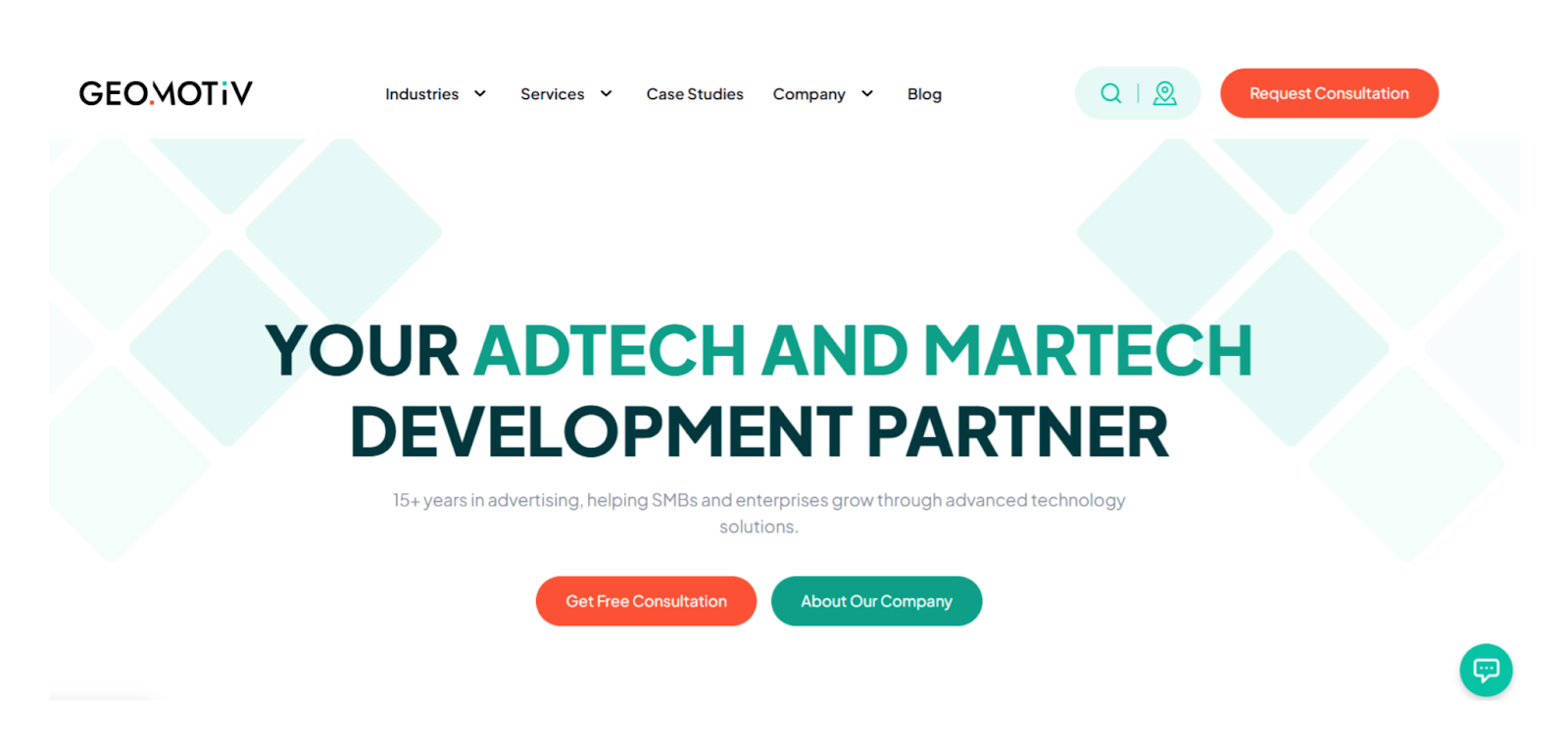
Their engineering-first approach provides high flexibility but also requires longer build cycles, especially when integrating with legacy infrastructure. Geomotiv is well-suited for logistics teams seeking customized back-office systems and process-heavy workflows.
Read more | Build AI-Powered Mobile Apps
8. Innowise Group
Innowise Group develops logistics and supply chain platforms for enterprise clients, including fleet tracking systems, warehouse automation tools, inventory management software, and delivery optimization engines. Their technical depth makes them a strong partner for companies needing scalability and complex system integrations.

As a full-stack engineering provider, Innowise follows traditional, multi-phase development flows, ideal for enterprises but less flexible for teams needing quick iteration cycles or lighter maintenance footprints.
Read more | No-code mobile app development guide
9. CleverDev Software
CleverDev Software focuses on custom logistics software for small and mid-sized logistics companies. Their solutions include dispatch systems, tracking tools, load boards, driver apps, and internal operations software tailored to the needs of transportation and freight businesses.

Their custom engineering model provides flexibility, though projects often require longer development cycles and more maintenance resources compared to low-code approaches that streamline operations while supporting rapid iteration.
Read more | Mobile app MVP development guide
How to Choose the Best Logistics Software Development Agency
Choosing the best logistics software development agency helps you build systems that support real-time operations, large data flows, and complex supply chain workflows. Logistics platforms must handle routing, tracking, inventory, and delivery updates without slowing down.
A strong logistics software development agency understands these demands and uses modern tools, clear communication, and scalable architecture to deliver reliable solutions. Many top Logistics software development agencies also use low-code platforms to speed up development while maintaining enterprise-level performance.
- Use of low-code platforms
Logistics software development agencies using tools like FlutterFlow, Bubble, and Glide can build logistics dashboards, driver apps, and automation systems faster. Low-code reduces long development cycles while still supporting scalable logic, real-time updates, and strong integrations. - Reviewing logistics-specific portfolios and case studies
Look for previous work in delivery apps, warehouse systems, fleet tools, or route optimization. Real case studies show the logistics software development agency understands logistics workflows and can design systems that fit real operational needs. - Checking domain expertise in supply chain operations
Strong Logistics software development agencies understand dispatching, inventory flows, driver coordination, and warehouse processes. This helps them build software that matches how logistics teams work in real life. - Evaluating ability to build real-time systems
Real-time tracking, live updates, and instant notifications are essential. The logistics software development agency should know how to build systems that support continuous data flow without delays. - Understanding backend scalability and architecture strength
Logistics platforms must handle thousands of orders, vehicles, and data points. Logistics software development agencies should design strong backend architecture that remains stable as delivery volume grows. - Transparent product management and communication
A good logistics software development agency explains progress, milestones, and decisions clearly. Strong project management ensures smooth execution and fewer delays. Exploring Pendo vs Userpilot can also be useful for understanding user behavior and improving product adoption in logistics software solutions. - Clarity in pricing, scope, and delivery timelines
Predictable pricing and detailed scope help you avoid unexpected costs. Clear timelines ensure your logistics platform launches on schedule. - Ability to support long-term improvements and growth
Logistics software evolves continuously. Logistics software development agencies should offer ongoing support, updates, and scaling options as your operations expand.
Choosing the right logistics software development agency ensures your platform is fast, reliable, and ready to grow with your business.
Read more | Native mobile app development
Red Flags When Choosing a Logistics Agency
Choosing the wrong logistics software development agency can create major operational problems, from slow routing tools to unreliable tracking systems. Logistics platforms require real-time data, strong backend design, and deep industry understanding.
If logistics software development agency lacks domain expertise or relies on outdated development practices, your system may fail under real-world pressure. Watching for these red flags helps you avoid delays, hidden costs, and unstable software.
- Use of traditional coding
Logistics software development agencies that depend only on heavy coding often move slowly and create systems that are harder to update. Modern logistics platforms benefit from low-code tools that deliver faster development, easier iteration, and strong scalability for growing shipment volumes. - No real logistics case studies or operational expertise
If logistics software development agency has never built delivery systems, fleet tools, or warehouse software, they may not understand logistics workflows. Lack of domain insight leads to poorly designed systems that fail to match real operational needs. - Poor understanding of routing, dispatch, or warehouse workflows
Logistics software must support route planning, dispatch coordination, warehouse tasks, and inventory flows. Logistics software development agencies without this knowledge often build confusing or inefficient tools that slow down daily operations. - Very low pricing without technical explanation
Low prices often hide missing features, weak architecture, or limited long-term planning. A reliable logistics software development agency explains their technical approach, timeline, and scope clearly before starting. - No long-term support or documentation
Logistics systems require continuous updates, bug fixes, and feature improvements. Logistics software development agencies that provide no documentation or post-launch support leave you with technical debt and no way to scale reliably.
Avoiding these red flags helps you choose a logistics development partner who can build fast, stable, and scalable systems that support real operational growth.
Conclusion
A great logistics software development agency understands real-world supply chain operations and builds systems that improve speed, accuracy, and visibility. The best partners deliver tools that handle routing, tracking, warehousing, automation, and integrations without slowing down under heavy load.
When comparing agencies, look for strong domain experience, scalable architecture, low-code capability, and clear communication. The right partner should help you reduce operational bottlenecks, automate manual work, and support long-term growth as delivery volume increases.
If you want a faster, more flexible way to build logistics platforms, LowCode Agency can help. We use modern low-code tools like FlutterFlow, Bubble, and Glide to deliver powerful logistics systems without long development cycles. Reach out and discuss your logistics needs.
Last updated on
September 3, 2026
.

Jesus is a visionary entrepreneur and tech expert. After nearly a decade working in web development, he founded LOW/CODE Agency to help businesses optimize their operations through custom software solutions.


FAQs
How do I choose the best logistics software development agency?
How long does it take to build a logistics software platform?
Why do logistics businesses prefer custom software over off-the-shelf tools?
Can low-code tools handle large logistics data and real-time tracking?
What is the cost to build logistics software?
Do logistics software agencies offer ongoing support?
Related Articles

Custom App Development
Best 8 Fintech Development Agencies (2026) | Hire Best One
Find the best fintech development agency for your startup. Our 2026 list features fast, trusted teams that help you launch and grow fast
AI
Custom App Development
How to Build an AI-Powered HR App | Save 70% of Time
Build an AI-powered HR app without code to automate hiring, onboarding, and leave tracking—saving up to 70% of your HR team’s time

Custom App Development
Best Custom Software Development Companies in 2026 (Top 20 Reviewed)
We reviewed 20+ top custom software development companies. Compare pricing, Clutch ratings, and tech stacks — from startups to enterprise.

Custom App Development
No-code/Low-code
How to Build Workforce Management Apps Using Low-code
Learn how to build workforce management apps using low-code, covering features, workflows, integrations, costs, and best practices for scalable teams.


Why customers trust us for no-code development


