

Retail Management System: Why You Need Custom RMS
14 min
read
Learn what a retail management system is, the problems it solves, key features, and when retailers should move beyond basic POS tools.

Why Retail Operations Break as You Grow
Retail usually works fine at the start. You have a few stores, a small team, and simple processes. But as you grow, complexity rises faster than clarity.
More locations, more products, more staff, and more data create pressure on systems that were never built to scale. What once felt manageable turns into daily firefighting.
Teams rely on spreadsheets, disconnected tools, and manual updates that slow decisions and increase errors. Growth exposes gaps in inventory tracking, reporting, approvals, and accountability.
In this article, we explain why retail operations start breaking during growth, what actually causes the cracks, and how structured systems bring order back. We focus on the operational side, not theory.
What a Retail Management System Actually Is
A retail management system is the core system that organizes how your retail business runs every day. It connects inventory, sales, people, and decisions into one clear flow, so growth does not turn operations into chaos.
- Centralized system for retail operations
An RMS brings inventory, sales data, staff actions, approvals, and reporting into one place. Instead of switching between tools and spreadsheets, your team works from a single system that stays consistent across stores and channels. - Difference between RMS and basic POS
A POS records transactions at checkout. An RMS manages what happens around those transactions, including inventory updates, workflows, reporting, and operational rules that keep the business running smoothly beyond the counter. - RMS as an operational backbone, not just software
An RMS is not just a tool you use occasionally. It becomes the structure behind daily work, defining how information flows, how decisions are made, and how teams stay aligned as operations grow.
In simple terms, a retail management system turns scattered processes into a clear operating structure. It helps your business move from reactive work to controlled, repeatable operations that scale without breaking.
What Problems a Retail Management System Is Meant to Solve
As retail operations grow, problems usually come from systems that were never designed to work together. Teams rely on separate tools, manual updates, and shared files to keep things moving. This creates delays, mistakes, and confusion that only increase with scale. A retail management system is meant to remove these pressure points by bringing structure and visibility to daily operations.
- Fragmented systems and disconnected data
When sales, inventory, and reporting live in different tools, data stops matching. Teams waste time reconciling numbers, fixing errors, and chasing updates instead of acting on reliable information. - Inventory inaccuracies and stock visibility issues
Without a connected system, stock levels fall out of sync across stores and channels. This leads to overstocking, stockouts, and missed sales because no one has a clear, real-time view. - Manual workflows slowing teams
Approvals, updates, and reports handled by hand depend on people remembering steps. Manual work creates delays, inconsistent execution, and higher error rates as volume increases. - Lack of real-time operational insight
Decisions get made on outdated reports or partial data. By the time issues are visible, the damage is already done and teams are forced to react instead of plan. - Difficulty managing multiple locations or channels
Each new store or channel adds complexity. Without a central system, processes drift, standards break, and leadership loses control over how operations actually run.
A retail management system addresses these problems by creating one structured way of working. It replaces guesswork and manual coordination with clear processes that hold up as your retail business grows.
Read more | Common E-Commerce Challenges
Core Components of a Retail Management System
A retail management system is built from connected components that support daily operations. Each part handles a specific function, but real value comes from keeping them aligned and working from the same data.
Sales and Point-of-Sale Operations
This component controls how sales are processed and recorded across stores and channels. It ensures transactions follow consistent rules and feed accurate data into the rest of the system.
- Transactions, receipts, pricing logic, promotions
Handles checkout, applies pricing and discounts correctly, generates receipts, and ensures every sale updates inventory and reports without manual fixes or follow-ups.
When sales data flows cleanly, teams trust the numbers and avoid downstream errors.
Inventory and Stock Management
Inventory management focuses on visibility and control. It helps teams understand stock levels and movement without relying on guesswork or delayed updates.
- Real-time tracking, stock movement, replenishment logic
Tracks inventory as it moves between locations and sales channels, while triggering replenishment rules to prevent stockouts and overstocking.
This keeps inventory decisions proactive instead of reactive.
Customer and CRM Capabilities
Customer data becomes useful only when it is structured and connected to operations. This component helps teams understand and respond to customer behavior.
- Customer profiles, purchase history, personalization
Stores customer details and buying history in one place, enabling better service, targeted communication, and more relevant retail experiences.
Clear customer insight supports long-term loyalty, not just one-time sales.
Reporting and Business Analytics
Reporting turns raw data into usable insight. It shows what is working, what is slipping, and where attention is needed.
- Sales trends, inventory performance, operational metrics
Provides visibility into sales patterns, stock efficiency, and operational health using up-to-date data instead of delayed reports.
Good reporting supports faster and more confident decisions.
Employee and Store Operations Management
Retail operations depend on people following clear processes. This component brings structure and accountability to daily work.
- Staff scheduling, roles, permissions, activity tracking
Manages schedules, defines roles, controls permissions, and tracks staff activity so operations stay consistent across locations.
Clear structure reduces errors and improves team coordination at scale.
Read more | Dedicated Software Development Team
How Retail Management Systems Support Omnichannel Retail
Omnichannel retail fails when each channel runs on its own rules. Online, in-store, and third-party channels create duplicate work, mismatched data, and broken customer experiences. A retail management system connects these channels into one operational flow so teams stay aligned.
- Online and in-store inventory sync
Inventory updates automatically across online and physical stores. When a product sells in one channel, stock levels adjust everywhere, reducing overselling, stockouts, and manual inventory reconciliation. - Unified customer experience across channels
Customer data stays consistent across touchpoints. Purchase history, preferences, and interactions follow the customer, allowing teams to deliver the same experience whether sales happen online or in-store. - Centralized order and fulfillment management
Orders from all channels flow into one system. This simplifies fulfillment, returns, and tracking while giving teams clear visibility into order status and delivery performance. - Reduced operational duplication
Processes are defined once instead of repeated per channel. This cuts manual work, prevents errors, and keeps operations efficient as new sales channels are added.
By connecting channels at the system level, a retail management system turns omnichannel from a coordination problem into a structured way of operating.
Benefits of Using a Retail Management System
The real benefit of a retail management system is not automation alone. It is clarity. When your operations are structured and connected, teams move faster, mistakes drop, and decisions stop depending on guesswork. These benefits become more visible as your retail business grows.
- Operational clarity and efficiency
A retail management system replaces scattered processes with clear workflows. Teams know where data lives, how work moves, and who owns each step, reducing confusion and wasted effort. - Fewer errors and better data accuracy
Because data updates automatically across the system, manual entry and reconciliation drop. Inventory, sales, and reports stay aligned, which reduces costly mistakes and inconsistent numbers. - Faster decision-making with real-time data
Leaders see what is happening now, not days later. Real-time visibility into sales, stock, and operations supports quicker and more confident decisions. - Improved customer experience
Accurate inventory, consistent pricing, and connected customer data help teams deliver smoother experiences across stores and channels without friction or delays. - Scalable foundation for growth
As locations, products, or channels increase, the system absorbs complexity. Growth adds volume, not chaos.
Overall, a retail management system creates stability. It gives your business a reliable operating foundation that holds up as scale and complexity increase.
Red more | How to Build a Successful Marketplace Business
Retail Management System by Business Stage
The role of a retail management system becomes clearer as your business moves through different stages. Each stage brings new operational pressure, and the system’s value grows as complexity increases.
Single-Store and Early-Stage Retailers
At this stage, operations are still visible, but cracks begin to form as volume grows and manual work increases.
- When basic tools stop working
Spreadsheets and simple POS setups struggle once inventory expands and reporting needs grow. Small errors start consuming time and attention. - Early signs of operational strain
Stock mismatches, delayed reports, and inconsistent processes appear even with one location, creating daily friction for teams. - Need for structure before scale
An RMS helps set clean processes early, so growth builds on structure instead of patchwork fixes.
Growing and Multi-Location Retailers
As locations increase, maintaining consistency becomes harder without a shared system.
- Central control with local execution
Leadership defines rules and standards centrally, while stores operate independently without breaking alignment. - Consistent data across locations
Sales, inventory, and performance data stay comparable, making reporting and planning more reliable. - Reduced management overhead
Fewer manual check-ins and reconciliations are needed to understand how each store is performing.
Omnichannel and Operations-Heavy Retail Businesses
Complex operations push systems beyond optional support into critical infrastructure.
- One system for all channels
Online, in-store, and third-party sales flow through the same operational logic, preventing duplication and errors. - Coordinated fulfillment and returns
Orders, pickups, and returns stay visible and manageable across channels and locations. - Operational stability at scale
An RMS absorbs complexity so teams focus on execution instead of constant coordination.
At this level, a retail management system becomes essential for keeping operations controlled, visible, and scalable.
Common Challenges When Implementing a Retail Management System
Implementing a retail management system is not just a technical change. It is an operational shift. Most challenges appear when teams treat the system as software first instead of fixing how work actually flows. Understanding these risks early helps avoid costly resets later.
- Integration with existing systems
Legacy tools, POS setups, and third-party platforms often do not connect cleanly. Poor integrations create data gaps, manual workarounds, and frustration across teams. - Staff training and adoption issues
If workflows are unclear, staff struggle to use the system correctly. Low adoption usually signals process problems, not user resistance. - Data migration risks
Moving inventory, customer, and historical data can introduce errors. Incomplete or messy data leads to reporting issues and lost trust in the system. - Over-customization too early
Trying to build everything at once adds complexity before teams understand real needs. Early over-customization makes systems harder to maintain and adapt. - Choosing tools before fixing workflows
Selecting software without mapping processes locks in bad habits. Systems should support clear workflows, not force teams to work around them.
Most implementation issues come from skipping the thinking phase. When processes are clarified first, the system becomes easier to adopt and scale.
How to Choose the Right Retail Management System
Choosing a retail management system is an operational decision, not a feature comparison. The right system supports how your business actually runs today while staying flexible enough for how it will run tomorrow. Focusing on fundamentals helps avoid costly rework later.
- Fit with your operational workflows
Start with how work moves in your business. The system should match your real processes instead of forcing teams to adapt to rigid software logic. - Scalability and flexibility
The system must handle more stores, products, and users without breaking. Flexibility matters more than advanced features you may not need yet. - Integration capabilities
Look for strong connections with POS, accounting, fulfillment, and other core tools. Clean integrations reduce manual work and keep data reliable. - Ease of use for store teams
If store staff struggle to use the system, adoption will fail. Simple interfaces and clear flows matter more than complex dashboards. - Long-term adaptability, not short-term features
Avoid systems chosen for quick wins. Prioritize platforms that evolve with your operations as processes and scale change.
The right retail management system feels supportive, not restrictive. It fits your business today and continues to make sense as complexity grows.
Retail Management System vs POS vs ERP
Retail teams often hear these terms used interchangeably, which creates confusion during system decisions. Each system serves a different purpose. Understanding where a retail management system sits between POS and ERP helps you choose based on operations, not labels.
Retail Management System vs POS
POS systems focus on selling. Retail management systems focus on running the business around those sales.
- Scope and operational depth
A POS handles transactions, payments, and receipts at checkout. A retail management system manages inventory flow, workflows, reporting, and coordination across stores and channels using sales as one input. - Beyond the counter
POS systems stop once the sale is complete. Retail management systems handle what happens before and after the sale, including stock updates, approvals, and operational visibility. - Operational control
An RMS supports day-to-day retail operations, while POS supports point-of-sale activity only.
POS is necessary. RMS is what turns sales data into structured operations.
Retail Management System vs ERP
ERP systems are built for large enterprises with heavy processes. Retail management systems are built for operational flexibility.
- Flexibility vs enterprise overhead
ERP systems are rigid and complex, often requiring long implementations and heavy customization. Retail management systems adapt faster to changing retail workflows. - Retail-first design
ERPs cover finance, HR, and procurement broadly. RMS focuses specifically on retail operations like inventory movement, store performance, and omnichannel coordination. - Speed of change
Retail management systems allow faster iteration as processes evolve, without the overhead that slows ERP environments.
In simple terms, POS sells, ERP governs, and a retail management system operates. Choosing the right layer depends on where your retail complexity actually lives.
How LOW/CODE Agency Helps Retail Businesses
Most retail problems are not caused by missing software. They come from systems that do not reflect how work actually happens.
This is where we step in as a product team, not a dev shop. At LOW/CODE Agency, we help retail teams replace fragile setups with systems built around real operations.
- Custom retail operations systems beyond POS
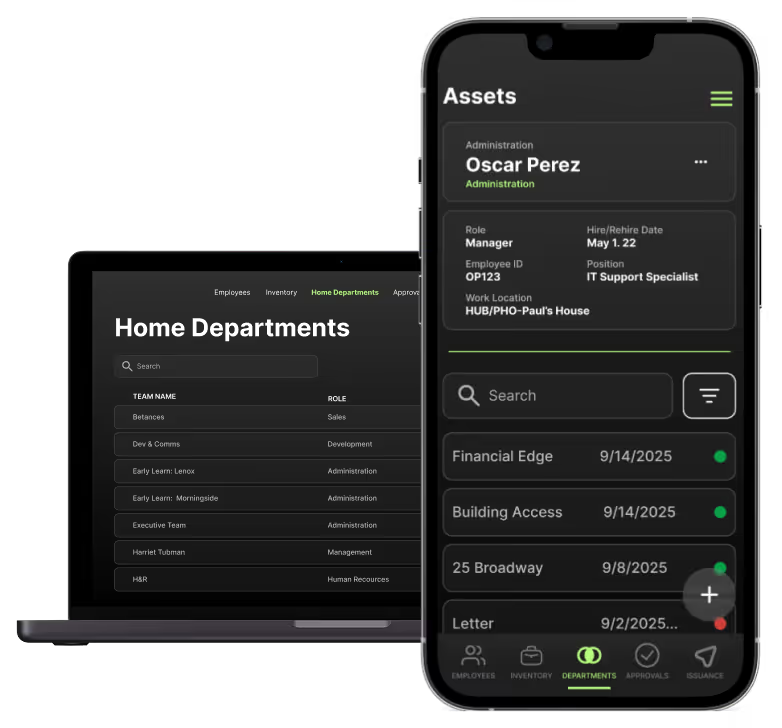
We design retail management systems that sit above POS, connecting inventory, workflows, approvals, and reporting into one operational layer that grows with the business. - Internal tools, dashboards, and automation
We build internal apps, dashboards, and automated workflows that give teams real-time visibility and reduce manual coordination across stores and channels. - Replacing spreadsheets with scalable workflows
We help teams move away from spreadsheet-driven processes by creating structured workflows that are easier to use, audit, and scale without breaking. - Long-term product evolution instead of one-time builds
We stay involved after launch, evolving the system as operations change. The goal is not delivery, but a system that continues to support growth.
Our role is simple. We turn messy retail operations into clear, dependable systems that teams actually use every day.
Conclusion
Most retail challenges are not caused by low sales or weak demand. They come from operations that cannot keep up with growth. As stores, channels, and teams expand, clarity matters more than speed.
A retail management system brings structure to inventory, workflows, data, and decisions so growth does not turn into daily firefighting.
When systems are designed around how work actually happens, retail teams gain control, confidence, and the ability to scale without breaking what already works.
📌 Check out our case studies and let’s discuss how we can turn your vision into reality.

Related Articles
- Saas Webflow Development Agency (Guide For Founders)
- How to Choose A Webflow Development Agency In 2026
- How to build a mental health app with FlutterFlow (2026 Guide)
- E-Commerce Challenges: Real Problems Behind Slow Growth
- Dedicated Software Development Team: A Practical Guide for Founders
- How to Build a Multi-Vendor Marketplace App (Complete Guide)
Last updated on
September 3, 2026
.

Jesus is a visionary entrepreneur and tech expert. After nearly a decade working in web development, he founded LOW/CODE Agency to help businesses optimize their operations through custom software solutions.


FAQs
What is a retail management system?
How is a retail management system different from POS software?
Do small retailers need a retail management system?
What problems does a retail management system solve?
When should a retailer upgrade to a full retail management system?
Can a retail management system support omnichannel selling?
Related Articles

Custom App Development
Enterprise Software Development Planning: Complete Guide
Learn how to plan enterprise software development projects effectively. Covers roadmapping, resource planning, risk management, and governance frameworks.

Custom App Development
Best Education Software Development Companies
Discover the best education software development companies in 2026. Compare top firms by expertise, pricing, and results to find the right partner.

Custom App Development
Best 8 Fintech Development Agencies (2026) | Hire Best One
Find the best fintech development agency for your startup. Our 2026 list features fast, trusted teams that help you launch and grow fast
Custom App Development
Lawyer Consulting App Development | Complete Guide
Build a secure and feature-rich lawyer consulting app with no-code tools. Learn about key features, compliance, costs, and the role of AI in modern legal tech

Why customers trust us for no-code development


