

How to Build a Mobile App Developer Marketplace
Learn step-by-step how to create a mobile app developer marketplace with key features, tech stack, and marketing tips for success.


Hiring the wrong mobile app developer can cost a product team six figures and six months of momentum. A well-built mobile app developer marketplace reduces that risk by surfacing verified talent with platform-specific expertise. But building that marketplace is itself a complex product challenge.
The platform must handle developer vetting, milestone payments, and trust signals specific to mobile builds. This guide covers what it takes to do it right.
Key Takeaways
- Platform specialization drives quality: A marketplace focused on iOS, Android, or cross-platform frameworks attracts developers with deeper expertise than any generalist freelancer board.
- App Store history is the strongest signal: Published apps with live download data are more credible than any portfolio item a developer self-selects.
- Milestone escrow is non-negotiable: Mobile builds span 3–6 months, so milestone-based payment releases protect both client and developer throughout the full lifecycle.
- Stack filtering is a core feature: A client searching for a Flutter developer has entirely different needs from one hiring a Swift developer.
- Commission at 10–15% is the sustainable range: Above 15%, top developers list elsewhere. Below 10%, the platform cannot cover moderation costs at low transaction volumes.
- The cold-start problem is acute here: Recruit and vet 30–50 quality developers before opening to clients, or the platform has no credibility.

What Does a Mobile App Developer Marketplace Need to Function?
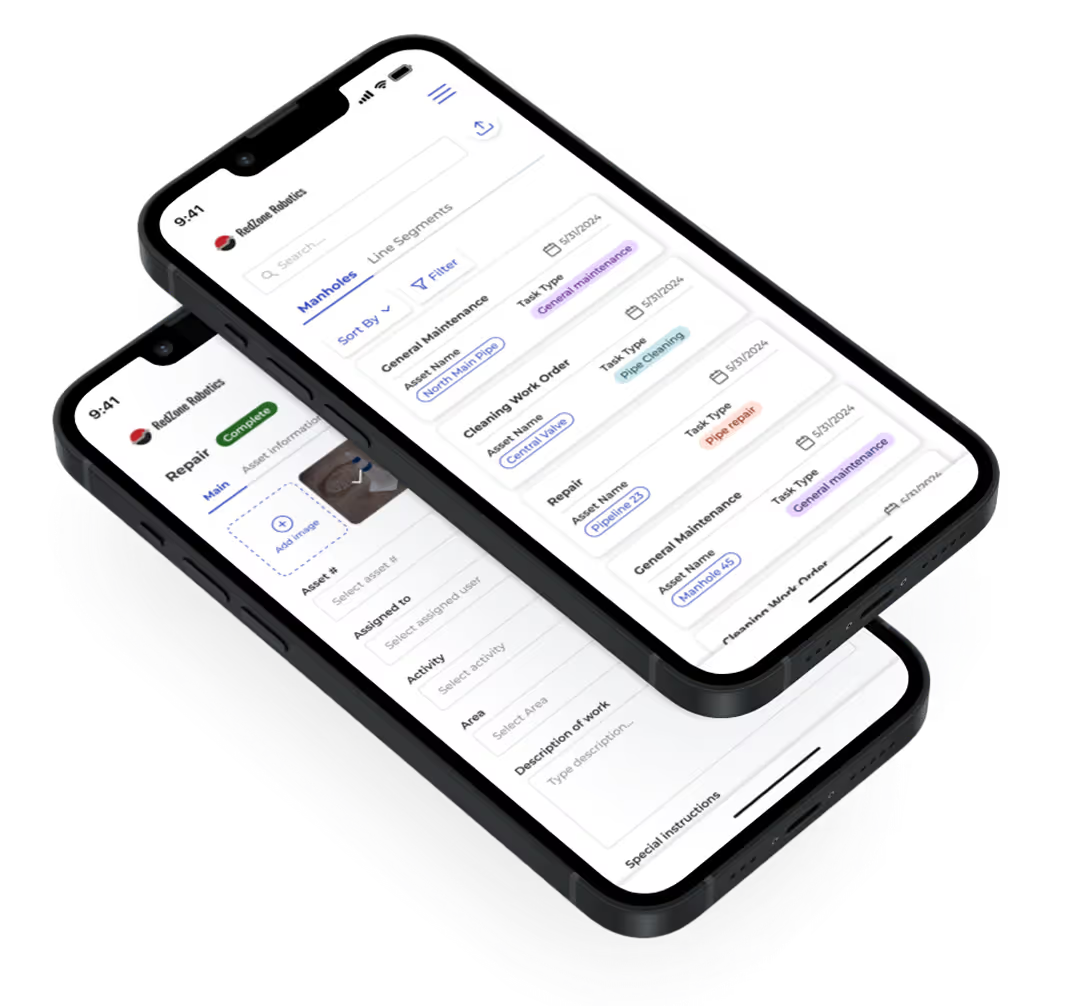
A mobile app developer marketplace is a two-sided platform connecting clients with qualified developers. Both sides must find clear value, or neither stays.
The platform differs from general developer marketplaces because of platform specialization, longer project timelines, higher project values, and the availability of verifiable public work through App Store listings.
- Two-sided balance: Clients need to find qualified developers quickly. Developers need enough client demand to make listing worthwhile.
- Platform specialization matters: iOS, Android, and cross-platform markets have different talent pools and different client expectations at every stage.
- Verifiable public work: App Store and Play Store listings give this category a trust signal that most developer marketplaces cannot offer.
- Core components at launch: Developer profiles with stack tags, client project briefs, search logic, in-platform messaging, milestone payments, and post-project reviews.
- The lean launch principle: You need the minimum set that creates a trustworthy transaction, not every feature before going live.
For the broader structural decisions involved in building a B2C marketplace app, that guide covers the architecture choices that apply across marketplace types.
What Features Does a Mobile Developer Marketplace Require?
The core marketplace app features required across all marketplace types are the foundation. A mobile developer marketplace builds additional technical verification layers on top.
Every feature in this category must serve the specific complexity of multi-month, high-value software projects.
Developer Profile System
- Platform tagging: iOS/Swift, Android/Kotlin, React Native, and Flutter tags let clients filter precisely for the expertise they need.
- App Store verification: Live app links with download tiers and ratings are the most credible portfolio signal available in this category.
- Availability and rate fields: Hourly and fixed-rate display with real-time availability status reduces wasted outreach from clients and developers alike.
Client Project Brief Templates
- Structured intake: Capturing platform target, app category, core feature list, timeline, and budget range prevents the misaligned proposals that drive project failures.
- Template formats: Pre-built brief templates for common mobile project types reduce the effort of posting a quality brief significantly.
- Brief quality gates: Requiring completion of key fields before a brief is published reduces unworkable enquiries that waste developer time.
Technology Stack Search and Filtering
- Stack-level precision: Filtering by framework (Swift, Kotlin, Flutter, React Native) ensures clients find developers with exactly the expertise their project requires.
- Project type filters: New build versus iteration projects require different expertise profiles and attract different developer sub-segments on the platform.
- Rate and availability filters: Combining rate, availability, and stack filters gives clients the search power to shortlist quickly and confidently.
Messaging and File Sharing
- On-platform communication: Keeping messaging on-platform protects both sides and enables dispute resolution with a full communication record.
- Technical file support: Wireframes, design files, and code repository links must all be shareable within the platform messaging environment.
- Audit trail: Documented conversations become the reference record for milestone approvals and dispute resolution.
Milestone Payment and Escrow
- Milestone-based releases: Client funds each milestone into escrow before the developer begins that phase, with payment released on client approval.
- Multi-milestone workflow: Mobile projects regularly involve 4–8 milestones across a multi-month build, requiring a payment system built for this pattern.
- Commission deduction at release: Platform commission is deducted automatically at each milestone release, keeping the transaction mechanics clean.
Review and Rating System
- Verified reviews only: Reviews tied to completed projects and payment releases carry credibility that open review systems cannot match.
- Technical communication sub-rating: This is a top-three concern for clients hiring remote mobile developers and almost no marketplace surfaces it explicitly.
- Post-project bilateral review: Both client and developer review each other, creating accountability and data quality on both sides of the market.
How Do You Vet and Manage Mobile Developer Profiles?
Quality vetting is the product. The rigour of your verification process is what separates a trusted marketplace from a developer directory.
Developers should apply rather than self-register, requiring platform declaration, App Store or Play Store links, GitHub profile, and a short technical questionnaire.
- Published app verification: The platform team confirms App Store and Play Store links are live, that the developer is credited as author or contributor, and checks app rating and download tier.
- Skill assessment options: Code review of a submitted sample, live technical interview, or automated assessment, chosen based on launch volume and available moderation resource.
- Tiered profile status: New Developer, Verified Developer, and Elite Developer tiers based on portfolio audit, completed projects, and review averages give developers a clear path to advancement.
- Tier visibility in search: Tier status displays on search cards and affects ranking, creating a visible incentive for developers to improve their platform standing.
- Ongoing performance flags: Profiles are automatically flagged when review average falls below 4.2, project cancellation rate exceeds 10%, or response time exceeds 48 hours.
The operational principles of managing vendors in a marketplace apply directly to the developer side of your platform. Supply quality is the competitive moat every successful marketplace is built on.
How Should Payments and Contracts Work?
The architecture of escrow and split payment systems in high-value technical marketplaces requires more complexity than a standard payment gateway. The milestone logic has to work correctly, or both sides lose confidence in the platform.
Mobile projects averaging $15,000–$80,000 make payment architecture the primary risk management tool for both clients and developers.
- Milestone-based escrow structure: Client funds each milestone before work begins. Developer submits deliverable. Client approves and releases. Platform deducts commission at release.
- Milestone definition guidance: Standard templates for mobile projects (Discovery, UI Design, Backend Build, Frontend Build, QA, Launch) reduce poorly defined milestones, the most common source of payment disputes.
- Fixed-price versus time-and-materials: Fixed-price uses milestone escrow. Time-and-materials uses weekly billing with time-tracking integration and a 72-hour dispute window before auto-release.
- Transparent commission: Platform commission of 10–15% is displayed clearly during developer onboarding. Surprise fees at payout drive platform abandonment.
- Dispute resolution: Client raises a dispute within 72 hours of deliverable submission. Platform mediator reviews against agreed milestone criteria. Resolution within 7 business days.
How Do You Build Trust on a Mobile Developer Marketplace?
The ratings and reviews architecture you implement shapes the behaviors of both developers and clients. The incentive structure built into the review flow determines whether feedback is honest and useful.
Trust is what makes a second transaction happen after the first. Every trust signal must be built on verified evidence, not self-report.
- App Store verification badges: Clients cannot independently verify developer credit on published apps. The platform confirming authorship is a significant credibility feature.
- Verified post-project reviews: Reviews unlock only after project completion and final payment release, with a 14-day review window that closes automatically.
- Response time display: Average response time shown on profile cards gives clients an operational signal alongside portfolio quality.
- Technical communication rating: This sub-rating is a top-three concern for clients hiring remote mobile developers and surfaces evidence that star ratings alone cannot provide.
- Project completion rate: Completed versus canceled projects displayed on profiles. A 95%+ completion rate is a stronger signal than a high average review score for high-value builds.
- Client quality signals: Developers see a client's verified payment status, project history, and average project value before spending time on a proposal.
How Do You Monetize a Mobile App Developer Marketplace?
Monetization must align platform revenue with supply and demand health. The wrong model at the wrong stage drives away the developers or clients the platform most needs to retain.
Match the monetization model to your growth stage rather than copying competitors whose supply and demand dynamics may differ significantly from yours.
- Commission model: 10–15% on each transaction, taken from developer payout. Lower rates attract and retain top developers. Higher rates are only sustainable when client demand is strong enough that developers cannot afford to list elsewhere.
- Subscription tiers for developers: Monthly plans offering reduced commission, higher search ranking, or increased proposal credits. Viable only after developer supply exceeds client demand.
- Featured placement: Developers pay for homepage or category-page featured placement. Simple to implement and generates incremental revenue without changing the commission structure.
- Enterprise client plans: Monthly or annual plans for agencies, product studios, and funded startups with recurring hiring needs. Includes dedicated account management and reduced commission rates.
- Avoid high double-sided commission: Charging both client and developer significant fees at transaction time drives both sides to transact off-platform at low volumes.
What Does the Build Process Look Like and What Will It Cost?
Scope failures are the most common reason marketplace builds fail to launch on time or within budget. A realistic build plan prevents this.
Decisions made in Phase 1 are the most expensive to reverse. Invest time there before starting Phase 2.
- Phase 1, platform architecture and design (3–6 weeks): User flow mapping, database design, API architecture, and UI/UX wireframing. Everything else builds on these decisions.
- Phase 2, core feature build (10–18 weeks): Onboarding flows, profile system, search and filter engine, messaging, payment integration via Stripe Connect, and admin dashboard.
- Phase 3, vetting and moderation tooling (2–4 weeks): Application review workflow, App Store link verification, skill assessment integration, and moderation queue. This phase is consistently underscoped in initial project plans.
- Phase 4, QA and launch preparation (2–4 weeks): Full QA across all user flows, payment sandbox testing, security review, and load testing. Do not compress this phase under deadline pressure.
- Cost ranges: Low-code build runs $20,000–$50,000. Custom development runs $100,000–$250,000 and above. Annual maintenance is 15–20% of build cost.
Conclusion
A mobile app developer marketplace lives or dies on three things: the rigour of developer vetting, the clarity of the payment architecture, and the depth of the trust signals it surfaces.
Platform features are the wrapper. Vetting, payments, and trust are the product. Build those three things correctly before worrying about growth or monetization.
Define your developer vetting criteria before writing a specification. What does a developer have to prove to earn a profile? That answer shapes every feature decision that follows.
Building a Mobile Developer Marketplace? Get the Architecture Right First.
Most mobile developer marketplace builds fail not because of missing features, but because the vetting logic and payment architecture were not designed for the complexity of multi-month technical projects.
We are LOW/CODE Agency — an AI product development company for SMBs. We build across the full stack: web apps, mobile apps, AI chatbots, RAG pipelines, and autonomous agents. Custom software, built by experts. We scope, design, and build technical marketplace platforms with the verification workflows, milestone payment systems, and trust architecture that make them credible to both developers and clients from day one.
- Marketplace scoping: We map both sides of your platform before any build begins, defining the verification flow, payment model, and trust signals the market actually requires.
- Developer verification design: We design the App Store verification, portfolio review, and tier progression logic that separates your marketplace from a developer directory.
- Milestone payment architecture: We build escrow and split payment systems that handle multi-milestone mobile project workflows without manual reconciliation.
- Search and filter engineering: We build technology stack filtering and platform-specific search logic that gives clients the precision they need to shortlist confidently.
- Trust system implementation: We implement ratings, review prompts, and completion rate displays that produce honest, useful feedback rather than inflated averages.
- Post-launch iteration: We stay involved after launch, refining matching logic and moderation tools as your platform data accumulates.
- Full product team: Strategy, design, development, and QA from one team invested in your platform's outcome, not just the delivery milestone.
We have built 350+ products for clients including Coca-Cola, American Express, and Sotheby's. We know exactly where marketplace builds go wrong and how to avoid those failures before they cost you months.
A mobile app developer marketplace needs credibility infrastructure most founders skip
Portfolio verification, skills assessment, project escrow, and dispute mediation are the features that make clients trust your platform with five-figure engagements. Without them you attract small projects and lose the clients worth keeping.
LOW/CODE Agency builds the credibility and transaction layer that serious developer marketplaces require. Our SaaS development team has built B2B service marketplaces with vetting workflows, milestone-based payment release, and review systems designed to hold up under scrutiny.
For the search and matching experience that helps clients find the right developer fast, our web app development practice delivers intuitive interfaces that reduce time-to-hire without sacrificing match quality.
We have delivered 450+ projects for organizations including Medtronic, American Express, and Coca-Cola. Talk to our team about building your platform.
Last updated on
September 28, 2026
.

Jesus is a visionary entrepreneur and tech expert. After nearly a decade working in web development, he founded LOW/CODE Agency to help businesses optimize their operations through custom software solutions.


FAQs
What are the essential features of a mobile app developer marketplace?
Which technology stack is best for building a developer marketplace app?
How can I attract developers and clients to my marketplace?
What are common challenges in launching a developer marketplace?
How do I ensure secure payments on my platform?
Should I build a native app or a web-based platform for my marketplace?
Related Articles
Marketplace
How to Build a Pet Trainer Marketplace
Learn key steps to create a successful pet trainer marketplace platform with essential features and marketing tips.

Marketplace
How to Build a Salon Booking Marketplace
Learn step-by-step how to create a salon booking marketplace with key features, costs, and marketing tips for success.

Marketplace
Top Marketplace Monetization Models Explained
Discover key marketplace monetization models and how they generate revenue effectively for online platforms.
Marketplace
How to Build a Home Repair Marketplace
Learn key steps to create a successful home repair marketplace platform with expert tips and common challenges to avoid.

Why customers trust us for no-code development


