

How to Build a Model and Talent Marketplace
Learn key steps to create a thriving model and talent marketplace with expert tips on platform design, user engagement, and monetization.

Casting and talent sourcing still runs the way it did 30 years ago: agency calls, PDF comp cards emailed back and forth, and days of scheduling to confirm availability. A model and talent marketplace compresses that to hours. Search by look, size, location, and availability. Shortlist directly. Book, contract, and pay in one workflow.
This article covers what it takes to build that platform properly, from the portfolio data model to the legal requirements that most builders ignore until they create liability.
Key Takeaways
- Visual search and filtering is the core product: Clients book based on appearance, measurements, and portfolio, so your search system must reflect talent-specific criteria, not generic freelancer parameters.
- Comp card quality drives conversion: Standardized comp card format with measurements, look book images, and video reels turns profile views into booking requests.
- Age verification and consent are mandatory: Platforms listing minors require parental consent workflows and minor-specific protections as legal requirements, not optional features.
- Industry-specific contracts are non-negotiable: Usage rights, exclusivity, buyout versus day rate, and digital versus print are too complex to leave to ad hoc negotiation.
- Monetization skews toward subscription and commission: Talent pay to list at premium tiers. Clients pay subscription or per-booking fees. Agency commission structures of 15–20% often apply.
- The agency relationship must be resolved before launch: Agencies can seed your supply quickly, but they may resist a platform that disintermediates them. Define the relationship before you approach them.
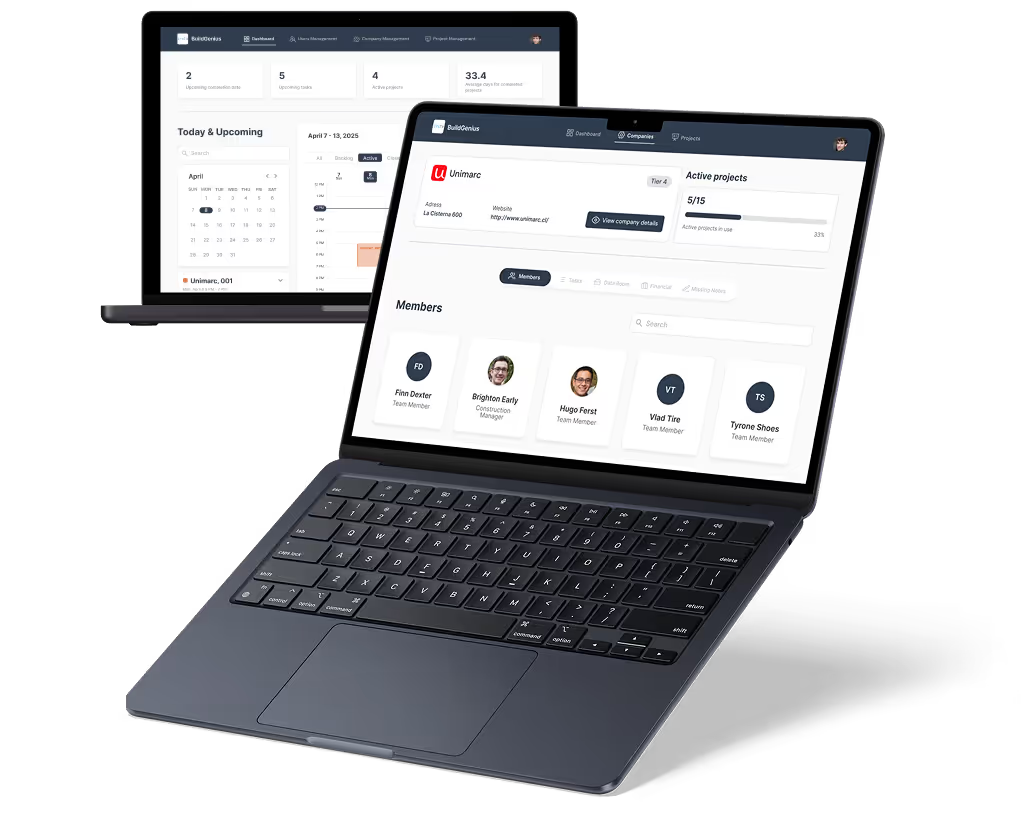

What Is a Model and Talent Marketplace and How Does It Work?
A model and talent marketplace is a platform where brands, agencies, casting directors, and production companies discover, shortlist, book, and pay talent directly, without going through a traditional agency as an intermediary.
The platform typically serves fashion models, commercial models, fitness models, child models, actors and extras, brand ambassadors, and voice-over talent. Each has different profile requirements, contract norms, and client types.
- Client types: Brands running campaign shoots, advertising agencies casting creative projects, photographers seeking editorial talent, and production companies filling background roles.
- End-to-end workflow: Client searches with specific parameters, shortlists talent, sends a booking enquiry, talent accepts, contract is generated and signed, shoot occurs, payment releases, and both parties review.
- B2C dynamics for business clients: Even when clients are businesses, they search and decide like consumers, evaluating options on visual quality and fit rather than running a procurement process.
- What makes it different from a directory: Discovery, booking, contracting, and payment all happen in one workflow. A directory requires the client to manage all of those steps themselves.
Even though many clients on a talent marketplace are businesses, the B2C marketplace app development model governs the trust, discovery, and booking flow. Clients search and decide like consumers, not procurement teams.
What Features Does a Model and Talent Marketplace Need?
The essential talent marketplace features that separate a functional booking platform from a basic directory include structured measurement data, verified portfolio media, and downloadable comp card functionality.
Every feature in this category must serve the specific discovery and trust requirements of a visual, booking-driven marketplace.
Talent Profile and Comp Card System
- Standardized comp card format: Primary headshot, body shot, hair and makeup variations, look book images, and video reel upload form the searchable visual record for each talent.
- Physical measurements as structured data: Height, weight, dress size, shoe size, hair color, and eye color must be structured fields, not profile text, because they drive search filtering.
- Agency and campaign history: Past campaigns, agency affiliations, and training history give clients context that portfolio images alone cannot provide.
Visual Search and Advanced Filtering
- Measurement-based filters: Height range, dress size, hair color, and age range are the search parameters that talent-specific clients actually use.
- Availability and rate filters: Day rate, half-day rate, hourly, location, and travel availability let clients narrow to bookable talent quickly.
- Image-based search (post-MVP): Upload a reference image to find similar-looking talent. This feature reduces client search time significantly and is worth investing in after MVP validation.
Availability Calendar and Booking Request System
- Talent-managed calendar: Talent controls their own availability, reducing scheduling errors and double-bookings.
- Structured booking request: Client sends a booking request with shoot date, location, brief, and fee offer. Talent accepts, declines, or counters.
- Confirmation triggers escrow: Confirmed booking immediately triggers contract generation and payment escrow, removing the gap between agreement and commitment.
Contract Generation and E-Signature
- Template contract coverage: Day rate or buyout fee, usage rights (digital, print, broadcast, duration), exclusivity period, location, expenses, cancellation terms, and IP ownership must all be covered.
- E-signature integration: DocuSign or HelloSign integration makes contract execution fast and legally valid.
- Jurisdiction review: Contracts must be reviewed by legal counsel for every market the platform operates in before the first booking is placed.
Payment and Escrow System
- Escrow on contract signing: Client pays into platform escrow at contract signing. Platform releases to talent after shoot confirmation.
- Expense handling: Day rate held in escrow, expenses reimbursed separately with receipts, usage fee released on content delivery and client sign-off.
- Transparent fee structure: Talent and clients both see the platform commission clearly before any booking is confirmed.
How Do You Manage Talent at Scale?
Applying talent supply management principles, response rate tracking, booking completion scoring, and proactive outreach to inactive profiles, keeps the supply side healthy and ensures clients find engaged, reliable talent when they search.
Supply quality is what determines whether clients return. An approval-based onboarding process, not open self-registration, is the standard for serious talent platforms.
- Application-based approval: Portfolio quality review, measurement data completeness, identity verification, and representation status confirmation are all required before listing.
- Identity and age verification: Government ID verification is essential for all talent. For minor categories, parental or guardian consent verification and age-specific protections are mandatory, not optional.
- Exclusive versus non-exclusive talent: Clarify whether the platform accepts talent with existing agency contracts. Accepting exclusively represented talent without checking creates legal exposure.
- Activity management: Response rate to booking requests, booking completion rate, client rating average, and portfolio update frequency are the signals that keep the supply side healthy.
- Agency partnership definition: Agencies can seed supply quickly by listing their rosters. In return, they expect their commission structure respected. Define this relationship before onboarding agency talent.
How Do You Build Trust Between Clients and Talent?
The trust and review system design for a talent marketplace must be bidirectional. Clients evaluate talent professionalism and talent evaluate client conduct, because both parties are assessing risk before committing to a booking.
Trust infrastructure determines whether both sides transact with confidence after the first experience.
- Portfolio verification: Reverse image search integration flags stolen or stock photography presented as original portfolio work. Watermarked samples or agency confirmation handle high-profile past work claims.
- Client credibility signals: Verified business email, business name, and booking history let talent assess whether a client is serious before spending time on a proposal.
- Bilateral verified reviews: Reviews only trigger from completed bookings. Both parties evaluate each other. Both records persist on the platform permanently.
- Dispute escalation path: Platforms that lack a clear dispute process lose both parties after the first unresolved incident. Define the escalation path for talent no-shows, client cancellations, and usage rights violations.
What Legal Obligations Apply to a Talent Marketplace?
Understanding the legal requirements for talent platforms, from age protection to worker classification to usage rights, separates a professionally operated marketplace from one that creates liability for everyone on it.
Legal infrastructure is not a post-launch concern. It must be built into the platform before the first booking is placed.
- Child protection obligations: Age verification, parental consent (documented and stored), restrictions on adult-to-minor direct communication, and chaperone requirements for bookings are legal requirements, not design choices.
- Worker classification: Platform terms of service must correctly reflect the independent contractor classification of talent. Misclassification creates employment liability in most jurisdictions.
- Usage rights and intellectual property: Talent licenses image and likeness for specific uses. Using content outside the agreed scope exposes brands and the platform to litigation.
- Exclusivity and agency conflicts: Platform terms should require talent to confirm they are free to accept direct bookings. Agency exclusivity breaches create legal exposure for the platform.
How Do You Monetize a Model and Talent Marketplace?
Monetization in talent marketplaces rewards platforms that align revenue with the transaction structures talent and clients already understand from traditional agency relationships.
Match monetization model to your growth stage, and introduce subscription tiers only after demonstrating consistent booking volume.
Platform Commission on Bookings (15–20%)
- Mirrors agency commission: Talent are already accustomed to 15–20% agency deductions, making this the easiest monetization model to explain during supply onboarding.
- Launch-stage simplicity: Commission per booking is the right starting model when transaction volume is building and subscription fees are premature.
Talent Subscription Tiers (Free vs. Featured)
- Free listing with limits: Limited profile slots and search visibility for free tier. Premium subscription at $29–$99 per month for featured placement, priority in category pages, and portfolio expansion.
- Recurring supply-side revenue: Subscription revenue from talent is independent of booking volume, providing a stable revenue baseline as the platform grows.
Client Access and Search Subscription
- Brand and agency plans: $199–$999 per month covering unlimited search, shortlisting tools, and direct booking. Replaces or reduces per-booking commission for high-volume clients.
- Enterprise pricing: Agency clients booking talent across multiple projects simultaneously benefit from a flat enterprise plan rather than per-booking commission at scale.
Composite Card and Portfolio Services
- Value-added services: Professional comp card design, photography referral, and portfolio upgrade packages diversify revenue beyond pure transaction fees.
- Talent investment signals: Talent who purchase profile enhancement services are more engaged with the platform and more likely to be active and responsive to booking requests.
Conclusion
A model and talent marketplace competes on the quality and searchability of its talent supply, the safety and simplicity of its booking workflow, and the legal infrastructure that makes both sides feel protected.
Get the portfolio system, visual search, contract generation, and age protection mechanisms right before anything else. These are the features that determine whether talent trusts the platform and clients return to it.
Start narrow. One talent category, one client segment. A platform for commercial models serving mid-size advertising agencies is buildable in 12–18 weeks. A platform for all talent types serving all client types is a five-year project.
Building a Model and Talent Marketplace? Start With the Right Foundation.
Most talent marketplace builds stall on the features that look simple on a wireframe but are genuinely complex to execute: the visual search, the age verification workflow, the contract generation, and the bilateral trust system.
LOW/CODE Agency is the AI product development partner built for SMBs. We build and ship web apps, mobile apps, chatbots, RAG systems, and AI agents — end to end, without the enterprise overhead. We scope talent and service marketplace builds from the portfolio data model and booking workflow through to the compliance infrastructure and monetization design, before any development begins.
- Portfolio and search architecture: We design the measurement data model and filtering logic that makes talent discovery fast and accurate for clients who know exactly what they are looking for.
- Booking and contract workflow: We build the availability calendar, booking request flow, and contract generation system that takes a client from search to signed contract in one session.
- Age and identity verification: We design the verification and parental consent workflows for minor categories that meet legal requirements in your target jurisdiction.
- Trust and review system: We implement bidirectional, verified review systems that create accountability on both sides without inflating ratings or suppressing honest feedback.
- Payment and escrow design: We build the escrow mechanics that hold payment securely from contract signing through to confirmed shoot delivery.
- Compliance architecture: We work with your legal counsel on the worker classification, usage rights, and agency relationship terms that the platform must resolve before launch.
- Full product team: Strategy, design, development, and QA from a single team that understands the talent industry and the marketplace architecture it requires.
We have built 350+ products for clients including Coca-Cola, American Express, and Sotheby's. We understand what makes a marketplace credible to both sides from the first transaction.
Model and talent marketplaces need more than a portfolio grid and a contact button
Casting workflows, exclusivity windows, usage rights tracking, and agency commission splits are the features that separate a professional talent platform from a directory. Build the directory first and you will spend the next year adding what you should have scoped from the start.
LOW/CODE Agency scopes the full platform before development begins. Our SaaS development team builds talent marketplaces with contract management, casting brief workflows, and payment disbursement logic designed to handle agency, direct, and hybrid booking models.
For the portfolio presentation and brand-client matching experience, our web app development practice creates polished interfaces that make talent shine and make clients book confidently.
After 450+ projects for teams like Medtronic, American Express, and Coca-Cola, we know what a production-ready talent platform requires. Book a discovery call to get started.
Last updated on
September 28, 2026
.

Jesus is a visionary entrepreneur and tech expert. After nearly a decade working in web development, he founded LOW/CODE Agency to help businesses optimize their operations through custom software solutions.


FAQs
What are the first steps to create a talent marketplace?
How do I attract models and talent to my marketplace?
What features are essential for a model and talent marketplace?
How can I ensure trust and safety on the platform?
What monetization models work best for talent marketplaces?
How do I handle disputes between talent and clients?
Related Articles

Marketplace
How to Build a Wedding Vendors Marketplace
Learn key steps to create a successful wedding vendors marketplace with expert tips on platform features, vendor onboarding, and marketing strategies.
Marketplace
How to Build an Event Staffing Marketplace
Learn key steps to create a successful event staffing marketplace with tips on platform features, recruitment, and management.
Marketplace
How to Build a Spa Services Marketplace
Learn key steps to create a successful spa services marketplace with tips on features, marketing, and technology.

Marketplace
Marketplace App Wireframing & Prototyping Guide
Learn key steps and best practices for wireframing and prototyping marketplace apps effectively.

Why customers trust us for no-code development


