

How to Build a Mentorship Marketplace
Learn key steps and tips to create a thriving mentorship marketplace that connects mentors and mentees effectively.

What separates a mentorship marketplace that retains users for years from one that sees mentees book a session and never return? Matching quality. Mentorship is more personal than coaching and more informal than consulting. The relationship only works when the mentor's experience maps directly to the mentee's specific situation and stage.
This guide covers how to build a platform with the matching intelligence, session design, and community features that create mentorship relationships that last rather than introductory calls that do not convert.
Key Takeaways
- Matching is the core product: Mentorship marketplaces live or die on match quality. A mentor-mentee fit that clicks produces long-term relationships and referrals. A poor match produces one session and churn.
- Mentorship is not coaching: Coaching is structured and goal-directed. Mentorship is relationship-based and experiential. The intake, session format, and review system must reflect this distinction.
- Mentor motivation is the supply challenge: Many experienced professionals are willing to mentor but not willing to manage bookings, chase payments, and handle logistics. The platform must be low-friction or supply will not scale.
- Community features multiply retention: Mentorship platforms that add community elements give mentees value between sessions, increasing engagement and reducing churn between bookings significantly.
- Monetization models vary by mentor motivation: Paid mentorship suits professional mentors and builds sustainable supply. Volunteer or donation-based models suit community and non-profit mentorship platforms.
- Niche mentorship platforms outperform generalist directories: Platforms focused on a specific career stage, industry, or identity group build trust and relevance that general mentorship directories cannot match.

What Model Should Your Mentorship Marketplace Use?
Most mentorship marketplaces serve individual mentees directly. The B2C marketplace development guide covers how consumer-facing platforms are structured differently from corporate L&D procurement platforms in account design, payment flow, and trust signal architecture.
The mentor motivation model, session format, and client segment all determine the platform's commercial structure and feature requirements before any feature is scoped. Getting the model right early prevents the expensive pivot of rebuilding the payment architecture or onboarding flow after launch.
- Paid mentorship: Mentors charge per session or per month. Platform takes commission. Supply of motivated, engaged mentors is higher because the financial incentive supports consistent participation and preparation.
- Volunteer mentorship with platform subscription: Mentors give time free. Mentees pay a platform access subscription. Revenue is decoupled from individual session transactions, creating predictable platform income.
- Corporate mentorship: Companies purchase mentorship access for employees. Monthly or annual fee per employee. Highest contract value and most predictable revenue. Requires program management and reporting features.
- Community mentorship: Members mentor each other. Platform provides matching and scheduling infrastructure. Revenue from platform access fees rather than individual mentor charges.
- Session format options: One-time advice sessions (30–60 minutes), ongoing mentorship relationships (recurring sessions over 3–12 months), group mentorship (one mentor with a small cohort), and asynchronous text mentorship.
The niche decision is as important as the model decision. Specific communities like women in tech, first-generation founders, and early-career designers build faster credibility and deeper trust than general mentorship directories, and enable targeted mentor recruitment.
What Features Does a Mentorship Marketplace Need?
A mentorship marketplace shares the foundational core marketplace app features of all two-sided service platforms. Then it extends those with relationship management, intake, and async communication tools that distinguish a genuine mentorship experience from a session booking system.
The features that differentiate a mentorship marketplace from a generic coaching booking tool are centerd on matching intelligence, relationship continuity, and the community layer that keeps mentees engaged between individual sessions.
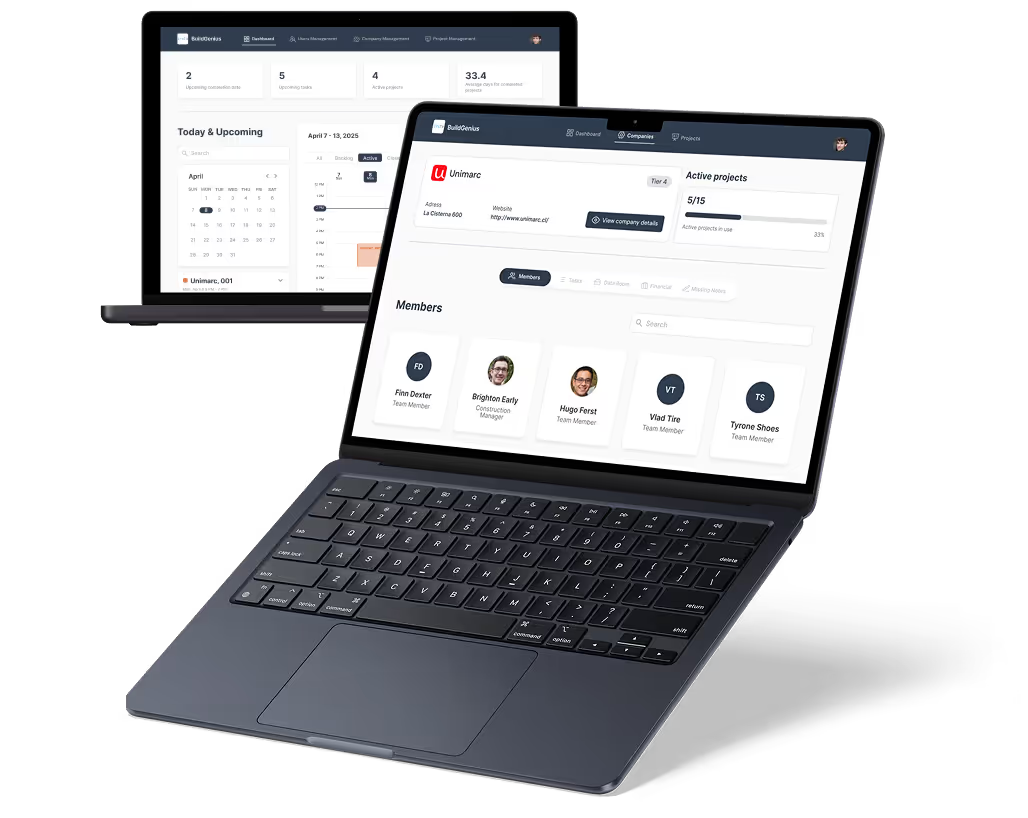
- Must-have features for launch: Mentor profiles with career background, expertise areas, industries, mentoring style, and availability. Mentee accounts with goal and background brief. Search and filter by expertise, industry, career stage, format, and availability.
- Mentorship-specific features: Mentee intake form capturing career stage and specific questions used for matching and mentor preparation. Relationship tracking covering session history, agreed next steps, and progress notes.
- Goal setting and progress tracking: Specific goals the mentorship relationship is working toward, tracked over time and visible to both mentor and mentee throughout the engagement.
- Async messaging between sessions: Not just pre-session enquiry but ongoing relationship support between scheduled sessions. This is the feature that separates a mentorship relationship from a series of disconnected bookings.
- Mentor-side features: Mentee profile preview before accepting a session request, session preparation summary with mentee goals and background sent before the session, relationship dashboard for ongoing mentees.
- Cohort and group session management: For group mentorship formats covering one mentor with a small cohort, the platform needs cohort creation, scheduling, and group communication tools as a distinct session type.
The admin features matter more than on most marketplace types. Mentor application review, quality monitoring of session completion and review scores, and community moderation all require dedicated infrastructure rather than manual management.
How Do You Vet and Manage Mentors at Scale?
The approach to managing mentors on your platform must account for the fact that mentor motivation varies from paid professional to time-constrained senior executive. One-size management systems fail because they ignore what keeps each mentor type engaged.
The quality of mentors on the platform is the primary determinant of mentee satisfaction and platform retention. An experienced mentor who gives a poor session because they were overbooked or underprepared is worse for the platform than a vacant slot.
- What to verify for mentors: Professional experience through LinkedIn verification and employment history check. Expertise area accuracy covering years in the claimed field and specific accomplishments. Coaching or mentoring history and prior outcomes.
- Application process elements: Career summary, mentoring philosophy, example scenarios they can help with, and a short video introduction. Video is the highest-converting profile element for mentorship because personal chemistry is critical to match effectiveness.
- Mentor capacity management: Mentors have limited time. The platform must give them controls to cap active mentee numbers, set availability windows, and close new requests during busy periods. Overloaded mentors give poor sessions.
- Ongoing quality management: Rating monitoring, session completion rate, response rate to mentee messages, re-engagement rate measuring mentees who return for a second session, and mentor-initiated session completion tracking.
- Mentor churn prevention: Mentor attrition is the supply-side risk. Build mentor impact visibility showing how many mentees they have supported and what outcomes were achieved. Community recognition sustains motivation beyond earnings.
The mentor video introduction is worth investing in as a required profile element. It allows mentees to assess personal chemistry before booking, which dramatically reduces mismatched bookings that produce one-session-and-churn outcomes.
How Do You Build Trust Between Mentors and Mentees?
The ratings and reviews architecture for mentorship platforms must capture relationship quality and session usefulness, not just a star rating, to give future mentees the information they need to make a confident match decision.
Trust in a mentorship marketplace operates at a higher personal level than most service categories. Mentees share career vulnerabilities, professional frustrations, and strategic uncertainties. The platform must make this level of sharing feel safe before it happens.
- Mentor profile signals that build trust: Verified professional experience, specific expertise areas with evidence of accomplishments, video introduction showing communication style, and a mentoring approach description covering how sessions are run.
- Mentor-mentee fit before booking: A structured "who I work best with" section on mentor profiles, a mentee intake question the mentor reviews before accepting, and availability for a brief introduction message exchange before session confirmation.
- Review design for mentorship: Reviews must capture session usefulness, mentor experience relevance, communication quality, and whether the mentee would continue the relationship. Vague "great mentor" reviews do not help future mentees make match decisions.
- First session as the trust gateway: The first session is make-or-break for long-term relationships. Design a first-session structure recommendation that maximizes the chance of a productive initial encounter between mentor and mentee.
- Safety and conduct standards: Mentorship involves personal sharing and career vulnerability. The platform needs a clear code of conduct, session recording options with consent, and a clear reporting mechanism for mentor behavior outside acceptable boundaries.
The code of conduct and reporting mechanism are not just compliance features. They enable the level of personal openness that makes mentorship valuable. Mentees who trust that boundaries will be enforced share more authentically and get more from the relationship.
How Do You Support On-Demand and Scheduled Mentorship?
Adding on-demand access to a mentorship platform requires real-time availability infrastructure that scheduled booking platforms are not designed for. On-demand marketplace development covers the technical requirements that separate true on-demand systems from static availability calendars.
The two access models serve different mentee needs. Scheduled mentorship suits mentees building an ongoing relationship. On-demand mentorship serves mentees with an urgent question who cannot wait for a calendar slot to open.
- Scheduled mentorship: Mentee books a session in advance from the mentor's calendar. Standard for ongoing relationships. Requires availability calendar management, buffer time configuration, and booking confirmation flow.
- On-demand mentorship: Mentee submits a question or request. A mentor who is currently available responds within a defined window. Requires real-time availability status display and a defined response window of 2 hours before the request is released to other mentors.
- Text-based async mentorship: Mentees submit questions. Mentors respond in their own time. Lower friction for mentors. Accessible to mentees who cannot schedule video sessions. Monetized per response or on a subscription basis.
- Converting on-demand to ongoing: Mentees who have a positive on-demand experience are the highest-converting prospects for ongoing mentorship packages. Build an automated ongoing relationship offer after a positive on-demand session.
- Capacity management for on-demand: Design on-demand acceptance limits and visible response load indicators to ensure mentees get the attention their question deserves from mentors who are not overwhelmed.
The conversion flow from on-demand session to ongoing mentorship relationship is one of the highest-leverage product decisions on a mentorship platform. Design it deliberately rather than leaving the conversion to happen organically.
How Do You Monetize a Mentorship Marketplace?
Mentorship marketplace monetization must align with mentor motivation. Paid mentors need transparent, fair commission structures. Volunteer mentors need platform access subscriptions that do not burden them with financial transactions.
Corporate mentorship program contracts represent the highest contract value and most predictable revenue stream on mentorship platforms, making enterprise features worth investing in once the platform has established supply credibility.
- Commission on paid mentor sessions (15–25%): Platform takes a percentage of each session payment. Appropriate when mentors are charging for their time and the platform provides client acquisition, booking infrastructure, and payment processing.
- Platform access subscription for mentees (volunteer model): When mentors give time free, mentees pay monthly or annual subscription for access to the mentor pool, session booking, and community features. Revenue is decoupled from individual session transactions.
- Corporate mentorship program contracts: Organizations pay monthly or annual fee for platform access, a defined number of sessions per employee, and program reporting. Highest contract value and most predictable revenue stream.
- Cohort program access: A defined cohort accesses a structured mentorship program with specific mentors, scheduled sessions, and peer group interaction for a one-time program fee.
- Freemium community model: Free access to community forums and async Q&A. Paid subscription for booked one-on-one sessions and advanced matching. Lowers the barrier to entry and converts active community members to paid users.
The corporate program model requires dedicated L&D reporting features including session completion rates, mentee satisfaction scores, and skills development tracking. Build these before pitching to enterprise buyers.
How Do You Launch a Mentorship Marketplace and Build Both Sides?
The cold-start problem on a mentorship marketplace is a mentor motivation problem first. Mentors who do not see the platform as genuinely useful for the people they want to help will not maintain active profiles regardless of the financial incentive.
The founding cohort strategy produces the outcome data and testimonials that are the most effective marketing assets for subsequent mentor and mentee acquisition.
- Mentor recruitment before launch: Recruit 30–50 verified mentors in the target niche before opening to mentees. Direct outreach to senior professionals in relevant communities on LinkedIn, industry associations, and alumni networks.
- Mission-first framing for mentor acquisition: Experienced professionals who mentor do so for impact, not primarily for income. Mentor recruitment must emphasize mentee impact and platform simplicity, not earnings potential.
- Mentee acquisition strategy: Content marketing targeting the challenges and goals of the target mentee audience. Community partnerships with student associations, professional networks, and founder communities.
- Founding cohort strategy: Curating a pilot cohort of 20–30 mentees with 10–15 mentors before public launch allows the platform to test matching quality, refine onboarding, and collect outcome data that becomes the primary marketing asset.
- Retention and the community layer: Mentors and mentees who find value through community events, peer connections, and forum activity stay on the platform between sessions and generate the word-of-mouth that scales acquisition better than any paid channel.
The founding cohort strategy is the most important pre-launch investment a mentorship marketplace founder can make. The case studies and testimonials it produces outperform any paid acquisition channel for both mentor and mentee recruitment.
Conclusion
A mentorship marketplace's value is in the quality of the relationships it creates, not the number of sessions it facilitates.
Platforms that invest in matching intelligence, first-session structure, and community building create relationships that outlast any individual session and generate the word-of-mouth that scales mentor and mentee acquisition better than any paid channel.
Define your mentorship niche, your mentor motivation model, and your session format before writing any feature requirements. Those three decisions determine your supply strategy, your monetization approach, and the matching logic that determines whether your platform creates mentorship relationships or just books introductory calls.
Building a Mentorship Marketplace? Matching Quality and Community Design Are the Foundation.
Most mentorship marketplace builds focus on the booking and payment infrastructure and treat matching quality and community features as phase-two additions. Platforms built in that sequence produce booking systems that mentees use once and do not return to because the first session did not produce a relationship worth continuing.
LOW/CODE Agency is the AI product development partner built for SMBs. We build and ship web apps, mobile apps, chatbots, RAG systems, and AI agents — end to end, without the enterprise overhead. We scope mentorship marketplace platforms by building the matching intelligence, relationship management tools, and community infrastructure into the foundation, so the platform creates mentorship relationships that retain mentors and mentees beyond the first session.
- Matching system design: We design the intake form, mentor profile structure, and matching logic that connects mentees to mentors based on career stage, expertise alignment, and mentoring style fit rather than keyword overlap.
- Relationship management tools: We build the session history, agreed next steps tracking, progress notes, and goal monitoring features that make ongoing mentorship relationships manageable from the mentor dashboard.
- On-demand and scheduled session infrastructure: We build both the scheduled booking calendar and the real-time on-demand availability system so the platform supports both access models from launch.
- Community layer design: We scope and build the forums, peer groups, and community features that give mentees value between sessions and create the network effects that retain both mentors and mentees on the platform.
- Corporate program features: We design the L&D reporting, program management, and enterprise account features that make corporate mentorship program contracts viable and valuable to HR and L&D buyers.
- Mentor motivation architecture: We design the impact visibility dashboard, community recognition features, and low-friction scheduling tools that keep volunteer and paid mentors engaged on the platform over time.
- Full product team: Strategy, UX, development, and QA from one team invested in your platform's long-term user retention, not just the delivery milestone.
We have built 350+ products for clients including Coca-Cola, American Express, and Sotheby's. We understand what it takes to build a platform that creates lasting relationships rather than one-time transactions.
Mentorship marketplaces that do not solve the matching problem churn mentees within two sessions
Most mentorship platforms launch with a basic filter and call it matching. Mentees who cannot find the right person within one or two searches leave and do not return. Retaining them requires compatibility signals, goal alignment, and scheduling friction reduction built into the core experience.
LOW/CODE Agency builds matching and retention logic that keeps mentorship relationships active. Our SaaS development team has built two-sided platforms with guided onboarding flows, compatibility scoring, and session management tools designed to increase match quality and session completion rates.
For the mentee and mentor dashboards where goals, notes, and session history need to be visible and actionable, our web app development practice creates interfaces that make every session feel productive.
After 450+ projects for organizations including Medtronic, American Express, and Coca-Cola, we know what drives engagement on professional platforms. Book a discovery call today.
Last updated on
September 28, 2026
.

Jesus is a visionary entrepreneur and tech expert. After nearly a decade working in web development, he founded LOW/CODE Agency to help businesses optimize their operations through custom software solutions.


FAQs
What are the essential features of a mentorship marketplace?
How do I attract mentors and mentees to my platform?
What technology stack is best for building a mentorship marketplace?
How can I ensure quality and trust in my mentorship marketplace?
What are common challenges when launching a mentorship marketplace?
How do I monetize a mentorship marketplace effectively?
Related Articles

Marketplace
How to Build a Vacation Home Marketplace
Learn key steps and tips to create a successful vacation home marketplace platform from scratch.
Marketplace
How to Build a Fitness Bootcamp Marketplace
Learn step-by-step how to build a successful fitness bootcamp marketplace with key features and marketing tips.

Marketplace
How to Build a Medical Specialists Marketplace
Learn key steps to create a successful medical specialists marketplace with expert tips on features, compliance, and user trust.

Marketplace
How to Build a Dress Rental Marketplace
Learn key steps to create a successful dress rental marketplace with tips on platform, inventory, and customer management.


Why customers trust us for no-code development


