

How to Build a Project Manager Marketplace
Learn step-by-step how to create a project manager marketplace with key features, tech tips, and common challenges to avoid.


Organizations running complex projects without experienced project management consistently overspend and underdeliver. But the market for contract project managers is fragmented, opaque, and reliant on agency relationships that add 30–50% to the effective cost.
A project manager marketplace solves this by connecting organizations directly with vetted contract PMs. Building one that buyers trust with real projects requires specific product decisions that generic freelancer platforms do not make.
Key Takeaways
- Credential-dependent B2B platform: Buyers hire on certifications, methodology fit, and delivery track record, not hourly rate alone.
- Certification verification is baseline: PMP, PRINCE2, and Agile certifications are the primary qualifying signals for PM buyers. The platform must verify and display these, not just list them.
- Flexible payment structure required: Some PM engagements are short fixed-scope projects; others are 12-month interim management roles. The platform must support both payment models.
- Project type specialization drives confidence: A PM who has delivered 12 software implementations signals differently to a technology buyer than one with a generic delivery background.
- Milestone payments protect both sides: Project managers want payment security; organizations want payment tied to delivery. Escrow-linked milestone release satisfies both.
- Delivery success drives retention: In a PM marketplace, a failed project means a lost client forever. Vetting quality and review architecture are retention features, not just trust features.
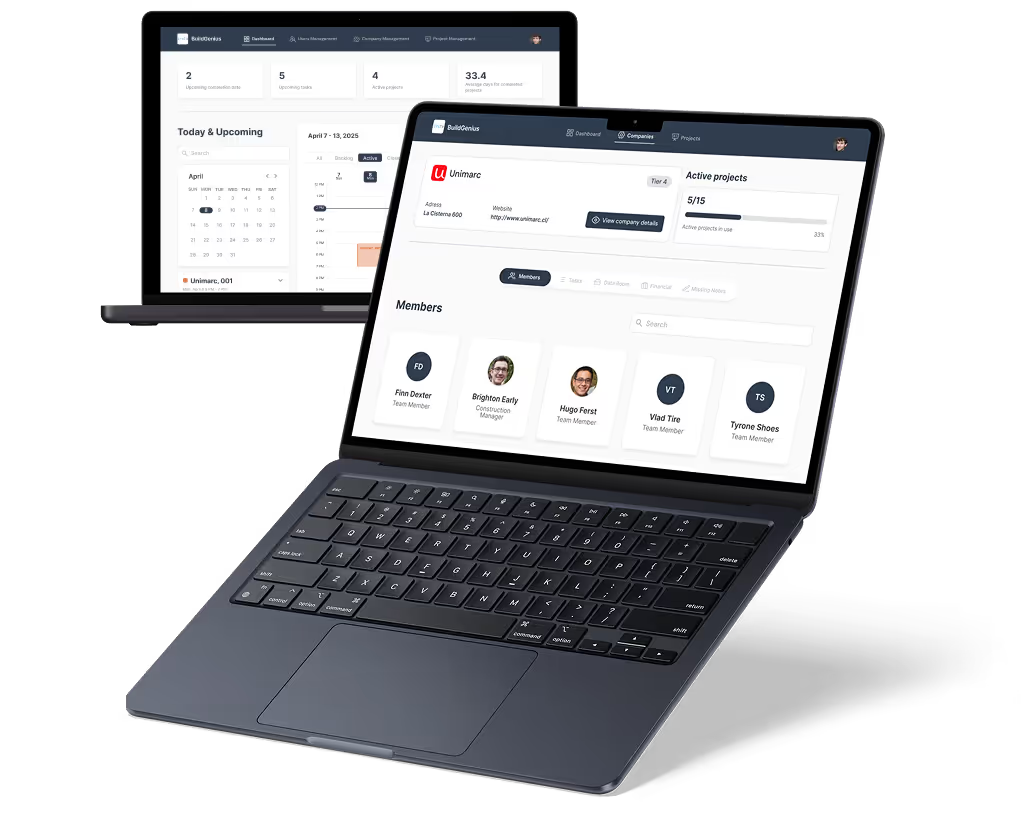

What Type of Marketplace Is a Project Manager Platform?
Project manager marketplaces are B2B two-sided platforms connecting organizations needing project delivery capability with freelance or contract project managers. The distinction from generalist talent platforms is not just positioning.
Project management is a certified discipline with recognized methodologies. Buyers are hiring for specific delivery frameworks applied to specific project types, not generic organizational ability.
- Distinct from staffing agencies: Direct access to vetted PMs without agency markup, transparent track records, and the ability to assess methodology fit before committing to an engagement.
- Engagement model range: Fixed-scope project delivery, interim head of project management for 6–18 months, fractional program director, and PMO build-out contracts all require different scoping, payment, and review architecture.
- Buyer intent is specific: A technology company hiring a PM for a cloud migration wants evidence of specific methodologies and comparable project scale, not a general delivery background.
- Certification creates a verifiable quality floor: Unlike general freelancer platforms, PM marketplaces can set an objective minimum qualification standard and verify it at onboarding.
Understanding the B2B marketplace architecture decisions around trust, contract flow, and high-value transaction handling is the right foundation before designing PM-specific features.
What Features Does the Platform Require?
The core features for marketplace platforms, search, structured profiles, payments, and reviews, all apply here, but each needs to be built to the standard a project director expects when evaluating critical delivery resources.
PM marketplace features must reflect the credential-dependent, high-stakes nature of every engagement.
PM Profiles and Certification Display
Project managers list their certifications, methodology specialization, project type experience, industry background, day rate, and availability. Verified certification badges are the first thing a buyer evaluates. The verification process and badge display must be clearly designed from the first profile.
- PMI registry verification: PMP certification can be verified directly against the PMI public registry. Build this API integration at onboarding, not as a later enhancement.
- AXELOS PRINCE2 verification: PRINCE2 and MSP certification lookup is available through AXELOS. Verified status displayed on profiles carries significantly more weight than self-reported claims.
- Project type tagging: Tags for IT project management, construction, digital transformation, M&A, and regulatory programs let buyers filter directly for PMs with their specific project type experience.
Project Brief and PM Search
Buyers post project briefs with project type, scope summary, timeline, budget, and required methodology. PM search filters on certification type, project type experience, sector background, availability, and rate range. Keyword-only search does not surface the right candidates for specialized delivery roles.
- Structured brief intake: A well-structured project brief captures the information PMs need to assess fit and submit an informed proposal. Unstructured briefs produce generic proposals that do not convert.
- Methodology-first filtering: Buyers searching for Agile or SAFe certified PMs for specific project types need filters that surface those combinations without manual scanning of every profile.
- Availability matching: A PM available in three months does not help a buyer with an immediate project start. Real-time availability status should filter out unavailable PMs from active search results.
Proposal and Selection Flow
PMs submit structured proposals covering their approach, relevant delivery examples, team management experience, and fee breakdown. Buyers compare proposals, request availability calls, and confirm engagement inside the platform. Keeping this on-platform prevents displacement before the engagement starts.
- Structured proposal templates: Proposal templates that prompt PMs to address the specific brief requirements produce higher-quality responses and reduce buyer evaluation effort.
- Comparison functionality: Side-by-side proposal comparison across methodology approach, relevant experience, fee structure, and availability helps buyers make faster, more confident decisions.
- Video introduction option: A short video introduction from the PM allows buyers to assess communication style and confidence before committing to an availability call.
Contract and SOW Management
Statement of work generation with defined deliverables, timeline, milestone payment schedule, and e-signature creates an audit trail, defines accountability clearly, and makes scope change management visible. A digital contract inside the platform is the accountability mechanism that makes buyers confident in hiring through the platform for complex projects.
- Milestone schedule in the SOW: Payment milestones defined at contract stage align payment timing with delivery accountability. Vague payment terms produce disputes at the milestone stage.
- Change order management: Scope changes generate a formal change order that both parties must approve before additional work begins. This creates a written record for every modification.
- Document version history: Both parties need access to the current signed version and any amended versions of the SOW throughout the engagement.
Milestone Tracking and Delivery Review
Project milestone dashboard for both PM and buyer, milestone submission by PM, buyer review and sign-off, and payment release trigger. This is the accountability mechanism that makes buyers confident in hiring through the platform for complex, high-stakes projects.
- Photo and document evidence at milestone submission: PMs submit milestone evidence at submission. Buyers review against the defined deliverable before signing off and releasing payment.
- Sign-off timeline enforcement: Buyers should have a defined window to sign off or dispute each milestone. Expired windows with no dispute trigger automatic payment release.
- Escalation path for disputed milestones: A defined escalation workflow with platform support involvement and resolution timeline must exist before the first milestone dispute arrives.
How Do You Build and Manage PM Supply?
The operational systems for managing freelance talent supply, vetting workflows, performance tracking, and tiering, need to be built as infrastructure rather than managed case-by-case as the PM roster grows.
Quality over quantity is the defining principle for a PM marketplace. Buyers who encounter a curated, verified group of qualified PMs convert. Buyers who see a generic talent listing do not.
- Certification verification at onboarding: PMI PMP registry check, AXELOS PRINCE2 verification, and equivalent checks for Agile, SAFe, and APM credentials. Automated where registry APIs are available; manual where they are not.
- Reference check requirements: Minimum two delivery clients providing references on specific projects before a PM appears in search. Reference requests sent directly through the platform to previous clients.
- Minimum profile standards: All certifications verified, minimum two project case studies completed, availability status current, and rate range specified. Incomplete profiles do not appear in search results.
- Performance monitoring: Engagement completion rate, client repeat rate, on-time and on-budget delivery rate as reported by buyers at engagement close, and post-engagement rating all feed the search ranking algorithm.
- PM retention strategy: Experienced project managers with strong direct networks will go direct if deal flow is inconsistent. Platform value must include consistent inquiry volume, not just listing access.
How Should Project Manager Payments Work?
The implementation of escrow payments for project engagements, including milestone hold conditions, release triggers, and dispute holds, is the technical foundation the payment architecture is built on.
PM engagements vary significantly in structure. The payment system must handle all of them without requiring custom configuration for each engagement.
- Milestone payment release: Fixed-scope PM engagements are structured around key delivery milestones. The platform holds the agreed fee in escrow and releases tranches as buyers confirm milestone delivery, not on a calendar schedule.
- Day-rate and time-based billing: Interim and fractional PM roles are billed on days worked. The platform must support timesheet submission, buyer approval, and payment processing on a weekly or fortnightly cycle.
- Security deposit and contract commencement: A commencement payment held against early termination gives PMs security that the engagement will not be canceled without financial consequence.
- Commission structure: 10–15% is appropriate for a PM marketplace. Above 15%, experienced PMs with established direct networks go direct after the first platform introduction.
- Dispute process for delivery disagreements: A defined escalation process with documented timeline, escalation to platform support, and defined resolution criteria must exist before the first milestone dispute. Without it, payment disputes damage both PM and buyer trust simultaneously.
How Do You Build Trust Between Buyers and PMs?
Designing reviews that build marketplace trust in a PM marketplace requires more structure than standard ratings. The prompt design must surface delivery-specific signals, not generic satisfaction scores.
Certification verification and delivery track records are the actual conversion drivers. Star ratings are the signal buyers use after the credentials have already qualified the PM.
- Certification verification display: "PMP Verified via PMI Registry" carries significantly more weight than "PMP (self-reported)" for buyers making high-value delivery decisions. Display verification source on the profile.
- Delivery track record reviews: Post-engagement reviews structured around project outcomes, on time, on budget, scope delivered, quality of stakeholder management, not generic service satisfaction ratings.
- Project case study library: PMs publish anonymised case studies of projects delivered, covering scale, complexity, challenges, and outcomes. This is the content buyers most actively evaluate when shortlisting project management candidates.
- Reference check facilitation: The platform facilitates pre-engagement reference requests from buyers to PMs' previous clients, mirroring how project managers are traditionally hired.
- Escalation track record transparency: Whether a PM has had disputes, how they were resolved, and the resolution outcome are visible as part of the profile trust score. Hiding dispute history from buyers undermines the platform's credibility.
How Do You Launch and Grow a Project Manager Marketplace?
Launch supply quality determines whether buyers convert. Buyers who encounter a curated group of verified, qualified PMs convert. Buyers who see a sparse, unverified listing leave and do not return.
The expansion triggers are more important than the launch targets. Know what metrics must be in place before adding a second methodology specialization.
- Launch supply strategy: Recruit 30–50 deeply vetted PMs across two or three methodology specializations before opening to buyers. Depth and verification quality at launch define the platform's first buyer impression.
- Specialism focus: IT project management, construction PM, and digital transformation PM attract different buyers with different credential requirements. Choose one specialism for launch and execute it well before expanding.
- Demand acquisition: Direct outreach to mid-market companies with active project pipelines, content marketing featuring PM insights and delivery frameworks, and case study publication from early engagements.
- Monetization sequence: Transaction commission at 10–15% at launch. Introduce a PM subscription tier once deal flow is consistent. Add buyer subscription for organizations with recurring project needs.
- Expansion triggers: Expand to a second methodology specialization when the first shows 80%+ engagement completion rate, 40%+ buyer repeat rate, and at least 20 completed engagements with published reviews.
Conclusion
A project manager marketplace earns its place in a buyer's procurement process by doing what agencies do, verifying credentials, checking references, and curating quality, at a fraction of the agency markup.
The platform that does this verification rigorously and surfaces delivery track records transparently will win buyers' trust. The one that lists any self-described PM and relies on star ratings to do the qualification work will not. Define your PM specialism, the certifications that matter, and the vetting process before designing any feature.
Building a Project Manager Marketplace? The Vetting Process Is Your First Build Priority.
Most PM marketplace builds prioritize the search interface and job posting flow before the credential verification and trust infrastructure is complete. That sequence produces a platform that looks finished but does not convert buyers considering real project delivery decisions.
LOW/CODE Agency is the AI product development partner built for SMBs. We build and ship web apps, mobile apps, chatbots, RAG systems, and AI agents — end to end, without the enterprise overhead. We scope PM marketplace builds from the vetting and trust architecture outward, designing the credential verification flow, payment architecture, and trust signals that create buyer confidence from the first search result.
- Certification verification integration: We build PMI registry checks, AXELOS PRINCE2 lookups, and equivalent API integrations for Agile and SAFe credentials so verification is automated at onboarding.
- SOW and milestone management: We build digital statement of work generation, milestone tracking dashboards, sign-off workflows, and payment release triggers connected to the escrow layer.
- Escrow and payment architecture: We implement milestone-based escrow, day-rate timesheet billing, and dispute hold logic for the full range of PM engagement structures.
- Trust signal infrastructure: We design delivery outcome review prompts, certification display logic, case study frameworks, and dispute track record transparency that converts buyers evaluating high-stakes projects.
- Search and matching: We build PM search with methodology, certification, project type, and availability filtering that surfaces the right candidates for each specific engagement.
- Supply management systems: We build performance monitoring, PM tiering, automated re-engagement flows, and profile completeness enforcement that maintain quality as the PM roster scales.
- Full product team: Strategy, design, development, and QA from a single team invested in your outcome, not just the delivery milestone.
We have built 350+ products for clients including Coca-Cola, American Express, and Sotheby's. We know exactly where B2B talent marketplace builds lose buyer trust, and we address those points before they affect your platform's credibility.
A project manager marketplace needs more than a profile directory to create real client confidence
Clients hiring project managers through a marketplace need to see methodology fit, domain experience, and availability, not just a resume and a star rating. Generic freelance marketplace templates do not surface that information in a way that drives qualified bookings.
LOW/CODE Agency builds professional services marketplaces designed for high-consideration hiring decisions. Our web app development practice covers structured profile systems, skill-and-domain matching, scoping conversation flows, and contract and milestone payment features built for project-based engagements.
If your platform serves enterprise clients with multiple concurrent projects, we also build SaaS marketplace infrastructure with team accounts, role-based access, and the reporting your clients need to manage vendor spend.
After 450+ projects for teams like Medtronic, American Express, and Coca-Cola, we know how to build for high-stakes professional hiring. Book a 30-minute call to scope your project manager marketplace.
Last updated on
September 28, 2026
.

Jesus is a visionary entrepreneur and tech expert. After nearly a decade working in web development, he founded LOW/CODE Agency to help businesses optimize their operations through custom software solutions.


FAQs
What are the essential features of a project manager marketplace?
Which technology stack is best for building a project manager marketplace?
How can I ensure trust and security in a project manager marketplace?
What are common challenges when launching a project manager marketplace?
How do I monetize a project manager marketplace effectively?
What legal considerations should I keep in mind for a project manager marketplace?
Related Articles

Marketplace
How to Build an After School Classes Marketplace
Learn key steps to create a successful after school classes marketplace with practical tips for platform design, user engagement, and monetization.
Marketplace
How to Build a Cleaning Services Marketplace
Learn key steps to create a successful cleaning services marketplace with practical tips for platform design, user trust, and marketing strategies.
Marketplace
How to Build a Student Project Marketplace
Learn step-by-step how to create a student project marketplace with essential features, platform choices, and tips for success.

Marketplace
How to Build a Hotel Deals Marketplace
Learn the key steps to create a successful hotel deals marketplace with essential features and strategies for growth.

Why customers trust us for no-code development


