

How to Build a Lead Tracking CRM with FlutterFlow
12 min
read
Learn how to create a lead tracking CRM using FlutterFlow with step-by-step guidance for efficient customer management.


A FlutterFlow lead tracking CRM lets sales teams build a custom pipeline where stages, qualification criteria, and follow-up triggers match how they actually convert leads. Generic tools like Pipedrive or Monday CRM are built for an average sales process, and your process is not average.
When your qualification logic is specific, lead sources are multiple, or your team needs mobile-first access, off-the-shelf tools create workarounds. This guide covers what FlutterFlow can deliver, realistic timelines and costs, and where the platform has real limits.
Key Takeaways
- Core capability: FlutterFlow can build lead intake, qualification scoring, pipeline stage management, follow-up automation, and conversion analytics in a fully custom CRM.
- Timeline: A lead tracking MVP takes 5–9 weeks; a full pipeline CRM with automation and analytics takes 12–18 weeks.
- Cost: Projects range from $15,000–$60,000 depending on lead source integrations and automation requirements.
- Best fit: Sales teams with custom qualification frameworks, field sales requiring mobile access, or businesses combining lead management with other internal tools.
- Key limitation: Automated email sequence sending requires third-party integrations; it is not a native FlutterFlow capability.

What Can FlutterFlow Build for Lead Tracking?
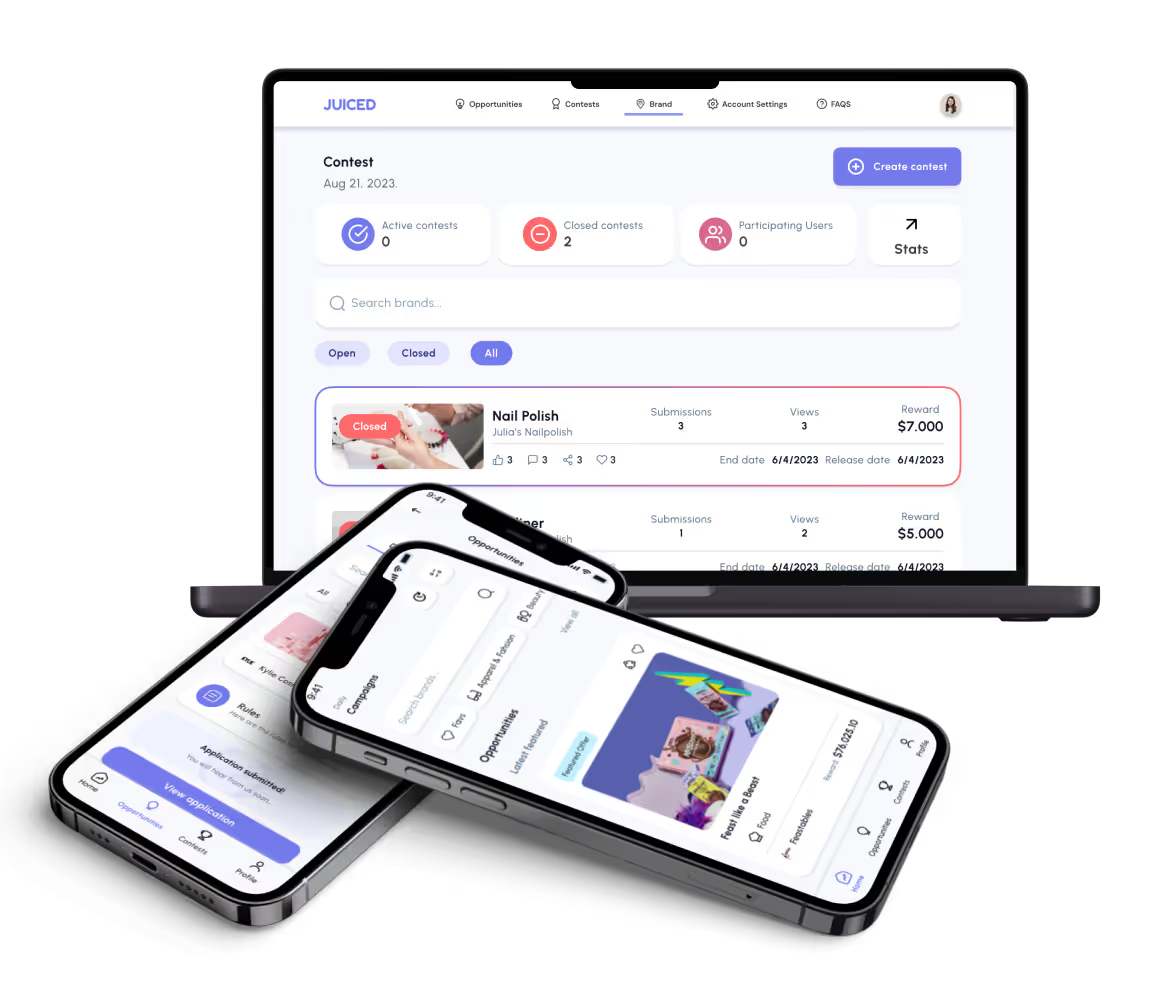
FlutterFlow can deliver a fully custom lead tracking CRM covering multi-source intake, qualification scoring, pipeline stage management, task assignment, contact history, lead routing, performance dashboards, and mobile access. All stages and qualification logic are built to your exact process.
For practical inspiration, browse FlutterFlow app examples for sales and pipeline tools to see how other teams have structured their lead management systems.
Multi-Source Lead Intake
- Web form capture: Custom intake forms collect leads from your website directly into the CRM pipeline without manual entry.
- CSV import and API ingestion: Leads from advertising platforms and third-party sources load via import or direct API connection.
- Unified pipeline view: All lead sources consolidate into a single ranked pipeline view, eliminating tab-switching between platforms.
Lead Qualification Scoring
- Attribute-based scoring: Company size, budget signals, and intent data score automatically against your custom qualification framework.
- Priority surfacing: Highest-scoring leads rise to the top of the pipeline view, reducing the time reps spend deciding who to contact.
- Configurable scoring weights: Sales managers adjust attribute weights through an admin interface without developer involvement.
Pipeline Stage Management
- Custom stage configuration: Every stage name, entry condition, and exit criterion reflects your qualification and conversion process exactly.
- Deal value and probability tracking: Each stage carries weighted deal value, giving managers an accurate pipeline revenue forecast.
- Stage-level automation triggers: Moving a lead to a new stage fires back-end actions such as task creation or notification delivery.
Follow-Up Task and Reminder System
- Rep task assignment: Follow-up tasks assign to named reps with due dates and priority flags visible in their personal task queue.
- Cold lead escalation alerts: Leads that go past a defined threshold without contact trigger escalation notifications to sales managers.
- Overdue task dashboard: Managers see all overdue follow-ups across the team in a single filtered view.
Contact and Interaction History
- Full interaction log: Every call, email, meeting, and note records against the lead, giving reps complete context before each follow-up.
- Chronological timeline view: The contact record displays interactions in reverse chronological order with timestamps and rep attribution.
- Note and attachment support: Reps add text notes and file attachments directly to the lead record from mobile or desktop.
Lead Assignment and Routing Rules
- Territory-based routing: New leads route automatically to the correct rep based on geographic territory or industry vertical.
- Round-robin distribution: Leads from high-volume sources distribute evenly across available reps without manual assignment overhead.
- Source-based routing rules: Leads from specific ad campaigns or referral partners route to the rep or team designated for that source.
Sales Performance and Conversion Dashboard
- Pipeline value by stage: Managers see total deal value in each stage in real time, updated as reps advance leads through the funnel.
- Lead volume by source: The dashboard breaks down how many leads each source generates and what conversion rate each achieves.
- Rep performance metrics: Follow-up response times, stage advancement rates, and closed deals surface per rep for coaching conversations.
Mobile Lead Management
- Full iOS and Android access: Field reps view their pipeline, log calls, update qualification status, and add notes from any location.
- Offline data capture: Notes and activity logs entered without connectivity sync when the device reconnects to the back end.
- Push notification delivery: Task reminders and escalation alerts deliver to the rep's phone regardless of whether the app is open.
How Long Does It Take to Build a Lead Tracking CRM with FlutterFlow?
A simple lead tracking MVP takes 5–9 weeks. A full lead tracking CRM with multi-source intake, qualification scoring, automation, mobile access, and analytics takes 12–18 weeks. The number of lead source integrations and automation complexity drive the timeline more than the UI.
The phased approach works best for a CRM build. Core lead tracking first, automation and analytics once the pipeline logic is validated.
- Lead source count is the key variable: Each additional advertising platform or intake source adds integration work that extends the timeline.
- Qualification scoring logic adds scope: Complex multi-attribute scoring frameworks with weighted conditions require more build and test time than simple stage tracking.
- Phased delivery is 30–40% faster: Launching pipeline and contact logging first, then adding scoring and automation, consistently reaches production faster than a big-bang build.
Pipedrive activates within hours but cannot model custom qualification logic or multi-source intake from non-standard platforms. That gap is where the build investment pays off.
What Does It Cost to Build a FlutterFlow Lead Tracking CRM?
A FlutterFlow lead tracking CRM costs $15,000–$75,000 depending on the number of lead source integrations, automation requirements, and whether mobile access is in scope. Ongoing costs include lead source API fees, backend hosting, and a maintenance retainer.
Review FlutterFlow pricing plans explained before budgeting. The platform subscription is minimal; lead source integrations and development are the primary costs.
- Custom build breaks even at 3–6 years: A $45,000 FlutterFlow build at $6,000 per year maintenance equals Pipedrive at 15 seats over approximately 4–5 years.
- Hidden integration costs are real: Facebook Lead Ads, Google Ads, and LinkedIn Lead Gen Form sync require webhook or API integration, each adding project scope.
- Data migration adds upfront cost: Moving existing contact and lead records from a prior CRM requires scoping, transformation, and validation before go-live.
For teams where the custom qualification logic, ownership, and mobile-first experience justify the investment, the build delivers permanent cost advantage beyond year five.
How Does FlutterFlow Compare to Off-the-Shelf Lead Tracking Tools?
FlutterFlow builds in 10–18 weeks versus same-day activation for Pipedrive or Monday CRM. Over three years, the custom build costs more but delivers full ownership and qualification logic that no off-the-shelf tool can replicate.
If you are evaluating other platforms, FlutterFlow alternatives for CRM includes options worth considering alongside Pipedrive and HubSpot.
- Off-the-shelf wins on speed: Pipedrive and Monday CRM are live the same day; FlutterFlow requires 10–18 weeks before the first rep uses the tool.
- FlutterFlow wins on qualification depth: Custom stages, scoring weights, and routing rules reflect your actual process; Pipedrive's architecture has fixed constraints.
- Email automation is a genuine gap: Pipedrive's Automations and HubSpot's Sequences are mature native features; FlutterFlow requires an external email service provider integration.
For small sales teams where per-seat SaaS costs are not yet significant and email sequences are essential from day one, off-the-shelf is the right call.
What Are the Limitations of FlutterFlow for Lead Tracking?
FlutterFlow has no native email sequence automation, no direct ad platform lead sync, and no built-in duplicate detection. These are real limitations, not edge cases, they affect most multi-source lead tracking builds and require deliberate engineering to address.
For high-volume lead databases with thousands of active records, review FlutterFlow performance at scale before locking in your database architecture.
- No native email sequences: Automated drip campaigns triggered by pipeline stage or time elapsed require integration with Mailchimp, ActiveCampaign, or a similar provider.
- No direct ad platform sync: Facebook Lead Ads, Google Ads, and LinkedIn Lead Gen Form sync require webhook or API integration; they are not native FlutterFlow connectors.
- No built-in duplicate detection: Multiple intake sources create duplicate records that FlutterFlow cannot detect natively; custom deduplication logic must be built deliberately.
- Reporting depth requires custom work: Pipedrive's goal tracking and HubSpot's forecast reporting are mature built-in features; equivalent analytics in FlutterFlow require custom development.
- Outbound calling needs an integration: Click-to-call via Twilio or RingCentral requires API integration and adds project scope beyond a standard lead tracking build.
- Volume performance needs architecture care: Querying pipeline data for thousands of active leads requires database architecture decisions that default Firestore configurations do not handle optimally.
Addressing these limitations requires deliberate engineering choices at the architecture stage, not configuration after the app is built.
How Do You Get a FlutterFlow Lead Tracking CRM Built?
Hire a team with sales pipeline design knowledge, FlutterFlow expertise, lead source API integration experience, and a clear approach to duplicate lead data. Multi-source intake and custom qualification logic require a structured team, not a solo freelancer.
For a CRM build with multiple lead source integrations and custom qualification logic, top FlutterFlow development agencies are better positioned than solo freelancers.
- Sales pipeline design knowledge matters: A developer who has built CRM or pipeline tools before makes better architecture decisions than one approaching it for the first time.
- Duplicate lead handling is a red flag test: Ask specifically how they approach duplicate detection from multiple intake sources; a vague answer indicates limited CRM experience.
- Lead source integration experience: Confirm they have integrated Facebook Lead Ads, Google Ads, or LinkedIn Gen Forms via webhook before, not as a first attempt.
- Database design for relational CRM data: CRM data is relational; the developer must understand how to model contacts, deals, activities, and stages in Firestore or Supabase correctly.
- Ask for prior pipeline tool examples: A portfolio without at least one CRM or pipeline tool build is a genuine signal of limited domain experience.
Expect 10–16 weeks for a full lead tracking CRM with multi-source intake, qualification scoring, and analytics from a team that has built pipeline tools before.
Conclusion
FlutterFlow is a strong platform for custom lead tracking when your qualification process, lead sources, or mobile requirements do not map to what Pipedrive or HubSpot can deliver. Email automation, ad platform sync, and deduplication logic all require deliberate engineering.
Document your lead sources, qualification stages, and top three follow-up automation scenarios before briefing any developer. Those three inputs define the bulk of the project scope.
Building a Custom FlutterFlow Lead Tracking CRM? Here Is How LOW/CODE Agency Approaches It.
Most custom CRM builds go off track because the pipeline logic was never fully documented before development started. Reps then get a tool that looks right but handles their actual qualification process incorrectly.
As AI development experts, we at LOW/CODE Agency help SMBs ship real software — web and mobile applications, intelligent chatbots, RAG pipelines, and autonomous AI agents built for businesses that need results, not platforms. We map your pipeline logic, document every lead source integration, and design the qualification scoring before writing a line of code, so the system reflects how your team actually sells.
- Pipeline logic mapping: We document every stage, qualification criterion, and routing rule before any configuration begins in FlutterFlow.
- Lead source integration design: We scope the webhook and API connections for each ad platform and intake source before the build starts.
- Qualification scoring build: We implement your custom scoring framework with configurable weights that sales managers can adjust without developer help.
- Duplicate detection logic: We design and build deduplication rules that handle the edge cases created by multiple simultaneous intake sources.
- Mobile-first build: We build iOS and Android lead management with offline capability so field reps work without connectivity constraints.
- Email automation integration: We connect your chosen email service provider to FlutterFlow so sequence triggers fire correctly at each pipeline stage.
- Full product team: Strategy, UX, development, and QA from a single team that treats your CRM as a revenue tool, not a configuration task.
We have built 350+ products for clients including Coca-Cola, American Express, and Sotheby's. We know what makes custom pipeline tools succeed and we design those decisions in from the start.
Related Articles
Last updated on
September 24, 2026
.

Jesus is a visionary entrepreneur and tech expert. After nearly a decade working in web development, he founded LOW/CODE Agency to help businesses optimize their operations through custom software solutions.


FAQs
What are the key features to include in a lead tracking CRM built with FlutterFlow?
Can FlutterFlow integrate with external databases for CRM lead management?
How do I set up automated lead status updates in FlutterFlow?
Is it possible to customize the CRM interface in FlutterFlow for different user roles?
What are common challenges when building a lead tracking CRM with FlutterFlow?
How secure is a lead tracking CRM built with FlutterFlow?
Related Articles

FlutterFlow
How to Build a Dropshipping App with FlutterFlow
Learn how to create a dropshipping app using FlutterFlow with step-by-step guidance and tips for beginners.

FlutterFlow
How to Build Insurance Tech Apps with FlutterFlow
Learn how to create insurance tech apps using FlutterFlow with ease. Discover key steps, benefits, and common challenges.

FlutterFlow
How to Build an Influencer Campaign Manager with FlutterFlow
Learn how to create an influencer campaign manager app using FlutterFlow with step-by-step guidance and best practices.

FlutterFlow
How to Build an Attendance Tracking System with FlutterFlow
Learn how to create an efficient attendance tracking system using FlutterFlow with step-by-step guidance and best practices.

Why customers trust us for no-code development


