

How to Build a Coaching Marketplace Platform with FlutterFlow
12 min
read
Learn how to create a coaching marketplace platform using FlutterFlow with step-by-step guidance and best practices.


Building a FlutterFlow coaching marketplace platform is a practical goal for founders who want to connect coaches with clients without the cost of custom development. Coach discovery, session booking, and Stripe payments are all achievable natively.
Video calling is not. Understanding what FlutterFlow handles natively versus what requires third-party API integration separates a realistic plan from an expensive rebuild after launch.
Key Takeaways
- Coach profiles and discovery: Clients find coaches by specialty, coaching style, availability, and rate surfaced from Firestore profile data.
- Calendar booking and confirmation: Coaches set availability; clients book slots with instant confirmation and reminder notifications sent automatically.
- Session package payments: Stripe handles one-off session payments and multi-session bundle purchases with package pricing logic.
- Session notes and progress tracking: Post-session notes and goal tracking create a structured client progress record over time.
- Video session integration: Native video calling is not a FlutterFlow feature; Daily.co or Zoom APIs must be integrated via Cloud Functions.

What Can FlutterFlow Build for a Coaching Marketplace Platform?
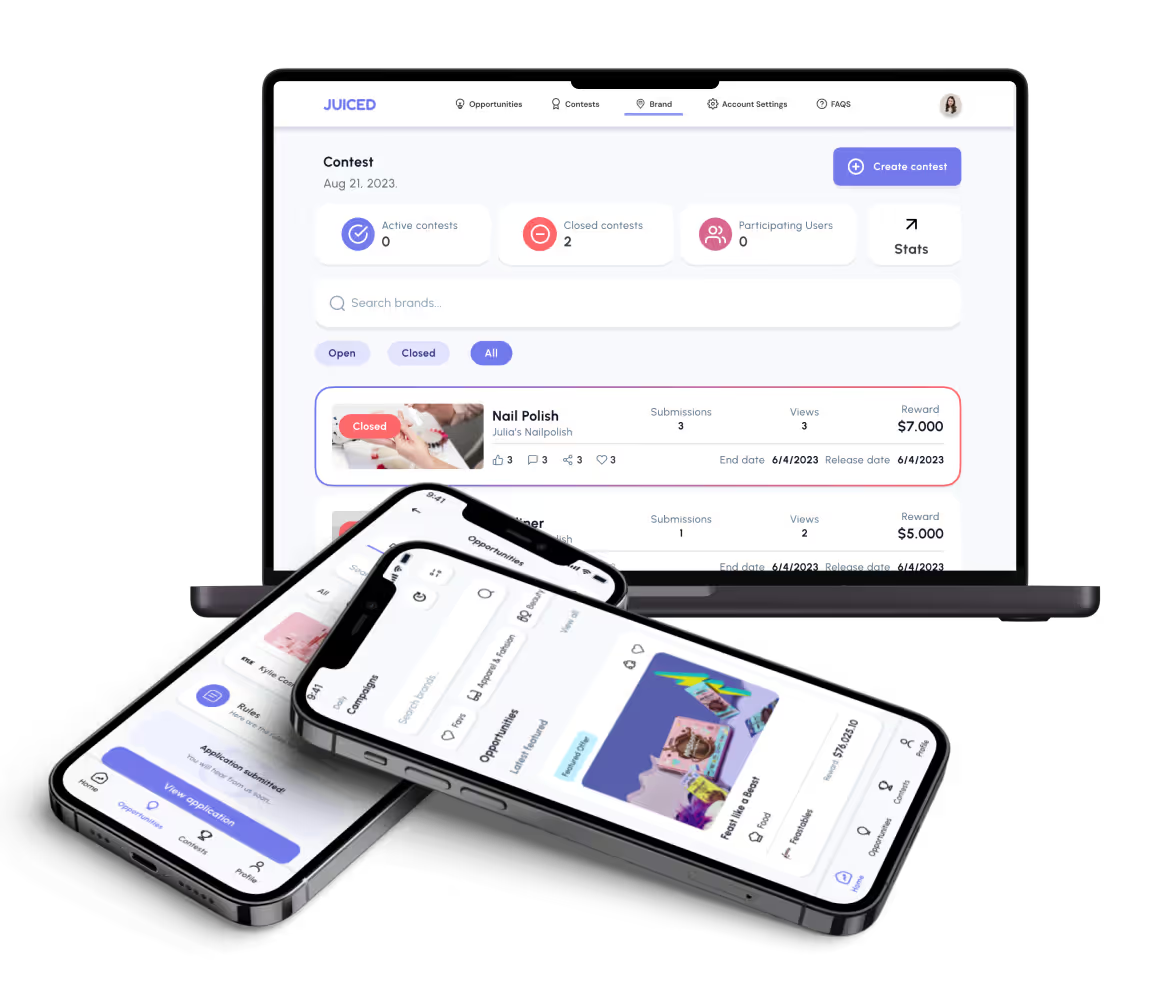
FlutterFlow delivers the full coaching marketplace layer: coach profiles, client discovery, availability booking, Stripe payments, session notes, progress tracking, and post-session reviews. Video calling and external calendar sync require third-party API integration.
Coaching marketplaces follow SaaS platform architecture. Understanding whether you can build a SaaS with FlutterFlow gives useful context before scoping features.
Coach Profile and Specialty Display
Coaches build detailed profiles with bio, niche, certifications, pricing, availability, and sample session structure stored in Firestore.
- Profile data structure: Coaches populate niche tags, certifications, and pricing tiers in a structured Firestore document for search filtering.
- Public profile display: FlutterFlow card and list components render profiles cleanly with ratings, pricing, and specialty tags visible.
- Search filter support: Clients filter coaches by niche, price range, coaching format, and rating using Firestore query parameters.
Profile data model decisions made during discovery directly shape search quality. Attribute taxonomy must be defined before building any UI.
Client Discovery and Search
Clients search coaches by specialty, price range, availability, coaching format, and aggregate review score.
- Keyword and tag search: Firestore query filters surface coaches matching a client's stated niche or coaching goal accurately.
- Price and availability filters: Dynamic range inputs filter the coach roster by hourly rate and available time slots.
- Aggregate rating display: Calculated review averages update on coach profiles after each completed session review submission.
Availability Calendar and Session Booking
Coaches configure weekly availability. Clients book open slots with confirmation push notifications sent to both parties on booking.
- Availability configuration: Coaches set recurring weekly time blocks and mark exceptions for blocked periods or holidays.
- Client booking flow: Clients select an available slot, confirm session format, and receive instant confirmation via push and email.
- Double-booking prevention: Firestore transaction writes on booking submission prevent concurrent bookings on the same time slot.
Session Package and One-Off Pricing
Coaches offer individual sessions or discounted multi-session packages. Stripe handles both one-time and upfront package payments cleanly.
- One-off session checkout: Stripe payment intent completes on booking confirmation, charging the client for the individual session.
- Package purchase logic: Clients purchase multi-session bundles upfront; Firestore records the remaining session count per relationship.
- Session countdown tracking: Each completed session decrements the Firestore counter, blocking new bookings when sessions are exhausted.
Stripe Connect Coach Payout
Session revenue routes through Stripe Connect, delivering net earnings to the coach after platform commission on booking completion.
- Stripe Connect onboarding: Coaches complete Express onboarding to receive direct payouts without manual platform disbursement.
- Platform commission deduction: The platform fee is calculated and separated from coach earnings automatically on each payment intent.
- Payout scheduling: Coaches set payout frequency within Stripe Connect; the platform has no manual payout management burden.
Session Notes and Goal Tracking
Coaches log post-session notes and update client goal progress, visible to the client inside their personal progress dashboard.
- Post-session note entry: Coaches access a session summary screen after each booking to add structured notes and observations.
- Goal milestone updates: Coaches update client goal progress status after each session, creating a timestamped progression record.
- Client visibility controls: Clients view session notes and goal progress but cannot edit coach-authored entries directly.
Client Progress Dashboard
Clients view session history, completed goals, coach notes, and upcoming bookings in a personal progress tracker screen.
- Session history log: Completed sessions display chronologically with coach notes, duration, and session format per entry.
- Goal progress display: Active and completed goals show with coach-assigned progress indicators and session-linked updates.
- Upcoming booking reminder: The dashboard surfaces the next scheduled session with one-tap reschedule or cancellation options.
Review and Testimonial After Sessions
Clients rate and review their coach after sessions; testimonials display publicly on coach profiles to support new client acquisition.
- Post-session review prompt: A review request appears automatically after each session is marked complete in the system.
- Star rating and text review: Clients submit a 1 to 5 star rating and optional written testimonial that routes to coach profile display.
- Acquisition value: Public testimonials reduce booking friction for new clients evaluating coaches on the discovery screen.
Review data feeds directly into the search and discovery layer. Coaches with more reviews and higher ratings surface higher in filtered results.
How Long Does It Take to Build a Coaching Marketplace Platform with FlutterFlow?
A simple coaching MVP takes 8 to 12 weeks. A full platform with packages, progress tracking, notes, reviews, and an admin panel runs 16 to 24 weeks. Video API integration adds 2 to 4 weeks on top of either scope.
FlutterFlow handles the coach and client UI significantly faster than custom code. Video API integration and calendar availability require consistent engineering effort regardless of platform.
- Phase-first approach: Launch booking and payment first, then add progress tracking and session resources in a deliberate second phase.
- Calendar complexity: Availability configuration and booking conflict prevention require Firestore transaction design addressed before development starts.
- Video API adds weeks: Daily.co or Zoom integration via Cloud Functions and custom widget packages adds 2 to 4 weeks to any timeline.
A phased build reduces time-to-launch by delivering the booking core before adding notes and content delivery features.
What Does It Cost to Build a FlutterFlow Coaching Marketplace Platform?
FlutterFlow pricing plans are a predictable fixed cost. The variable spend in coaching platforms is video API usage and Stripe Connect setup. Total project costs run $20,000 to $100,000 depending on scope.
Platform cost is $0 to $70 per month. Developer projects land between $20,000 and $70,000. Agency builds run $30,000 to $100,000.
- Video API per-session costs: Daily.co and Zoom API both charge per minute of video usage, which accumulates quickly in high-session platforms.
- Calendar sync with external providers: Google Calendar and Outlook sync require API integration outside FlutterFlow, adding cost at build and maintenance stages.
- Coach onboarding and vetting tools: Identity verification, credential review, and onboarding flows are often underestimated in initial project budgets.
The gap between FlutterFlow and custom development is significant. A platform costing $120,000 to $350,000 custom delivers at $30,000 to $100,000 with FlutterFlow.
How Does FlutterFlow Compare to Custom Development for a Coaching Marketplace Platform?
FlutterFlow builds a coaching marketplace in 16 to 24 weeks at $30,000 to $100,000. Custom development for an equivalent platform takes 18 to 36 months and costs $120,000 to $350,000. The capability ceiling appears with AI-powered coach matching and advanced progress analytics.
The comparison shifts depending on platform ambition. For niche coaching verticals and demand validation, FlutterFlow is the clear choice.
- When FlutterFlow wins: Niche coaching verticals, solo coach platforms expanding to a marketplace, and MVPs validating demand before larger investment.
- When custom wins: Enterprise platforms requiring AI matching, LMS-integrated curriculum, and complex corporate client account management.
- Maintenance comparison: FlutterFlow reduces ongoing cost for profile and category management; video API and Stripe Connect layers still require developer involvement.
The Bubble vs FlutterFlow comparison is worth reviewing for coaching platforms deciding between no-code options with different database strengths.
What Are the Limitations of FlutterFlow for a Coaching Marketplace Platform?
FlutterFlow does not include native video calling, external calendar sync, or AI coach matching. Session package countdown logic requires deliberate Firestore design. Apple IAP policy is a real architectural decision for coaching apps, not a minor compliance detail.
These are structural constraints. Addressing them in the architecture phase avoids expensive rework after the product is live.
- No native video calling: Daily.co, Zoom, or Agora APIs must be integrated via Cloud Functions and custom widget packages for any video session feature.
- External calendar sync requires API work: Syncing coach availability with Google Calendar or Outlook is not native to FlutterFlow and adds project time and cost.
- Session package countdown complexity: Tracking remaining sessions in a purchased bundle requires specific Firestore document structure planned before development begins.
- No AI coach matching: Goal-based or personality-matched coach recommendations require external ML service integration that FlutterFlow cannot replicate visually.
- Apple IAP policy risk: Platforms offering in-app paid sessions may face Apple in-app purchase requirements for certain session types sold on iOS devices.
FlutterFlow scalability planning becomes important as a coaching platform grows its coach roster and concurrent session booking volume.
How Do You Find the Right Team for a FlutterFlow Coaching Marketplace Platform?
When you hire FlutterFlow developers for a coaching platform, video API and calendar booking experience are the primary technical screening criteria. Coaching marketplace complexity warrants an experienced agency over a generalist freelancer.
Video integration, package payments, and progress tracking together create a genuinely complex build. A team without live booking platform examples represents real project risk.
- Video API experience is non-negotiable: Candidates who cannot name a video API they have integrated into a FlutterFlow build are not qualified for this project.
- Stripe Connect is distinct from Stripe Checkout: Standard payment experience does not qualify someone for coach payout architecture; ask for a specific Stripe Connect example.
- Calendar availability design: Ask how they model recurring availability, exceptions, and booking conflict prevention before any UI work begins.
- Red flags when hiring: No live booking platform in portfolio, no video API integration example, no answer on session package countdown logic.
- Key questions to ask: What video API do you recommend? How do you handle session package countdown? Can you show a Stripe Connect coach payout example?
A good team will define video and calendar architecture in weeks one and two, complete scoping by week four, and begin building in week five.
Conclusion
FlutterFlow is a strong fit for coaching marketplace development. Coach discovery, session booking, package payments, progress tracking, and reviews are all achievable within the platform.
Native video calling and external calendar sync require third-party API integration that adds cost and timeline to any scope. Define your video session approach and calendar sync requirements before scoping, then engage a team with video API and booking system experience.
Building a Coaching Marketplace Platform with FlutterFlow? Here Is How LOW/CODE Agency Approaches It.
Most coaching marketplace builds stall on video integration and payment architecture. Teams underestimate both the technical complexity and the data modelling required to make session packages and payouts work reliably from the start.
At LOW/CODE Agency, we help SMBs compete with AI-powered software built for them — custom web and mobile apps, RAG systems, chatbots, and intelligent agents delivered by a senior development team. We build FlutterFlow coaching marketplaces with proper Stripe Connect architecture, video API integration, and session data models designed to scale from the first booking.
- Platform scoping: We map coach and client workflows before touching a single canvas screen, identifying video, calendar, and payment dependencies early.
- Stripe Connect implementation: We build the full coach payout architecture, including platform commission splits, not just a standard Stripe checkout flow.
- Video API integration: We select and integrate the right video provider for your session format, usage volume, and budget constraints.
- Calendar and booking design: We architect availability management, booking conflict prevention, and session countdown logic to handle real-world edge cases.
- Progress tracking build: We design session notes and goal tracking data models so client progress is structured, searchable, and exportable.
- Post-launch iteration: We stay engaged after launch to refine booking flows, coach onboarding, and platform analytics as usage data comes in.
- Full product team: Strategy, UX, FlutterFlow development, and QA from a single team invested in the outcome, not just the delivery date.
We have built 350+ products for clients including Coca-Cola, American Express, and Sotheby's. We know where coaching marketplace builds go wrong and address those risks before they cost you months.
Related Articles
- How to Build a Compliance Audit Checklist App with FlutterFlow
- How to Build a Community App with FlutterFlow
- How to Build a Collaboration App with FlutterFlow
- How to Build a Coaching App with FlutterFlow
- How to Build a Cloud Kitchen Management App with FlutterFlow
- How to Build a Clinic Management System with FlutterFlow
Last updated on
September 24, 2026
.

Jesus is a visionary entrepreneur and tech expert. After nearly a decade working in web development, he founded LOW/CODE Agency to help businesses optimize their operations through custom software solutions.


FAQs
What are the first steps to create a coaching marketplace in FlutterFlow?
How can I integrate payment processing in a FlutterFlow coaching app?
What features are essential for a coaching marketplace platform?
Can FlutterFlow handle real-time chat between coaches and clients?
How do I ensure my coaching marketplace app is scalable using FlutterFlow?
Is coding required to build a coaching marketplace with FlutterFlow?
Related Articles

FlutterFlow
How to Build a Real Estate Agent Marketplace with FlutterFlow
Learn how to create a real estate agent marketplace using FlutterFlow with step-by-step guidance and key features explained.

FlutterFlow
Can You Build SaaS With FlutterFlow in 2026? | Expert Guide
Learn if FlutterFlow can truly build SaaS products, including limitations, architecture, cost, and real decision criteria. Practical answers, no fluff.
FlutterFlow
How to Build a Spending Analytics Dashboard with FlutterFlow
Learn how to create a spending analytics dashboard using FlutterFlow with step-by-step guidance and best practices.

Comparison
FlutterFlow
AppMaster vs FluterFlow
Compare FlutterFlow vs. AppMaster: Discover which no-code platform best fits your needs with this in-depth analysis of features, pricing, and real user feedback.


Why customers trust us for no-code development


