

How to Build a Brand Collaboration App with FlutterFlow
11 min
read
Learn how to create a brand collaboration app using FlutterFlow with step-by-step guidance and expert tips for smooth app development.


Managing brand-creator collaborations through email chains and shared spreadsheets is how deals fall through. A FlutterFlow brand collaboration app centralises deal terms, approvals, and payments in one structured platform.
Building it correctly requires understanding where FlutterFlow excels and where third-party integrations carry the weight. This guide covers the full feature set, realistic timelines, real costs, and the limitations to plan around before you start.
Key Takeaways
- Deal management workflows: Structured forms, approval stages, and status tracking are well within FlutterFlow's visual builder capability.
- AI matching improves partnerships: API-connected recommendation logic can surface the most relevant creator profiles for each brand's campaign goals.
- Contracts need third parties: FlutterFlow has no native document signing, making DocuSign or HelloSign integration a legal requirement in most markets.
- Multi-party messaging works: In-app communication between brand and creator roles is achievable with Firebase Realtime Database.
- ROI analytics require social APIs: Post-campaign performance data depends on creator-authorised social account connections, which carry rate limit constraints.

What Can FlutterFlow Build for a Brand Collaboration App?
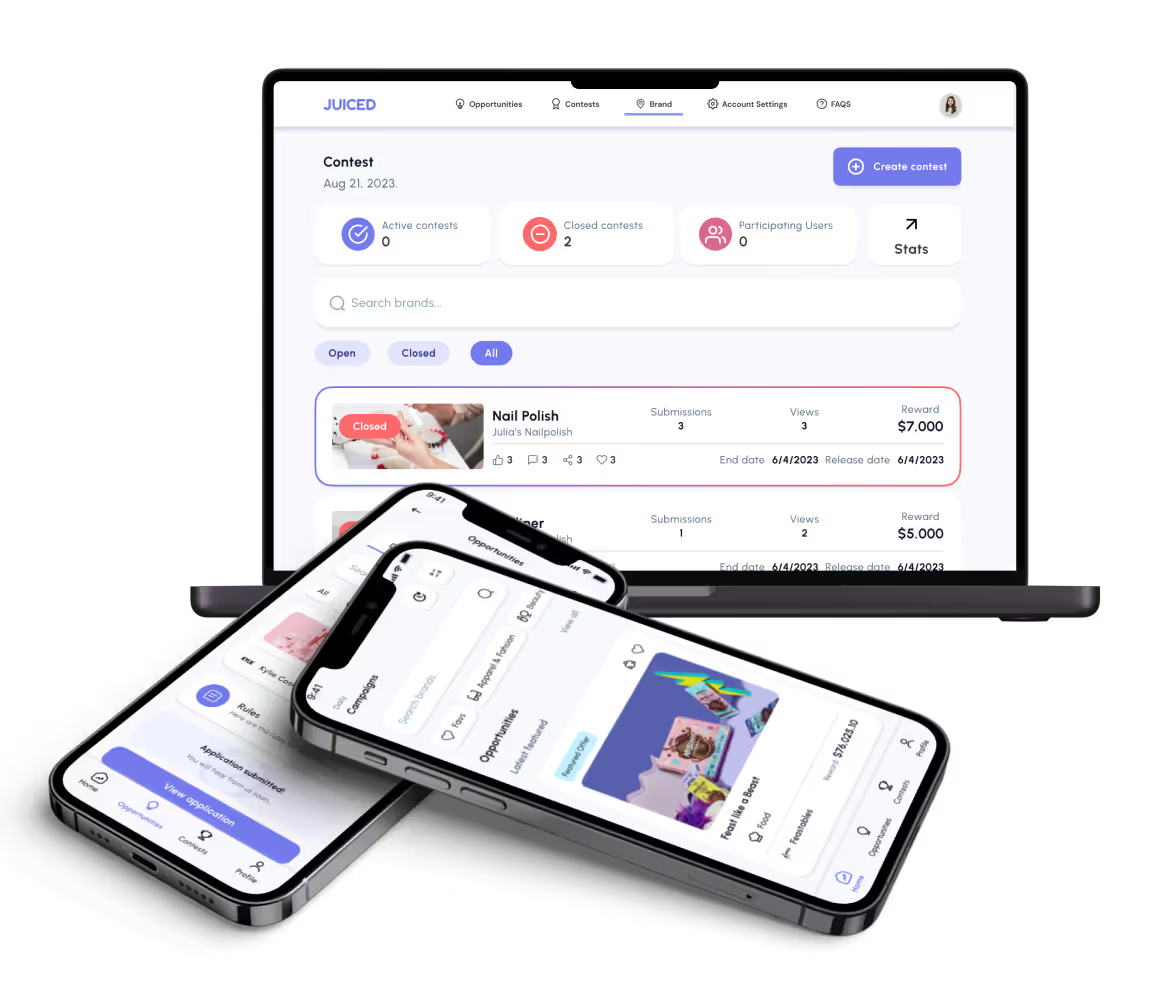
FlutterFlow can deliver the full operational layer of a brand collaboration platform: branded profiles, proposal flows, contract acceptance, deliverable approvals, milestone payments, and campaign reporting. Each feature maps to the platform's native capabilities, with e-signature and social API connections handled through third-party integrations.
Following solid FlutterFlow app design best practices around data model structure and role-based access is critical when the app holds commercially sensitive deal terms for multiple parties.
Brand Profile and Campaign Showcase
Brand pages display company profile, past collaboration history, campaign types offered, and average compensation rates for creator reference.
Creator Discovery with AI Matching
A search and recommendation interface uses AI-driven brand-creator matching to surface creators whose audience, niche, and engagement align with brand campaign goals.
Collaboration Proposal and Negotiation Flow
Structured deal proposal forms include counter-offer capability, allowing brands and creators to negotiate deliverables, timelines, and rates within the app.
Digital Contract and Terms Agreement
Document presentation and acceptance flows connect to third-party e-signature APIs with logged timestamp confirmation for each agreed deal.
Deliverable Submission and Brand Approval
Content submission screens let creators upload deliverables while brands review against brief requirements and approve or request revisions with inline comments.
Milestone-Based Payment Tracking
Payment schedule screens show agreed milestones, payment amounts, release conditions, and Stripe Connect transfer history for completed work.
Campaign Performance Reporting
Post-campaign analytics dashboards aggregate reach, impressions, engagement, and conversion data from creator-connected social accounts.
Collaboration History and Relationship Management
An archive of past collaborations between specific brand-creator pairs stores ratings, notes, and quick re-engagement capability for future campaigns.
Each feature in this blueprint maps to a specific workflow stage in the deal lifecycle, from first contact to final payment.
How Long Does It Take to Build a Brand Collaboration App with FlutterFlow?
A simple brand collaboration MVP covering profiles, proposals, and approvals takes 5–8 weeks with an experienced FlutterFlow developer. A full-featured platform including AI matching, e-signature, payment tracking, and campaign analytics takes 12–18 weeks.
The phased approach works well here. Launch profile and proposal workflows first, then add contract signing, payment tracking, and analytics in phase two.
- Simple MVP timeline: Profiles, proposal forms, and approval status tracking ship in 5–8 weeks with a focused scope.
- Full platform timeline: Adding AI matching, e-signature integration, Stripe Connect, and social API analytics extends the build to 12–18 weeks.
- E-signature adds complexity: Integrating DocuSign or HelloSign and mapping it to negotiated deal terms adds 2–3 weeks to any timeline.
- Social API access is an external variable: Gaining approved access to Instagram or TikTok creator data adds time independent of the FlutterFlow build.
- Speed vs custom development: FlutterFlow delivers this B2B collaboration tool at roughly 50% of the time and cost of a fully custom build.
Mapping every stage of the deal lifecycle during discovery prevents timeline surprises during the build phase.
What Does It Cost to Build a FlutterFlow Brand Collaboration App?
A FlutterFlow brand collaboration app costs $18,000–$55,000 for developer projects and $25,000–$70,000 for a full agency build. Understanding FlutterFlow plan pricing as part of the total budget helps founders set realistic expectations before scoping.
Platform subscription runs $0–$70 per month. The variable costs are integrations, legal compliance, and API fees.
- Platform costs are predictable: FlutterFlow's subscription is a fixed monthly cost, and Firebase scales with usage.
- E-signature is not optional: Enforceable contracts in most markets legally require a compliant e-signature solution, adding API costs from day one.
- Legal review adds budget: Contract template legal review and GDPR compliance for brand and creator data storage are real line items.
- Payment compliance varies by jurisdiction: Stripe Connect fees and applicable payout regulations differ by country and must be scoped for each target market.
- Custom builds cost 3–4x more: An equivalent feature set built entirely custom typically runs $70,000–$200,000 before maintenance costs.
Hidden costs in this category come from legal work, compliance requirements, and API subscription tiers rather than development hours.
How Does FlutterFlow Compare to Custom Development for a Brand Collaboration App?
FlutterFlow delivers a brand collaboration MVP in 5–8 weeks at $25,000–$55,000. A custom build covering the same feature set takes 4–6 months at $70,000–$200,000. For early-stage platforms and agency-managed creator programs, FlutterFlow is the stronger starting point.
The platform handles deal management workflows, approval routing, and payment tracking well. The ceiling appears at complex multi-round counter-offers and dynamically generated contracts.
- FlutterFlow wins for early-stage platforms: Brand tools for internal teams, creator agencies, and platforms testing product-market fit ship faster and cheaper.
- Custom wins for enterprise workflows: Multi-currency compliance, proprietary matching algorithms, and complex contractual logic push toward fully custom builds.
- UI iteration speed favours FlutterFlow: Updating deal flow screens, form layouts, and dashboard views is fast in the visual editor without a new engineering sprint.
Teams still deciding on the right low-code foundation should review Bubble versus FlutterFlow to see which suits their collaboration platform architecture better.
What Are the Limitations of FlutterFlow for a Brand Collaboration App?
FlutterFlow cannot dynamically generate contracts from negotiated data, cannot handle multi-round counter-offer flows with extensive conditional branching reliably, and is subject to social API rate limits for campaign analytics. These are not blockers, but they require deliberate third-party integration planning before build.
Understanding FlutterFlow scalability limits early prevents Firestore query bottlenecks when active deal volume grows across hundreds of simultaneous campaigns.
- Contract generation requires backend logic: Dynamically populated contracts from negotiated deal data require Firebase Functions or external document generation APIs.
- Negotiation depth has a ceiling: Multi-round counter-offer flows with conditional branching become difficult to maintain in the visual editor as complexity grows.
- Social APIs change without notice: Post-performance campaign data is subject to API rate limits and platform policy changes that affect reporting reliability.
- Scale requires Firestore optimisation: Platforms managing hundreds of simultaneous active deals need careful query design to maintain performance.
- Vendor dependency is real: Platform-level changes to FlutterFlow's action system can affect complex multi-step approval flows built on those components.
- Code export is advisable: For platforms expecting to add proprietary deal automation logic beyond FlutterFlow's visual builder, code export provides a path forward.
Do not soften these limitations in your planning. Each one requires a specific technical decision before development begins.
How Do You Build a FlutterFlow Brand Collaboration App with the Right Team?
Finding vetted FlutterFlow developers with B2B app experience ensures the deal management logic is designed correctly from the start. Multi-role FlutterFlow apps with shared data between brand and creator accounts require specific expertise in Firebase security rules and Stripe Connect.
Allow 2–3 weeks of discovery to map the full deal lifecycle before any design or development work begins.
- Multi-role experience is essential: Developers must demonstrate experience with apps where two distinct user types access shared records with different permissions.
- E-signature API knowledge matters: Candidates should know the difference between DocuSign and HelloSign and have integrated at least one in a previous project.
- Stripe Connect is specialist knowledge: Payment splits between platform, brand, and creator require Stripe Connect configuration experience, not just Stripe Checkout.
- Red flag to watch for: No demonstrated experience with multi-role FlutterFlow apps and no knowledge of e-signature API options are disqualifying.
- Key discovery question: Ask how they handle conditional deal stage logic and how they approach shared data access between brand and creator roles.
Freelancers are viable for an MVP covering profiles and proposal flows. A full platform with contracts, payments, and analytics warrants an agency with product and backend experience.
Conclusion
FlutterFlow is a strong fit for brand collaboration apps that need fast delivery and clean deal management workflows.
Contract generation, social API analytics, and complex negotiation flows require careful third-party integration planning. These are solvable, but they must be scoped before development begins.
Map every stage of your deal lifecycle from proposal to payment before engaging a developer. Getting the data model right from the start prevents expensive rework later.
Building a Brand Collaboration App with FlutterFlow? Here Is How LOW/CODE Agency Approaches It.
Most collaboration platform builds stall not because of the technology but because the deal lifecycle was never fully mapped before development started. Proposal stages, counter-offer logic, e-signature placement, and payment milestones all interact in ways that break an underprepared data model.
As AI development experts, we at LOW/CODE Agency help SMBs ship real software — web and mobile applications, intelligent chatbots, RAG pipelines, and autonomous AI agents built for businesses that need results, not platforms. We build FlutterFlow collaboration platforms with a full discovery phase that maps every deal stage, data relationship, and integration requirement before a single screen is designed. Our team covers strategy, UX, FlutterFlow development, Firebase backend, and QA.
- Deal lifecycle mapping: We document every stage from proposal to final payment, including counter-offer flows and approval conditions, before any development begins.
- Data model design: We architect the brand-creator shared data structure with role-based Firestore security rules from the first day of build.
- E-signature integration: We integrate DocuSign or HelloSign and map it to your negotiated deal terms so contracts are enforceable and timestamped.
- Stripe Connect setup: We configure milestone-based payment releases, deposit holds, and creator payout logic for your specific market and currency requirements.
- AI matching integration: We connect API-based recommendation logic to surface relevant creator profiles against brand campaign parameters.
- Social API connections: We integrate creator-authorised social data for post-campaign analytics and build caching logic to handle API rate limits.
- Post-launch support: We stay involved through the first live deal cycles to calibrate approval flows, fix edge cases, and extend the platform as your deal volume grows.
We have built 350+ products for clients including Coca-Cola, American Express, and Sotheby's. We know where collaboration platform builds go wrong and we address those risks before they become delays.
Related Articles
Last updated on
September 24, 2026
.

Jesus is a visionary entrepreneur and tech expert. After nearly a decade working in web development, he founded LOW/CODE Agency to help businesses optimize their operations through custom software solutions.


FAQs
What are the first steps to create a brand collaboration app in FlutterFlow?
Can FlutterFlow handle real-time collaboration features in an app?
How do I manage user permissions in a brand collaboration app built with FlutterFlow?
Is coding required to build a brand collaboration app in FlutterFlow?
What are common challenges when building collaboration apps with FlutterFlow?
How can I test and deploy my FlutterFlow brand collaboration app?
Related Articles

FlutterFlow
Can You Build SaaS With FlutterFlow in 2026? | Expert Guide
Learn if FlutterFlow can truly build SaaS products, including limitations, architecture, cost, and real decision criteria. Practical answers, no fluff.
Comparison
FlutterFlow
FlutterFlow vs Draftbit | 9 Factors Compared (2026)
Compare FlutterFlow vs Draftbit across 9 key factors including customization, code control, backend flexibility, pricing, and scalability to choose the right builder in 2026.

FlutterFlow
How to Build a Content Scheduling App with FlutterFlow
Learn how to create a content scheduling app using FlutterFlow with step-by-step tips and best practices for smooth app development.
Comparison
FlutterFlow
FlutterFlow vs Retool | 8 Factors to Decide the Best One
Compare FlutterFlow vs Retool across 8 key factors to find the best platform for building mobile apps or internal tools in 2025

Why customers trust us for no-code development


