

Bubble Native Mobile Editor vs Wrapper (2026 Guide)
15 min
read
Compare Bubble native mobile editor vs wrappers. Learn performance, App Store approval risks, costs, and which approach is best for launching a Bubble mobile app.

.avif)
Most founders build a solid web app with Bubble and then hit the same wall: how do you get it into the App Store? The Bubble native mobile editor vs wrapper decision is where the confusion starts.
This guide breaks down both options clearly so you can choose the right path for your product stage, budget, and timeline.
Key Takeaways
- Wrappers launch faster: You can get an existing Bubble app into the App Store in days, not weeks.
- Native apps perform better: The Bubble native mobile editor builds real iOS and Android apps using React Native.
- App Store rejection is a real risk: Thin WebView wrappers can be rejected by Apple if they lack native functionality.
- Your backend stays intact: Migrating from wrapper to native later only requires rebuilding the mobile UI, not the full product.
- Most founders start with wrappers: Validate traction first, then invest in native architecture when the product proves itself.

Can Bubble Apps Be Published on the App Store?
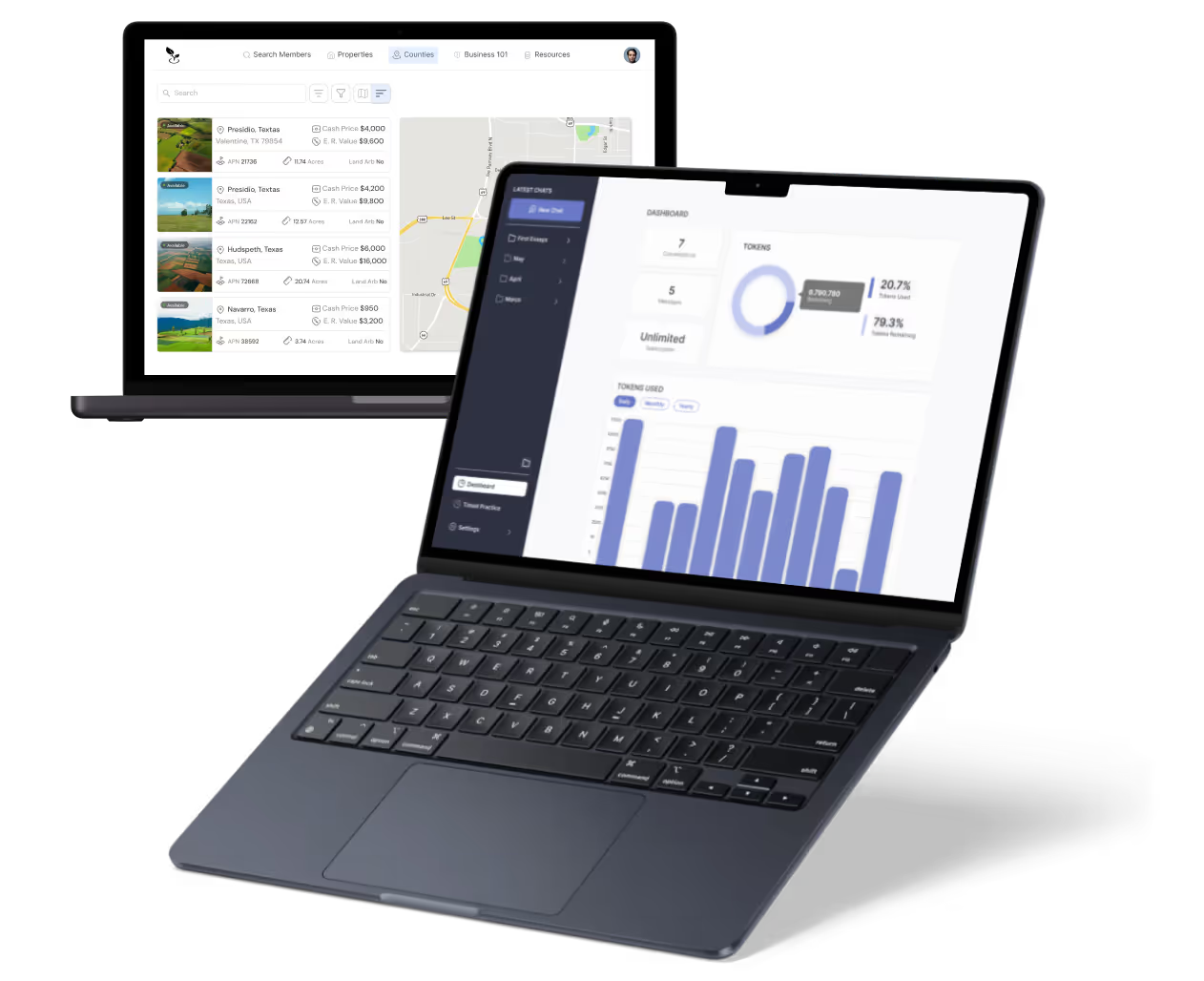
A responsive Bubble web app cannot be submitted directly to the Apple App Store or Google Play. You need a proper mobile app build, and two approaches make that possible today.
Both the Bubble native mobile editor and mobile wrappers can get your app into the app stores. The difference is in what you get on the other side.
- Native mobile editor: builds real iOS and Android apps using React Native, giving you a fully native experience on top of your existing Bubble backend.
- Mobile wrappers: package your existing Bubble web app inside a native shell so it installs and behaves like a mobile app without rebuilding the UI.
Choosing between these two approaches determines performance, cost, and long-term scalability for your product.
The Two Ways to Turn a Bubble App Into a Mobile App
You have two real paths. One is faster. One is built to last. Understanding what each approach actually does helps you make the right call for where your product is right now.
Bubble Native Mobile Editor
The Bubble native mobile editor is Bubble's official mobile development solution. It compiles real native iOS and Android apps, not a web app in a mobile container.
You use a drag-and-drop editor with mobile-specific components, native navigation, and gesture support. Your Bubble backend, database, and workflows carry over completely.
- React Native under the hood: your app compiles into a genuine native iOS and Android build, not a browser-based experience.
- Mobile-specific UI components: navigation, gestures, and layouts built for how users actually interact on mobile devices.
- Same Bubble backend reused: all your existing data, workflows, and API connections work without changes.
- Designed for long-term products: built for teams investing in mobile as a core part of their product, not a quick add-on.
The mobile UI must be built separately. There is no conversion of your existing Bubble web pages into native screens.
Bubble Mobile Wrappers
A Bubble mobile wrapper loads your existing Bubble web app inside a WebView container. The app stores treat it as a mobile app and users install it like one.
You do not rebuild anything. You point the wrapper at your Bubble app URL, configure settings, and generate your builds. It is the fastest path to the App Store for an existing Bubble product.
- No UI rebuild required: your existing Bubble web app becomes the content inside the mobile shell without any changes.
- Minimal setup process: enter your app URL, configure icons and notifications, generate iOS and Android builds.
- Popular tools available: Natively, BDK Native, GoNative, and WebViewGold are the most used options for Bubble apps.
- Faster time to market: most wrapper setups go from configuration to App Store submission within days.
Wrappers come with performance and approval trade-offs that matter more as your product grows.
Bubble Native Mobile Editor vs Wrapper (Quick Comparison)
This comparison covers the factors that matter most to founders choosing between the two approaches.
- Development approach: the native editor requires rebuilding your mobile UI from scratch; wrappers package your existing web app without touching the UI.
- App performance: native apps render using device-level frameworks for smooth, fast interactions; wrappers render inside a browser engine and depend on network speed.
- App Store approval risk: native apps follow standard submission rules; thin WebView wrappers risk Apple rejection for offering little beyond a packaged website.
- Mobile user experience: native apps support gestures, smooth scrolling, and platform navigation patterns; wrapped apps behave more like mobile websites.
- Access to device features: native apps access camera, GPS, biometrics, and background tasks natively; wrappers offer limited hardware access depending on the tool.
- Development time: wrappers take days to launch; the native mobile editor takes weeks of UI design, build, and testing.
- Cost to launch: wrappers are significantly cheaper upfront; native development costs more due to the longer build time required.
- Long-term scalability: the native editor is built for products that grow in complexity; wrappers hit limitations as features and user expectations increase.
- Reuse of existing Bubble apps: wrappers are built entirely around reuse; the native editor requires building a new mobile UI from the ground up.
How the Bubble Native Mobile Editor Works
The Bubble native mobile editor compiles your app using React Native, the same framework behind many large consumer mobile products. Your app renders using iOS and Android device frameworks, not a browser.
You work in a drag-and-drop mobile editor with components, navigation, and layouts designed specifically for mobile screens.
If you want to understand the full scope of what Bubble can do before committing to the mobile editor path, where Bubble's capabilities end and its real limitations begin is worth understanding first.
- Device feature access: camera, GPS, push notifications, biometrics, and background tasks are available natively without workarounds.
- Backend reuse: your existing Bubble database, workflows, and integrations carry over completely to the mobile product.
- Drag-and-drop mobile editor: mobile-specific UI components and navigation built into the same type of visual builder Bubble developers already know.
The native mobile editor is still evolving. Core features work in production, but some advanced capabilities are still being added to the mobile builder over time.
How Bubble Mobile Wrappers Work
A wrapper creates a native mobile shell around your existing Bubble web app. The app stores accept it as a native app. Users install and open it like any other app on their phone.
The typical setup process for a Bubble mobile wrapper looks like this:
- Enter your Bubble app URL: the wrapper tool loads your live Bubble app as the content inside the mobile shell on every launch.
- Configure mobile settings: splash screens, icons, orientation, and basic navigation behavior are set up inside the wrapper tool's dashboard.
- Add push notifications and permissions: most wrapper tools include push notification support and device permission configuration as part of the setup.
- Generate your builds: the tool compiles iOS and Android builds that you submit through your Apple and Google developer accounts.
The most used wrapper tools for Bubble apps are Natively, BDK Native, GoNative, and WebViewGold. Each has different pricing, plugin support, and levels of device hardware access, so the right choice depends on what your specific app needs.
Performance Differences: Native Apps vs Wrapped Apps
Native apps built with the Bubble mobile editor render UI using iOS and Android device frameworks directly. Every interaction runs through the device's own rendering engine regardless of network conditions.
Wrapped apps render inside a browser engine. Performance depends on your network connection and how well your Bubble web app is optimized for mobile screens.
- Native rendering advantage: animations, transitions, and scroll behavior run at device speed, not browser speed.
- Wrapper dependency on network: WebView apps load content over the network, making performance variable based on connection quality.
- When the gap matters most: consumer apps with complex UI feel the difference immediately; internal dashboards and content tools often do not.
For simpler Bubble apps used internally, the performance gap is often small enough that users will not notice. For consumer products with high interaction frequency, native architecture pays off directly in retention.
User Experience Differences
The user experience gap between native and wrapped apps is harder to measure than performance but easier for real users to feel when they use your product every day.
Native apps built with the Bubble mobile editor give users the same interaction patterns as every other native app on their device.
- Native gesture support: swipe-to-go-back on iOS and bottom navigation patterns on Android work exactly as users expect them to.
- Smooth scrolling physics: momentum and snap behavior match the OS-level feel users are trained to expect from their phones.
- Platform navigation patterns: screen transitions follow iOS and Android conventions, making the app feel familiar from the first use.
- Better offline handling: native apps cache data and function without a live connection in ways WebView apps typically cannot replicate.
Wrapped apps behave more like mobile websites inside a container. A well-designed responsive Bubble app can feel close to native for simple use cases, but platform-specific interactions remain difficult to replicate through a WebView.
Access to Mobile Device Features
What hardware your app needs to function is one of the most practical factors in choosing between the Bubble native mobile editor and a wrapper.
Native mobile apps built with the Bubble mobile editor can access the full range of device features directly.
- Camera and microphone: photo capture, video recording, and voice input work natively without third-party workarounds or plugin dependencies.
- GPS and location services: real-time location tracking and location-based logic are available as first-class native features.
- Biometric authentication: Face ID and fingerprint login are supported natively, adding security users expect from any serious mobile product.
- Background tasks: your app can continue processing and syncing data even when the user is not actively using it.
Wrappers offer more limited hardware access. Basic push notifications work across most wrapper tools. Advanced features like biometrics or background sync depend on the specific wrapper tool and its plugin support.
Development Time: Which Approach Is Faster?
Wrappers are faster. If you already have a working Bubble web app, you can go from setup to App Store submission in days. There is no new UI to build and no new components to learn.
The Bubble native mobile editor requires building your mobile UI from scratch. You plan the screens, design them with mobile components, test across devices, and then handle App Store submission for both platforms. For a product with many screens, this takes weeks.
- Wrapper timeline: setup to submission typically takes one to five days depending on configuration complexity and review speed.
- Native editor timeline: UI design, build, device testing, and submission takes several weeks for most products.
- Right frame for this decision: development time only matters in the context of your product stage, not in isolation.
If you are validating whether your product has traction, wrappers save you weeks. If you are past validation, the extra build time for native is an investment in long-term product quality.
Cost Comparison
The cost difference between a wrapper launch and a native mobile editor build comes down to one variable: development time.
For a wrapper-based launch, your main costs are straightforward.
A wrapper tool subscription runs roughly $19 to $99 per month depending on the tool and plan. An Apple Developer account costs $99 per year. A Google Play account is a one-time $25 fee.
Understanding how Bubble's pricing plans affect your overall build cost matters here too, since your Bubble plan tier affects what features your app can use.
- Wrapper total launch cost: under $500 for the first year if you build it yourself, including all subscriptions and developer accounts.
- Native editor cost driver: development time is the biggest cost factor; more screens and complexity means more build hours required.
- Cheaper upfront vs cheaper long-term: wrappers cost less to launch; native apps cost less to maintain and scale as your product grows.
A wrapper is the right financial decision for early validation. A native build is the right financial decision once your product has proven demand and you are investing in scale.
App Store Approval Risks
Apple has specific guidelines against thin WebView apps that offer nothing beyond packaging a website inside a mobile container. This is a real risk for Bubble wrapper submissions and one most comparison articles skip entirely.
A well-configured wrapper app with push notifications, clear native functionality, and strong metadata has a reasonable chance of approval. A minimal wrapper that simply loads a Bubble URL with no additional native features is at genuine risk of rejection.
- Apple's stated concern: apps that are primarily web content and do not offer a compelling reason to exist as a native app are flagged for rejection during review.
- Native apps face no architectural rejection risk: apps built with the Bubble mobile editor compile as genuine native apps and are reviewed on content and functionality grounds only.
- How to reduce wrapper rejection risk: strong push notifications, proper device permissions, clear in-app functionality, and polished metadata all improve your approval odds significantly.
If App Store stability is important to your business, native architecture removes a variable that wrappers always carry.
When a Wrapper Is the Better Choice
A wrapper is the right choice for specific product situations. Knowing when it fits keeps your build efficient and your budget focused on what matters at your current stage.
A wrapper makes sense when:
- You already have a working Bubble web app and want mobile distribution without rebuilding your entire product UI from scratch.
- You are launching an MVP and need real user feedback quickly before committing to a full native build investment.
- Your app is content-driven or dashboard-based where native gestures and smooth animations are not central to the value users get from your product.
- Budget is limited and you need an affordable mobile presence while you validate whether the product has traction worth investing in.
- Mobile performance is not critical for your specific use case, such as an internal business tool used occasionally rather than daily.
When the Bubble Native Mobile Editor Is the Better Choice
The native mobile editor is the right choice when mobile is core to your product and user experience quality is non-negotiable.
The native editor makes sense when:
- You are building a mobile-first product where the app is the primary experience, not a companion to a web version you already have.
- You are targeting consumer users who compare your app against polished native apps on their phones and notice performance and interaction quality immediately.
- Your product needs native device features like biometrics, background sync, GPS tracking, or camera access that wrapper tools cannot reliably deliver.
- You are building for long-term scale and need architecture that supports growing feature complexity without hitting WebView limitations over time.
- App Store experience matters for user acquisition, store rankings, or simply keeping your rejection and removal risk as low as possible.
Can You Start With a Wrapper and Move to Native Later?
Yes. Starting with a wrapper and migrating to the native mobile editor later is a well-established path that many Bubble product teams follow.
You launch with a wrapper to validate traction. Once the product proves itself, you rebuild the mobile UI inside the native editor.
Your Bubble backend, database, workflows, and integrations stay exactly the same throughout. Understanding how Bubble handles scalability as your product grows helps you plan the backend side of this migration before you need it.
- Backend stays intact: the migration is a UI rebuild, not a full product rebuild, which makes it significantly more manageable than it sounds.
- No automated conversion tool: mobile screens must be designed and built intentionally inside the native editor, not converted from existing web pages.
- Best time to migrate: once you have real usage data, you know exactly what screens and flows to prioritize in the native rebuild.
The migration requires real investment. But it is planned investment in a product with proven demand, not a guess made before you know whether the product works.
The Best Strategy for Most Bubble Founders
For most Bubble founders building a mobile product, the clearest path follows a two-stage strategy that matches investment to evidence.
Start with a wrapper. Launch your existing Bubble app through Natively or BDK Native, get it into the App Store, and focus entirely on whether your product solves the problem it was built for. Gather real usage data.
Watch how people interact with it. If you are still deciding whether Bubble is the right foundation for your product entirely, how Bubble compares to the other tools available is worth reviewing before you go deep on either mobile path.
- Stage one is validation: use a wrapper to get real users fast without over-investing in architecture before traction is proven.
- Stage two is scale: once the product has proven demand, rebuild the mobile UI with the native editor using everything you learned in stage one.
- The backend is your anchor: your Bubble data layer and workflows stay the same across both stages, so no work is wasted.
This path works because it matches the size of the investment to the size of the evidence. Build smart first. Scale intentionally after.
Final Verdict: Bubble Native Mobile Editor vs Wrapper
Both tools solve the same problem in different ways. The right choice depends entirely on your product stage.
Wrappers are best for speed, early validation, and founders who need mobile distribution without starting over. The native mobile editor is best for long-term mobile products where performance and user experience are part of the product's core value.
Most founders start with a wrapper. Most serious mobile products eventually move to native. Neither decision is permanent, and both can get you to the next step.
Want to Build a Bubble Mobile App the Right Way?
Choosing between a wrapper and the native mobile editor is the first decision. Building it so it actually works for your users is the harder part.
LOW/CODE Agency is the AI product development partner built for SMBs. We build and ship web apps, mobile apps, chatbots, RAG systems, and AI agents — end to end, without the enterprise overhead. We are not a dev shop.
- Clarity before development: we map user journeys, permissions, and workflows before any mobile screen is designed or built.
- Designed for real adoption: clean UX and friction-free flows so your users actually open and rely on the app every day.
- Built with Bubble and low-code as accelerators: we use the right tool for your product's needs, not the easiest one for us.
- Scalable from MVP to production: architecture that supports growth without forcing a full rebuild when your user base expands.
- Long-term product partnership: we stay involved after launch, iterating and adding features as your operations evolve.
We have shipped 350+ products across 20+ industries. Clients include Medtronic, American Express, and Coca-Cola.
If you are serious about building a Bubble mobile app that lasts beyond version one, let's talk about what your product actually needs to get there.
Related Articles
Last updated on
September 3, 2026
.

Jesus is a visionary entrepreneur and tech expert. After nearly a decade working in web development, he founded LOW/CODE Agency to help businesses optimize their operations through custom software solutions.


FAQs
Can Bubble publish apps to the App Store?
Are Bubble wrappers allowed on the App Store?
Is Bubble native mobile production ready?
Can you convert a Bubble web app into a mobile app?
Which wrapper works best for Bubble apps?
Should startups start with wrappers or native apps?
Related Articles
Bubble
How to Build a D2C Brand Store App with Bubble
Build a D2C brand store with Bubble. Sell direct, own your customer data, and control the experience — without Shopify's limitations or fees.

Bubble
How to Build a Grocery Delivery Platform App with Bubble
Simplify grant tracking with a Bubble app built without coding. Manage applications, deadlines, and reporting in one place step-by-step guide.
Bubble
How to Build a Bar Management App with Bubble
Build a bar management app with Bubble no coding needed. Track inventory, staff, and sales step-by-step in this no-code guide.
Bubble
How to Build a Driver Log App with Bubble
Build a donor management app with Bubble without writing code. Track donors, manage gifts, and run campaigns step-by-step with no-code.

Why customers trust us for no-code development


