

How to Hire No-code Developers (Practical Guide for Founders)
16 min
read
Learn how to hire no-code developers the right way. Avoid mistakes, evaluate skills, and choose the best fit for your project and budget.

Hiring a no-code developer is one of the most consequential early product decisions a founder makes. The right hire ships a product that works, scales, and evolves.
The wrong hire produces a well-intentioned rebuild that costs more than building correctly the first time would have.
This guide covers every step from defining what you need through evaluating, hiring, and managing no-code developers so you make the decision with full information rather than expensive hindsight.
Key Takeaways
- Define scope before hiring: unclear requirements waste budget and produce products that need rebuilding before they reach their first growth milestone.
- Product thinking matters more than tool knowledge: anyone can use a visual builder; the developers worth hiring understand users, workflows, and business logic behind every screen they build.
- Run a trial project before full commitment: interviews reveal communication style; paid trial tasks reveal how someone actually builds under real conditions.
- Cheap builds become expensive fixes: poor data architecture and workflow design at the build stage create the rebuilds that cost two to five times the original project budget.
- Agency or product team beats freelancer for complex products: structured delivery, accountability, and long-term partnership produce better outcomes than individual freelancers for anything beyond simple scope.

Do You Actually Need a No-code Developer?
Before evaluating candidates, the most important question is whether hiring is the right decision at your current product stage at all.
- When hiring makes sense: you want to build faster than DIY allows, you do not have time to learn the platform deeply, or you need a structured product with clean architecture rather than an experimental build you iterate on yourself.
- When you should NOT hire yet: if your idea is not validated or your scope is unclear, hiring too early wastes budget on a product direction that user feedback would have corrected in the first week of real usage.
- Build vs hire decision: building yourself takes longer and costs less money; hiring speeds execution but requires scope clarity and budget that pre-validation products rarely have with confidence.
When to use no-code covers the specific product stage signals that indicate whether building, hiring, or validating first is the right sequence for your situation.
Define What You Need Before Hiring No-code Developers (Most Important Step)
Most hiring mistakes happen before the first candidate is evaluated. Unclear scope produces misaligned proposals, wrong platform selection, and products that require rebuilding because the requirements were never clear enough to build correctly.
- Clarify your product scope: define core features for the first version only; a full roadmap is not a scope document and produces proposals that price and timeline everything rather than the thing that needs to be built now.
- Identify your users and use cases: who will use the product, what problem they are solving, and how they will interact with it determines the data model, workflow logic, and platform selection before any developer is involved.
- Choose the platform direction early: Bubble suits complex web SaaS with relational data; Glide suits internal data-driven tools; FlutterFlow suits mobile-first native apps; deciding this before hiring filters candidates immediately.
- Set realistic budget and timeline: clear expectations prevent the misalignment during delivery that produces scope disputes, delayed launches, and frustrated relationships between founders and developers.
Freelancer vs Agency vs In-house No-code Developer (Critical Decision)
The hiring model affects not just cost but the quality of architectural decisions, accountability for outcomes, and the product's long-term maintainability.
- Freelancers: best for small projects with clearly defined scope, limited integration complexity, and no significant ambiguity about what needs to be built; risk increases with product complexity.
- Agencies or product teams: better for complex apps, long-term products, and scalable systems where data architecture, workflow design, and product thinking matter as much as execution speed.
- In-house developers: useful for long-term internal product needs but require higher ongoing cost, management overhead, and hiring investment that pre-revenue products rarely justify.
- Trade-offs you need to understand: lower cost often means higher architectural risk; structured teams cost more upfront and produce better long-term outcomes for products that succeed and need to scale.
Agency vs freelancer for no-code development covers this decision in detail with the specific factors that determine which model fits your product type and stage.
Where to Find No-code Developers Worth Hiring
Finding candidates is the easy part of hiring. Finding candidates whose work quality matches their profile is where most founder hiring processes break down.
- Freelance platforms: Upwork and similar platforms provide fast access to a large talent pool; filtering for relevant platform experience and real portfolio work rather than profile completeness reduces the quality gap.
- No-code communities: Bubble Forum, FlutterFlow community, and platform-specific Slack groups contain active builders whose work and thinking are visible before any hiring conversation begins.
- Platform directories: Bubble, Glide, and FlutterFlow maintain expert directories of vetted builders with platform-verified experience; these reduce screening effort significantly compared to open talent platforms.
- LinkedIn and direct outreach: experienced no-code developers with strong portfolios are findable through platform-specific LinkedIn searches; direct outreach to people whose public work is impressive produces better candidates than inbound responses to job posts.
- Pre-vetted talent platforms: services that screen no-code developers before listing them reduce hiring risk for founders who do not have the technical background to evaluate candidates independently.
What Skills Actually Matter When Hiring No-code Developers
Platform knowledge is the minimum requirement. The skills that determine whether a developer builds a product that works versus a product that needs rebuilding go significantly beyond knowing how to use the visual builder.
- Platform expertise: direct experience with the specific tool your product requires; Bubble expertise does not transfer to FlutterFlow and vice versa; platform-specific depth matters more than broad no-code familiarity.
- Understanding of data and logic: ability to design database structures, relational data models, and workflow logic correctly from the start; this is the skill most directly responsible for whether the product needs rebuilding at the growth stage.
- UI/UX thinking: building interfaces that users complete the core workflow in without guidance or explanation; visual builder proficiency without UX thinking produces technically functional products that users find confusing.
- Integration and automation knowledge: connecting external APIs, payment systems, and automation tools reliably; integration failures are the most common source of production problems in no-code products.
- Problem-solving ability: handling real-world complexity, edge cases, and unexpected platform limitations without requiring founder involvement at every decision point during the build.
Product Thinking vs Tool Usage: The Biggest Differentiator in No-code Hiring
The difference between a no-code developer who builds a product and one who builds a collection of screens is product thinking. This is the quality that most hiring processes fail to evaluate correctly.
- Tool knowledge is not enough: anyone can learn to place components in a visual builder; building a product that users want to return to requires understanding the problem, the user, and the business logic behind every decision.
- Look for product understanding: the developer should ask about users, workflows, and business goals before asking about features; developers who start with features before understanding context build technically functional products in the wrong direction.
- Ability to think beyond MVP: they should consider how the data model supports future features, how the workflow logic handles scale, and where the platform ceiling appears relative to the product roadmap.
How to Evaluate No-code Developers Properly
Evaluation quality determines hiring quality. Most founder hiring processes rely too heavily on interviews and not enough on work evidence and trial execution.
- Check real portfolio, not just demos: look for working products accessible to real users, not template-based demos or screen recordings of builds that were never deployed to production.
- Review past results and outcomes: what measurable impact did their work create for the businesses that hired them; portfolio pieces without outcome context are much weaker evidence than case studies with specific results.
- Assess communication and clarity: if a developer cannot explain their architectural decisions simply and clearly, they cannot build clearly; communication quality at the evaluation stage predicts delivery quality reliably.
- Look for similar project experience: a developer who has built a marketplace before brings pattern recognition to your marketplace build that a developer without that experience cannot replicate regardless of their general skill level.
Questions to Ask No-code Developers Before Hiring
The questions worth asking reveal thinking and decision-making quality rather than factual knowledge about platform features.
- Have you built similar products before? Experience with the specific product type reduces architectural risk more than general platform familiarity; similar project experience means the patterns, edge cases, and platform limitations are already known.
- How do you handle scalability? Reveals whether the developer thinks about data architecture and workflow design for the scale the product plans to reach or only for the minimum that ships on day one.
- How do you approach database structure and workflows? The answer reveals technical depth; good developers explain their approach to data modeling before they explain their approach to building screens.
- How do you manage changes and iterations? Important for products that will evolve based on user feedback; developers who handle scope changes poorly create expensive delays at the stage when iteration speed matters most.
Run a Trial Project Before Full Commitment
A paid trial task is the most reliable evaluation tool available and the step most founders skip in favor of additional interviews that reveal less than one real build task.
- Start with a small paid task: assign a specific build challenge relevant to your product type; real execution under real conditions reveals capability gaps that interviews and portfolios consistently conceal.
- Evaluate speed and quality: how long the task takes and how clean the output is relative to the brief tells you more about delivery expectations than any timeline discussion in a hiring conversation.
- Check communication and ownership: how the developer handles ambiguity, asks clarifying questions, and takes responsibility for decisions during the trial task predicts how they handle the same situations during the full project.
The trial task investment of a few hundred dollars is the cheapest possible insurance against a multi-thousand dollar project with the wrong developer.
Red Flags to Never Ignore When Hiring No-code Developers
- No real case studies or proof of work: a portfolio without deployed production products is a significant risk signal regardless of how confident the presentation or how polished the demo appears.
- Only template-based experience: developers whose portfolio consists of modified templates rather than custom builds from defined requirements will struggle with the custom logic your product requires.
- Overpromising timelines or features: unrealistic commitments at the proposal stage produce missed deadlines, reduced scope, and quality compromises that compound throughout the project delivery.
- Cannot explain their decisions: inability to articulate why specific architectural choices were made indicates shallow platform knowledge that becomes a problem when the build hits complexity that requires genuine understanding to solve.
Budget, Pricing, and Engagement Models for No-code Development
Understanding pricing models before entering hiring conversations prevents the misalignment between founder expectations and developer proposals that delays projects before they start.
- Freelancer vs agency pricing: freelancers charge $30 to $150 per hour depending on experience and platform; no-code agencies charge more and provide structured delivery, project management, and accountability that individual freelancers rarely match for complex scope.
- Common engagement models: fixed price suits well-defined scope; hourly suits evolving scope; retainer suits ongoing iteration and product development after initial launch; long-term partnership suits products that will grow significantly.
- Focus on value, not just cost: cheap builds lead to expensive fixes; the developer who costs 30 percent more and produces clean architecture saves two to five times that premium at the first growth milestone when rebuilding is the only alternative to the structural problems cheap builds create.
No-code Developer Hiring Process (Simple and Effective)
A structured hiring process reduces the time spent evaluating wrong candidates and increases the confidence in the final hiring decision.
- Shortlist candidates: filter based on relevant platform experience, similar project portfolio, and communication quality in initial outreach; eliminate candidates without specific evidence of the product type you are building.
- Interview and evaluate: focus on how candidates think about product problems rather than how they describe platform features; thinking quality predicts build quality more reliably than technical vocabulary.
- Run a trial project: assign a paid build task relevant to your product; evaluate the output against the brief before committing to full project engagement.
- Finalize and onboard: set expectations on communication frequency, milestone structure, delivery format, and feedback process from day one; ambiguity in onboarding produces the same problems it produces in scope definition.
Managing No-code Developers After Hiring
Hiring correctly is half the outcome. Managing effectively after hiring determines whether the build produces what the product actually needs.
- Set clear milestones and deliverables: define what done means for each phase before the phase starts; vague milestones produce vague delivery that requires multiple revision cycles to reach the output that a clear brief would have produced in one.
- Maintain regular communication: weekly check-ins with specific agenda items produce better project visibility than open-ended availability; structure the communication rather than relying on the developer to surface issues proactively.
- Track progress consistently: review working builds rather than status updates; a working screen reviewed weekly reveals scope and quality issues weeks earlier than a status report that describes progress without demonstrating it.
- Align on outcomes, not just tasks: the measure of progress is whether the product is moving toward the user outcome it was built to deliver, not whether individual tasks are being completed on schedule.
The Hidden Cost of Hiring the Wrong No-code Developer
The real cost of a wrong hire is not the project fee. It is the rebuild cost, the delayed launch, and the architectural debt that compounds through every subsequent development decision.
- Rebuilding costs more than building right: fixing bad architecture after the product depends on it requires rebuilding every feature sitting on top of the broken foundation; this cost consistently exceeds the original build budget.
- Poor architecture slows growth: no-code scalability problems that appear at the growth stage almost always trace back to data model and workflow design decisions made in the first week of the original build.
- Delays impact business outcomes: time lost to rework, debugging, and rebuilding is time not spent acquiring users, improving the product based on real feedback, and building the operational systems the business needs to scale.
Long-term Thinking: Hiring for MVP vs Real Product
The hiring decision should be calibrated to what the product needs to become, not just what it needs to be on launch day.
- MVP-focused hiring: faster execution, lower cost, and higher risk of rebuilding later; appropriate when validation is the goal and the product direction is likely to change significantly based on early user feedback.
- Product-focused hiring: better data architecture, stronger workflow design, and scalability built in from the start; appropriate when the core product direction is validated and the build needs to support real growth without structural rebuilding.
- Choose based on your goals: how no-code agencies structure builds from discovery through launch covers the difference between MVP-quality and production-quality no-code development so the decision is made intentionally rather than by default.
Want to Build a No-code Product Without the Hiring Risk?
At LowCode Agency, we are a strategic product team that designs, builds, and evolves no-code products for growing SMBs and startups. We are not a dev shop.
- No-code development: our no-code development service covers platform selection, data architecture, and full production builds for products where speed and cost are the priority without sacrificing structural quality.
- Bubble development: our Bubble development service handles web SaaS, internal tools, and workflow-heavy business applications built to scale within the platform's genuine strengths.
- FlutterFlow development: our FlutterFlow development service covers mobile-first native app builds for founders who need iOS and Android without native development timelines.
- Architecture before build: we define data models, workflow logic, and platform selection before any visual building begins, preventing the structural mistakes that make no-code products expensive to scale.
- Long-term partnership: we stay involved after launch, iterating as your product direction clarifies and your operational requirements grow over time.
We have shipped 350+ products across 20+ industries. Clients include Medtronic, American Express, Coca-Cola, and Zapier.
If you want a no-code product built correctly without the hiring risk, let's talk.
Last updated on
March 24, 2026
.

Jesus is a visionary entrepreneur and tech expert. After nearly a decade working in web development, he founded LowCode Agency to help businesses optimize their operations through custom software solutions.




FAQs
How do I find the right no-code developer?
Should I hire a freelancer or an agency?
How much does it cost to hire a no-code developer?
What skills should I look for in a no-code developer?
How can I avoid hiring the wrong developer?
What are the biggest mistakes founders make when hiring no-code developers?
Related Articles
No-code/Low-code
No-code Use Cases (Real Examples You Can Build in 2026)
Explore real no-code use cases you can build in 2026. See practical examples, tools, and ideas to launch apps, automate workflows, and solve business problems fast.

No-code/Low-code
How to Hire the Best Web App Developers
Learn how to hire the best web app developers for your project. Compare skills, pricing, and platforms to find the perfect fit faster
No-code/Low-code
How to Work With No-code Agency
Work with a no-code agency the right way. Learn how to choose, collaborate, avoid mistakes, and build scalable products without wasting time or money.
No-code/Low-code
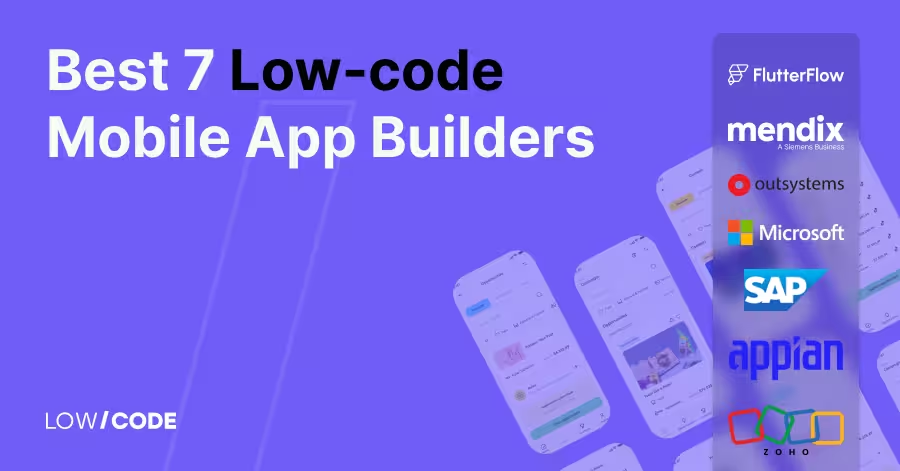
Best 7 Low-code Mobile App Builders (2026)
Compare the 7 best low-code mobile app builders of 2026. Find the right platform for fast, flexible app development with minimal coding
.avif)
.avif)
Why customers trust us for no-code development


