

How to Build a Management Consultant Marketplace
Learn key steps to create a successful management consultant marketplace platform efficiently and effectively.

Most founders building a management consultant marketplace think the hard part is finding consultants. It is not. Finding consultants is straightforward. Management professionals are not difficult to recruit.
The hard part is verifying that the ones you list are actually good enough to justify the rates buyers will pay, and building a platform that earns the trust of organizations making significant strategic decisions. That vetting and trust architecture is where consultant marketplaces succeed or fail.
Key Takeaways
- Vetting is the product, not the profile: A marketplace where anyone can list is a directory. One where credentials and track records are verified is a platform buyers trust with strategic decisions.
- Buyer trust is built on evidence: Engagement outcomes, methodology examples, and industry-specific case studies matter more to consulting buyers than generic star ratings or aggregate review scores.
- Milestone payment architecture is not optional: Management consulting engagements rarely involve single payments. The platform must support phased payment tied to deliverable milestones from day one.
- NDA infrastructure must be built in: Organizations will not share strategic problems with a consultant met through a marketplace without confidentiality protection built into the platform flow.
- Consultant retention requires consistent deal flow: Experienced consultants have strong direct networks. They stay on a platform only when it consistently delivers engagements they could not access independently.
- Start with one industry vertical: Strategy consultants for healthcare differ significantly from those for financial services. Depth in one vertical before breadth reduces positioning ambiguity for both buyers and consultants.

What Kind of Platform Is a Management Consultant Marketplace?
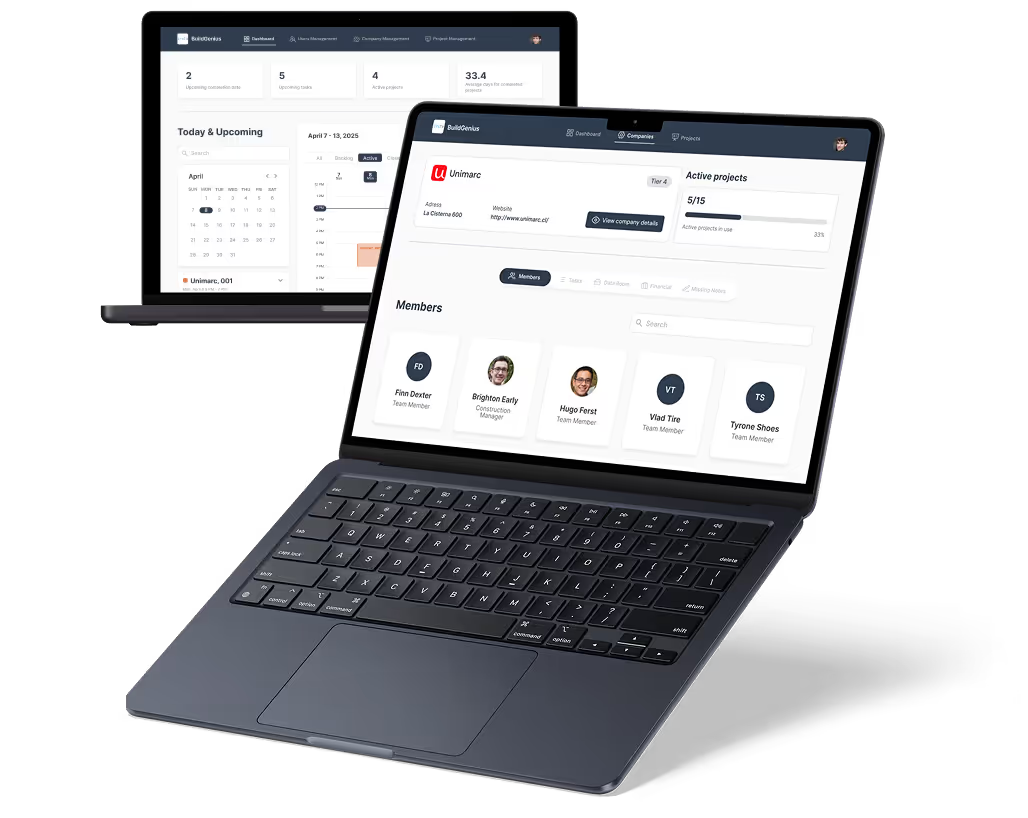
Management consultant marketplaces are B2B two-sided platforms connecting organizations with independent management consultants for strategic, operational, or transformation engagements. The buyer is typically a CEO, CFO, or senior operations leader at a mid-market or enterprise company, not a procurement manager running a vendor tender.
Understanding the B2B marketplace infrastructure principles particularly around trust architecture and high-value transaction flows is the right foundation before designing consultant-specific features.
- Key distinction from freelancer platforms: Management consulting engagements are higher-value, longer-duration, and require significantly more due diligence. Buyers hire for strategic impact, not task completion.
- Engagement types the platform must support: Project-based strategy engagements, interim management roles, fractional executive assignments, and advisory board placements. Each has different scoping, payment, and duration requirements.
- Buyer UX requirements: The platform UX must speak to how senior buyers actually evaluate and hire consulting support, not how procurement managers run vendor tenders or how general freelancer platforms display profiles.
- Platform differentiation: A curated, verified set of 50 exceptional consultants is more valuable to buyers than an unverified directory of 500. Resist the temptation to maximize supply headcount at the expense of quality.
The buyer for management consulting engagements makes decisions based on demonstrated strategic impact, not availability and price. Every platform design decision must reflect this buyer behavior rather than optimize for convenience metrics that apply to commodity services.
What Features Does the Platform Need?
The marketplace features that build conversion covering search, structured profiles, payments, and reviews all apply here but must be built to the standard a senior buyer expects when making a significant hiring decision.
Every feature must be designed for the evaluation process of an experienced executive buyer, not a transactional consumer. The proposal review, NDA workflow, and milestone tracking features are not enhancements. They are the core product for this buyer.
Consultant Profiles and Expertise Display
Consultants present functional specialization, industry experience, methodology and frameworks, past engagement outcomes (anonymised), education, professional memberships, and day rate or project fee range. Profile depth signals platform quality.
- Outcome evidence: Anonymised examples of delivered engagement outcomes are the primary evidence a senior buyer evaluates. Generic descriptions of capabilities do not serve this buyer's due diligence need.
- Methodology and framework display: Consultants who can articulate their analytical approach to a specific problem type are demonstrably more credible than those who list general competencies.
- Shallow profiles signal low standards: A platform where consultant profiles lack depth signals that the platform does not curate its supply. Senior buyers draw this conclusion in seconds and leave.
Engagement Scoping and Proposal Flow
Buyers post engagement briefs with context, objectives, timeline, and budget. Consultants submit structured proposals covering approach, relevant experience, deliverables, and fee structure, with messaging, document sharing, and revision support all happening on-platform.
- Brief quality determines proposal quality: A brief template that forces buyers to specify context, objectives, timeline, and budget produces proposals that are actually evaluable by a decision-making executive.
- On-platform proposal exchange: Keeping the proposal and review cycle on-platform creates a record that protects both parties and prevents off-platform displacement before the engagement begins.
- Structured proposal format: A standardized proposal format covering approach, relevant experience, key deliverables, and fee structure makes side-by-side comparison possible for buyers evaluating multiple consultants.
NDA and Contract Management
Platform-managed NDA signing at the pre-proposal stage, and digital contract generation with e-signature at engagement confirmation, keeps legal documentation inside the platform and prevents off-platform displacement before the first engagement begins.
- NDA before brief sharing: Organizations sharing strategic context with an unfamiliar consultant need confidentiality protection before any sensitive information is disclosed. NDA signing at brief submission is the right sequencing.
- Digital contract generation: Engagement letters generated on-platform with e-signature reduce the friction of formalizing the engagement relationship and keep the contract within the platform's legal framework.
- Displacement prevention: Keeping NDAs and contracts on-platform makes it significantly more difficult for buyers and consultants to move the relationship off-platform before the first payment is transacted.
Milestone Tracking and Deliverable Review
Defined project milestones, deliverable upload, buyer sign-off workflow, and payment release linked to each milestone confirmation keeps engagements accountable and payment tied to outcome rather than elapsed time.
- Milestone definition at engagement start: Both parties agree on milestone definitions, deliverable specifications, and payment amounts at the beginning of the engagement, not after disputes arise.
- Deliverable upload and review: Consultants upload deliverables to the platform. Buyers review and sign off. This creates a documented record of what was delivered and when approval was given.
- Payment linked to sign-off: Funds held in escrow release against milestone sign-off, not on a calendar schedule. This is the payment structure senior buyers expect for strategy engagements.
Verified Credentials and Reference Checks
Platform-verified badges for educational credentials, professional body memberships, and previous employer validation, with optional buyer reference check requests facilitated through the platform.
- Verification badges: Verified credentials displayed on profile cards signal that the platform has done the due diligence that buyers would otherwise need to do themselves before engaging.
- Reference check facilitation: Platform-facilitated reference requests give buyers access to the direct reference conversation that drives the majority of traditional consulting hiring decisions.
- Beyond LinkedIn endorsements: LinkedIn endorsements are not sufficient verification. The platform must verify credentials through official sources and document the verification process for platform quality assurance.
How Do You Vet and Manage Consultant Supply?
The operational systems for managing high-value consultant supply including performance scoring, tier management, and supply quality monitoring need to be built as platform infrastructure, not handled on a case-by-case basis.
The quality of consultants on the platform is the single most important determinant of buyer trust and retention. A management consultant marketplace with 500 undifferentiated consultants is less valuable than one with 50 exceptional ones.
- Vetting criteria: Verifiable prior employer or client references (not LinkedIn endorsements), evidence of delivered outcomes from past engagements, credential verification for stated qualifications, and clear functional and industry specialization.
- Vetting process design: Application review, document submission, structured reference check, and potentially a competency conversation. The depth of the process signals platform quality and filters out general professionals who would dilute credibility.
- Profile approval standards: Consultants do not appear in search until their profile meets a defined completeness and verification standard. This single gatekeeping mechanism does more for platform quality than any search algorithm.
- Performance monitoring: Engagement completion rate, buyer repeat rate, proposal acceptance rate, milestone dispute rate, and post-engagement rating. Track continuously and use for preferential search placement.
- Resist supply volume pressure: Increasing supply headcount at the expense of quality is the most common mistake on management consultant platforms. Curated depth beats unverified breadth for every buyer in this category.
Defining the vetting criteria before writing the first profile field is the right sequencing. The profile must be built to capture the data the vetting process produces, not the other way around.
How Should Consultant Engagements Be Paid?
The technical architecture for payment systems for consultant platforms covering milestone holds, retainer billing, and escrow release on sign-off requires deliberate design from the start rather than retrofit.
Management consulting engagements span weeks to months and involve significant financial commitments. The payment architecture must reflect the engagement structure that consultants and buyers actually use in the market.
- Project milestone payments: Payment releases in tranches as defined deliverables are confirmed by the buyer, not on a calendar schedule. The platform must hold and release funds against milestone sign-off from the buyer dashboard.
- Retainer billing: Monthly retainer engagements for ongoing advisory or fractional executive work require automatic recurring billing with clear renewal, adjustment, and cancellation terms built into the platform.
- Day rate billing: Some engagements are billed on days worked. The platform must support timesheet submission and day-rate approval flows for time-and-materials engagements where deliverables are not the right billing basis.
- Platform commission and anti-leakage: 10–20% commission is standard for high-value consulting platforms. Above 20% incentivizes direct engagement. NDA management, invoicing, and milestone tracking are the most effective anti-leakage mechanisms.
- Invoice and tax documentation: Consulting buyers are businesses with accounts payable processes. Automatic invoice generation with VAT or GST handling is a standard requirement, not an optional feature on a B2B platform.
Commission transparency at onboarding is essential for consultant retention. Experienced consultants who discover fee structures after their first successful engagement will move the next engagement off-platform immediately.
How Do You Build Credibility Through Reviews?
The outcome-focused review system design for a consulting marketplace is more structured than standard star ratings. The prompt architecture and outcome-tagging system are both platform decisions, not content decisions.
A five-star rating with no context does not help a buyer choose between two strategy consultants for a market entry project. Outcome-specific structured reviews do. This is the fundamental design principle for the review architecture.
- Structured review prompts: Post-engagement reviews capture specific outcomes achieved, quality of strategic thinking, communication and responsiveness, and whether the buyer would re-engage. Each prompt surfaces a different dimension of value.
- Anonymised case study publication: Consultants publish engagement case studies anonymised for client confidentiality. This is the content buyers actually evaluate when assessing unfamiliar consultants for a new engagement.
- Reference check functionality: Pre-engagement reference requests facilitated through the platform with consultant consent give buyers access to the direct reference conversation that drives most traditional consulting hiring decisions.
- Dispute track record transparency: Consultant dispute rate and resolution history displayed alongside positive reviews. A consultant with 100 positive reviews and two unresolved disputes is a different risk profile than one with the same reviews and none.
How Do You Launch and Grow a Management Consultant Marketplace?
The right launch sequence for a management consultant marketplace prioritizes supply quality over supply volume and buyer trust over buyer volume. Both sides of this market make decisions based on evidence, not availability.
Demand acquisition for a consulting marketplace requires content that demonstrates consultant expertise and case study publication from early engagements. Buyers adopt platforms because other buyers report results, not because of marketing claims.
- Launch supply strategy: Recruit 20–40 deeply vetted consultants in one functional or industry specialism before opening to buyers. Buyers who see exceptional curated profiles convert. Buyers who see undifferentiated lists do not.
- Demand acquisition approach: Direct outreach to mid-market companies with known strategic consulting needs, thought leadership content featuring consultant expertise, and case study publication from early engagements.
- Monetization sequence: Transaction commission at launch, then provider subscription tiers once consultants experience consistent deal flow, then buyer subscription for high-volume buyers.
- Anti-leakage strategy: Ongoing platform value through milestone management, NDA handling, and invoicing infrastructure is the most effective retention mechanism for both sides of the market.
- Expansion from specialism to adjacencies: Succeed in one vertical such as operational efficiency consulting before expanding to strategy, finance, or HR consulting where different vetted consultant pools are required.
Conclusion
A management consultant marketplace is a trust product before it is a technology product. The platform's credibility is determined almost entirely by who it lets in, how it verifies credentials, and how it captures outcomes that buyers can actually evaluate.
Build the vetting process before the search function. The search results are only as good as the quality of what sits behind them.
Define your functional specialism and the vetting criteria that would make a senior buyer confident hiring a consultant they have never met. Write that vetting process before building a single profile field.
Building a Management Consultant Marketplace? The Vetting Architecture Is the Product.
Most management consultant marketplace builders scope the platform features before defining the vetting criteria that determine what quality of supply the platform can credibly offer. Platforms built in that sequence produce impressive search results pages populated with consultants that senior buyers do not trust.
We are LOW/CODE Agency — an AI product development company for SMBs. We build across the full stack: web apps, mobile apps, AI chatbots, RAG pipelines, and autonomous agents. Custom software, built by experts. We scope B2B professional services marketplace platforms by building the vetting process, trust architecture, and payment flows before the first profile field is defined, so the platform creates credibility for buyers from the first search result.
- Vetting framework design: We define the verification criteria, reference check process, and profile approval standards that make consultant listings credible to senior executive buyers.
- NDA and contract workflow: We build the NDA signing, engagement letter generation, and e-signature flow that keeps the buyer-consultant relationship on-platform from first contact through final payment.
- Milestone payment architecture: We design and build the milestone escrow, deliverable review, and payment release system that matches how strategy engagements are actually structured and paid.
- Outcome-focused review system: We design the structured review prompts, anonymised case study format, and reference check facilitation that give buyers the evidence they need to evaluate unfamiliar consultants.
- Anti-leakage design: We build the platform value features including NDA management, invoicing, and milestone tracking that give both sides a reason to transact on-platform rather than moving relationships off it.
- Supply quality monitoring: We build the performance scoring, tier management, and engagement outcome tracking that keep supply quality high as the platform grows beyond the founding consultant cohort.
- Full product team: Strategy, UX, development, and QA from one team invested in your platform's long-term commercial success, not just the launch milestone.
We have built 350+ products for clients including Coca-Cola, American Express, and Sotheby's. We understand what it takes to build a B2B professional services platform that earns buyer trust and consultant commitment simultaneously.
Management consultant marketplaces that list credentials without context lose buyers to Rolodex referrals
Executives hiring management consultants need industry-specific case evidence, engagement model clarity, and rate transparency before they will take a first call. A profile with a logo and a bullet list sends them back to their personal network instead of booking through your platform.
LOW/CODE Agency builds the trust and matching infrastructure that high-value professional service marketplaces require. Our SaaS development team has designed B2B consulting platforms with structured case study display, expertise taxonomy, engagement workflow tools, and NDA-protected brief sharing.
For the executive buyer experience where finding, evaluating, and engaging a consultant needs to feel as rigorous as their own procurement process, our web app development practice builds interfaces that earn C-suite confidence.
We have completed 450+ projects for organizations including Medtronic, American Express, and Coca-Cola. Schedule a call to discuss your build.
Last updated on
September 28, 2026
.

Jesus is a visionary entrepreneur and tech expert. After nearly a decade working in web development, he founded LOW/CODE Agency to help businesses optimize their operations through custom software solutions.


FAQs
What are the first steps in creating a consultant marketplace?
How do I attract qualified consultants to my marketplace?
What technology is best for building a consultant marketplace?
How can I ensure quality control in a consultant marketplace?
What are common challenges when launching a consultant marketplace?
How do I monetize a management consultant marketplace?
Related Articles
Marketplace
How to Build a Shipping Carriers Marketplace
Learn key steps to create a shipping carriers marketplace with tips on features, costs, and challenges for success.
Marketplace
How to Build an Email Marketing Services Marketplace
Learn step-by-step how to create a successful email marketing services marketplace with essential tips and strategies.
Marketplace
How to Build a Remote Worker Marketplace
Learn step-by-step how to create a successful remote worker marketplace with essential features and best practices.

Marketplace
How to Build a Sports and Fitness Marketplace
Learn key steps to create a successful sports and fitness marketplace platform with expert tips and common challenges addressed.


Why customers trust us for no-code development


