

How to Build a Freight and Logistics Marketplace
Learn key steps to create a successful freight and logistics marketplace platform efficiently and effectively.


Freight brokerage is a multi-trillion dollar industry running on phone calls, email chains, and legacy load board software that has barely changed in two decades. Digital freight marketplaces have captured significant market share from traditional brokers, and the opportunity to build one has never been more accessible.
Freight is a regulated, high-liability industry. The platform architecture must reflect that from the first line of build scoping, not from the first compliance problem.
Key Takeaways
- Load matching is the core technical product: A freight marketplace lives or dies on the quality and speed of carrier-to-load matching, requiring real-time availability data and equipment filtering.
- Carrier compliance is non-negotiable: US carriers must hold active DOT authority and insurance. UK hauliers require Operator Licenses. The platform must verify these before any carrier accepts loads.
- Payment terms are a carrier retention issue: Carriers prefer fast payment. Shippers prefer longer terms. The platform's financial architecture must bridge this gap or lose its carrier base.
- Freight brokerage license requirements apply in the US: Operating as a digital freight broker requires active FMCSA brokerage authority. This is a mandatory pre-launch step, not an optional registration.
- B2B platform dynamics differ from B2C: Longer sales cycles, higher transaction values, contract relationships, and compliance documentation are all features of the B2B logistics market.
- The tech stack must support real-time tracking: Shippers expect live shipment tracking once a load is booked. This requires GPS integration and carrier tracking data feeds, not manual status updates.
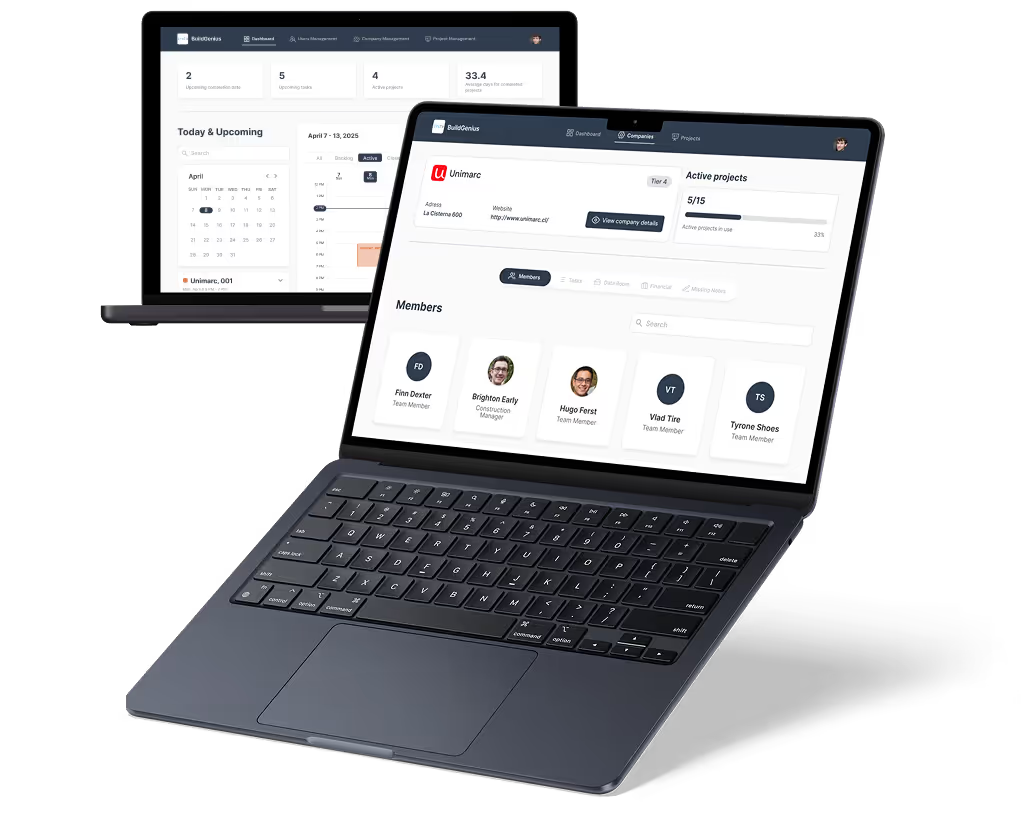

What Kind of Platform Is a Freight and Logistics Marketplace?
Grounding the build in a sound B2B marketplace development approach is essential. Freight is a business-to-business category where enterprise feature requirements, payment terms, and compliance architecture are fundamentally different from consumer marketplaces.
The platform connects shippers with carriers through real-time matching, not just a load listing directory. That distinction determines the architecture.
- Two-sided model: Shippers post loads. Carriers bid on or accept those loads. The platform earns a margin on each transaction through a freight brokerage model or collects a commission or SaaS fee.
- Freight types: Full truckload, less-than-truckload, flatbed, refrigerated, and specialist loads each require equipment type matching, weight and dimension specifications, and route planning as core requirements.
- B2B dynamics: Both sides are businesses. Sales cycles are longer, relationships matter, and contract lanes with recurring carrier-shipper arrangements must be supported alongside the spot market.
- Market positioning options: Open spot market, managed marketplace with curated carriers, vertical specialist for temperature-controlled or dangerous goods freight, or a hybrid combining spot and contract lanes each require different feature prioritization.
What Features Does a Freight and Logistics Marketplace Need?
The core marketplace app features every two-sided platform requires are the baseline. Then you layer the freight-specific compliance, load matching, and document management features on top.
Three distinct user groups have separate feature requirements. Build for all three from the start.
Shipper-Side Features
Account and company profile with business details and billing information, a load posting tool with origin, destination, pickup and delivery windows, freight type, weight, dimensions, and special requirements. Shippers also need quote management to compare carrier bids against compliance status and ratings before accepting, shipment tracking for real-time GPS visibility once a load is booked, and invoice and payment management for outstanding invoices and transaction history.
- Load posting structured data: The data structure at load posting determines matching quality. Unstructured posts cannot be matched accurately to available carrier capacity.
- Quote comparison interface: Shippers need to compare carrier bids alongside compliance badges, safety ratings, and past performance metrics in a single view without leaving the platform.
- Shipment tracking dashboard: Real-time GPS tracking with delivery milestone notifications keeps shippers from needing to call carriers for status updates, which drives them back to broker relationships.
Carrier-Side Features
Carrier profile and compliance documentation including DOT number, Operator License, insurance certificates, equipment types, service areas, and verified compliance status. Load board access to browse available loads by origin, destination, equipment type, and pickup window. Digital documentation for Bill of Lading generation, proof of delivery upload, and invoice generation. A carrier dashboard showing active loads, upcoming pickups, earnings, and payout status.
- Compliance documentation display: DOT number, insurance certificate, and operating authority are displayed on the carrier profile with verification status and last-checked date visible to shippers.
- Load board filtering: Carriers filter available loads by their equipment type, preferred service corridors, and pickup window. Irrelevant loads in the feed reduce carrier engagement over time.
- Digital BOL generation: Automated Bill of Lading creation from load booking data eliminates manual document preparation and reduces the errors that cause delivery disputes and payment delays.
Platform-Side Features
A load matching engine that filters loads against eligible carriers by equipment type, location, availability, and compliance status. Compliance verification workflow with DOT and insurance license verification at onboarding and renewal tracking with expiry alerts. Real-time tracking integration from carrier GPS data. Digital document generation for BOL, proof of delivery, and invoice templates. An admin dashboard covering carrier compliance board, active loads, financial reporting, and dispute queue.
- Matching engine design: Rules-based matching at MVP handles equipment type, location, and compliance status filtering. Algorithmic optimization for route efficiency and carrier performance ranking comes in phase two.
- Compliance monitoring automation: Carrier authority can be revoked and insurance can lapse between onboarding and booking. Automated monitoring removes non-compliant carriers from load search without manual review.
- Dispute queue management: A dedicated admin interface for payment disputes, damage claims, and delivery disagreements ensures resolution before payment release decisions are made.
What Legal and Compliance Requirements Apply to a Freight Marketplace?
The marketplace legal compliance requirements for a freight marketplace go beyond standard platform obligations. Freight brokerage is a federally licensed activity in the US, and carrier compliance verification creates direct platform liability if not implemented correctly.
Each regulatory requirement below is a hard pre-launch obligation, not a risk to manage post-launch.
- FMCSA freight broker authority (US): Any company arranging transportation of freight for compensation must hold an active FMCSA broker authority with MC number and a $75,000 surety bond. Operating without it is a federal violation. This process takes 4–8 weeks and cannot be bypassed.
- Carrier compliance verification (US): Carriers must hold active DOT authority, appropriate CMV insurance of $750,000 minimum for general freight and higher for hazmat, and valid operating authority. Liability can transfer to the broker if a non-compliant carrier causes an accident.
- Operator License requirements (UK): UK haulage operators must hold a valid Operator License from the Traffic Commissioner. The platform must verify this before a carrier can accept any loads.
- Dangerous goods regulations: Carriers moving hazardous materials require HAZMAT endorsement in the US or ADR certification in the UK and EU. The platform must filter hazmat loads to verified HAZMAT-certified carriers only.
- Data and privacy requirements: Freight involves significant business and shipment data. GDPR for EU operations and CCPA for California require specific data handling practices documented and enforced from launch.
How Do You Handle Payments in a Freight and Logistics Marketplace?
Getting marketplace payment system design right for a freight platform requires solving the payment timing mismatch between shippers on net 30–60 day terms and carriers who want immediate payment. This is a financial engineering problem as much as a payments integration.
The platform's ability to bridge this gap is a direct carrier retention tool and a revenue opportunity.
- Payment timing mismatch: Carriers want payment in 24–48 hours for cash flow. Shippers want 30–60 day payment terms for working capital management. Bridging this gap is the platform's financial engineering challenge and a key service differentiator from traditional brokers.
- Quick-pay financing: The platform pays carriers within 24–48 hours and waits for shipper payment on standard terms. The platform earns a financing margin of typically 2–5% of load value plus the brokerage margin.
- High-value payment infrastructure: Freight transactions run $1,000–$50,000 or more per load. Payment infrastructure must support ACH, wire transfer, and credit terms alongside standard card processing.
- Brokerage margin model: The platform earns the spread between what the shipper pays and what the carrier receives. Decide whether your model is transparent with a disclosed commission or spread-based where the carrier quotes net and the shipper pays gross.
How Do You Manage Carriers in a Freight and Logistics Marketplace?
Building marketplace vendor management systems for a freight platform is more complex than most categories. Insurance monitoring, compliance renewal tracking, and performance scoring are all operational requirements, not optional features.
Carrier management quality is the platform's supply-side moat. Shippers who experience unreliable carrier quality will not rebook through the platform.
- Carrier onboarding as compliance gate: DOT number, insurance certificate, and operating authority verification are hard gates before any carrier can accept loads. Automated verification via the FMCSA API significantly reduces the manual overhead.
- Insurance monitoring: Carrier insurance certificates expire and cargo claims can void coverage. The platform must track expiry dates and remove carriers with lapsed insurance automatically, not through manual review cycles.
- Performance scoring: Track on-time pickup rate, on-time delivery rate, damage claims rate, and shipper ratings. Carriers below defined thresholds enter a performance review process or are suspended from load search.
- Preferred carrier programs: High-performing carriers get access to premium loads, lower platform fees, and contract lane opportunities. Retention of quality carriers is the platform's most important supply-side metric.
- Carrier community and communication: A dedicated carrier support channel, regular performance reports, and early access to new features reduce churn among the carriers whose consistent performance the platform's reputation depends on.
What Tech Stack Should You Use to Build a Freight and Logistics Marketplace?
Freight marketplace builds are more technically complex than most marketplace categories. Choose a stack that fits your current stage and has a clear migration path as volume grows.
A focused freight marketplace MVP requires 16–24 weeks with a professional engineering team. Do not underestimate this timeline.
- Front-end architecture: Next.js is appropriate for a data-dense B2B application with map views, load boards, and compliance dashboards. Bubble is not recommended for freight platforms at scale due to performance limitations with real-time data volumes.
- Load matching and map infrastructure: Google Maps Platform or Mapbox for route mapping and carrier location display. Start with a rules-based matching engine and avoid over-engineering the algorithm at MVP stage.
- Real-time tracking: Samsara or KeepTruckin API for telematics integration with fleet carriers. A custom GPS tracking mobile app for independent owner-operators without fleet telematics.
- FMCSA compliance API: The FMCSA SAFER system has a public API for DOT number and carrier authority verification. Use this for automated carrier compliance checking at onboarding to eliminate manual verification overhead.
- Document generation: Puppeteer or a PDF API handles automated BOL and invoice generation from booking data without manual document preparation.
Conclusion
Building a freight and logistics marketplace means building a regulated financial intermediary, not just a digital load board. The compliance requirements, broker authority, carrier verification, and insurance monitoring are not features to add later. They are the legal foundation the platform must stand on before it takes a single booking.
Before writing a line of code, apply for your FMCSA freight broker authority or confirm your platform's regulatory classification. That regulatory step takes 4–8 weeks and cannot be bypassed. Every technical decision you make after this depends on your regulatory classification.
Building a Freight and Logistics Marketplace? Start with Compliance, Then Build the Platform.
Most freight marketplace builds fail not because of the technology but because the compliance layer is treated as a late-stage consideration. Carrier verification gaps and missing broker authority create liability that no subsequent feature investment can remove.
LOW/CODE Agency is the AI product development partner built for SMBs. We build and ship web apps, mobile apps, chatbots, RAG systems, and AI agents — end to end, without the enterprise overhead. We build B2B operations marketplaces including compliance verification architecture, load matching engine design, payment infrastructure for high-value transactions, and carrier management systems so the platform is legally sound and operationally reliable from day one.
- Compliance architecture scoping: We design the carrier verification workflow, DOT and insurance monitoring system, and platform authority framework before any build decisions are made.
- Load matching engine design: We build the rules-based matching engine that filters available carrier capacity against shipper load requirements on equipment type, location, and compliance status simultaneously.
- Payment timing bridge: We architect the quick-pay financing model, ACH and wire transfer integration, and shipper invoice management that solves the carrier-shipper payment timing mismatch.
- Carrier management systems: We build the onboarding workflow, compliance expiry monitoring, performance scoring, and preferred carrier program infrastructure that maintains supply quality at scale.
- Document management: We build automated BOL generation, proof of delivery capture, and invoice management with the audit trail that commercial freight disputes require.
- MVP in 16–24 weeks: We deliver working freight marketplace platforms with load posting, carrier profiles, compliance verification, matching, and payment before you begin shipper and carrier acquisition.
- Post-launch iteration: We add algorithmic matching optimization, real-time tracking integrations, and analytics dashboards in defined phases as transaction volume generates the data to prioritize them.
We have built 350+ products for clients including Coca-Cola, American Express, and Sotheby's. We understand the compliance and operational complexity that freight marketplaces specifically require.
Related Articles
- How to Build a Furniture Assembly Marketplace
- How to Build a Freight Matching Marketplace
- How to Build a Freight Marketplace
- How to Build a Freelancer Marketplace App
- How to Build a Food Truck Marketplace
- How to Build a Food and Restaurant Marketplace
Partner with our mobile app development experts to launch your product faster.
Last updated on
September 28, 2026
.

Jesus is a visionary entrepreneur and tech expert. After nearly a decade working in web development, he founded LOW/CODE Agency to help businesses optimize their operations through custom software solutions.


FAQs
What are the essential features of a freight marketplace platform?
How do I ensure security in a logistics marketplace?
What technology stack is best for building a logistics marketplace?
How can I attract carriers and shippers to my platform?
What are common challenges when launching a freight marketplace?
How do I monetize a freight and logistics marketplace?
Related Articles

Marketplace
How to Build a Peer to Peer Rentals Marketplace
Learn key steps to create a successful peer to peer rentals marketplace with essential features and strategies for growth.
Marketplace
How to Build a Healthcare Services Marketplace
Learn key steps to create a healthcare services marketplace with expert tips on technology, compliance, and user experience.

Marketplace
How to Build a Service Marketplace Platform
Learn key steps and tips to create a successful service marketplace platform with ease and efficiency.
Marketplace
How to Build a Tool Rental Marketplace
Learn key steps to create a successful tool rental marketplace with essential features, costs, and marketing tips for growth.


Why customers trust us for no-code development


