

How to Build a Construction Services Marketplace
Learn key steps to create a successful construction services marketplace with expert tips on features, challenges, and monetization strategies.

Finding a reliable, licensed contractor for a construction project still relies on word of mouth, trade directories, and phone calls, a process that produces inconsistent results and exposes project owners to unverified credentials and payment disputes.
A construction services marketplace replaces that uncertainty with a platform where every contractor is verified, every project is scoped formally, and payment is structured against deliverables. Both sides engage with confidence rather than risk.
Key Takeaways
- Contractor licensing and insurance verification is the platform's threshold requirement: Project owners will not engage unlicensed or uninsured contractors, and a platform that lists them without verification will be held accountable when something goes wrong.
- Milestone-based payment is the industry standard: Payment tied to defined project stages, foundation, frame, fit-out, completion, protects both owner and contractor and is the norm for any project above a minimum value.
- Scope definition prevents most disputes: Ambiguous project scopes produce disputes and cost overruns, the platform must support structured scope definition and agreed deliverables before any work begins.
- Trade specialization cannot be abstracted: Structural engineers, electricians, plumbers, and HVAC specialists serve different project phases and require different licenses, the platform's matching system must handle this differentiation.
- Insurance requirements vary by project type and location: The platform must surface applicable insurance requirements and verify that contracted specialists hold adequate cover before projects begin.
- Low-code approaches reduce time to market by 40–60%: Marketplace frameworks handle foundational infrastructure so engineering effort concentrates on the construction-specific workflows that differentiate the platform.

What Makes a Construction Services Marketplace Different From Other B2B Platforms?
A construction services marketplace is not a general B2B services platform with contractors listed on it. The project-based transaction structure, licensing complexity, and payment risk all require a distinct architecture.
Before scoping features, reviewing B2B construction marketplace fundamentals establishes the architectural decisions that determine whether the platform can support project-based transactions and contractor verification at the depth this vertical requires.
- Project-based transaction structure: Construction engagements have defined scope, timeline, deliverables, and milestone payment, the transaction is not a single booking but a managed project relationship that may span weeks or months.
- Trade specialization complexity: General contractors, structural engineers, electricians, plumbers, HVAC specialists, and specialist subcontractors are regulated professions with different licenses, insurance requirements, and project scope authority.
- Licensing jurisdiction specificity: Contractor licenses are jurisdiction-specific, trade-specific, and level-specific, the platform must verify the right license for the right trade and location, not apply a single generic verification to all contractor types.
- Scope and payment risk: Construction disputes almost always trace to ambiguous scope definitions or payment disagreements, the platform's value is in providing formal scope documents, agreed deliverables, and milestone payment that reduces dispute frequency.
- Regulatory and safety compliance: Construction work is subject to building permits, planning approvals, safety standards, and inspection requirements, the platform must either guide users through these requirements or connect them with professionals who do.
The licensing and compliance reality is what separates construction services from most other B2B service categories. Get this right and the platform creates genuine value. Skip it and the platform creates liability.
What Features Does a Construction Services Marketplace Need?
Beyond a core marketplace features checklist covering foundational platform infrastructure every marketplace needs, a construction services marketplace requires significant additions driven by licensing complexity, project structure, and payment risk.
Each feature below addresses a specific failure point in how construction services are currently sourced and managed through informal channels.
Verified Contractor Profiles
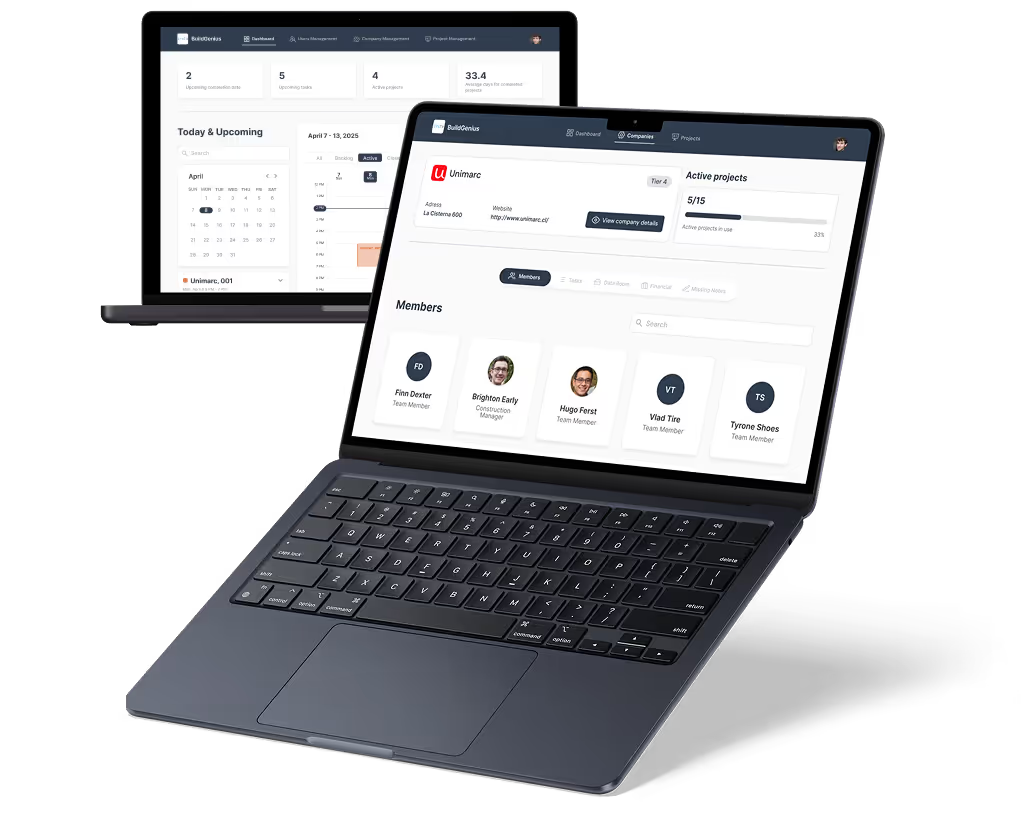
Every contractor profile must display verified licenses, active insurance certificates, project portfolio, trade specializations, geographic service area, and platform performance history.
- Verified license display by trade and jurisdiction: Electrical, plumbing, structural, and general building licenses are verified against the appropriate regulatory body before the profile appears in search results.
- Active insurance certificate verification: Public liability, professional indemnity, and workers' compensation certificates are checked for coverage type, minimum limit, and expiry, displayed to project owners before engagement.
- Platform performance history: Project completion rate, timeline adherence, cost overrun frequency, and dispute rate aggregated into a visible performance record that project owners use alongside credentials.
Unverified contractors must not appear in search results. The directory's credibility is what project owners pay for.
Project Scope Builder
A structured tool for project owners to define scope, before the quoting process begins.
- Guided scope definition: Project type, location, work description, specifications, timeline, budget range, and required specializations, structured inputs prevent the vague descriptions that produce inaccurate quotes and disputes.
- Scope completeness check: The platform should prompt project owners through missing scope elements before quotes are solicited, incomplete scopes are the root cause of most construction disputes.
- Specification attachment support: Project drawings, planning permissions, and specification documents uploaded and shared with quoting contractors within the platform.
Contractor Quoting and Tender Workflow
Contractors must receive project scope, ask clarifying questions, submit detailed quotes, and receive award notification, all within the platform.
- Clarifying question flow: Contractors can ask scope questions before submitting a quote, answers visible to all quoting contractors to ensure consistent information across proposals.
- Itemised quote submission: Quotes submitted with cost breakdowns, timeline, and terms, enabling project owners to compare quotes accurately rather than comparing lump-sum totals.
- Award notification and contract trigger: Once a project is awarded, the platform triggers the contract generation and milestone definition workflow automatically.
Milestone-Based Contract Management
Once a project is awarded, the platform generates a formal contract with agreed scope, milestone definitions, and payment schedule.
- Auto-generated contract with agreed scope: Contract includes defined scope, milestone definitions, payment schedule, and variation management provisions, generated automatically from the accepted quote.
- Variation and change order management: Scope changes during construction are documented through a formal variation order workflow with cost approval before work proceeds.
- Milestone sign-off and payment release: Each milestone requires formal project owner sign-off before the corresponding payment tranche is released from escrow.
Document and Compliance Repository
Building permits, planning approvals, safety plans, inspection records, and project drawings hosted on the platform throughout the project lifecycle.
- Document centralisation: All project documents accessible to both owner and contractor through the platform, eliminating the email chains and lost attachments that create liability and regulatory risk.
- Inspection record hosting: Inspection results and certificates uploaded to the project record as they occur, creating a complete compliance trail for both parties.
- Access controls by project phase: Document access can be configured by project phase, limiting early-stage documents to scoping parties and expanding access as the project progresses.
Dispute Resolution Pathway
A structured dispute process with defined timelines, documentation requirements, and resolution options.
- Defined escalation stages: Client and contractor attempt direct resolution within the platform first, escalation to platform mediation occurs only when direct resolution fails within a defined window.
- Evidence submission requirements: Both parties submit documentation, communication records, and relevant materials through the platform, creating an evidence base for mediation that does not rely on reconstructed email threads.
- Independent assessment option: For disputes over quality, scope completion, or additional cost claims, independent technical assessment is available as a resolution option within the platform.
How Do You Verify and Manage Contractors on the Platform?
The requirements for contractor verification and management on a construction platform are more extensive than most marketplace frameworks support, because the consequences of an unlicensed or uninsured contractor causing site damage or injury extend to the platform that facilitated the engagement.
Verification is not a one-time onboarding step. It is an ongoing operational requirement.
- Onboarding verification sequence: Contractor license validation by trade and jurisdiction, insurance certificate review, business registration verification, and reference or portfolio review, all completed before any contractor profile appears in project owner search results.
- Trade-specific license verification: Electrical, plumbing, structural, and gas contractors each require specific licenses from specific regulatory bodies, the platform must map license types to trades and verify the correct credential for each, not apply a single generic check.
- Ongoing insurance and license monitoring: Licenses and insurance certificates expire, the platform must track expiry dates, automatically suppress contractor visibility when credentials lapse, and send renewal prompts well before suspension occurs.
- Performance scoring system: Project completion rate, timeline adherence, cost overrun frequency, dispute rate, and owner ratings aggregated into a performance score that influences search ranking.
- Tiered verification levels: Self-declared, document-verified, and platform-audited contractor tiers displayed in search results, project owners calibrate their risk tolerance based on project value and complexity.
What Legal and Regulatory Requirements Apply to Construction Platforms?
Understanding the construction platform compliance requirements that apply to the platform itself, beyond the contractors it lists, is essential before any contractor onboarding or project owner acquisition begins.
The platform is a marketplace, not a contractor. But that distinction must be deliberately designed into the terms of service and consistently maintained.
- Contractor licensing obligations: The platform must not list contractors operating outside their licensed scope and must have a clear process for handling license lapses, listing an unlicensed contractor is not protected by marketplace terms alone.
- Platform liability position: The platform is a marketplace, not a contractor, it does not carry liability for contractor workmanship, safety incidents, or property damage. This distinction must be explicit in terms of service and consistently communicated to both sides.
- Insurance requirements for listed contractors: Minimum public liability insurance, professional indemnity for design or advisory roles, and workers' compensation are standard requirements, the platform must verify minimum coverage levels and display them to project owners before engagement.
- Building permits and planning compliance: Some construction work requires permits or planning approval before it can legally proceed, the platform should require contractors to confirm regulatory compliance is in place or provide owners with guidance on their specific project type.
- Consumer protection obligations: For platforms serving residential project owners, consumer protection legislation may apply, including right to cancel, mandatory contract terms, and restrictions on upfront payment in many jurisdictions.
How Do You Structure Payment for Construction Projects?
The architecture required for milestone escrow for construction is the payment infrastructure that makes the platform trustworthy to both project owners and contractors, without it, both sides have good reasons to manage the financial relationship off-platform.
Standard marketplace checkout is not sufficient for construction project payments. The complexity of project-based work requires a purpose-built payment architecture.
- Milestone payment as the industry standard: Construction projects are paid in stages, deposit on award, payment on milestone completion, retention held until defects liability expires, and the platform's payment infrastructure must support this structure natively.
- Escrow for milestone payments: Funds for each milestone held in escrow until the project owner approves completion, protecting contractors from non-payment and owners from paying for incomplete or defective work.
- Retention management: Standard construction contracts hold a retention amount, typically 3–5% of contract value, until the defects liability period expires. The platform must manage retention holding, release triggers, and partial release for multi-stage projects.
- Variation and change order payment: Construction projects routinely involve scope changes, the payment system must handle variation orders, revised pricing, and cost approval workflows without breaking the milestone payment structure.
- Dispute and payment hold: When a project owner disputes milestone completion quality, the payment system must hold the disputed amount pending resolution rather than releasing automatically.
Conclusion
A construction services marketplace succeeds or fails on the credibility of its contractor verification, the structure of its project scoping and quoting workflow, and the reliability of its milestone payment infrastructure.
Project owners who engage unlicensed contractors or experience payment disputes will not return. Contractors who face non-payment or scope disputes without platform support will seek their work elsewhere. Both problems are preventable with the right architecture built from the start.
Map the full project workflow for the construction category you want to serve, from owner project brief to final milestone payment, and identify every point where the current process relies on informal trust or manual document management. Each of those points is a feature the build must address.
Building a Construction Marketplace Where Projects Complete and Payments Clear?
Most construction marketplace builds underestimate the contractor verification depth, scope management infrastructure, and milestone payment complexity the category requires. They launch with a listing directory and a payment button, and face their first disputed project before reaching transaction liquidity.
LOW/CODE Agency is the AI product development partner built for SMBs. We build and ship web apps, mobile apps, chatbots, RAG systems, and AI agents — end to end, without the enterprise overhead. We build project-based service marketplaces with contractor license verification, milestone contract management, escrow payment infrastructure, and dispute resolution systems, so the platform supports real construction engagements from scope to completion.
- Contractor license verification system: We build trade-specific and jurisdiction-specific license verification workflows with expiry tracking and automated visibility suppression when credentials lapse.
- Project scope builder: We design structured scope definition tools that guide project owners through complete specifications before any contractor quotes are solicited.
- Milestone contract generation: We implement auto-generated contracts with defined scope, milestone definitions, and payment schedules triggered automatically from accepted quotes.
- Escrow and retention management: We build milestone escrow with retention holding, defects liability period tracking, and dispute-triggered payment hold logic.
- Dispute resolution infrastructure: We design structured dispute escalation with evidence submission, defined timelines, and independent assessment options for quality or scope disputes.
- Compliance repository design: We build document hosting with access controls, inspection record management, and audit trails appropriate to the regulatory requirements of the construction category.
- Full product team: Strategy, design, development, and QA from a single team invested in the platform operating correctly from the first project.
We have built 350+ products for clients including Coca-Cola, American Express, and Sotheby's. We understand what it takes to build regulated project-based marketplaces that professional buyers trust with significant commercial engagements.
Related Articles
- How to Build a Contractor Marketplace Platform
- How to Build a Contractor Marketplace
- How to Build a Content Creators Marketplace
- How to Build a Construction Labor Marketplace
- How to Build a Construction Equipment Rental Marketplace
- How to Build a Compliance Services Marketplace
Our mobile app development team delivers production-ready apps for iOS, Android and web.
Last updated on
September 28, 2026
.

Jesus is a visionary entrepreneur and tech expert. After nearly a decade working in web development, he founded LOW/CODE Agency to help businesses optimize their operations through custom software solutions.


FAQs
What are the essential features of a construction services marketplace?
How do I attract both contractors and clients to my marketplace?
What are common challenges when building a construction marketplace?
How can I monetize a construction services marketplace?
What technology stack is best for developing this type of marketplace?
How do I ensure quality and reliability of service providers?
Related Articles

Marketplace
Marketplace App Architecture Explained
Discover key components and best practices for designing scalable marketplace app architecture efficiently.

Marketplace
How to Build a Creative Professionals Marketplace
Learn key steps to create a successful marketplace connecting creative professionals with clients efficiently and securely.

Marketplace
Effective Vendor Management for Marketplace Apps
Learn key strategies for managing vendors in marketplace apps to improve partnerships, compliance, and user experience.

Marketplace
How to Build a Contractor Marketplace Platform
Learn key steps to create a contractor marketplace platform with essential features, costs, and best practices for success.


Why customers trust us for no-code development


