

How to Build a Child Therapist Marketplace
Learn step-by-step how to create a successful child therapist marketplace with essential features and marketing tips.


Demand for child mental health services has significantly outpaced supply in most developed markets. Waiting lists for NHS child therapy in the UK run to months, and private therapy is inaccessible for many families who cannot find a vetted therapist through existing channels. A child therapist marketplace addresses a genuine access gap, but building one responsibly means navigating the most sensitive data, safeguarding, and credential requirements of any marketplace category.
The technical build is achievable. The credential verification, safeguarding infrastructure, and clinical confidentiality model must be designed correctly from the start, not as features added after launch.
Key Takeaways
- Therapist registration verification is mandatory: Child therapists hold registration with professional bodies such as BACP, UKCP, and HCPC in the UK and state licensure boards in the US. Verify registration against these databases before any profile goes live.
- Safeguarding is a first-order platform obligation: Child therapy involves disclosures about abuse, self-harm, and family dysfunction. The platform must have a safeguarding escalation process that operates before, during, and after sessions.
- Patient data is the most sensitive in any marketplace: Child therapy records involve mental health information about minors, requiring the highest level of data security, access controls, and privacy compliance of any marketplace category.
- Parents book but children are the clients: The platform must serve both, with parents managing bookings and billing while children and therapists retain clinical confidentiality protection from parental access.
- Specialization matching matters more than proximity: Families should be matched to therapists who specialize in the child's presenting issue, such as anxiety, ADHD, or trauma, because proximity alone is an insufficient matching criterion.
- Insurance and funding integration expands the market: Many families qualify for insurance-funded or LA-funded therapy sessions. Platforms that support these funding pathways serve a significantly wider patient population from the start.

What Is a Child Therapist Marketplace and How Does It Work?
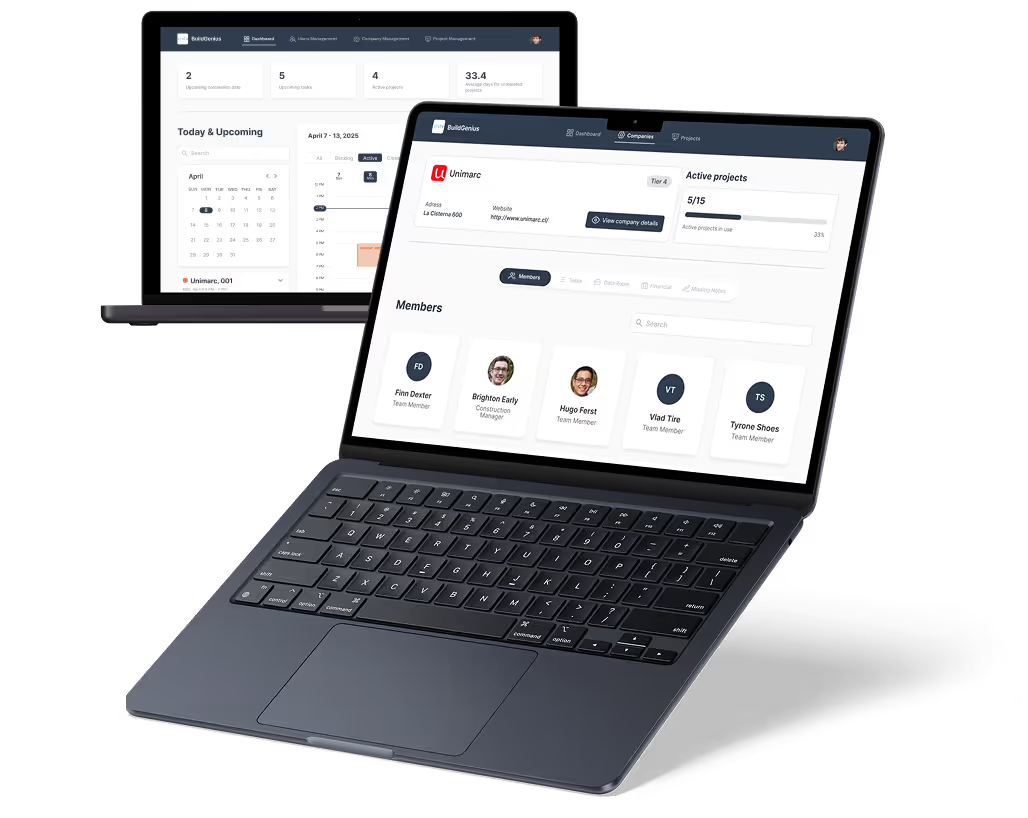
A child therapist marketplace is a three-party platform connecting parents and guardians who book and pay, children and young people who are the therapy clients, and therapists who are the service providers. Each party has distinct needs and different data access rights.
Core marketplace features provide the structural foundation. A child therapist platform builds significantly on top of this with clinical specialization matching, safeguarding infrastructure, three-party data access controls, and confidentiality management that no other marketplace category requires.
- Therapy modalities supported: Play therapy, cognitive behavioral therapy, family therapy, art therapy, EMDR for children, and ADHD coaching. Specialization matching is more important than geographic proximity in most cases.
- Core platform flow: Parent creates a referral request describing the child's presenting needs, platform matches to therapists with relevant specialization and availability, parent reviews profiles and books an initial assessment, therapist conducts assessment, ongoing schedule is agreed, sessions are delivered in-person or via video, payment is automated, and session records are maintained securely.
- What makes this different from adult therapy platforms: The client is a minor, which creates specific safeguarding, consent, confidentiality, and data protection obligations that do not apply in most other service categories.
- Three-party access tension: Parents need administrative transparency for bookings and billing. Therapists and children need clinical confidentiality from the same parent. Getting this wrong either destroys therapist trust or creates confidentiality breaches.
What Features Does a Child Therapist Marketplace Need?
Role-separated features for therapists, parents, and admin are the architecture that handles clinical matching, session management, and sensitive data correctly. Build each role's feature set with the specific data access rights and workflow needs of that role in mind.
The safeguarding escalation workflow and the clinical confidentiality model are not admin features. They are core product requirements.
Therapist Features
Verified profile with professional registration body and number, registration expiry, specializations covering anxiety, trauma, autism, and ADHD, therapy modalities, age ranges worked with, session format covering in-person, video, and home visits, and availability. Background check status with children's barred list. Separate booking flow for initial assessments versus ongoing sessions. Secure session notes and treatment plan records accessible only to the therapist and relevant supervisors.
Parent and Guardian Features
Child referral form capturing presenting concerns, diagnosis history, school year, previous therapy experience, and funding type. Therapist search with specialization filter, modality filter, session format, and availability. Booking management for initial assessment and ongoing sessions. Billing management with downloadable invoices for insurance reimbursement. Communication channel for administrative matters only, not clinical content.
Admin Features
Therapist credential verification and registration check workflow. Enhanced background check integration. Safeguarding incident escalation workflow and logging. GDPR and data protection compliance dashboard. Revenue, session volume, and platform commission reporting.
What Legal and Regulatory Requirements Apply to a Child Therapy Platform?
Therapy marketplace legal requirements covers the platform-level compliance obligations. For a child therapy marketplace, the registration verification, safeguarding, and minor consent requirements make this the most legally complex children's services marketplace category to build.
Get legal advice specific to your jurisdiction before designing any feature in this section.
- Therapist registration requirements: Verify registration against BACP, UKCP, HCPC in the UK, state licensure boards in the US, or AHPRA in Australia as appropriate. Do not rely on self-declaration for any registration claim.
- Child protection and safeguarding law: Therapists on the platform are mandated reporters in most jurisdictions. Disclosures of abuse, neglect, or risk to the child must be reported to relevant authorities. The platform must have a process for supporting these reports and a clear escalation policy.
- Consent and confidentiality with minors: The rules around parental consent to a minor's therapy and the extent of parental access to session content vary by jurisdiction and by the child's age. The platform's data access model must reflect these rules and be designed with legal advice specific to your market.
- Platform liability boundaries: The platform facilitates access to registered therapists but does not provide clinical services. This does not remove the obligation to act on safeguarding disclosures or to maintain standards of therapist verification.
- Insurance and LA funding compliance: If the platform processes sessions funded by private health insurance or local authority referrals, it may need to meet additional administrative and reporting requirements from those funders.
How Do You Protect Sensitive Clinical Data on a Child Therapy Platform?
Marketplace security compliance covers the technical implementation baseline. For a child therapy platform, the sensitivity of the data held means applying these controls at the highest available standard, not the minimum required.
Child therapy records are simultaneously mental health data, data about a minor, and clinical notes. This combination triggers the highest level of data protection obligations in virtually every jurisdiction.
- Encryption at every level: All session notes, treatment plans, assessment records, and child profile data must be encrypted at rest and in transit using established compliant cloud infrastructure. Do not store clinical notes in a general database without encryption.
- Access controls by role: Therapists see only their own clients' records. Parents see only administrative and billing information, not clinical session content. Platform staff see only the data necessary for support and compliance functions. Document these access rules formally before any build begins.
- Session note confidentiality architecture: Session notes are a clinical tool for the therapist and their supervisor, not a service delivery report to the parent. The platform must prevent inadvertent parent access to clinical content through deliberate data model design.
- Data retention policy: Define how long session notes and child records are retained after a therapy relationship ends. Apply the legally required retention period for clinical records in each jurisdiction and make the retention policy visible to parents at registration.
What Data Privacy Rules Apply to Child Therapy Records?
Child data privacy compliance covers the framework that applies when a platform processes health and mental health data about minors. For a child therapy marketplace, this is the highest-complexity data privacy environment of any marketplace category.
Each jurisdiction adds requirements on top of the GDPR baseline. Do not assume cloud infrastructure handles cross-border compliance automatically.
- GDPR special category data: Health data and data revealing mental health conditions are special category data under GDPR, requiring explicit consent, a legal basis beyond standard legitimate interest, and a Data Protection Impact Assessment before processing begins.
- Data about children under GDPR: Children under 16, or 13 in some member states, cannot provide their own consent for data processing. Parental or guardian consent is required, and the platform's consent mechanisms must reflect this age threshold.
- US state-level mental health privacy: Many US states have specific laws governing the confidentiality of mental health records that go beyond HIPAA. These must be reviewed for each state of operation before the platform is made available there.
- Cross-border data transfer restrictions: Child mental health records transferred between the EU or UK and the US require Standard Contractual Clauses or equivalent legal mechanisms. Do not assume cloud infrastructure handles this automatically.
- Subject access rights and data deletion: Parents and children, depending on age, have the right to request access to their data and request deletion. Build these processes into the platform administration before launch, not after the first request arrives.
How Should Session Booking and Billing Work?
Marketplace payment systems covers the technical implementation. For a child therapy platform, insurance-compatible invoice generation is a feature that directly expands the addressable market beyond self-funded families.
Build the insurance invoice and recurring session scheduling infrastructure from the MVP, not as a phase-two addition.
- Initial assessment booking: Separate booking flow for a first appointment, typically 60-90 minutes and priced differently from ongoing sessions. Payment captured at booking with a 48-hour free cancellation window.
- Ongoing session scheduling: Weekly or bi-weekly recurring sessions scheduled between therapist and family after the initial assessment. Platform manages booking confirmation and automated reminders for both parties.
- Session payment capture: Payment captured the day before each session. Released to therapist 24 hours after session completion confirmation. This protects against no-shows without holding funds indefinitely.
- Insurance invoice generation: Produce invoices with therapist registration number, session date, therapy modality code, and session duration formatted for private health insurance reimbursement claims from the platform's billing system.
- Cancellation policy enforcement: Define cancellation fee windows that are standard practice in the therapy profession, such as the full fee for cancellations within 24 hours, and enforce these automatically through the payment system rather than through therapist-client negotiation.
What Are the Most Common Mistakes When Building a Child Therapist Marketplace?
The failure modes specific to child therapy marketplace builds are more consequential than in any other marketplace category. A safeguarding failure or data breach involving children's mental health records is not a product problem. It is a regulatory, clinical, and reputational crisis.
Build defensively against these failures from the architecture stage.
- Treating this like a general wellness booking platform: Child therapy involves professional registration, mandatory reporting obligations, minor consent rules, and the most sensitive personal data in any service category. Generic booking software without these layers creates both a clinical risk and a regulatory exposure.
- Skipping registration verification: Allowing self-declared therapist qualifications without verification against professional registration databases is both a patient safety failure and a trust collapse waiting to happen with every family who books through the platform.
- Inadequate data access design: Parents need administrative transparency while therapists and children need clinical confidentiality from the same parent. Getting this wrong either destroys therapist trust or creates confidentiality breaches that regulators will act on.
- No safeguarding escalation workflow: A child therapy platform with no defined process for handling abuse disclosures from a child in session or a parent calling in a concern is not fit to operate in this category under any jurisdiction.
- Underestimating adolescent confidentiality: Teenagers aged 12-17 often have specific confidentiality rights with their therapist that limit what parents can access. The platform's data model must reflect these rights, not flatten everyone under 18 into the same parental consent model.
Conclusion
A child therapist marketplace operates in the most sensitive, most regulated, and most ethically consequential category of any marketplace type. The technical build is achievable, but the credential verification, safeguarding infrastructure, data security architecture, and clinical confidentiality model must be designed correctly from the start.
Before writing a line of code, engage a solicitor or attorney with healthcare and child protection experience in your target jurisdiction. Define your therapist registration verification process, your safeguarding policy, and your consent and confidentiality framework for minors. These are the architecture the platform is built around, not features to design later.
Building a Child Therapist Marketplace? Start With the Compliance and Safeguarding Architecture.
Most child therapy marketplace builds that face regulatory or clinical challenges discover the failure in the product because the safeguarding policy, registration verification, and minor data access controls were not defined at architecture stage. These cannot be retrofitted without rebuilding core platform logic.
We are LOW/CODE Agency — an AI product development company for SMBs. We build across the full stack: web apps, mobile apps, AI chatbots, RAG pipelines, and autonomous agents. Custom software, built by experts. We build regulated care and health service marketplaces from the architecture up, scoping the credential verification workflow, safeguarding infrastructure, data security architecture, and clinical confidentiality model that child therapy platforms require to operate safely and credibly.
- Therapist registration verification: We build the professional body database verification workflow, registration expiry tracking, and listing suspension logic that ensures only currently registered therapists appear on the platform.
- Safeguarding escalation infrastructure: We design the incident logging, escalation pathway, and mandatory reporting support workflow that the platform must have operational before accepting the first booking.
- Three-party data access architecture: We design the role-separated data model that gives parents administrative access, therapists clinical record access, and admin staff the minimal access required for support and compliance functions.
- Encryption and security implementation: We configure clinical record encryption at rest and in transit, access control enforcement, and the compliant cloud infrastructure that child therapy data requires.
- GDPR and minor consent flows: We build the age-appropriate consent mechanisms, data retention policies, subject access request processes, and cross-border transfer safeguards your platform needs before accepting data from families.
- Insurance invoice generation: We build the insurance-compatible invoice output with registration number, modality code, and session duration formatting that expands your addressable market beyond self-funded families.
- Full product team: Strategy, UX, development, and QA from a single team, with healthcare regulatory experience informing every architecture decision from day one.
We have built 350+ products for clients including Coca-Cola, American Express, and Sotheby's. We know how to build regulated platforms that operate responsibly at the architecture level, not as afterthoughts added under regulatory pressure.
Related Articles
- How to Build a Cloud Kitchen Marketplace
- How to Build a Clothing Marketplace
- How to Build a Cleaning Services Marketplace
- How to Build a Chauffeur Services Marketplace
- How to Build a Catering Services Marketplace
- How to Build a Carpenter Marketplace
Looking to build a mobile app? Our mobile app development services cover the full build lifecycle.
Last updated on
September 28, 2026
.

Jesus is a visionary entrepreneur and tech expert. After nearly a decade working in web development, he founded LOW/CODE Agency to help businesses optimize their operations through custom software solutions.


FAQs
What are the key features needed in a child therapist marketplace?
How do I ensure therapist qualifications and safety on the platform?
What technology stack is best for building a therapist marketplace?
How can I attract both therapists and parents to my marketplace?
What are common challenges when launching a child therapist marketplace?
How do I handle privacy and compliance for child therapy services online?
Related Articles

Marketplace
How to Build a Construction Equipment Rental Marketplace
Learn key steps to create a successful construction equipment rental marketplace with expert tips and common challenges explained.
Marketplace
How to Build a Management Consultant Marketplace
Learn key steps to create a successful management consultant marketplace platform efficiently and effectively.

Marketplace
How to Build a Warehouse Space Marketplace
Learn key steps to create a successful warehouse space marketplace with tips on platform design, user trust, and marketing strategies.

Marketplace
Real-Time Chat & Notifications for Marketplaces
Explore real-time chat and notification systems to enhance user engagement and communication in online marketplaces effectively.


Why customers trust us for no-code development


