

How to Build a Marketplace App with FlutterFlow
13 min
read
Learn how to create a marketplace app using FlutterFlow with step-by-step guidance and best practices for success.


FlutterFlow marketplace app development gives founders a real path to a two-sided platform without a six-figure backend team. The challenge is not the UI, it is managing seller payouts, buyer trust, and dispute logic simultaneously.
Getting both sides working reliably requires deliberate architecture choices before a single screen is built. This guide covers every major technical decision so you can scope the project accurately.
Key Takeaways
- Two-sided architecture: FlutterFlow models separate buyer and seller experiences within one app using role-based navigation.
- Stripe Connect for payouts: Commission-based payment splits between the platform and sellers are achievable via Stripe Connect.
- Seller onboarding: Profile creation, listing management, and verification flows are all buildable natively in FlutterFlow.
- Trust and reviews: Buyer and seller rating systems with review display are standard Firestore-driven features.
- Commission complexity: Multi-tier commission logic and escrow-style payment holding push against FlutterFlow's native capabilities.

What Can FlutterFlow Build for a Marketplace App?
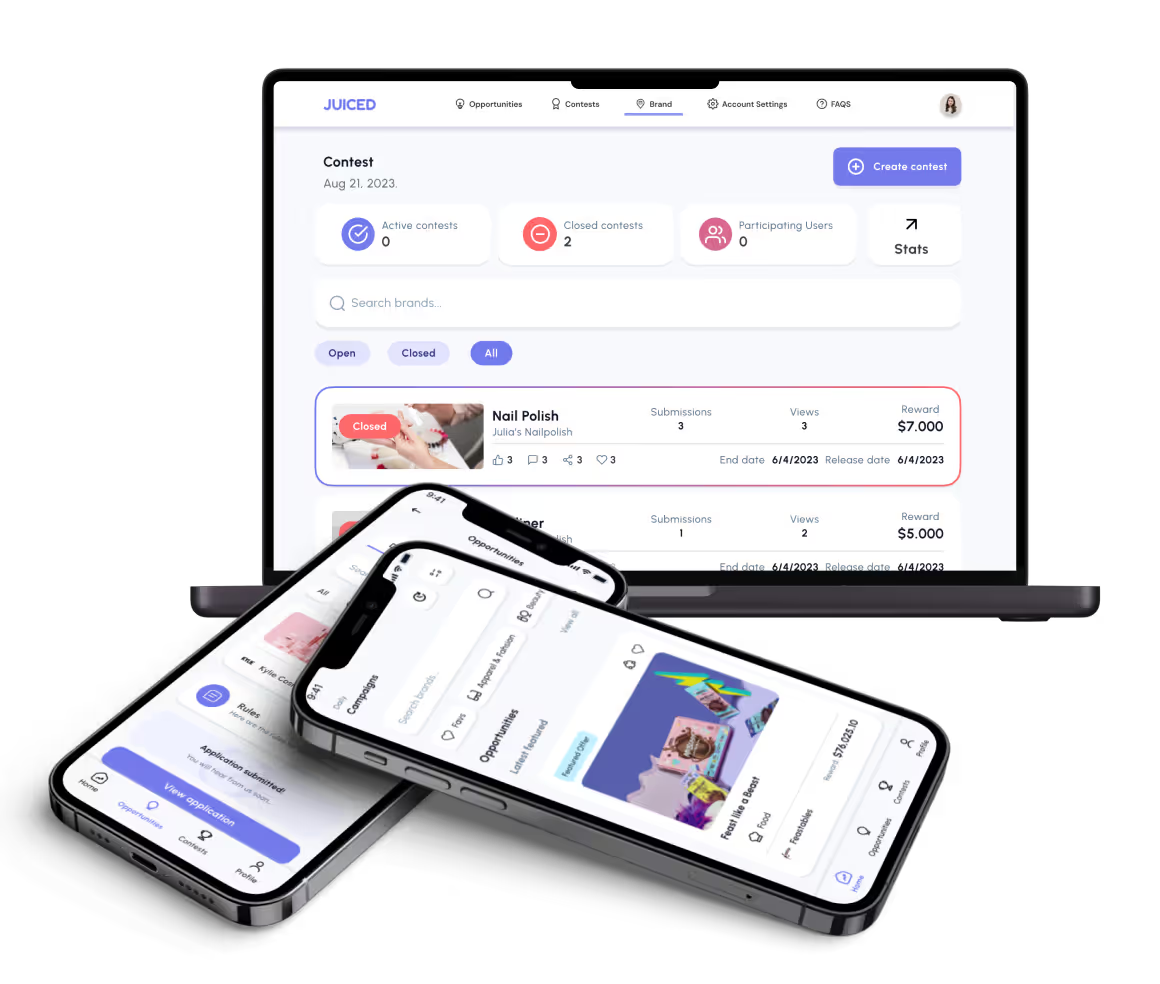
FlutterFlow delivers the full feature set of a niche two-sided marketplace: seller onboarding, listing management, buyer search, Stripe Connect payments, in-app messaging, and ratings. Each feature depends on Firestore and Firebase, with Stripe handling payment complexity.
Marketplaces share architecture with SaaS platforms, understanding whether you can build a SaaS with FlutterFlow gives useful context for marketplace capability decisions.
Seller Onboarding and Profile Creation
Sellers register, complete identity verification via a third-party KYC API, and set up their seller profile with bio, portfolio, and category selection stored in Firestore.
- KYC verification: Third-party KYC APIs integrate via custom API calls, adding compliance to the registration flow without blocking launch.
- Profile structure: Seller bio, portfolio media, service categories, and location are stored as structured Firestore documents.
- Onboarding state machine: A status tracker locks listing creation until all verification and profile steps are fully completed.
Listing Creation and Management
Sellers create, edit, and archive listings with images, pricing, descriptions, and availability settings managed from a dedicated seller dashboard.
- Image upload: Firebase Storage handles listing photos with metadata indexed in Firestore for fast search and filter queries.
- Listing states: Draft, active, paused, and archived states let sellers control visibility without deleting content permanently.
- Seller dashboard: A real-time panel shows active listing count, views, and transaction history for each seller account.
Buyer Search and Discovery
Buyers search and filter listings by category, price, location, rating, and custom attributes using Firestore queries and filter panels built in FlutterFlow.
- Filter panels: Category, price range, location radius, and seller rating filters are buildable with Firestore compound queries.
- Search indexing: Algolia integration via custom API call improves full-text search beyond what native Firestore queries support natively.
- Featured listings: Sponsored or priority-ranked listings display first using a priority field in the Firestore collection.
Stripe Connect Payment Split
Checkout triggers a Stripe Connect payment that routes the seller's share directly to their connected account while retaining the platform commission automatically.
- Express vs Custom accounts: Express accounts onboard sellers faster; Custom accounts offer full payout control with more compliance documentation required.
- Commission retention: Stripe's application fee parameter deducts the platform commission before routing the remainder to the seller's account.
- Payout scheduling: Sellers view pending and available balances from their dashboard, with payout timing configured at the platform level.
Booking or Purchase Confirmation Flow
Buyers confirm purchases or bookings, creating transaction records in Firestore and notifying both parties via push notification immediately after confirmation.
- Transaction records: Each confirmed transaction writes to a Firestore collection shared by buyer, seller, and platform admin views.
- Push notifications: Firebase Cloud Messaging sends confirmation, reminder, and status-change notifications to both buyer and seller.
- Receipt generation: PDF receipts generate via a Cloud Function triggered on transaction confirmation and delivered by email.
In-App Messaging Between Parties
A real-time chat interface lets buyers and sellers communicate about listings without leaving the app, built on Firestore real-time listeners for instant delivery.
- Message threads: Each transaction or inquiry creates a unique Firestore chat thread accessible to both parties and platform admins.
- Read receipts: Message read status is tracked in Firestore and displayed in the conversation list for both users.
- Message flagging: Users can flag messages for admin review, creating a moderation queue without leaving the messaging interface.
Ratings and Review System
After transaction completion, both parties rate each other. Aggregate scores display on seller profiles and buyer records to support trust across the platform.
- Dual-direction ratings: Both buyer and seller submit ratings post-transaction, with Firestore aggregation updating the displayed average score.
- Review moderation: A Cloud Function screens submitted review text before it becomes visible on the platform.
- Rating gates: The review screen only appears after transaction status reaches "completed" in Firestore, preventing premature submissions.
Dispute Resolution Request
Either party can flag a transaction for dispute, creating a support case routed to the platform admin for review and resolution without email.
- Dispute creation: A dispute form collects issue type, supporting evidence, and desired resolution, stored as a Firestore support document.
- Admin review queue: Platform admins see all open disputes in a management dashboard with transaction details and chat history attached.
- Resolution workflow: Admins can mark disputes resolved, trigger refunds via Stripe API, or escalate to manual review from the admin portal.
Each of these features depends on deliberate Firestore data modelling from day one. The database schema determines both the speed and cost of every section of the build.
How Long Does It Take to Build a Marketplace App with FlutterFlow?
A marketplace MVP with listings, buyer search, and Stripe checkout takes 8–12 weeks. A full platform with seller onboarding, Stripe Connect, reviews, messaging, and dispute flows takes 16–28 weeks. Stripe Connect setup and KYC approach are the primary timeline variables beyond the visual build.
The phased approach is the most reliable delivery strategy for marketplace apps.
- Phase 1 scope (8–12 weeks): Listings, buyer search, basic Stripe checkout, and seller profiles deliver a testable product fast.
- Phase 2 additions (8–16 more weeks): Add Stripe Connect payouts, messaging, ratings, and dispute resolution after the core transaction flow is proven.
- Stripe Connect timeline factor: Express account setup takes days; Custom account compliance review adds 2–4 weeks before payouts can go live.
- KYC integration impact: Third-party KYC APIs require access setup, compliance review, and integration testing that adds 1–3 weeks to the build.
- UI speed advantage: FlutterFlow delivers buyer and seller screens 50–60% faster than custom development for equivalent visual complexity.
FlutterFlow is faster on the UI and data layer. Stripe Connect configuration requires the same expertise regardless of frontend platform.
What Does It Cost to Build a FlutterFlow Marketplace App?
A FlutterFlow marketplace app costs $25,000–$100,000 depending on feature scope and team structure. Platform fees are $0–$70 per month. Custom development equivalents cost $150,000–$400,000 or more. Stripe Connect fees and KYC API costs are ongoing regardless of platform choice.
FlutterFlow pricing plans are a small fraction of marketplace development costs. The real budget drivers are Stripe Connect integration and seller onboarding flows.
- Hidden cost: Connect onboarding: Custom Stripe Connect onboarding flows require compliance documentation that adds scope beyond standard checkout integration.
- Hidden cost: fraud tooling: Fraud detection and seller vetting infrastructure must be budgeted separately from platform and development costs.
- Hidden cost: dispute management: Dispute workflows and seller support infrastructure add operational cost after launch that most initial budgets undercount.
Ongoing Stripe and Firebase costs scale directly with transaction volume. Factor this into unit economics before committing to a commission structure.
How Does FlutterFlow Compare to Custom Development for a Marketplace App?
FlutterFlow delivers a marketplace in 16–28 weeks at 3–5x lower cost than custom development. Custom development wins only when algorithmic matching, dynamic pricing engines, or multi-currency cross-border compliance are core requirements from day one.
The Bubble vs FlutterFlow comparison addresses database flexibility differences that matter specifically for marketplace data modelling decisions.
- When FlutterFlow wins: Niche two-sided marketplaces, MVP validation, regional vertical platforms, and service marketplaces with defined seller categories.
- When custom wins: High-volume platforms requiring algorithmic matching, international tax compliance, or proprietary recommendation engines at scale.
- Maintenance advantage: FlutterFlow reduces UI update cost significantly; Stripe Connect and API layers require developer expertise regardless of frontend platform.
The 3–5x cost advantage is real at MVP and early-growth stage. The key question is whether your marketplace requirements will outgrow FlutterFlow's capability ceiling before the platform generates enough revenue to fund a rebuild.
What Are the Limitations of FlutterFlow for a Marketplace App?
FlutterFlow's marketplace limitations centre on Stripe Connect compliance complexity, escrow-style payment architecture, app store approval risk for user-generated content, and Firestore design requirements at high listing volume. These are solvable with experienced teams, not solvable inside the visual editor alone.
For marketplaces expecting rapid user growth, FlutterFlow scalability limits need to be understood before designing the Firestore data architecture.
- Stripe Connect compliance: Custom vs Express accounts carry different compliance implications not surfaced in the visual builder, these require direct Stripe documentation review.
- Escrow-style payments: Holding payment until service completion requires careful Stripe API architecture beyond simple Connect splits, handled through Cloud Functions.
- App store approval risk: Marketplaces with user-generated content face additional Apple and Google review scrutiny, adding unpredictable time to launch planning.
- Dispute logic complexity: Dispute resolution workflows are logic-heavy and difficult to model cleanly in FlutterFlow's visual editor without structured Cloud Function support.
- Firestore at scale: High listing volumes and concurrent transactions require deliberate Firestore collection design and indexing strategy from day one.
- Real-time booking conflicts: Preventing double-bookings requires transactional writes that FlutterFlow's native logic handles inconsistently under concurrent load.
None of these limitations make FlutterFlow the wrong choice. They make experienced team selection the right priority.
How Do You Find the Right Team for a FlutterFlow Marketplace App?
When you hire FlutterFlow developers for a marketplace, Stripe Connect experience and two-sided UX architecture are the essential screening criteria. Marketplace complexity warrants an agency over a solo freelancer in most cases.
The right team reduces both timeline and risk. The wrong team discovers Stripe Connect complexity mid-build.
- Required expertise: Stripe Connect integration, Firestore real-time architecture, role-based access control, and messaging system implementation are all non-negotiable.
- Portfolio requirement: Ask to see a live two-sided marketplace in their portfolio, not a single-seller store or a demo environment.
- Red flag: A team that cannot explain the difference between Stripe Express and Custom accounts should not be scoping your marketplace.
- Key screening question: "What Stripe Connect account type do you recommend for our commission model?" The answer reveals both experience and judgment.
- Freelancer vs agency: Stripe Connect architecture, dual-role UX, and dispute logic together justify a structured agency engagement over a solo freelancer.
- Expected timeline from a good team: Stripe Connect architecture decision in week 1, full scoping in weeks 1–3, build starting in week 4.
A good agency asks about your commission model, dispute policy, and seller verification requirements before designing a single screen. That scoping conversation is the first signal of the right partner.
Conclusion
FlutterFlow is a capable platform for marketplace app development. Seller and buyer architecture, listings, Stripe Connect payments, messaging, and reviews are all achievable within the platform's toolset.
The non-negotiables are Stripe Connect compliance, dispute resolution logic, and app store review for user-generated content. These require experienced teams, not just capable tools.
Define your commission model and Stripe Connect account type before scoping. Then find a team with a live two-sided marketplace in their portfolio.
Building a Marketplace App with FlutterFlow? Here Is How LOW/CODE Agency Approaches It.
Most marketplace builds stall on Stripe Connect complexity or collapse under Firestore design decisions made too early. Getting these right before any code is written is the difference between an 8-week build and a 28-week rebuild.
At LOW/CODE Agency, we help SMBs compete with AI-powered software built for them — custom web and mobile apps, RAG systems, chatbots, and intelligent agents delivered by a senior development team. We build two-sided marketplace apps on FlutterFlow with Stripe Connect architecture, Firestore data modelling, and role-based UX designed for both buyer and seller experiences from day one.
- Commission model scoping: We define your Stripe Connect account type, commission structure, and payout logic before any screen is designed.
- Firestore architecture: We design your marketplace database schema for listing volume, concurrent transactions, and real-time messaging before development starts.
- Stripe Connect integration: We implement Express or Custom account onboarding, payment splits, and payout scheduling with compliance review included.
- Dual-role UX design: We design and build separate buyer and seller experiences with role-based navigation, not two apps bolted together.
- Dispute and review systems: We build dispute resolution workflows and ratings systems that hold up under real transaction load and admin review requirements.
- App store deployment: We handle iOS and Android submission including user-generated content compliance documentation to reduce approval risk.
- Full product team: Strategy, UX design, FlutterFlow development, and QA from a single team accountable for the full marketplace, not just individual screens.
We have built 350+ products for clients including Coca-Cola, American Express, and Sotheby's. We know exactly where marketplace builds go wrong and we address those decisions before they cost you months.
Related Articles
- How to Build a Membership Subscription Platform with FlutterFlow
- How to Build a Membership Management App with FlutterFlow
- How to Build a Medical Records App with FlutterFlow
- How to Build Manufacturing Apps with FlutterFlow
- How to Build a Logistics App with FlutterFlow
- How to Build an LMS with FlutterFlow
Looking to go low-code? Our low-code development services reduce build time without sacrificing quality.
Last updated on
September 24, 2026
.

Jesus is a visionary entrepreneur and tech expert. After nearly a decade working in web development, he founded LOW/CODE Agency to help businesses optimize their operations through custom software solutions.


FAQs
What are the first steps to create a marketplace app in FlutterFlow?
Can FlutterFlow handle payment integrations for marketplace apps?
How do I manage user authentication in a FlutterFlow marketplace app?
Is it possible to customize the marketplace app's design without coding in FlutterFlow?
What are common challenges when building a marketplace app with FlutterFlow?
How can I test and deploy my FlutterFlow marketplace app effectively?
Related Articles

Comparison
FlutterFlow
AppMaster vs FluterFlow
Compare FlutterFlow vs. AppMaster: Discover which no-code platform best fits your needs with this in-depth analysis of features, pricing, and real user feedback.

FlutterFlow
How to Build a Dropshipping App with FlutterFlow
Learn how to create a dropshipping app using FlutterFlow with step-by-step guidance and tips for beginners.

FlutterFlow
How to Build a Food Ordering App with FlutterFlow
Learn how to create a food ordering app using FlutterFlow with step-by-step guidance for beginners and pros.

FlutterFlow
How to Build a Utility Billing Platform with FlutterFlow
Learn how to create a utility billing platform using FlutterFlow with step-by-step tips and best practices for efficient app development.


Why customers trust us for no-code development


