

How to Build a Hotel Booking App with FlutterFlow
10 min
read
Learn how to create a hotel booking app using FlutterFlow with step-by-step guidance and tips for a smooth development process.


Independent hotels are losing 15–25% of revenue to OTA commissions on every booking. A direct booking app built on FlutterFlow can change that equation, but only if it is built right the first time.
Room listings, availability calendars, Stripe payments, and digital check-in are all within FlutterFlow's scope. The complications arrive when you need real-time PMS sync or two-way channel manager integration. This guide covers both.
Key Takeaways
- Direct booking is achievable: Room listings, availability calendar, guest details form, and Stripe payment are all within FlutterFlow's native scope.
- Rate parity with OTAs is not: Syncing rates across Booking.com, Expedia, and your own app via a channel manager requires custom middleware, not a FlutterFlow connector.
- PMS integration is complex: Two-way sync with Opera, Cloudbeds, or Mews requires custom backend middleware beyond FlutterFlow's native API connector.
- Cost range is $20,000–$55,000: A standalone direct booking app built by an agency typically falls within this range.
- Push notifications add real value: Pre-arrival and departure notifications via Firebase Cloud Messaging improve the guest experience meaningfully.
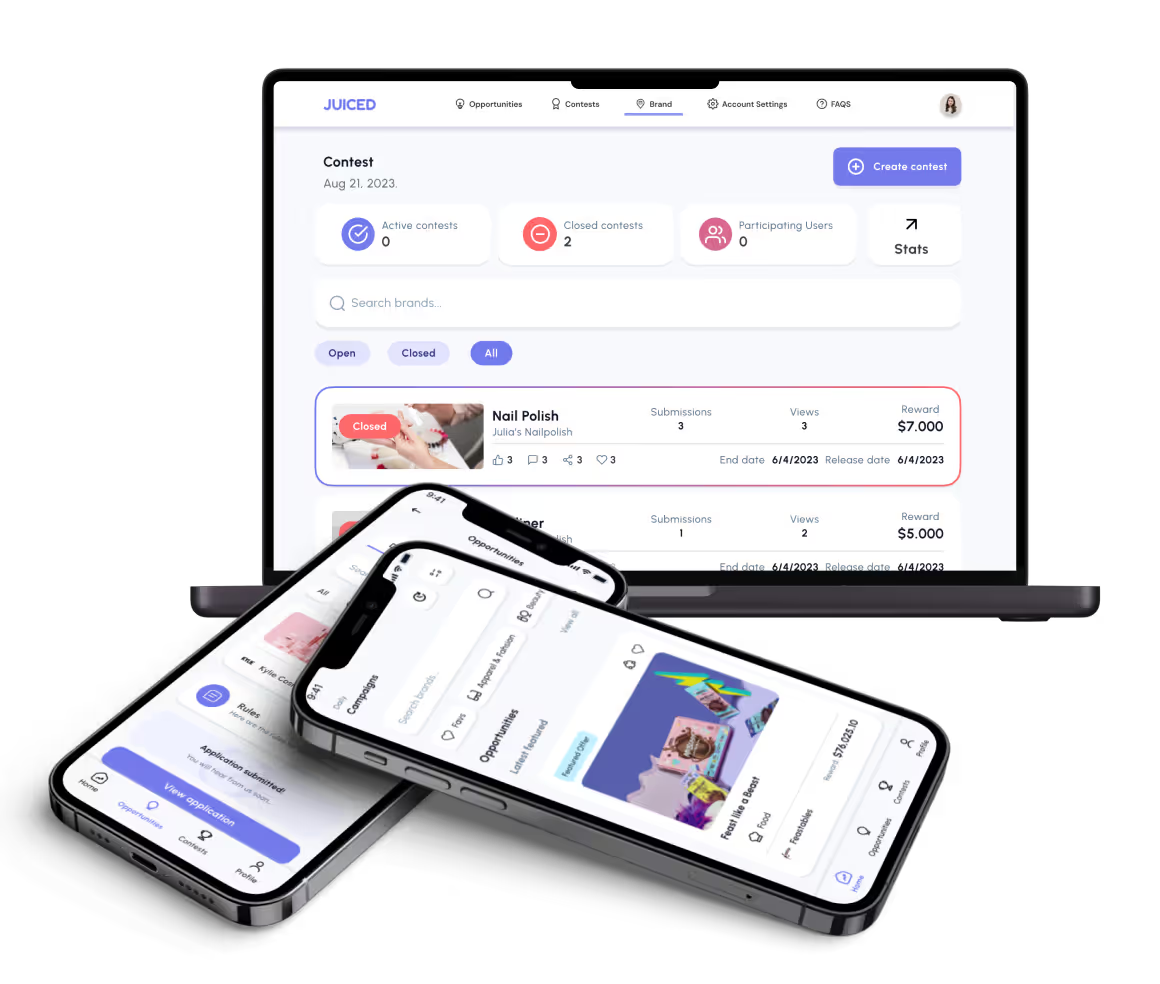

What Can FlutterFlow Build for a Hotel Booking App?
FlutterFlow can deliver a complete guest-facing direct booking experience: room browsing, availability selection, Stripe payment, booking confirmation, and digital check-in. FlutterFlow's ability to build cross-platform booking apps means iOS, Android, and web are served from one codebase.
Room listings, availability calendars, and payment flows are well within scope. The visual builder handles guest-facing features quickly and cleanly.
Room Listing and Visual Gallery
Rooms can be displayed with image carousels, amenity lists, bed type, capacity, and floor plan details. Guests get a full visual browse before selecting dates.
Real-Time Availability Calendar
A date range picker backed by a Firebase availability collection shows available and unavailable nights per room type. Guests select check-in and check-out dates before proceeding.
Dynamic Pricing Display
Room rates that vary by season, day of week, or minimum stay length are manageable in Firebase. Automated rate parity with OTA channel managers requires additional backend infrastructure.
Guest Details and Booking Form
A booking form collects name, email, phone, special requests, and billing details. Server-side validation via a Cloud Function runs before payment is processed.
Stripe Payment with Booking Confirmation
Guests pay via Stripe at the point of booking with full charge or deposit hold. An in-app confirmation with reference number is generated, and a confirmation email is triggered via SendGrid.
Digital Check-In and Pre-Arrival Form
Returning guests complete their check-in form before arrival through the app. ID details, arrival time, and special requests are submitted digitally, reducing front desk queue time.
Guest Profile with Booking History
Returning guests see past and upcoming reservations, loyalty point balances, and saved payment methods. This encourages repeat direct bookings over OTA channels.
In-App Concierge and Room Service
In-stay guests request amenities, housekeeping, or room service through the app. Requests route to a staff-facing dashboard built in the same FlutterFlow project.
How Long Does It Take to Build a Hotel Booking App with FlutterFlow?
A simple direct booking MVP takes 7–10 weeks. A full-featured app with digital check-in, in-stay concierge, loyalty programme, and staff dashboard takes 14–20 weeks. A phased build approach reduces launch risk significantly.
Room listings, booking forms, and payment screens are fast to build in FlutterFlow. PMS integration extends timelines regardless of build method.
- Simple MVP scope: Room listing, availability calendar, Stripe payment, and booking confirmation ship in 7–10 weeks for most independent properties.
- Full-featured timeline: Digital check-in, in-stay concierge, loyalty tracking, and staff dashboard extend the build to 14–20 weeks.
- Stripe deposit hold complexity: PaymentIntent setup for deposit hold with balance capture after checkout is a distinct implementation from a simple charge.
- Double-booking prevention: Firebase availability calendar logic preventing concurrent booking conflicts adds meaningful build time to get right.
- Push notification scheduling: Pre-arrival and departure reminder scheduling for bookings made weeks in advance requires thoughtful Firebase Cloud Messaging setup.
- Phased approach advantage: Launching direct booking with availability and Stripe first, then adding digital check-in and loyalty in phase two, reduces initial scope risk.
PMS integration is where custom backend investment becomes necessary regardless of the build tool. Plan for it separately if your property requires it at launch.
What Does It Cost to Build a FlutterFlow Hotel Booking App?
A FlutterFlow hotel booking app built by an agency costs $20,000–$55,000 for a standalone direct booking app. FlutterFlow subscription and plan costs are predictable; the variable costs come from payment processing, email APIs, and PMS integration fees.
Custom development for equivalent scope with full PMS integration runs $90,000–$220,000. The gap widens when you factor in timeline.
- Developer hourly rate: FlutterFlow specialists bill $50–$150/hour; most hotel booking projects run $15,000–$50,000 in development.
- PMS licensing costs: Cloudbeds API access starts at $100/month; Opera licensing is enterprise-priced and billed separately.
- Channel manager integration: Rate parity via SiteMinder or RateGain adds backend service costs not included in standard FlutterFlow builds.
- Google Maps API: A property location map display incurs Google Maps API charges based on load volume.
Hidden costs are most often the PMS access subscription and channel manager integration, not the FlutterFlow build itself.
How Does FlutterFlow Compare to Custom Development for a Hotel Booking App?
FlutterFlow delivers a full direct booking app in 10–16 weeks at $20,000–$55,000. Custom development for the same scope takes 5–10 months at $90,000–$250,000. The capability difference only matters when PMS sync, yield management, or enterprise chain requirements are in scope.
FlutterFlow wins for independent hotels with Firebase-managed inventory. Custom wins when the property management dependency is non-negotiable at launch. Understanding FlutterFlow pros versus custom code helps set the right expectations before committing to either path.
- FlutterFlow wins for: Independent hotels, boutique properties with Firebase-managed inventory, and direct booking apps targeting OTA commission reduction.
- Custom wins for: Enterprise hotel chains requiring Opera PMS integration, yield management automation, and OTA channel manager two-way sync.
- Maintenance reality: Guest-facing UI and booking flow iterate faster in FlutterFlow; PMS integration and rate management logic require backend engineering regardless of platform.
What Are the Limitations of FlutterFlow for a Hotel Booking App?
FlutterFlow cannot replace a proper PMS integration layer, manage yield pricing dynamically, or handle real-time OTA rate parity natively. These require custom backend middleware that exists independently of the FlutterFlow front end.
Understanding FlutterFlow security for booking apps is also essential. Payment data, guest records, and booking history require properly configured Firebase security rules, not just UI-layer restrictions.
- PMS two-way sync: Updating reservation status, room assignment, and guest folios via Opera, Cloudbeds, or Mews requires custom API middleware with complex authentication and payload transformation.
- Channel manager integration: Syncing availability and rates with Booking.com and Expedia via SiteMinder or RateGain requires a backend service FlutterFlow cannot manage.
- Double-booking at scale: Simultaneous booking attempts during high-demand periods require transactional Firestore writes with pessimistic locking, implemented via Cloud Functions.
- Yield management automation: Automatically adjusting room rates based on occupancy percentage, competitor rates, and demand forecasts requires a pricing engine outside FlutterFlow's scope.
- Scale for hotel groups: Hundreds of properties, thousands of room types, and millions of annual bookings need caching and CDN strategies beyond standard Firebase configuration.
- Code export reality: Booking logic tied to custom Cloud Functions must be maintained separately, regardless of whether the Flutter UI code is exported.
How Do You Find the Right Team for a FlutterFlow Hotel Booking App?
Knowing how to hire FlutterFlow booking app developers with hospitality experience avoids building availability logic incorrectly and discovering the failure on a busy weekend. Hospitality domain knowledge is as important as platform proficiency.
Freelancers handle room listings and basic booking flows well. Agencies are better suited for double-booking prevention logic, deposit hold flows, in-stay features, and App Store submission.
- Stripe PaymentIntent expertise: Your team must understand deposit hold with separate balance capture, not just standard Stripe charges, for hotel booking scenarios.
- Firebase availability logic: Concurrent booking conflict prevention in Firestore requires a developer who has solved this problem before, not one learning it on your project.
- Hospitality UX knowledge: Guest-trust signals, accessibility, and multi-language support for international travellers require domain-aware design decisions.
- Red flag: boolean availability: Any developer treating room availability as a simple yes/no without discussing concurrent booking conflicts lacks the required experience.
- Key question on deposits: Ask specifically how they handle Stripe deposit holds and balance capture after a guest's stay completes.
- Expected timeline from a good team: Discovery takes one week, design two weeks, build eight to ten weeks, and QA plus store submission two weeks.
A team with hotel or hospitality app experience will ask about your PMS before they ask about your colour palette.
Conclusion
FlutterFlow is a strong platform for independent hotel direct booking apps with Firebase-managed inventory. Room browsing, availability, payment, and digital check-in are all well within scope.
PMS integration, channel manager sync, and yield management require custom backend investment that FlutterFlow cannot replace. The decision point is whether your property needs real-time PMS sync at launch.
If you can manage availability in Firebase independently, FlutterFlow delivers a polished direct booking app in 10–14 weeks at a fraction of custom development cost.
Building a Hotel Booking App with FlutterFlow? Here Is How LOW/CODE Agency Approaches It.
Most hotel booking app projects stall on one of three things: double-booking logic that was not thought through, a Stripe deposit flow that does not match how the property actually operates, or a PMS integration that was underscoped at the start.
As AI development experts, we at LOW/CODE Agency help SMBs ship real software — web and mobile applications, intelligent chatbots, RAG pipelines, and autonomous AI agents built for businesses that need results, not platforms. We scope hospitality tech builds from the data architecture up, covering availability calendar logic, Stripe PaymentIntent flows, PMS integration planning, and the guest experience from browse to checkout.
- Availability architecture: We design Firebase availability logic with Firestore transactional writes to prevent double bookings under concurrent load.
- Stripe deposit hold setup: We implement PaymentIntent with separate authorisation and capture, matching how hotel properties actually charge for stays.
- PMS integration scoping: We assess whether your PMS requires custom middleware at launch or can be phased in after the guest-facing booking app is live.
- Digital check-in flow: We build pre-arrival forms and guest profile screens that reduce front desk load and increase repeat direct booking rates.
- Push notification scheduling: We configure Firebase Cloud Messaging for pre-arrival, check-in, and departure reminders triggered at the right moment relative to each booking.
- Cross-platform delivery: We build for iOS, Android, and web from a single FlutterFlow codebase, so no booking channel is left behind.
- Full product team: Strategy, UX, development, and QA from a single team that understands hospitality workflows, not just app development.
We have built 350+ products for clients including Coca-Cola, American Express, and Sotheby's. We know where hotel booking app builds go wrong, and we design around those failure points from day one.
Related Articles
- How to Build HR and Operations Apps with FlutterFlow
- How to Build an HR Document Management App with FlutterFlow
- How to Build a Housing Management Platform with FlutterFlow
- How to Build Hospitality and Travel Apps with FlutterFlow
- How to Build a Hospital Management App with FlutterFlow
- How to Build a Home Services Marketplace with FlutterFlow
Last updated on
September 24, 2026
.

Jesus is a visionary entrepreneur and tech expert. After nearly a decade working in web development, he founded LOW/CODE Agency to help businesses optimize their operations through custom software solutions.


FAQs
What are the first steps to create a hotel booking app in FlutterFlow?
How can I integrate payment processing in a FlutterFlow hotel booking app?
What backend options work best with FlutterFlow for hotel booking apps?
Can I add real-time booking availability updates in FlutterFlow?
How do I test and deploy a hotel booking app built with FlutterFlow?
What are common challenges when building booking apps with FlutterFlow?
Related Articles
FlutterFlow
How to Build a KPI Tracking App with FlutterFlow
Learn how to create a KPI tracking app using FlutterFlow with step-by-step guidance and best practices for app performance and data management.

FlutterFlow
How to Build a Creator Marketplace App with FlutterFlow
Learn how to create a creator marketplace app using FlutterFlow with step-by-step tips and best practices for success.
FlutterFlow
How to Build an SOP Documentation App with FlutterFlow
Learn how to create an SOP documentation app using FlutterFlow with step-by-step guidance and best practices for smooth app development.

FlutterFlow
How to Build a Restaurant Management System with FlutterFlow
Learn how to create a restaurant management system using FlutterFlow with step-by-step guidance and best practices.

Why customers trust us for no-code development


