

How to Build an Electricity Usage Dashboard with FlutterFlow
11 min
read
Learn how to create an electricity usage dashboard using FlutterFlow with step-by-step guidance and tips for effective data visualization.


Energy customers and facilities managers are drowning in data from smart meters and building management systems, but most cannot access it in a clean, actionable format without logging into a clunky utility portal. A FlutterFlow electricity usage dashboard changes that.
FlutterFlow delivers the dashboard layer: consumption charts, cost estimates, demand peaks, and usage alerts on iOS, Android, and web from a single codebase. The platform reads from APIs and databases; it does not talk directly to smart meters.
Key Takeaways
- Core capability: A FlutterFlow electricity usage dashboard can display consumption by period, cost estimates, demand peaks, and comparative benchmarks from smart meter APIs.
- API dependency: FlutterFlow reads electricity data from third-party APIs or databases. Direct smart meter communication requires a middleware data pipeline.
- Mobile and web: A single FlutterFlow codebase delivers the dashboard on iOS, Android, and web, which matters for both customer portals and internal facilities tools.
- Cost range: A focused electricity usage dashboard typically costs $12,000–$40,000 to build.
- Right use case: Strongest for customer self-service portals, building energy reporting, and sustainability dashboards, not for grid control or SCADA replacement.
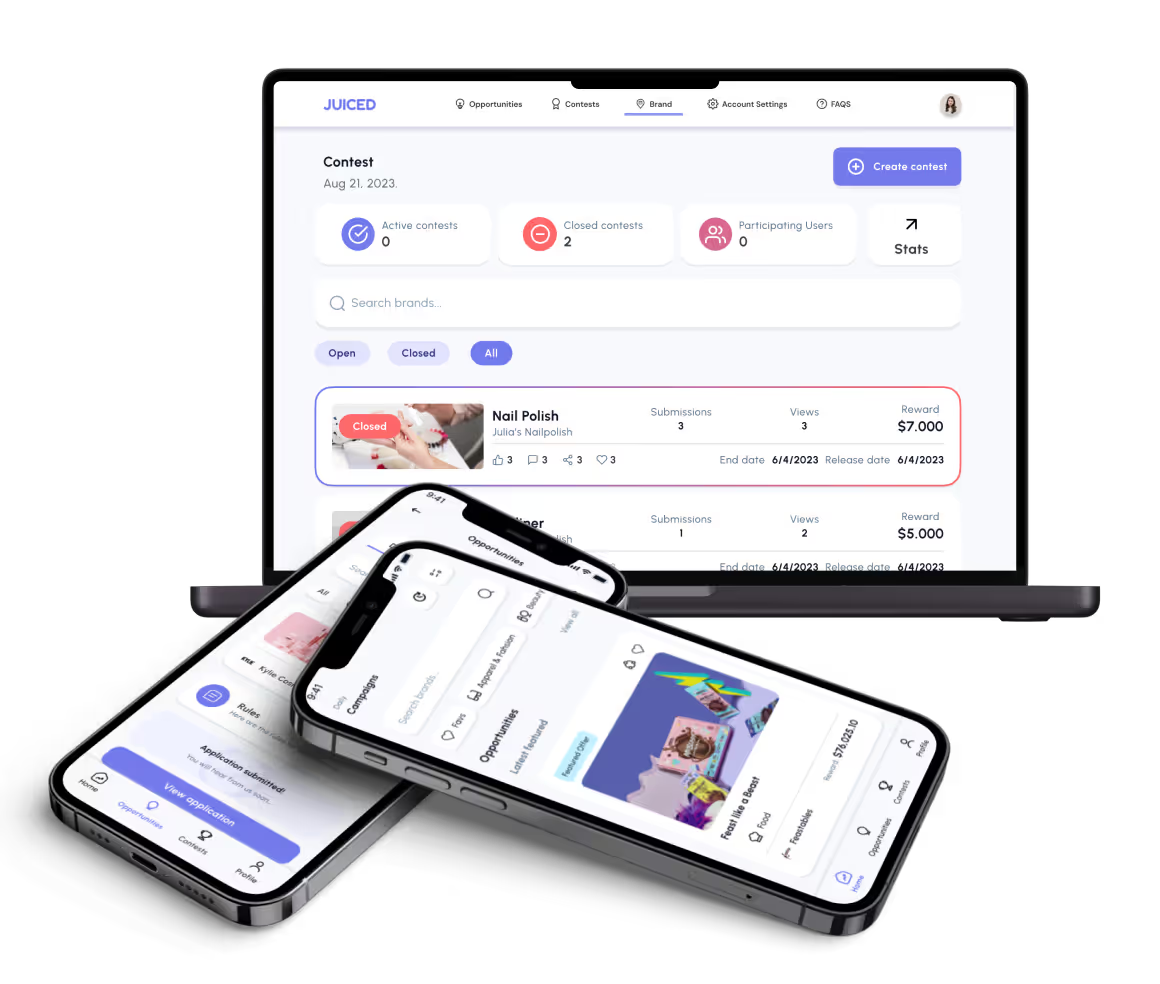

What Can FlutterFlow Build for an Electricity Usage Dashboard?
FlutterFlow can build a complete electricity usage dashboard covering consumption charts, cost tracking, demand peak identification, carbon estimates, comparative benchmarking, usage alerts, and circuit-level breakdowns when sub-metering data is available. FlutterFlow dashboard app examples from energy and facilities teams show how visual data displays have replaced static PDF reports in customer-facing products.
The visual builder handles chart layout, period selectors, and alert configuration well. The meter data pipeline behind it requires backend engineering regardless of the front-end tool.
Current and Historical Consumption Charts
Electricity usage displays by hour, day, week, month, and year with bar and line charts using FlutterFlow's native chart widgets fed by meter data APIs.
Cost and Budget Tracking
Estimated electricity costs display against a monthly or annual budget, with variance indicators and projected end-of-period spend.
Demand Peak Identification
Peak demand periods highlight on usage charts so facilities managers can identify opportunities to reduce demand charges on their utility bills.
Carbon Footprint Estimate
An estimated CO2 equivalent of electricity consumption calculates and displays based on configurable grid emission factors for the relevant region.
Comparative Benchmarking
Usage displays against similar buildings, prior year performance, or a user-defined target consumption level for performance context.
Usage Alerts and Notifications
Push notifications fire when daily, weekly, or monthly consumption exceeds a user-set threshold, encouraging demand-side response before bill cycle ends.
Appliance or Circuit Breakdown View
Consumption by circuit or appliance category displays when sub-metering data is available from the API, showing HVAC, lighting, and equipment separately.
These features represent the complete customer-facing display layer. The data feeding each widget comes from an upstream API or database that the build team must connect and normalise.
How Long Does It Take to Build an Electricity Usage Dashboard with FlutterFlow?
A simple dashboard MVP with consumption chart, cost estimate, and period selector takes 3–5 weeks. A full electricity dashboard with multi-period analysis, demand peaks, carbon estimates, alerts, and comparative views takes 8–14 weeks.
Timeline is driven by the number of meter data API sources and whether the dashboard serves customers, internal teams, or multiple sites.
- MVP is genuinely fast: A working consumption and cost display for a single meter source is achievable in 3–5 weeks with a team experienced in API integration.
- Multi-source complexity adds time: Each additional meter API source introduces data normalisation work that extends the timeline by days to weeks.
- Customer versus internal scope: A customer-facing portal with multi-account support adds authentication and access control complexity beyond a single-site internal tool.
- Push notification setup adds scope: Usage alert configuration with user-defined thresholds requires both notification infrastructure and backend comparison logic.
- FlutterFlow is roughly twice as fast: FlutterFlow dashboards typically deliver in approximately half the time of equivalent custom React or Flutter builds.
A phased approach, launching a basic consumption and cost view first, then adding demand analysis and comparative benchmarking in phase two, reduces risk and gets value to users faster.
What Does It Cost to Build a FlutterFlow Electricity Usage Dashboard?
FlutterFlow plan costs are modest, but the total build budget for an electricity usage dashboard must include backend data infrastructure and API subscription fees. The platform subscription is a small share of the total investment.
Developer and API infrastructure costs are the real budget drivers.
- Agency build range: A full multi-feature electricity dashboard with API integration and customer-facing portal delivery costs $18,000–$50,000.
- Enterprise alternative cost: Dedicated energy intelligence platforms like Arcadia or eSmart Systems cost $50,000–$500,000 or more to implement and configure.
- Hidden cost: data normalisation: Smart meter data arrives in different formats from different providers. Normalising it into a consistent schema is a real development cost.
- Hidden cost: multi-tariff logic: Time-of-use and demand-charge tariff calculations must be computed server-side, adding backend development cost.
- Ongoing API fees: Smart meter data feeds and utility API subscriptions are recurring costs that belong in your operating model from launch day.
Confirming API accessibility and data format with your utility data provider before scoping saves weeks of assumptions becoming surprises.
How Does FlutterFlow Compare to Custom Development or Enterprise Software for Electricity Usage Dashboards?
FlutterFlow delivers a working electricity usage dashboard in 6–14 weeks versus 5–12 months for a custom build. It costs 3–5x less than a custom alternative for a focused usage and cost display dashboard. Enterprise energy platforms cost significantly more to implement and serve far broader use cases.
FlutterFlow wins for customer-facing usage portals, facilities energy reporting, and sustainability dashboards. Custom or enterprise platforms win for grid-connected demand response and complex multi-tariff billing engines.
- FlutterFlow wins: Customer-facing usage portals, facilities energy reporting, sustainability dashboards, and internal building energy tools.
- Custom wins: Grid-connected demand response systems and complex multi-tariff billing engines requiring real-time grid pricing data.
- Enterprise wins: Utility operators with full grid management, automated demand response, and SCADA integration requirements.
- Maintenance advantage: Updating chart layouts and adding new KPI panels is fast in FlutterFlow. Meter API integration maintenance requires developer involvement on any platform.
If your dashboard requirements extend to automated demand response or real-time grid pricing, reviewing alternatives to FlutterFlow will identify platforms with deeper energy systems integration.
What Are the Limitations of FlutterFlow for an Electricity Usage Dashboard?
Understanding FlutterFlow at scale is essential when an electricity usage dashboard must serve thousands of concurrent customer accounts with live meter data. Backend architecture must be planned for peak polling load, not average usage.
The limitations are real but confined to specific use cases. Knowing them before scoping prevents the wrong platform choice.
- No direct smart meter communication: FlutterFlow cannot read smart meters directly. It requires a utility API, Green Button data feed, or cloud intermediary to access consumption data.
- Sub-minute refresh rates: Dashboards updating every few seconds require WebSocket or streaming pipeline architecture outside FlutterFlow's default request model.
- Complex tariff calculation: Multi-rate, time-of-use, and demand-charge calculations are too complex for the visual logic editor and must be computed server-side.
- Data privacy compliance: Smart meter data is personally identifiable in many jurisdictions. GDPR, CCPA, and utility-specific regulations require deliberate architectural design.
- Scale at many accounts: Dashboards serving tens of thousands of utility customers with concurrent live data polling require careful Firebase or database optimisation.
- Vendor dependency: Dashboard logic is embedded in FlutterFlow's platform. Code export is available but requires Flutter expertise to maintain independently.
These limitations are manageable with the right backend design. A focused customer portal or facilities dashboard rarely hits the sub-minute refresh or advanced tariff calculation limits.
How Do You Get a FlutterFlow Electricity Usage Dashboard Built?
When you hire a FlutterFlow developer for an electricity dashboard project, confirm they understand the difference between API-sourced meter data and direct meter communication. This distinction defines the entire project architecture.
The right team has integrated third-party data APIs before and knows the difference between a display layer and a data pipeline.
- Energy API experience is required: Confirm the team has integrated utility APIs or Green Button data feeds, not just generic REST API calls in previous projects.
- Time-zone-aware data handling: Consumption data timestamps must align with the user's local time zone for period comparisons to be accurate. Ask about this directly.
- Data privacy understanding: Smart meter data is personally identifiable. A team unfamiliar with utility data privacy considerations introduces regulatory risk.
- Red flag: no questions about data source: Any team that does not ask about your meter data API, data format, and refresh frequency before quoting has not built energy dashboards.
- Freelancer versus agency: A focused single-API dashboard works with a strong freelancer. Multi-source customer-facing utility portals warrant an agency with backend capability.
A working dashboard displaying consumption data for a single meter source within three to four weeks is a realistic milestone from a team that knows what they are doing.
Conclusion
FlutterFlow is a capable, cost-effective platform for building electricity usage dashboards that display consumption history, cost estimates, and alerts from smart meter APIs.
It relies on an upstream data pipeline and cannot replace complex billing engines or real-time grid control systems. Identify your meter data source, confirm API accessibility, and scope a three-week prototype displaying consumption and cost data before committing to a full build budget.
Building an Electricity Usage Dashboard with FlutterFlow? Here Is How LOW/CODE Agency Approaches It.
Most electricity dashboard projects stall at the API integration layer. The display is simple. Getting clean, normalised meter data into a format the dashboard can chart accurately is where the real complexity lives.
As AI development experts, we at LOW/CODE Agency help SMBs ship real software — web and mobile applications, intelligent chatbots, RAG pipelines, and autonomous AI agents built for businesses that need results, not platforms. We assess your meter data source and API accessibility before scoping a single chart widget, design the data normalisation pipeline, and build the customer-facing dashboard with the backend infrastructure it needs to perform reliably.
- Meter API assessment: We evaluate your utility API or Green Button data source in week one, identifying data format, refresh rate, and normalisation requirements before build begins.
- Data pipeline design: We design the backend data normalisation layer that converts raw meter data into the consistent schema the dashboard charts need.
- Chart and KPI build: We build consumption, cost, demand peak, and carbon estimate displays using FlutterFlow's chart widgets configured for your specific data structure.
- Usage alerts and notifications: We implement user-configurable consumption thresholds with Firebase Cloud Messaging alerts and backend comparison logic.
- Multi-platform delivery: We build for iOS, Android, and web from a single FlutterFlow codebase, covering both customer portals and internal facilities tools.
- Tariff calculation architecture: We design server-side cost calculation logic for multi-rate and demand-charge tariffs, keeping complex billing logic outside the visual editor.
- Full product team: Strategy, design, development, and QA from a single team that understands energy data and dashboard performance requirements.
We have built 350+ products for clients including Coca-Cola, American Express, and Sotheby's. We know where data-heavy dashboard builds break down and how to architect past those problems from day one.
Related Articles
Last updated on
September 24, 2026
.

Jesus is a visionary entrepreneur and tech expert. After nearly a decade working in web development, he founded LOW/CODE Agency to help businesses optimize their operations through custom software solutions.


FAQs
What are the first steps to create an electricity usage dashboard in FlutterFlow?
How can I visualize electricity consumption data effectively in FlutterFlow?
Can I connect real-time electricity data to the dashboard in FlutterFlow?
What are common challenges when building a usage dashboard with FlutterFlow?
How do I ensure the dashboard is user-friendly and responsive?
Is it possible to add alerts for high electricity usage in FlutterFlow?
Related Articles
FlutterFlow
How to Build a Remote Monitoring App with FlutterFlow
Learn how to create a remote monitoring app using FlutterFlow with step-by-step guidance and best practices for seamless app development.
FlutterFlow
How to Build an Invoice Generator App with FlutterFlow
Learn how to create an invoice generator app using FlutterFlow with step-by-step guidance and tips for beginners.

FlutterFlow
How to Build a Construction Checklist Tool with FlutterFlow
Learn how to create a construction checklist tool using FlutterFlow with step-by-step guidance and best practices.

Comparison
FlutterFlow
AppMaster vs FluterFlow
Compare FlutterFlow vs. AppMaster: Discover which no-code platform best fits your needs with this in-depth analysis of features, pricing, and real user feedback.


Why customers trust us for no-code development


