

How to Build a Sales Pipeline App with Bubble
7 min
read
Build a sales pipeline app with Bubble. Visualize every deal, track stages, and close faster — a lightweight custom tool without CRM bloat.


Sales pipeline visibility disappears when teams rely on spreadsheets. Bubble lets you build a custom sales pipeline app with real stage management, forecasting, and deal alerts without writing code.
Spreadsheet pipelines miss deals because stage movement is manual and forecasting is a guess. A purpose-built sales pipeline app fixes both problems inside a single tool your team will actually use.
Key Takeaways
- Visual pipeline board: Bubble supports drag-and-drop deal cards across configurable stages with live data updates.
- Forecast accuracy: Weighted revenue views by stage and close date replace spreadsheet guesswork with structured data.
- Deal inactivity alerts: Automated alerts notify reps and managers when deals go stale based on days since last activity.
- Custom data model: Deal, Contact, Account, Stage, and Activity types map directly to your sales process, not a generic CRM template.
- Launch speed: A focused MVP pipeline app typically launches in six to ten weeks on Bubble.
- Cost range: Builds range from $14,000 for an MVP to $46,000 for a full-featured platform.
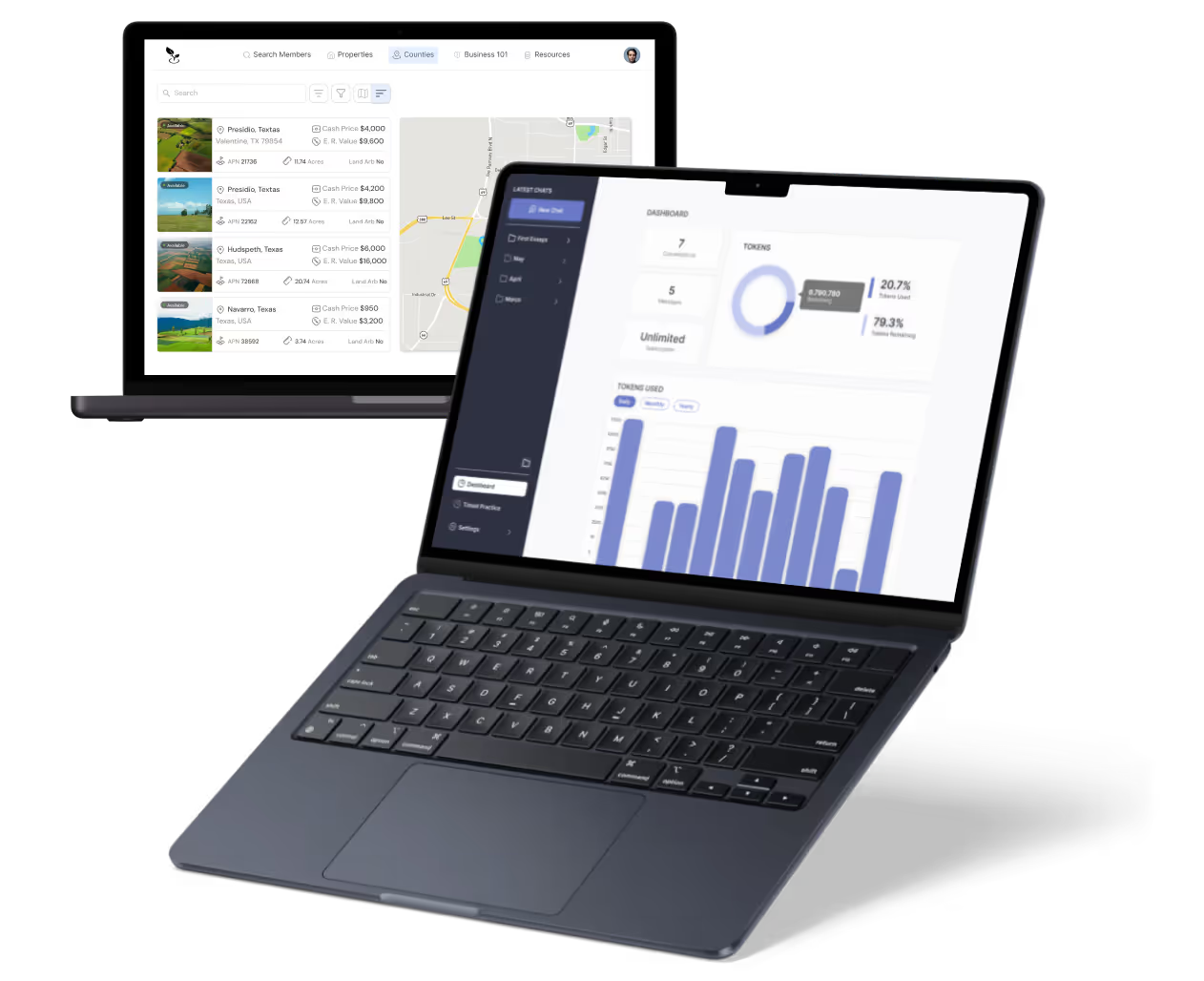

What Data Architecture Does a Sales Pipeline App Need?
A sales pipeline app needs six core data types: Deal, Stage, Contact, Account, Activity, and ForecastRecord. Each type carries specific fields that connect deals to people, companies, history, and projected revenue.
Bubble's database is relational by design. You link data types directly rather than duplicating fields across tables.
- Deal: Stores value, close date, stage, owner, account link, and probability percentage.
- Stage: Defines the ordered pipeline stages with a configurable name, position, and default probability.
- Contact: Holds the person record with name, email, phone, role, and linked Account.
- Account: Represents the company with industry, size, region, and a list of associated Contacts.
- Activity: Logs calls, emails, and meetings with a timestamp, type, rep link, and Deal link.
- ForecastRecord: Captures a periodic snapshot of weighted pipeline value for trend comparison.
Linking Deals to Accounts and Contacts via list fields lets you pull full relationship history from any record. See more structural patterns in Bubble app examples.
How Do You Build Pipeline Stages and Deal Cards?
Bubble builds a kanban-style pipeline with a repeating group set to horizontal scroll, each column bound to a Stage record and populated by filtered Deals.
Stage configuration comes from the database, not hardcoded UI. Admins add or rename stages without a developer.
- Stage columns: A repeating group of Stages renders each column; a nested group filters Deals by that Stage.
- Deal cards: Each card displays deal name, value, close date, contact name, and days since last activity.
- Stage movement: A drag workflow updates the Deal's Stage field and logs a timestamped Activity record automatically.
- Stage conversion rate: Bubble calculates the ratio of deals that moved forward versus those that stalled at each stage.
- Owner assignment: A dropdown on the deal card filters the TeamMember list and writes the owner field on save.
Conversion tracking per stage surfaces where deals stall so managers can coach on the right part of the process.
How Do You Build Forecast and Revenue Views?
Forecast views aggregate Deal value multiplied by probability, filtered by close date range and grouped by rep or team. Bubble's search and expression tools handle this without custom code.
A dedicated Forecast page pulls live Deal data and updates as reps change values, stages, or close dates.
- Weighted pipeline: A Do a Search filtered by close date range sums Deal value multiplied by Stage probability for each row.
- Close date filter: Date range inputs let managers filter the forecast to current quarter, next quarter, or a custom window.
- Rep-level view: A repeating group grouped by owner shows each rep's weighted pipeline and close rate side by side.
- Team total dashboard: A summary bar at the top aggregates all rep rows into a single weighted team pipeline number.
- Stage breakdown chart: A bar chart element breaks weighted value by stage so managers see where revenue is concentrated.
Rep-level visibility lets sales managers have specific coaching conversations backed by data rather than anecdote.
How Do You Build Deal Inactivity Alerts and Automation?
Bubble calculates days since last Activity on each Deal at page load. A scheduled workflow runs daily to flag deals where that value exceeds a threshold.
Stale deal logic runs server-side through Bubble's backend workflows, so alerts fire even when no user is logged in.
- Days-since-activity counter: A calculated field on the Deal record computes the difference between today and the most recent Activity timestamp.
- Stale deal threshold: An admin-configurable setting stores the inactivity threshold in days, applied globally or per deal tier.
- Rep alert: A backend workflow emails or in-app notifies the deal owner when the stale threshold is crossed.
- Manager escalation: Deals above a configurable value trigger a second notification to the assigned manager after an additional buffer period.
- Auto-snooze: Reps can snooze an alert for a set period, which resets the notification clock without logging a full activity.
Manager escalation for high-value stale deals ensures the largest opportunities get human attention before they go cold entirely.
How Much Does It Cost to Build a Sales Pipeline App on Bubble?
A focused MVP sales pipeline app on Bubble costs between $14,000 and $22,000. A full-featured platform with forecasting, automation, and reporting costs between $28,000 and $46,000.
Bubble pricing plans start at $32 per month for the Growth tier, which covers most pipeline app workloads at launch.
Timeline runs six to ten weeks for an MVP and twelve to eighteen weeks for a full platform build.
What Are the Limitations?
Bubble handles structured pipeline management well but has real limits for advanced sales intelligence use cases. Review Bubble's capabilities and limitations before committing to the stack.
Three specific gaps appear most often in sales pipeline builds.
- AI win probability: Native Bubble cannot train a machine learning model on deal history; integrating an external ML API adds cost and complexity.
- Native email sync: Bubble cannot pull email threads from Gmail or Outlook natively; a third-party integration like Nylas is required.
- Multi-currency reporting: Displaying pipeline in multiple currencies with live exchange rates requires external API calls and additional data modeling.
- Scale ceiling: Very high deal volumes with complex search queries can hit performance limits; see Bubble's scalability ceiling for details.
- Trade-offs: Read Bubble pros and cons to weigh speed and cost savings against these constraints.
If your pipeline requirements include native AI scoring or deep email threading, review Bubble alternatives to confirm Bubble is the right fit.
Bubble's security model covers role-based data visibility at the record level, which handles most sales team permission requirements without custom work.
A custom sales pipeline app on Bubble gives growing teams a tool that fits their exact process rather than forcing them into a generic CRM. The investment is recoverable when it replaces a paid SaaS tool or closes the visibility gap that costs deals.
Want to Build a Sales Pipeline App on Bubble?
Building a pipeline app that your team will actually use requires more than dragging UI elements together. Data architecture and workflow logic need to be right from day one.
At LOW/CODE Agency, we build sales pipeline apps on Bubble covering deal management, stage automation, forecasting, and rep activity tracking as one complete platform.
- Data architecture: Deal, Stage, Contact, Account, Activity, and ForecastRecord types built for query performance and easy extension.
- Pipeline board: Kanban view with drag-and-drop stage movement, deal card configuration, and conversion rate tracking per stage.
- Forecast views: Weighted pipeline by stage, close date filters, rep-level rollups, and team total dashboard included.
- Admin tooling: Stage configuration, inactivity thresholds, escalation rules, and user management accessible without a developer.
We have delivered 450+ products for clients including Coca-Cola and American Express. Bubble development services cover sales pipeline builds from architecture through launch; most engagements start around $14,000 USD.
Related Articles
Last updated on
September 28, 2026
.

Jesus is a visionary entrepreneur and tech expert. After nearly a decade working in web development, he founded LOW/CODE Agency to help businesses optimize their operations through custom software solutions.


FAQs
Can you build a sales pipeline app with Bubble?
How do you build a visual pipeline in Bubble?
How do you build deal activity tracking in Bubble?
How do you build automated follow-up reminders in a Bubble pipeline app?
How do you build deal scoring in Bubble?
How do you build pipeline reporting in Bubble?
Related Articles

Bubble
How to Build a POS System App With Bubble
Build a POS system with Bubble. Process sales, manage inventory, and track revenue in a custom interface — no code, no expensive POS hardware lock-in.

Bubble
How to Build a Deal Tracker App with Bubble
Build a deal tracker with Bubble. Visualize your pipeline, log every interaction, and never lose track of a deal — no code, no bloated CRM.
Bubble
How to Build a Work Order Management App with Bubble
Build a work order management app with Bubble without coding. Create, assign & track work orders step-by-step using powerful no-code tools.

Bubble
How to Build a Petition Platform App with Bubble
Build a petition platform app with Bubble without coding. Collect signatures, grow campaigns, and drive change fast using this no-code step-by-step guide.

Why customers trust us for no-code development


