

How to Build a Digital Products Marketplace App with Bubble
10 min
read
Build a digital products marketplace with Bubble. Let creators sell and buyers discover digital goods — a full platform, no backend code needed.


Digital products marketplaces sell goods delivered instantly: ebooks, templates, presets, fonts, music, and printables. Gumroad and Creative Market have proven the demand. The opportunity is in focused verticals where curated quality beats raw volume. Building a digital products marketplace on Bubble lets you validate a niche before committing to a custom engineering team.
This guide covers how to build a digital products marketplace with Bubble: product listings, secure file delivery, license management, creator payouts, and the platform mechanics that make digital product businesses sustainable.
Key Takeaways
- Bubble supports digital products marketplace architecture through product listings, file delivery workflows, Stripe Connect creator payouts, license management, and purchase-gated download access controls.
- Instant file delivery is the core product experience: customers who purchase a digital product expect immediate access; any delay between payment and download is a friction point that drives refunds and chargebacks.
- License management determines commercial viability: personal, commercial, and extended licenses carry different price points and usage terms that must be enforced through the platform's access model.
- A digital products marketplace MVP on Bubble takes 8-14 weeks and costs between $18,000 and $52,000 depending on file type variety, license tier complexity, and creator payout sophistication.
- Creator monetization tools drive supply growth: revenue share transparency, payout scheduling, and per-product sales analytics convince creators to list on your platform rather than spreading across multiple marketplaces.

What Data Architecture Does a Digital Products Marketplace Need?
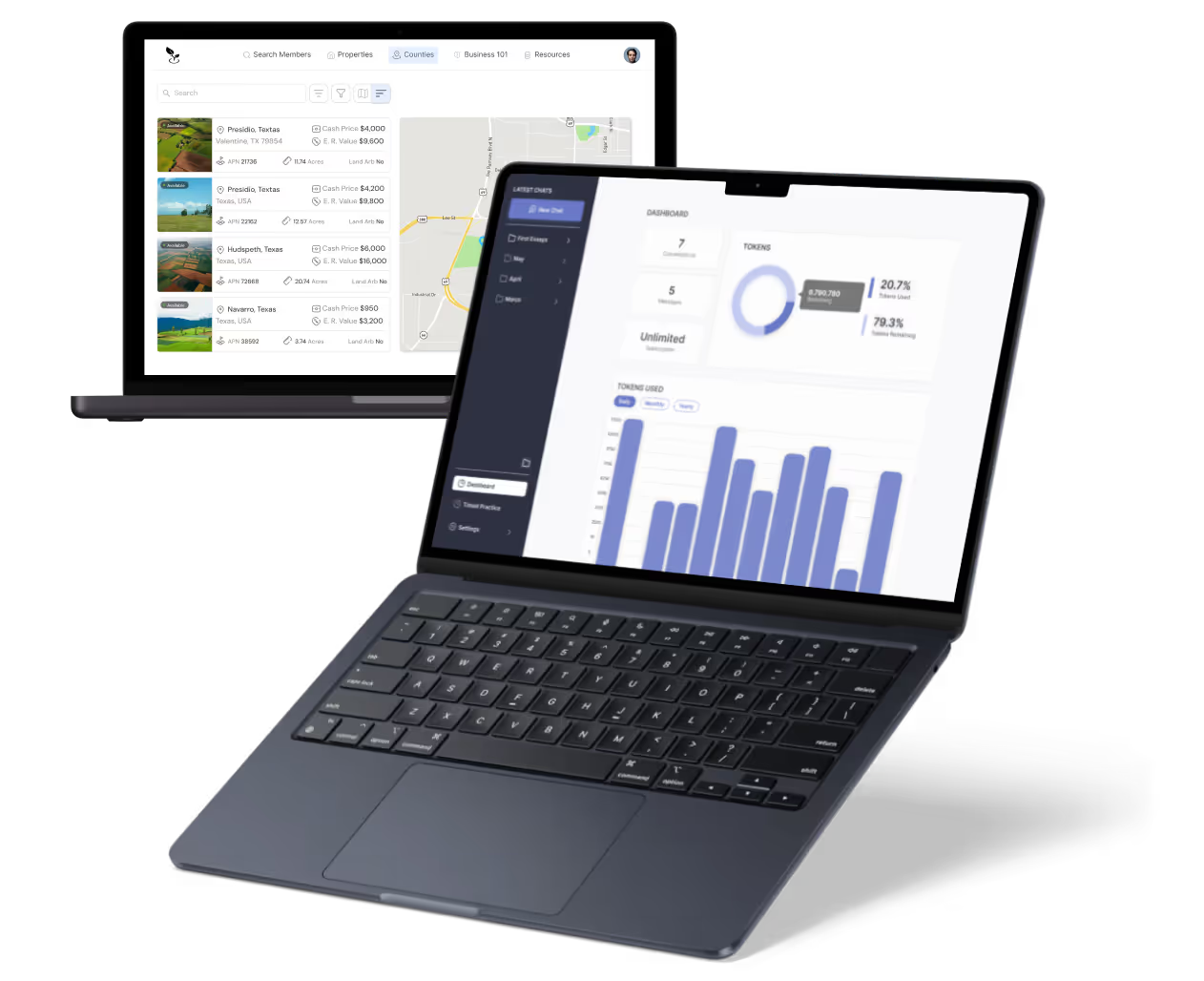
A digital products marketplace needs a Creator data type for sellers, a Product data type for listings, a Purchase data type for transactions, a License data type for usage rights, a FileAsset data type for secure file storage, and a Download data type for access tracking.
Digital product data architecture is simpler than physical marketplace data because there are no inventory counts, shipping addresses, or fulfillment states. The complexity lives in file access control, license enforcement, and revenue attribution.
- Creator data type: user reference, display name, bio, Stripe Connected Account ID, payout schedule, and total earnings to date.
- Product data type: creator reference, title, description, category, price, license type options, preview assets, and delivery file references per license tier.
- Purchase data type: buyer reference, product reference, license tier purchased, payment amount, Stripe PaymentIntent ID, and purchase timestamp.
- License data type: product reference, purchase reference, license tier (personal, commercial, extended), usage terms, and expiry date if applicable.
- Download data type: purchase reference, download timestamp, IP address, and download count for enforcing per-license download limits.
Bubble app examples include template stores, font marketplaces, and preset libraries where Bubble's privacy rules restrict file access to verified purchasers only, keeping the download system secure without external middleware.
How Do You Build Product Listings and File Delivery?
Build product listings with a structured creator upload form and preview asset management system, then build file delivery as a purchase-triggered workflow that generates a time-limited secure download link rather than exposing the raw file URL directly.
File security is what separates a real marketplace from a free download site. Files stored in Bubble's file storage or an S3 bucket must never be accessible via direct URL without a valid purchase record check.
- Creator upload form: product title, description, category, cover image, watermarked preview files, price per license tier, and corresponding delivery file uploads for each tier.
- Preview asset handling: creators upload watermarked or partial preview samples shown publicly; the full delivery file remains hidden until purchase is confirmed and the Purchase record exists.
- Purchase-triggered delivery workflow: on successful Stripe payment, create a Purchase record and email the buyer a time-limited signed URL generated via API connector to S3 or a secure delivery service.
- In-account download library: a buyer dashboard showing all purchases with re-download access, license details, invoice links, and the original license terms for each transaction.
- Download limit enforcement: track download count against the Purchase record and block further access once a per-license limit is reached, preventing buyers from sharing download links broadly.
Bubble's security model covers the privacy rules that restrict FileAsset records to the purchasing user, ensuring that direct URL guessing cannot bypass the purchase-gated access control layer.
How Do You Build License Management and Usage Rights?
Build license management by offering tiered license options at checkout, storing the purchased license tier on the Purchase record, and surfacing the full license terms in the buyer's download library so they know exactly what they are permitted to do with each file.
License tiers are a pricing lever. A font marketplace that sells personal and commercial licenses at different price points captures more revenue from professional buyers without pricing out casual purchasers who only need personal use rights.
- License tier options: define standard tiers (personal, commercial, extended commercial) with distinct usage terms, permitted uses, attribution requirements, and price points stored as License records linked to each Product.
- Checkout license selection: buyers choose a license tier before completing payment, with the total price updating dynamically and the full license terms displayed inline before they confirm purchase.
- License record creation: on purchase confirmation, create a License record linked to the Purchase and Product with the selected tier's usage terms stored as readable text for the buyer's reference.
- License certificate delivery: email the buyer a license certificate with the product name, license tier, purchase date, and permitted uses formatted clearly for their records and client-facing use.
- License upgrade workflow: allow buyers to upgrade from a personal to a commercial license by paying the price difference, creating a new License record linked to the same product and voiding the previous one.
Bubble's capabilities and limitations are relevant here because automated license compliance monitoring, watermark injection on delivery, and DRM-level file protection require third-party integrations rather than native Bubble functionality.
How Do You Build Creator Payouts and Revenue Sharing?
Build creator payouts using Stripe Connect, charging the buyer through your platform account, deducting the marketplace commission, and transferring the creator's revenue share to their Connected Account on a configurable payout schedule.
Payout reliability is the creator retention metric that matters most. Creators who trust the platform to pay them accurately and on schedule become your most productive sellers and your most vocal advocates.
- Stripe Connect onboarding: require creators to complete Stripe Connect onboarding before listing products, storing their Connected Account ID on the Creator record as the payout destination.
- Platform fee deduction: pass the platform commission as the application_fee_amount on each Stripe charge, with the remainder automatically transferable to the creator's Connected Account after payment clears.
- Payout schedule configuration: allow creators to choose between instant payouts after each sale, daily batch transfers, or a fixed-date monthly payout depending on their Stripe account type and preference.
- Creator earnings dashboard: a real-time view of total earnings, per-product revenue, sale history, pending payouts, and lifetime payout totals broken down by product and license tier.
- Tax documentation support: for US creators, collect W-9 information during onboarding and generate 1099 documentation via Stripe Tax for creators who exceed IRS reporting thresholds.
Review Bubble pricing plans when planning a digital marketplace with high transaction frequency, since each Stripe webhook and payout transfer triggers backend workflows that count toward your plan's capacity.
How Much Does It Cost to Build a Digital Products Marketplace on Bubble?
Building a digital products marketplace on Bubble costs between $18,000 and $52,000 depending on file delivery complexity, license tier depth, creator payout sophistication, and the range of product categories and discovery features.
Digital product marketplaces are among the faster Bubble marketplace builds because there are no physical fulfillment workflows or shipping integrations. Cost is driven primarily by file security architecture, license management depth, and creator tooling.
- MVP digital marketplace with product listings, secure file delivery, single license tier, Stripe Connect payouts, and a basic creator earnings dashboard: $18,000 to $28,000.
- Full digital marketplace with multi-tier licensing, creator analytics, upgrade workflows, download limits, curated collections, and admin product review queue: $36,000 to $52,000.
- Bubble production plan: recommended for marketplaces with active creator communities where payout workflows, download access checks, and file delivery events run continuously.
- Category-specific tooling: product types like software with activation keys, subscription-based file access, or AI-generated content require additional workflow design beyond a standard digital goods build.
The build scope stays predictable when file delivery, license tiers, and creator payout rules are defined clearly before development begins.
What Are the Limitations of Building a Digital Products Marketplace on Bubble?
Key limitations include native file storage constraints for large assets, the absence of DRM-level content protection, performance dependencies on third-party CDN delivery for fast downloads, and limited support for subscription-based file access models.
Bubble handles digital product marketplaces well up to moderate asset sizes and transaction volumes. Platforms with large file assets or strict content protection requirements need third-party integrations planned from the architecture phase.
- File size constraints: Bubble's native file storage suits documents, images, and small assets; large video files, software installers, or high-resolution asset packs require S3 or a CDN integration for reliable delivery speed.
- No native DRM: Bubble cannot enforce DRM restrictions, watermarked streaming, or offline playback controls natively; these require specialized third-party services connected via API connector.
- Subscription access model complexity: platforms selling monthly access to a file library rather than per-item purchases require subscription state management that is considerably more complex than single-transaction purchase workflows.
- Advanced search and discovery: semantic search, AI recommendations, and similarity-based matching require third-party search services rather than Bubble's built-in database search for meaningful discovery at scale.
Bubble pros and cons favor focused digital product marketplaces with document and image-weight assets, clear license tiers, and per-item sales models. For large-asset platforms or subscription libraries at scale, Bubble alternatives with native CDN delivery may fit the model better.
Want to Build a Digital Products Marketplace on Bubble?
Digital products marketplaces that get file security, license management, and creator payouts right from the start build the trust that keeps creators listing and buyers returning. The platform mechanics you implement at launch determine whether your supply side grows or stalls.
At LOW/CODE Agency, we build digital products marketplaces on Bubble that handle secure file delivery, multi-tier licensing, and creator payouts as one integrated platform.
- Data architecture: Creator, Product, Purchase, License, FileAsset, and Download data types with privacy rules for purchase-gated file access and download tracking.
- Product listings and delivery: creator upload form, preview asset management, purchase-triggered signed download links, in-account download library, and download limit enforcement.
- License management: tiered license options at checkout, license record creation, certificate delivery to buyers, and license upgrade workflows.
- Creator payouts: Stripe Connect onboarding, platform fee deduction, configurable payout scheduling, earnings dashboard, and tax documentation support.
- Admin tooling: product review queue, creator verification, dispute handling, category management, and platform analytics.
We have delivered 450+ products for clients including Coca-Cola and American Express. Bubble development services cover digital marketplace builds from architecture through production launch; most digital marketplace engagements start around $22,000 USD.
Related Articles
Last updated on
September 28, 2026
.

Jesus is a visionary entrepreneur and tech expert. After nearly a decade working in web development, he founded LOW/CODE Agency to help businesses optimize their operations through custom software solutions.


FAQs
Can you build a digital products marketplace with Bubble?
How do you onboard sellers to a Bubble digital marketplace?
How do you handle revenue sharing in a Bubble digital marketplace?
How do you build product discovery for a Bubble digital marketplace?
How do you manage product updates in a Bubble digital marketplace?
How do you build creator analytics in a Bubble digital marketplace?
Related Articles

Bubble
How to Build a Petition Platform App with Bubble
Build a petition platform app with Bubble without coding. Collect signatures, grow campaigns, and drive change fast using this no-code step-by-step guide.

Bubble
How to Build a Last Mile Delivery App with Bubble
Speed up deliveries with a last mile app built on Bubble no coding needed. Optimize routes, track drivers, and delight customers in real time.
Bubble
No-code/Low-code
Top 11 Bubble Agencies (2026) | Hire the Best One
Need a Best Bubble agency? See our 2026 list of 11 vetted teams, plus expert tips to compare, evaluate, and pick the perfect partner for fast, smart app builds
Bubble
How to Build an Assignment Tracker App with Bubble
Stay on top of coursework with Bubble. Build a no-code assignment tracker app step-by-step organize tasks, set deadlines & track progress fast.


Why customers trust us for no-code development


