

Can Glide Build iPhone Apps? (Glide iOS App Guide)
11 min
read
Can Glide build iPhone apps? Learn how Glide works on iOS, App Store limits, key features, and when Glide is the right tool for mobile app development.


Building an iPhone app used to mean hiring a developer, spending months in Xcode, and waiting through App Store reviews. Glide changed how many businesses think about that process. But a real question comes up fast: can Glide actually build iOS apps, or is it something different entirely?
The answer matters before you invest any time or money. Glide works on iPhones, but it works differently from what most people expect. Understanding that difference will help you decide whether Glide is the right tool for your project or whether you need something else.
We have helped businesses build and deploy dozens of Glide apps across industries, and this guide gives you a clear, honest look at everything you need to know.
The Quick Answer: Can Glide Build iOS Apps?
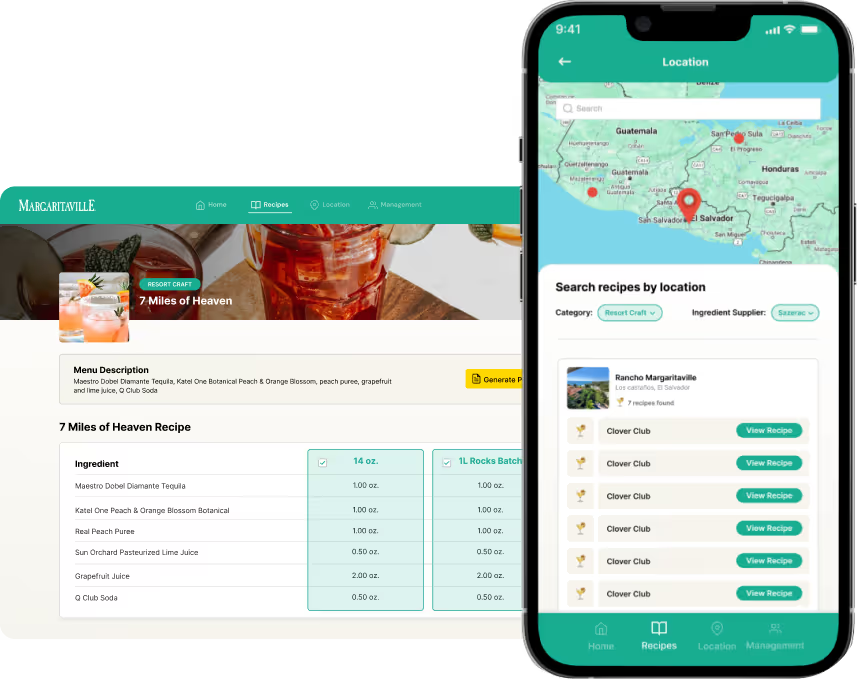
Glide apps work on iPhones, but they are not native iOS apps. Glide builds Progressive Web Apps, commonly called PWAs. When someone opens a Glide app on their iPhone, it loads through Safari and behaves like a mobile app, with smooth navigation, real-time data, and a layout built for smaller screens.
Users can also install a Glide app directly to their iPhone home screen, where it opens in full-screen mode and sits alongside native apps as its own icon. However, Glide apps cannot be submitted to or published through the Apple App Store.
They are shared and accessed through links. If you want to understand the full technical picture of how Glide works as a PWA, that deeper breakdown is worth reading before you decide.
How Glide Apps Actually Work on iPhone
Once you understand what Glide actually is, the next step is seeing how the experience works on a real device.
Opening a Glide App on iPhone
When someone receives a link to a Glide app and opens it on their iPhone, it launches inside Safari. No download is required. It simply loads in the browser and presents a fully functional mobile interface, with responsive layouts, touch-friendly controls, and real-time data that updates without refreshing manually.
The experience inside the browser is smooth. A user navigating a Glide app on their iPhone would not necessarily know they are using a web-based product. For most internal tools and business workflows, the day-to-day experience is clean and practical.
Installing a Glide App on the iPhone Home Screen
Users can install a Glide app to their home screen in a few simple steps, without going through the App Store at all.
- Open the Glide app link in Safari on your iPhone
- Tap the Share button at the bottom of the screen
- Select "Add to Home Screen" from the options
- Confirm the name and tap Add
The app then appears on the home screen exactly like a native app icon. Tapping it opens the app in full-screen mode with no visible browser interface. For most internal business tools, this is more than enough for daily use across a team.
Native iOS Apps vs Glide Apps
This is the most important section if you are making a build decision. Both options deliver an app on iPhone, but they work in fundamentally different ways and serve very different needs.
What Native iOS Apps Can Do
Native iOS apps are built specifically for Apple's operating system and submitted through the App Store. Because they run directly on the device, they have full access to iPhone hardware and system features.
- App Store distribution, giving your app public discoverability and download access for any iPhone user
- Full access to device hardware including Face ID, Touch ID, Bluetooth, NFC, and the camera system
- Background processing that allows the app to run tasks even when it is not open on screen
- Native push notifications delivered reliably through Apple's own notification infrastructure
- Strong offline functionality because data is stored and synced locally on the device itself
For consumer products, gaming apps, or anything needing deep device integration, native iOS development remains the right path.
What Glide Apps Can Do
Glide apps run as Progressive Web Apps, but they still offer a capable and practical mobile experience for the right projects.
- A clean, mobile-friendly app experience that works on any iPhone without installation friction or App Store dependency
- Instant updates without App Store review, so changes go live immediately for all users
- Real-time data syncing so your team always works with current and accurate information
- Cross-device access, meaning the same app works on iPhone, Android, and desktop through a single link
- Fast deployment through shareable links, which is far quicker than any App Store release cycle
You can explore real Glide app examples to see how teams are using these features across different industries and workflows.
Major iOS Limitations of Glide Apps
Understanding the trade-offs honestly is part of making a good decision. Glide has real limitations on iOS, and it is better to know them before you build.
No Apple App Store Publishing
Glide apps cannot be submitted to the Apple App Store. They are not packaged as native apps, so Apple's standard distribution channel is simply not available.
Your app will not appear in App Store search results, and users cannot find or download it the way they would a traditional product.
Distribution works through links instead. You share a URL, and users open it in Safari or install it to their home screen. For internal teams and B2B tools this is perfectly practical. For consumer products that depend on App Store visibility, this is a significant blocker.
Limited Access to iPhone Hardware
Because Glide apps run inside Safari rather than natively on the device, access to iPhone hardware is restricted. Most of what makes native apps powerful at the device level is simply not available inside a PWA environment.
- Face ID and Touch ID cannot be used for in-app authentication
- Bluetooth connections to external devices are not supported
- NFC functionality, which powers contactless scanning and payments, is unavailable
- Background sensors and precise location tracking have significant restrictions compared to native apps
If your app needs any of these capabilities, Glide will not be the right fit regardless of how well it handles everything else.
Push Notification Limitations
Push notifications in web apps on iPhone have historically been limited. Apple only began allowing PWA push notifications on iOS 16.4 and later, and even then users must first add the app to their home screen before notifications can be enabled.
This means messaging apps, alert-heavy workflows, or any product where reliable push delivery is critical will face real challenges on Glide. Notification reliability simply does not match what native apps deliver through Apple's notification system.
Offline Capability Constraints
Glide apps depend on an active internet connection to function properly. Some data caching exists and helps with minor connectivity gaps, but full offline support is not a strength of the platform.
For field teams working in areas with poor connections, or for workflows where offline data entry and local syncing are essential, this is a meaningful limitation. If stable offline performance is a hard requirement, a native or hybrid app will serve you better.
Best Use Cases for Glide Apps on iPhone
Glide is genuinely strong for a specific category of mobile app. When the use case matches the platform, the results are fast, reliable, and cost-effective.
The sweet spot is internal business tools and operational apps, where the audience is known, distribution is controlled, and the app needs to work well on iPhone without requiring App Store infrastructure.
- Internal company apps for HR, onboarding, or policy access that employees use on their iPhones every day
- CRM access for sales teams who need to view and update customer records while working in the field
- Inventory management tools that let warehouse or operations staff track stock directly from their phones
- Field operations dashboards for teams managing logistics, inspections, or on-site service delivery
- Customer portals that give clients access to their data, orders, or project status through a clean mobile interface
- Data collection apps for capturing form submissions, photos, or feedback from iPhone users on the go
- Operational workflow tools that replace paper processes or disconnected spreadsheets with a structured mobile system
A good starting point is to look at Glide use cases that match your industry, or browse Glide app templates to see how common business tools are structured before you build from scratch.
When Glide Is Not the Right Choice for iOS Apps
Being clear about when Glide does not make sense saves time and avoids expensive mistakes down the line.
Glide is not suited for consumer apps targeting the App Store, gaming apps, or complex mobile platforms that need public discoverability and App Store trust signals.
It is also not the right choice for apps that require deep hardware integration such as Bluetooth pairing, NFC scanning, or biometric authentication, since those features are not accessible in a PWA environment.
If your product depends on advanced push notification delivery, has a large consumer audience, or needs the kind of native performance that heavy media or social features demand, native development or a cross-platform framework is the more honest recommendation.
You can review the full Glide advantages and disadvantages to get a balanced view before committing to a direction.
Can You Convert a Glide App Into an iOS App?
This question comes up often once people learn that Glide apps are PWAs. The short answer is that it is technically possible, but it is not straightforward and comes with real risks.
Using App Wrapper Tools
Some third-party tools allow you to wrap a web app inside a native shell and submit it to the App Store. These are sometimes called web-to-app wrappers or hybrid containers, and they package your Glide app URL inside a lightweight native wrapper that Apple processes as a native submission.
- Apple has strict guidelines about apps that simply wrap a website without adding genuine native functionality, and these submissions regularly get rejected
- Performance inside a wrapper is often inferior to a true native app, since the web layer still runs underneath the shell
- Maintenance becomes more complex because you are managing both the Glide app and the wrapper layer separately over time
- Long-term, this approach creates more operational overhead than it solves and is rarely the right path for a serious product
If App Store distribution genuinely matters for your project, building natively or with a cross-platform framework from the start is the cleaner and more sustainable choice.
How Much Does It Cost to Build an iPhone App With Glide?
A native iPhone app typically costs between $30,000 and $150,000 depending on complexity, and that does not include ongoing developer fees for updates.
Cost is one of the biggest reasons businesses look at Glide in the first place. Compared to native iOS development, the numbers are dramatically different, and that difference is worth understanding clearly.
Glide's platform pricing starts with a free tier suitable for prototyping, with paid plans scaling based on users, data rows, and advanced features.
A Glide app built for a similar business workflow can often be delivered for a fraction of that cost, and updates can be made without touching code at all.
The cost advantage is most meaningful for internal tools, operational apps, and B2B products where you do not need App Store infrastructure. As your team or data volume grows, Glide scales with you without requiring expensive rebuilds.
You can read more about Glide's scalability to understand where the platform performs well at larger volumes and where the ceiling sits.
Glide Alternatives if You Need Real iOS Apps
If you work through this article and realise Glide does not meet your iOS requirements, there are clear alternatives worth considering depending on what your project actually needs.
Native Mobile Development
When your business needs full App Store control, deep device hardware access, and the trust that comes with a listed native app, traditional iOS development is the right path.
It carries higher cost and longer timelines, but for consumer products where those factors matter, it is the correct investment.
Cross-Platform Mobile Builders
Tools designed to build real iOS and Android apps from a single codebase offer a strong middle ground. They provide genuine native app output and App Store publishing capability without requiring two separate development projects.
A detailed FlutterFlow vs Glide comparison breaks down exactly where each platform fits and which is better suited to different project types.
Low-Code Mobile Development Platforms
Platforms that allow scalable app development without full custom coding give businesses a practical route to serious mobile products.
These platforms sit between Glide's simplicity and full native development, offering more capability while keeping timelines and costs manageable.
You can explore the broader landscape of Glide alternatives to find the platform that fits your specific requirements.
Conclusion: Is Glide a Good Mobile App Builder for iOS?
Glide is a strong mobile app builder for the right kind of iOS project. If you are building internal tools, operational apps, or business workflows for a defined team, Glide delivers fast, reliable, and cost-effective results on iPhone. The PWA experience is smooth, deployment is simple, and updates happen without any App Store delays.
Where Glide falls short is consumer apps, App Store publishing, and anything that requires deep device hardware access or advanced push notifications. For those projects, native development or a cross-platform framework will serve you better.
Identifying the category your project falls into is crucial before beginning development. If you're interested in seeing Glide in action within a real mobile app context, that's a great starting point.
Want to Build a Glide App for Your Business?
Glide works best when the app is built around how your team actually operates. The right structure, data connections, and workflow logic make the difference between a tool your team uses every day and one they ignore after a week.
At LOW/CODE Agency, we build AI-powered products for SMBs — custom web apps, mobile apps, chatbots, RAG systems, and AI agents, delivered with the depth and standards of a specialist software team. From internal tools and field operations dashboards to customer portals and data collection systems, we build software your team relies on to get work done.

Related Articles
Last updated on
September 3, 2026
.

Jesus is a visionary entrepreneur and tech expert. After nearly a decade working in web development, he founded LOW/CODE Agency to help businesses optimize their operations through custom software solutions.


FAQs
Does Glide work on iPhone?
Can Glide apps be published to the Apple App Store?
Are Glide apps native iOS apps?
Can you convert a Glide app into an App Store app?
Do Glide apps support push notifications on iPhone?
What is the best alternative to Glide for building iOS apps?
Related Articles
Glide
How to Connect Salesforce Database to Glide (Complete Guide)
Learn how to connect your Salesforce database to Glide using APIs, Zapier, or middleware. Sync data, automate workflows, and avoid common setup mistakes.

Glide
18+ Best Glide App Templates to Build Faster (2026 Picks)
Discover 18+ best Glide app templates to build faster in 2026. Explore ready-made Glide templates for MVPs, internal tools, and scalable business apps.

Glide
Mobile App Development
Build Mobile Apps Using Glide (Read this Before You Start)
Learn how to build mobile apps using Glide, what it can and can’t do, pricing limits, and when it makes sense for real business use cases in 2026.

Glide
How to Build a Glide Inventory App (Step-by-Step Guide)
Build a Glide inventory app step by step. Learn setup, data structure, workflows, barcode scanning, user roles, and best practices to launch fast.


Why customers trust us for no-code development


