

Acquia Website Redesign: What to Know
Everything you need to know about redesigning an Acquia website — costs, process, migration steps, and when to switch platforms.

An acquia website redesign is, at its core, a Drupal redesign running on a managed enterprise cloud platform.
Understanding the distinction between Acquia's platform services and the Drupal CMS itself is the starting point for every scoping decision your team will face.
The two layers have separate cost structures, expertise requirements, and implementation timelines. Treating them as one produces scoping errors that surface as budget overruns and missed milestones mid-project.
Key Takeaways
- Acquia Is a Cloud Platform: Acquia provides managed hosting, DevOps pipelines, and digital asset management on top of Drupal CMS.
- DXP Suite Expands Scope: Organizations using Acquia Personalization, Acquia CDP, or Acquia DAM have significant additional integration touchpoints.
- Staging Environments Are an Advantage: Acquia's Dev/Stage/Prod pipeline provides reliable production-equivalent testing environments for enterprise projects.
- Budget at Enterprise Scale: Acquia redesigns combine Drupal development with platform subscription costs, typically starting at $150K for serious projects.
- Partner Network Is Essential: Acquia's certified partner network is the most reliable path to teams with both Drupal and Acquia platform expertise.


Understanding Acquia as a Platform for Your Redesign
Acquia is not a website builder. It is a cloud infrastructure and services platform built specifically to host, operate, and extend Drupal applications at enterprise scale.
Your website is the Drupal application. Acquia manages the environment it runs on.
Acquia Cloud vs. Drupal: What's the Difference
Acquia Cloud is a managed cloud hosting and DevOps platform built exclusively for Drupal. The website application itself is Drupal.
Acquia provides the infrastructure, deployment pipeline, CDN, security tooling, and cloud services that run the Drupal application reliably at scale.
- Platform Layer Clarity: Acquia manages servers, deployment automation, CDN, and security patching. Drupal manages your content, templates, and application logic.
- DevOps Pipeline: Acquia Cloud includes a built-in Dev/Stage/Prod environment pipeline that enterprise teams use for structured, tested deployments.
- Infrastructure Services: Acquia bundles Fastly CDN, Acquia Shield (security), and Acquia Search (Solr-powered) as platform-level services.
Acquia's DXP Components and Their Redesign Implications
Acquia's Digital Experience Platform extends well beyond hosting. Organizations with DXP subscriptions have additional components that must be accounted for in any redesign scope.
Each component represents an integration touchpoint with its own configuration and migration requirements.
- Acquia Site Studio: A component-based design system builder for Drupal that significantly changes front-end redesign approach and expertise requirements.
- Acquia Personalization: Rules-based content personalization that requires audience segment review and rule migration as part of any redesign.
- Acquia DAM: Digital asset management library that must be restructured when content types change during a redesign.
- Acquia Campaign Studio: Marketing automation journeys that reference conversion points on the site must be updated when page architecture changes.
The Acquia Site Studio Consideration
Acquia Site Studio (formerly Cohesion) is a component-based design system builder for Drupal. It is a distinct layer on top of Drupal that fundamentally changes how the front-end is built and maintained.
Organizations using Site Studio need developers with specific Site Studio expertise, not just general Drupal skills. For context on Drupal redesign on Acquia, our Drupal-specific guide covers the broader redesign framework.
What an Acquia Website Redesign Actually Includes
Following the enterprise website redesign process for an Acquia project means accounting for Drupal application work, front-end development, Acquia environment configuration, and DXP integration updates simultaneously. Scope is typically broader than organizations expect.
Drupal Content Architecture and Template Review
Every Acquia redesign includes a Drupal application layer review before design work begins. This covers content types, data templates, taxonomy structures, and Views configuration.
This is the same structural work as any Drupal redesign and takes significant time on mature sites.
- Content Type Audit: Review all existing Drupal content types against the new site architecture and consolidate, rename, or create types as needed.
- Taxonomy Restructure: Vocabulary and term structures must align with the new navigation and content model before migration begins.
- Views Configuration: Drupal Views that power listing pages, feeds, and search results must be updated to reflect new content type and taxonomy structures.
Front-End Development: Custom Theme vs. Site Studio
Two main front-end approaches exist for Acquia Drupal redesigns. The choice between them has significant implications for cost, timeline, and long-term editorial flexibility.
Custom theme development offers more flexibility. Site Studio offers faster delivery within a constrained design system.
- Custom Drupal Theme: Full design flexibility, higher development cost, and complete independence from Site Studio's component constraints.
- Acquia Site Studio Components: Faster delivery and a structured editorial component system, but design constrained by Site Studio's architecture.
- Decision Criteria: The right choice depends on design complexity, editorial team capability, and the organization's long-term front-end maintenance model.
Acquia Environment Configuration and DevOps
Acquia Cloud's Dev/Stage/Prod pipeline must be configured specifically for the redesign project. This is infrastructure work that occurs alongside design and development. Configuration complexity increases significantly for multisite implementations.
- Environment Pipeline Setup: Dev, Stage, and Prod environments must be configured with matching infrastructure settings for reliable testing.
- Multisite Configuration: Organizations running multiple Drupal sites under one Acquia installation need shared configuration management as part of the redesign scope.
- Cloud Hooks: Acquia's deployment automation hooks must be configured to handle code deployment, configuration import, and cache clearing correctly.
DXP Integration Configuration
Organizations running Acquia's full DXP suite face additional integration work that extends both timeline and budget beyond a standard Drupal project. This work requires DXP-specific expertise separate from general Drupal development skills.
- Personalization Rule Migration: Audience segments, targeting rules, and content variations must be reviewed and updated for the new site architecture.
- DAM Library Restructure: Digital asset libraries need recategorization to match new content types and editorial workflows introduced in the redesign.
- Campaign Studio Journey Updates: Automated marketing journeys that reference specific page URLs or conversion points must be updated for new site structure.
What Does an Acquia Website Redesign Cost?
Cost ranges for Acquia redesigns reflect both Drupal development complexity and Acquia platform configuration scope. Use the enterprise redesign cost guide for detailed cost modeling across enterprise project types.
Standard Acquia Drupal Redesign ($150K-$350K)
This tier covers mid-size organizations running standard Acquia Cloud with a Drupal CMS redesign. It does not include full DXP suite integration.
Budget includes custom Drupal theme or Site Studio redesign, content architecture review, Acquia environment setup, SEO migration, and 90-day post-launch support.
- Scope at This Tier: Custom or Site Studio theme, content type review, Acquia environment configuration, redirect mapping, and launch support.
- Timeline: Typically 20-32 weeks from kickoff to launch for a site in this budget range.
- Who It Fits: Mid-size organizations with a mature Acquia Cloud subscription but limited DXP product adoption beyond core hosting.
Full DXP Redesign With Personalization ($350K-$700K+)
This tier covers complete DXP architecture work across Personalization, CDP, and DAM alongside the core Drupal redesign. Headless Drupal front-end implementations and large-scale content migrations sit at the upper end.
- Personalization Architecture: Full audience segment redesign, content variation mapping, and Acquia Personalization rules configuration.
- Headless Implementation: Decoupled Drupal with a React or Next.js front-end adds significant complexity and cost above the standard Drupal theme approach.
- Enterprise Content Migration: Large-scale content migrations with data transformation, quality review, and staged rollout processes.
Acquia Platform Licensing Costs
Acquia Cloud subscription costs are separate from implementation costs and must be included in total cost of ownership calculations. Subscription tier affects both platform capability and annual recurring cost.
- Subscription Tiers: Acquia Cloud tiers range from Professional through Business to Enterprise, with pricing scaling by traffic, storage, and DXP product inclusion.
- DXP Product Licensing: Acquia Personalization, DAM, and Campaign Studio are licensed separately from base Acquia Cloud hosting.
- Total Cost of Ownership: Implementation cost plus 3-year licensing cost is the correct frame for enterprise Acquia investment evaluation.
The Acquia Redesign Process
Using the Acquia redesign tool ecosystem effectively requires understanding how Acquia-specific tooling fits into each project phase. The process follows a structured sequence that differs from standard web redesign timelines.
Phase 1: Platform Assessment and Architecture Planning (6-10 Weeks)
The Acquia-specific discovery phase establishes the complete scope before design work begins. It often reveals scope not visible at briefing, and architecture decisions made here define every subsequent phase.
- Acquia Environment Audit: Review current Acquia Cloud configuration, subscription tier, active DXP products, and deployment pipeline setup.
- Drupal Version Assessment: Evaluate current Drupal version, installed modules, and upgrade requirements as part of the redesign scope definition.
- Architecture Decision Gate: Custom theme vs. Site Studio and headless vs. traditional are decided at this phase based on requirements and constraints.
Phase 2: Design and Component System Development (4-8 Weeks)
The design phase produces UX designs in Figma and defines the component library that will be built in Phase 3. This phase is where the visual design and editorial system are established.
Component system definition is especially important for Site Studio implementations.
- UX Design in Figma: All page templates and component designs are produced in Figma for stakeholder review before development begins.
- Component Library Definition: Whether building a custom Drupal theme or Site Studio components, the full component library is defined and approved in design phase.
- Accessibility Review: WCAG 2.1 AA compliance is assessed at the design stage to prevent costly remediation in development.
Phase 3: Development, Content Migration, and QA (12-20 Weeks)
Development encompasses Drupal build, DXP integration, content migration, and comprehensive testing on Acquia's staging environment. Load testing on Acquia infrastructure is a distinct requirement for high-traffic enterprise sites.
- Drupal and Site Studio Development: Core application development, custom module work, and Site Studio component configuration occur in parallel tracks.
- DXP Integration Testing: Personalization rules, DAM integrations, and Campaign Studio connections are tested in the Acquia staging environment.
- Pre-Launch Verification: Redirect map testing, Core Web Vitals benchmarking, and accessibility testing complete the pre-launch checklist.
SEO in an Acquia Drupal Redesign
SEO planning for an Acquia redesign requires both Drupal module expertise and an understanding of how Acquia's CDN configuration affects performance. Proper attention to SEO during Acquia redesign protects organic traffic through the migration.
Drupal SEO Modules on Acquia
Four Drupal modules handle most of the SEO foundation work on an Acquia deployment. Each has specific configuration requirements for optimal performance.
These modules must be configured as part of the redesign build, not retrofitted after launch.
- Pathauto Configuration: Pathauto's URL generation patterns must be carefully configured before content migration to prevent mass URL changes.
- Metatag Module Setup: Metatag handles all meta title and description fields. Token configuration must align with the new content type architecture.
- Simple XML Sitemap: Configures automated sitemap generation by content type, with exclusion rules for noindex content.
- Redirect Module: Drupal's Redirect module manages the redirect map implementation natively within the CMS, no server-level configuration required.
Acquia CDN and Page Speed for SEO
Acquia's Fastly-powered CDN provides significant page speed advantages when configured correctly. Core Web Vitals performance on Acquia hosting is a direct ranking factor.
Configuration gaps in the CDN setup undermine the performance potential of Acquia's infrastructure.
- Fastly Cache Configuration: Proper cache-control headers and TTL settings maximize Fastly's performance benefit for both users and Googlebot.
- Image Optimization: Acquia's image optimization services must be configured for modern formats (WebP) to support LCP performance targets.
- Core Web Vitals Monitoring: Acquia Cloud's monitoring tools should be configured to track CWV metrics in production from day one of launch.
URL Migration Planning for Acquia Drupal Sites
Drupal on Acquia introduces specific URL change risks tied to Pathauto configuration changes and content type restructuring. These must be planned before development begins.
The Redirect module handles implementation, but the redirect map must be built before Pathauto patterns change.
- Pathauto Pattern Risk: Changing Pathauto URL generation patterns during a redesign creates mass URL changes if the redirect map isn't ready first.
- Content Type Restructuring: Merging or renaming content types changes URL patterns for all content in those types automatically.
- Redirect Module Bulk Import: The Drupal Redirect module supports CSV bulk import of redirect maps, making large migration implementations manageable.
Acquia Redesigns for Corporate and Large-Scale Sites
Following the corporate website redesign guide principles helps large Acquia implementations address the unique governance and architecture challenges of enterprise-scale sites.
Multisite Architecture Planning
Many large Acquia implementations run multiple sites under a single Drupal installation. Redesigning one site in a multisite context affects the shared components all sites depend on.
Shared component libraries and shared content types require cross-site governance decisions at the architecture phase.
- Shared Component Governance: Changes to shared Drupal components or content types must be evaluated for their impact on all sites in the multisite install.
- Site-Level Design Independence: Each site in a multisite implementation typically needs its own Drupal theme or Site Studio configuration.
- Deployment Coordination: Multisite deployments require coordinated deployment windows to prevent one site's release from breaking another.
Personalization Strategy in the Redesign
Redesigning with Acquia Personalization requires defining audience segments, mapping content variations to conversion goals, and planning technical implementation alongside the visual redesign.
Personalization architecture left to the end of a redesign project creates post-launch technical debt.
- Audience Segment Review: Existing Acquia Personalization segments must be reviewed and updated to align with the new site's audience and conversion model.
- Content Variation Mapping: Each personalization rule requires a defined content variation. These must be designed and built as part of the core redesign scope.
- Conversion Goal Alignment: Personalization rules must reference the new site's conversion architecture, not the old site's page structure.
Content Governance and Editor Experience
Enterprise redesigns on Acquia must deliver both a compelling visitor experience and a well-structured editorial experience. Content governance is not optional at this scale.
A well-designed CMS that editors can use effectively produces better content over time than a beautiful front end with a poor editorial back end.
- Editorial Workflow Design: Drupal's content moderation and workflow modules should be configured to match the organization's actual editorial approval process.
- Content Governance Documentation: Page templates, component usage guidelines, and image specifications must be documented for every editor who will use the system.
- Editor Training Delivery: Site handoff must include structured training for all editorial roles, not just a recorded walkthrough video.
Conclusion
An Acquia website redesign is as much a platform strategy exercise as a design project. The organizations that succeed treat architecture decisions and DXP integration planning as equal in importance to visual design.
Schedule an Acquia platform review with your internal Drupal administrator. Understanding your current environment, Drupal version, and active DXP products is the prerequisite for every scoping and budgeting conversation.
LOW/CODE Agency Has the Enterprise Experience for Complex Platform Redesigns
Enterprise platform redesigns require a team that understands the architecture layers, not just the design deliverables. LOW/CODE Agency brings structured delivery for complex CMS migrations, large-scale content migrations, and multi-phase enterprise programs.
We operate as a strategic product team, not a dev shop. Our process is built for organizations that need senior-level thinking at every phase, from architecture assessment through to post-launch monitoring and optimization.
- Enterprise CMS Architecture: We scope and architect complex Drupal and Acquia implementations, including multisite and headless configurations.
- DXP Integration Planning: We account for Acquia Personalization, DAM, and Campaign Studio in every redesign scope from discovery through launch.
- Content Migration at Scale: We handle large-volume content migrations with transformation, QA, and staged rollout protocols.
- Accessibility Compliance Delivery: We build to WCAG 2.1 AA as a standard deliverable, not a post-launch remediation task.
- SEO Migration Management: We build redirect maps, configure Drupal SEO modules, and monitor GSC performance through the full post-launch period.
- Multi-Phase Structured Delivery: We design project phasing that manages budget, risk, and stakeholder complexity for large organizations.
- Post-Launch Support Programs: We provide structured 90-day post-launch support with defined SLAs for issue resolution and performance monitoring.
We are the enterprise website redesign partner for 350-plus products and organizations including Coca-Cola, American Express, Sotheby's, Medtronic, Zapier, and Dataiku. Start with a scoping call to discuss your Acquia project.
Looking to go no-code? Our no-code development services are built for speed and scale.
Last updated on
September 24, 2026
.

Daniel is a Web Developer at LowCode Agency who has been building websites in Webflow since 2022. With a background in graphic design, he turns the design team's concepts into fast, responsive sites built to scale.


FAQs
Related Articles
Webflow
Webflow for AI Search Visibility and LLM Citations
How to optimise your Webflow site for AI search engines and LLM citations — structured data, content clarity, and schema.
Comparison
Webflow
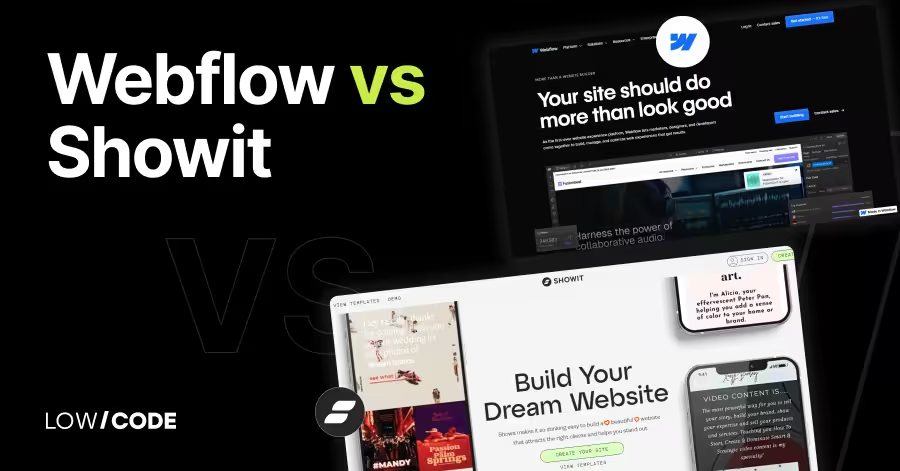
Webflow vs Showit | 12 Factors to Decide the Best One
Compare Webflow vs Showit across 12 key factors to choose the best website builder for design control, SEO, blogging, e-commerce, and scalability

Webflow
StoryBrand Website Redesign Guide
How to redesign your website using the StoryBrand framework — messaging clarity, customer hero positioning, and conversion-focused copy.

Webflow
Website Redesign Discovery Phase What To Expect
Not sure what happens in a redesign discovery phase? Here is exactly what it covers, what you will be asked to provide, and how to prepare for it.

Why customers trust us for no-code development


