

Webflow Development Trends to Watch in 2026
The Webflow trends shaping development in 2026 — AI tools, component APIs, enterprise adoption, and what teams are building.

Webflow development trends in 2025 reflect a platform maturing rapidly: AI features are being embedded, enterprise adoption is growing, and the role of the Webflow developer is evolving from builder to architect. The platform you are building on today may look significantly different in 18 months.
Before deciding whether Webflow fits your plans for the next stage of your site, understanding whether Webflow fits your plans in a shifting ecosystem will sharpen both your platform decision and your build approach.
For expert Webflow development services, LOW/CODE Agency delivers fast, conversion-focused builds for businesses ready to move off template platforms.
Key Takeaways
- AI is moving from novelty to workflow: Webflow's AI tools are shifting from experimental features to daily productivity gains for content and design teams.
- Design systems are becoming non-negotiable: Webflow Variables and component libraries are driving a shift from ad hoc builds to systematic design architecture.
- Headless Webflow is growing: Using Webflow as a CMS or design layer with custom front-end frameworks is a growing pattern for complex projects.
- Enterprise security features are expanding: SSO, audit logs, and advanced permissions are attracting organizations that previously ruled Webflow out.
- AI search is reshaping content strategy: Webflow sites structured for machine-readable content extraction will outperform in AI-generated answers.


How is AI reshaping Webflow development workflows?
AI is changing day-to-day Webflow development in observable, practical ways. The shift is from AI as an experimental feature to AI as a consistent workflow tool for content and design teams.
For an accurate picture of what is currently available before discussing where things are heading, Webflow's live AI capabilities covers the feature set that already exists within the platform.
- AI Assistant drafts and rewrites copy in the Editor: Content teams can generate and iterate on page copy, section descriptions, and alt text without leaving Webflow's native interface.
- AI-powered Designer search reduces navigation friction: Finding elements, properties, and components using natural language reduces the time cost of complex design system navigation.
- AI handles content production while humans handle architecture: The emerging division of labor puts AI on repetitive content tasks and human designers on integration logic and structural decisions.
- Smaller teams manage more with AI-augmented workflows: The productivity gain from AI-assisted content generation means one or two-person marketing teams can maintain site quality that previously required larger editorial support.
- Brand voice and compliance gaps are a real risk: AI-generated content without explicit brand voice guidelines and compliance review can create quality and regulatory liability problems in regulated sectors.
The productivity case for AI in Webflow workflows is already established. The management challenge is maintaining brand and compliance standards as AI-generated content volume increases.
What is the design systems trend and why does it matter for Webflow?
The shift toward systematic design in Webflow is one of the most significant operational changes happening across both agencies and in-house teams. Ad hoc builds are being replaced by design system-first architecture.
- Webflow Variables are the foundation layer: Design tokens for color, typography, and spacing create the systematic foundation that makes a design system coherent rather than aspirational.
- Component libraries reduce long-term maintenance cost: Reusable Symbols and global swatches mean that brand changes propagate across an entire site in minutes rather than hours.
- Design systems reduce per-page build time at scale: Once the system is established, new pages and sections are assembled from existing components rather than built from scratch each time.
- Agencies are shifting to design system delivery models: Selling a design system upfront rather than custom-built pages for every update creates a more sustainable and valuable client relationship.
- Enterprise clients specifically require design systems: Large organizations evaluating Webflow for multi-team use increasingly require a documented design system as a prerequisite before committing to the platform.
For teams building for scale, the design system is not a nice-to-have. It is the infrastructure that makes growth manageable rather than expensive.
How is headless Webflow changing what developers build?
Headless Webflow is a growing pattern where Webflow's CMS is used via API while the front end is rendered in a custom framework like Next.js, Nuxt, or Astro. It is not appropriate for every project, but it is the right choice for a specific set of complex use cases.
- Headless decouples CMS from rendering: Content editors continue to work in Webflow's familiar interface while developers build fully custom front-end experiences beyond what the Webflow canvas can deliver.
- Webflow's CMS API exposes content programmatically: The API provides access to CMS collection data for rendering in any front-end framework, enabling truly custom application experiences with Webflow-managed content.
- Performance ceilings drive the headless decision: Sites with extremely high traffic requirements or complex client-side application logic may hit the limits of Webflow's native rendering before headless becomes necessary.
- Headless adds engineering complexity and cost: This is not a solution for every project; it requires front-end engineering capability, additional infrastructure, and ongoing developer maintenance beyond a standard Webflow build.
- Projects where headless makes sense are specific: High-traffic publishing sites, complex SaaS marketing portals, and multi-tenant agency client platforms are the clearest use cases where headless Webflow's complexity is justified.
Understanding headless Webflow is increasingly important for Webflow practitioners advising clients at the upper end of the complexity range. It is not the right answer for most projects.
How is the membership and gated content trend evolving in Webflow?
Membership and gated content capabilities in Webflow are growing through both platform-native development and third-party ecosystem maturation. The gap between Webflow and dedicated membership platforms is narrowing.
The trajectory of membership site capability growth in Webflow is worth understanding if you are evaluating gated content or subscription models as part of your site architecture.
- Webflow Memberships is maturing natively: The platform's built-in membership feature has grown but remains limited in areas like native subscription billing, which still requires third-party integration.
- Memberstack 2.0 and Outseta are leading the ecosystem: These third-party tools have matured alongside Webflow's native capabilities, creating a reliable Webflow plus membership stack for most use cases.
- Webflow plus Memberstack plus Stripe is a common pattern: This three-tool stack handles member authentication, content gating, and recurring billing for education and subscription products built on Webflow.
- Education and knowledge product demand is growing: Learning platforms, course sites, and professional knowledge subscriptions built on Webflow are an increasing proportion of new Webflow membership builds.
- High-volume communities still need dedicated platforms: Circle or Mighty Networks remain the better choice for community-heavy membership products where user interaction volume exceeds what Webflow's architecture supports.
The membership use case in Webflow is viable for most mid-scale subscription content products. The ceiling is community-driven platforms with high interaction complexity.
How is AI search changing what Webflow sites need to do?
AI search tools including Google's AI Overviews, Perplexity, and ChatGPT Search are fundamentally changing how web content is surfaced. Webflow sites need structural and content changes to remain visible in this new search environment.
For the full picture on how this shift affects your site strategy, AI search visibility for Webflow covers the specific technical and content changes that improve citation rates in AI-generated answers.
- Structured content is now a competitive advantage: Clear heading hierarchy, factual statements, and well-organized content architecture make it easier for AI crawlers to extract and cite your content accurately.
- Schema markup adoption is becoming table stakes: Organization, Article, and FAQ schema are no longer optional SEO enhancements; they are now foundational for AI search visibility across all major platforms.
- Author authority signals matter more than before: LLMs weight content from identifiable, credible expert authors more heavily than anonymous or generic content; expert attribution should be visible on every article.
- Brand awareness replaces click-through as the primary KPI: As zero-click AI answers increase, being cited as a source builds brand visibility even without a direct visit; this changes how SEO success is measured.
- Content depth and specificity outperform keyword volume: AI systems filter out generic pages; factually specific, well-evidenced content that directly answers questions is cited significantly more than keyword-optimized thin content.
The content strategy shift toward AI search readiness is not a future planning exercise. The platforms processing these queries are active now and the content ranking signals are already in effect.
What compliance trends are affecting Webflow builds?
Regulatory and privacy compliance requirements for Webflow sites are increasing across all major markets. Compliance is no longer a post-launch fix; it must be built into every project from the architecture stage.
For teams navigating UK and EU privacy regulations, understanding GDPR and data compliance shifts for Webflow sites is increasingly important as enforcement activity increases across European markets.
- GDPR enforcement is intensifying: Cookie consent UX and data processing disclosures are under greater regulatory scrutiny in EU markets, with enforcement actions increasing in scale and frequency.
- UK GDPR is diverging from EU GDPR: Post-Brexit UK data protection has maintained similar requirements but is developing its own interpretation in specific areas; UK-focused builds need jurisdiction-specific legal review.
- US state privacy laws create a growing compliance burden: CCPA, CPRA, and expanding state-level equivalents mean US-focused Webflow sites serving California, Colorado, and Virginia residents face increasing obligations.
- Accessibility regulation is tightening: EN 301 549 in Europe and ADA Title III claims in the US are creating legal exposure for sites that do not meet WCAG standards, and enforcement action is increasing.
- Compliance is a project phase, not a post-launch fix: Teams that treat cookie consent, accessibility, and privacy policy as afterthoughts are creating liability that a proper project scope would have addressed at build time.
The compliance environment for Webflow sites in 2025 is more demanding than it was two years ago. Building compliance in from the start is significantly cheaper than retrofitting it after an enforcement action.
Conclusion
The Webflow development trends of 2025 reward teams that plan their builds strategically rather than reactively. AI integration, design systems, headless architecture, and AI search readiness are all observable signals right now, not future possibilities.
Review your current Webflow site or upcoming project against these trends. Design system adoption, schema markup implementation, and AI content workflows are the three areas with the highest near-term return on time and investment for most Webflow teams.
Webflow development trends matter most when they affect what you should build today, not what to watch for next year
Enterprise Webflow adoption, the component API shift, AI-assisted design tools, and headless CMS integrations are changing how teams scope and build on the platform right now. Teams that are not tracking these shifts are making architectural decisions today that they will need to undo in 12 months.
LOW/CODE Agency is the leading web development partner for SMBs and mid-market businesses. Our Webflow development team builds with current best practices and platform capabilities rather than patterns that were standard two years ago but are now being replaced.
For businesses that want a forward-looking assessment of their web technology stack, our technology consulting practice evaluates current architecture decisions against the direction the platform and the broader ecosystem are moving.
After 450+ projects for clients including Medtronic, American Express, and Coca-Cola, we stay current because our clients' sites depend on it. Book a call to discuss how trends affect your specific project.
Last updated on
September 25, 2026
.

Daniel is a Web Developer at LowCode Agency who has been building websites in Webflow since 2022. With a background in graphic design, he turns the design team's concepts into fast, responsive sites built to scale.


FAQs
What are the emerging Webflow features in 2026?
How is Webflow improving website performance this year?
Can Webflow handle complex animations in 2026?
Is Webflow suitable for e-commerce sites in 2026?
What security updates does Webflow offer in 2026?
How does Webflow compare to other no-code platforms in 2026?
Related Articles
Webflow
Website Redesign Case Study
A real website redesign case study covering what changed, why it changed, and what the numbers showed at 90 days post-launch. No stock photos. No vague claims.
Comparison
Webflow
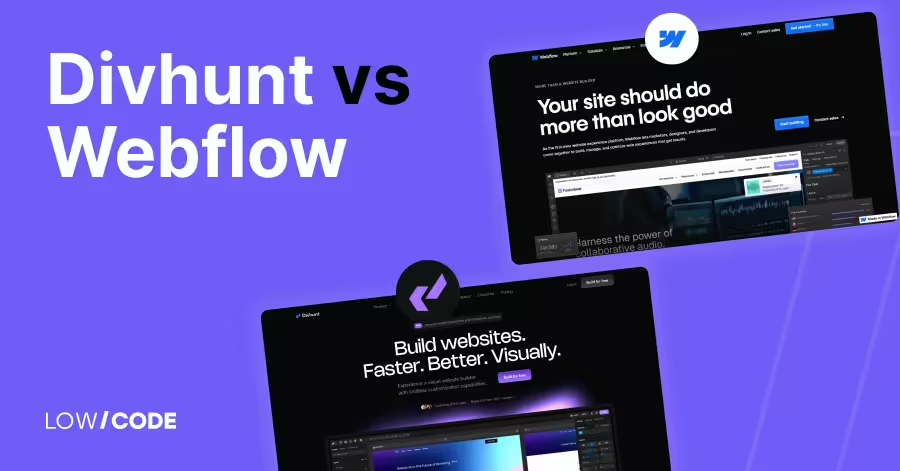
Webflow vs Divhunt | 14 Factors to Decide the Best One
Compare Webflow vs Divhunt across 14 key factors to choose the best website builder for your next project or business site
Webflow
When To Redesign Website Due To Low Conversion Rate
Low conversion rate does not always mean the design is the problem. Here is how to determine when a redesign will actually fix conversion and when it won't.

Webflow
Website Redesign User Experience
A website redesign that ignores UX produces a better-looking version of the same problem. Here is what actually needs to change for the experience to improve.


Why customers trust us for no-code development


