

Types of Mobile Apps: What Are Your Options?
24 min
read
Not sure which type of mobile app to build? Learn the differences between native, hybrid, cross-platform, and web apps explained clearly.

Not every mobile app is built the same way. The type you choose shapes your budget, timeline, user experience, and long-term scalability from day one.
Understanding the differences between native, web, hybrid, and cross-platform apps helps you make smarter decisions. This guide breaks down each mobile app type so you can pick the right fit.
Key Takeaways
- Native apps dominate performance but require separate codebases for iOS and Android, increasing development time.
- Web apps run in browsers and cost less upfront, though they sacrifice device-level features and offline access.
- Hybrid apps blend approaches by wrapping web code in a native shell for faster cross-platform deployment.
- Cross-platform frameworks shine when you need one codebase serving both platforms without major performance trade-offs.
- Your app type affects cost because each approach carries different development, testing, and maintenance requirements.
- Business goals drive the choice since audience expectations, feature needs, and budget all influence the right type.

What Are the Main Types of Mobile Apps?
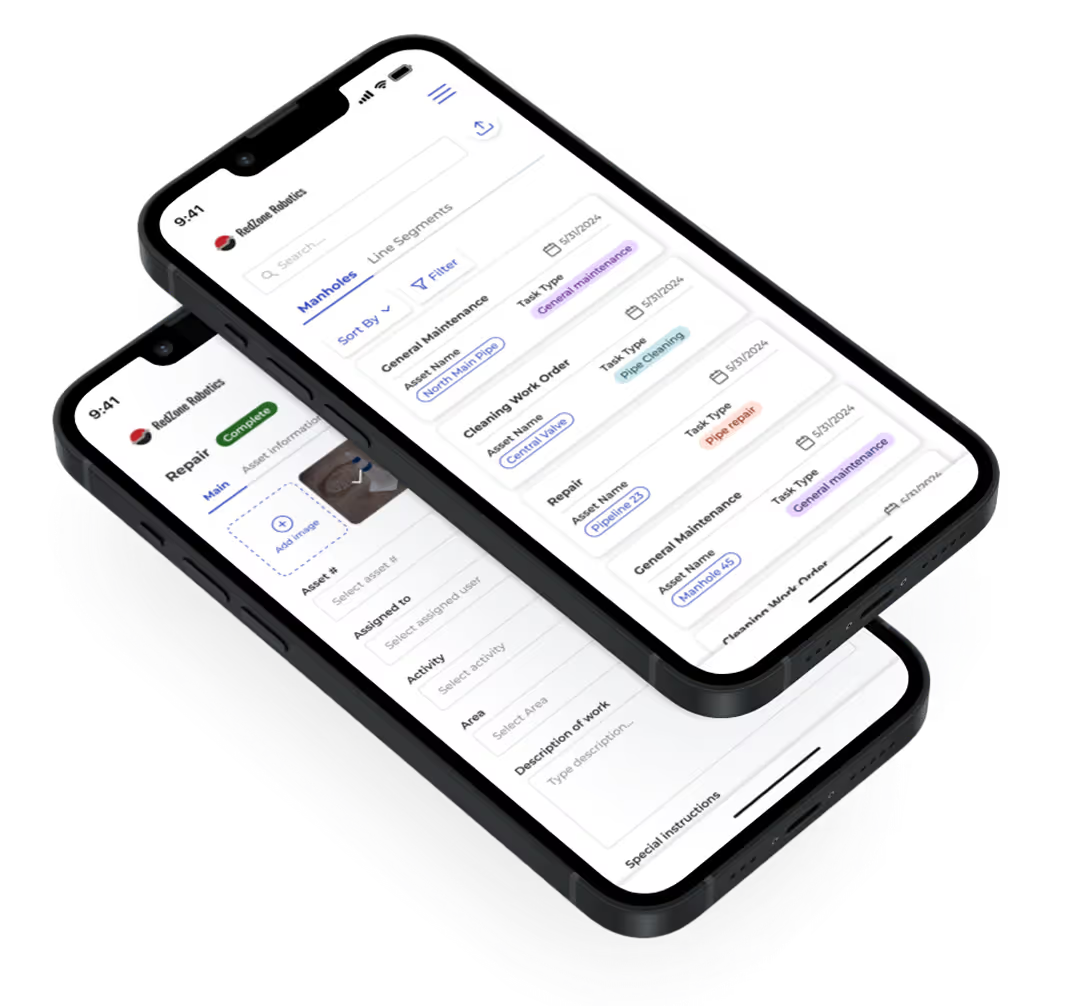
Mobile apps fall into four categories: native, web, hybrid, and cross-platform. Each type uses different technology, offers different capabilities, and fits different business scenarios.
Choosing the right type of mobile app starts with understanding what each category actually means. The technology behind your app determines everything from speed to store availability.
- Native apps are platform-specific and built using Swift for iOS or Kotlin for Android with full hardware access.
- Web apps are browser-based and accessed through URLs without requiring installation from an app store.
- Hybrid apps combine web and native by packaging web technologies inside a native container for store distribution.
- Cross-platform apps use shared code through frameworks like Flutter or React Native to deploy on both platforms.
- Progressive web apps bridge the gap by adding offline support and push notifications to standard web applications.
Each type of mobile app serves a different purpose, and the best choice depends on your product goals. Knowing the trade-offs upfront saves you from costly pivots later.
What Is a Native Mobile App and When Should You Build One?
A native app is built specifically for one platform using that platform's official programming language and tools. It delivers the best performance and full access to device features.
Native mobile apps are the gold standard for performance-intensive applications. If your product depends on camera access, GPS, Bluetooth, or complex animations, native development is the strongest path.
- Performance is unmatched because native code compiles directly to the device's processor without translation layers.
- User experience feels seamless since native apps follow platform-specific design guidelines that users already know.
- Hardware access is complete with direct integration into cameras, sensors, biometrics, and system-level features.
- App store optimization benefits because native apps tend to rank better and receive faster approval from reviewers.
- Development cost is higher since you need separate teams or codebases for iOS and Android platforms.
- Long-term investment in platform expertise means your team builds deep knowledge of platform-specific best practices over time.
Native apps are ideal when your mobile app business strategy prioritizes performance and user experience above speed to market. Companies like banking and healthcare often choose native for security and reliability.
What Is a Web App and How Does It Differ From a Mobile App?
A web app runs inside a mobile browser and does not require downloading from an app store. It is built with HTML, CSS, and JavaScript, making it accessible on any device with a browser.
Web apps offer the lowest barrier to entry for businesses testing a mobile presence. They are faster to build, easier to update, and accessible across all devices without store approval processes.
- No installation required means users access your app instantly through a URL without downloading anything.
- Updates happen server-side so every user sees the latest version without needing to update through a store.
- Development cost stays low because one codebase works across all devices and screen sizes simultaneously.
- Device feature access is limited since browsers restrict access to cameras, sensors, and offline storage capabilities.
- Discoverability suffers without stores because web apps miss out on app store search and recommendation algorithms.
Web apps work well for content-heavy products, internal tools, and early-stage validation. When you need to validate a mobile app idea quickly, a web app lets you test demand before committing to a full build.
What Are Hybrid Mobile Apps and How Do They Work?
A hybrid app wraps web-based code inside a native container, allowing it to be distributed through app stores while sharing one codebase across platforms.
Hybrid apps sit between native and web apps in terms of capability. Frameworks like Ionic and Apache Cordova let developers write once and deploy everywhere, which appeals to teams watching their budgets.
- Single codebase reduces cost by letting one development team build for both iOS and Android simultaneously.
- App store distribution is possible since the native wrapper qualifies hybrid apps for listing in both stores.
- Performance lags behind native because the web view layer adds overhead, especially for graphics-heavy applications.
- Plugin access bridges the gap by providing JavaScript interfaces to native device features like cameras and GPS.
- Maintenance is simpler since fixing a bug or adding a feature only requires changing one codebase instead of two.
Hybrid apps make sense for mobile commerce examples and content-driven products where performance demands are moderate. They offer a practical middle ground for businesses that need store presence without native budgets.
What Are Cross-Platform Apps and Why Are They Popular?
Cross-platform apps use frameworks like Flutter or React Native to compile a single codebase into native-like experiences on both iOS and Android.
Cross-platform development has surged in popularity because it solves the biggest pain point of native development: maintaining two separate codebases. Modern frameworks now deliver near-native performance.
- One codebase serves both platforms which cuts development time nearly in half compared to building two native apps.
- Near-native performance is achievable because frameworks like Flutter compile to native ARM code instead of using web views.
- UI consistency across platforms ensures your brand experience feels identical whether users are on iPhone or Android.
- Hot reload speeds development by letting developers see code changes instantly without recompiling the entire application.
- Community and tooling are growing with major companies like Google and Meta investing heavily in cross-platform frameworks.
- Cost savings compound over time since updates, bug fixes, and new features only need to be built once.
Cross-platform is increasingly the best way to build a mobile app for startups and mid-market companies. It balances quality, speed, and cost better than any other type of mobile app available today.
How Do Progressive Web Apps Fit Into the Picture?
Progressive web apps combine the reach of web apps with native-like features including offline access, push notifications, and home screen installation without requiring app store distribution.
Progressive web apps represent a newer category that blurs the line between web and native. They are particularly valuable for businesses that want mobile capabilities without the cost and complexity of store distribution.
- No app store required means users install the PWA directly from the browser, avoiding store fees and review processes.
- Offline functionality through service workers caches content locally so the app works without an internet connection.
- Push notifications re-engage users by sending alerts even when the browser is closed, similar to native app behavior.
- Automatic updates happen seamlessly because the app refreshes itself without requiring users to download anything from a store.
- Lower development and distribution costs make PWAs attractive for businesses testing mobile engagement before committing to native.
- SEO benefits from web indexing because PWA content is discoverable through search engines, unlike native app content.
Progressive web apps work best for content-focused products, ecommerce catalogs, and businesses where broad reach matters more than deep device integration. They are not a full replacement for native apps, but they fill an important gap.
How Do You Choose the Right Type of Mobile App?
Choose based on your budget, timeline, performance requirements, and target audience. There is no universal best type of mobile app, only the best fit for your situation.
Picking the right type of mobile app requires honest assessment of your priorities. A fitness tracker with real-time sensor data has different needs than an ecommerce catalog or employee directory.
- Budget constraints favor hybrid or web since they require fewer developers and less time to reach both platforms.
- Performance-critical apps demand native when millisecond response times, complex animations, or heavy processing are required.
- Speed to market points to cross-platform because one codebase gets you to both app stores faster than two native builds.
- Offline functionality narrows your options since web apps struggle without connectivity while native and hybrid handle it better.
- Target audience matters significantly because iOS-only or Android-only audiences may justify single-platform native development.
Your mobile app development cost will vary dramatically depending on which type you choose. Start with your must-have features and work backward to find the type of mobile app that delivers them within your budget.
How Does Each Type of Mobile App Affect Long-Term Maintenance?
Maintenance costs differ by app type. Native apps require parallel updates across platforms, while cross-platform and hybrid apps simplify ongoing work with shared codebases.
Building the app is only the beginning. The type of mobile app you choose determines how much time and money you spend maintaining it over the next three to five years.
- Native apps double maintenance effort because every update, patch, and feature must be built and tested on each platform separately.
- Cross-platform apps reduce ongoing costs since one update deploys to both platforms through a single codebase.
- Web apps are easiest to maintain because server-side changes propagate instantly without requiring user action or store approval.
- Hybrid app plugins can break when underlying native platforms update their operating systems or deprecate older APIs.
- Testing complexity varies by type with native apps requiring the most device-specific QA across different screen sizes and OS versions.
- Framework deprecation poses long-term risk when the community behind a hybrid or cross-platform framework reduces support over time.
Plan your maintenance strategy before you start building. Understanding long-term costs helps you budget realistically and avoid the trap of choosing the cheapest option upfront only to pay more later.
How Do Low-Code Platforms Change the App Type Decision?
Low-code platforms change the decision by making cross-platform development faster and cheaper, reducing the cost advantage of web apps, and enabling teams to build native-quality apps without large engineering teams.
Low-code and no-code platforms have disrupted traditional app type trade-offs. Platforms like FlutterFlow, Bubble, and Glide let teams build functional mobile apps that would have required native development teams just a few years ago.
- FlutterFlow compiles to native Flutter code producing cross-platform apps with native performance that previously required dedicated Flutter developers.
- Bubble handles complex web app logic enabling marketplace, SaaS, and workflow apps that would otherwise need full-stack engineering teams.
- Glide turns spreadsheets into functional apps providing the fastest path to internal tools and simple business applications for non-technical teams.
- Development speed increases dramatically because visual builders let teams iterate on features in days rather than weeks of traditional coding.
- Cost reduction makes cross-platform viable for smaller budgets by eliminating the need for large development teams while maintaining quality standards.
- Technical debt risks differ from traditional development because platform lock-in replaces code quality as the primary long-term concern to manage.
Low-code platforms do not eliminate the app type decision entirely. They shift the trade-offs so that cross-platform development becomes accessible to more teams at lower cost points than before.
Evaluate whether a low-code approach fits your project requirements before defaulting to traditional custom development, because the time and cost savings can be substantial for many types of mobile apps.
What Types of Mobile Apps Work Best for Business Applications?
Business apps that handle workflows, data, and communication typically perform well as cross-platform or hybrid builds. Customer-facing apps with complex features often justify native development.
The type of mobile app that works best for your business depends on who uses it and what they need to do. Internal tools have different requirements than consumer-facing products.
- Internal tools fit hybrid or web because employee apps prioritize functionality over pixel-perfect animations and performance.
- Customer-facing products lean native when brand experience, speed, and device integration drive user satisfaction and retention.
- Data-heavy dashboards work as web apps since they primarily display information and require minimal device hardware access.
- Field service apps need cross-platform because mobile workforce teams use mixed devices and need offline capability.
- Ecommerce apps benefit from cross-platform since shopping experiences require smooth performance on both iOS and Android equally.
Matching the type of mobile app to your use case is the single most important technical decision you will make early on. Get it right and everything downstream becomes easier.
Consult with experienced developers who have built multiple app types before committing, because the wrong choice creates compounding costs that grow with every feature you add to the product.
Want Help Choosing the Right Type of Mobile App?
Picking the wrong app type leads to wasted budget, missed deadlines, and frustrated users. The right choice depends on your goals, audience, and technical requirements working together.
LowCode Agency is a strategic product team, not a dev shop. We help businesses choose and build the right type of mobile app based on real product goals, not just technical preferences.
- Discovery sessions map your needs so the app type recommendation is based on data, not assumptions or developer preference.
- Design aligns with platform standards ensuring your app feels native regardless of the underlying technology chosen.
- Build uses the right framework from FlutterFlow and Bubble to custom Flutter, matched precisely to your project requirements.
- Scalability is planned from day one so your app type supports growth without requiring a complete rebuild later.
- Delivery includes store deployment with full setup for iOS App Store and Google Play distribution when applicable.
- Partnership means ongoing support through post-launch maintenance, monitoring, and iteration based on real user feedback.
Over 350 projects delivered for clients including Medtronic, American Express, Coca-Cola, Zapier, and Sotheby's. We build across FlutterFlow, Bubble, Glide, Webflow, and custom frameworks.
If you are serious about building the right type of mobile app, let's build it properly.
Our team at LowCode Agency will help you choose the type that fits your business and build it to last.
Last updated on
March 24, 2026
.

Jesus is a visionary entrepreneur and tech expert. After nearly a decade working in web development, he founded LowCode Agency to help businesses optimize their operations through custom software solutions.


FAQs
What are the different types of mobile apps?
What is the difference between native and cross-platform mobile apps?
What is a hybrid mobile app?
What type of mobile app is best for a startup?
What is the difference between a mobile app and a Progressive Web App?
How do I choose the right type of mobile app for my project?
Related Articles
.avif)
Mobile App Development
Mobile App Design First or Development First?
Should you design or develop your mobile app first? Learn the right order of operations and why skipping design is a costly mistake.

Mobile App Development
Mobile App Testing & QA Process: Full Guide
Skipping QA is how mobile apps fail at launch. Learn how the testing and quality assurance process works and what it should include.
Mobile App Development
PWA vs Mobile App: Which Should You Build?
Progressive web app or native mobile app? Compare performance, cost, reach, and use cases to decide which is right for your project.

Mobile App Development
Mobile App Development Process: Full Guide
What does the mobile app development process actually look like? Get a full breakdown of every stage from idea to launch.

Why customers trust us for no-code development


