

Mobile App Design First or Development First?
12 min
read
Should you design or develop your mobile app first? Learn the right order of operations and why skipping design is a costly mistake.

.avif)
Should you design your mobile app before writing any code, or should you start building and figure out the interface as you go? This question divides founders, and the wrong answer costs months of rework on features users never wanted.
The mobile app design first or development first debate has a clear winner for most projects, but the answer depends on your product stage, budget, and team structure. This guide walks through when each approach works and where each one fails.
Key Takeaways
- Design first reduces rework: by 40% to 60% because you validate user flows and interfaces before investing in code.
- Development first works: only when you have a highly technical MVP with minimal UI requirements and need to prove a concept fast.
- Design phase costs $5K-$25K: for wireframes and prototypes, which saves multiples of that amount in avoided development rework.
- Most projects go design first: because changing a Figma file takes hours while changing coded screens takes days or weeks.
- Design first creates alignment: between founders, designers, and developers before expensive engineering work begins.
- Skipping design causes overruns: and going development first is the most common reason mobile app projects exceed their original budget and timeline.
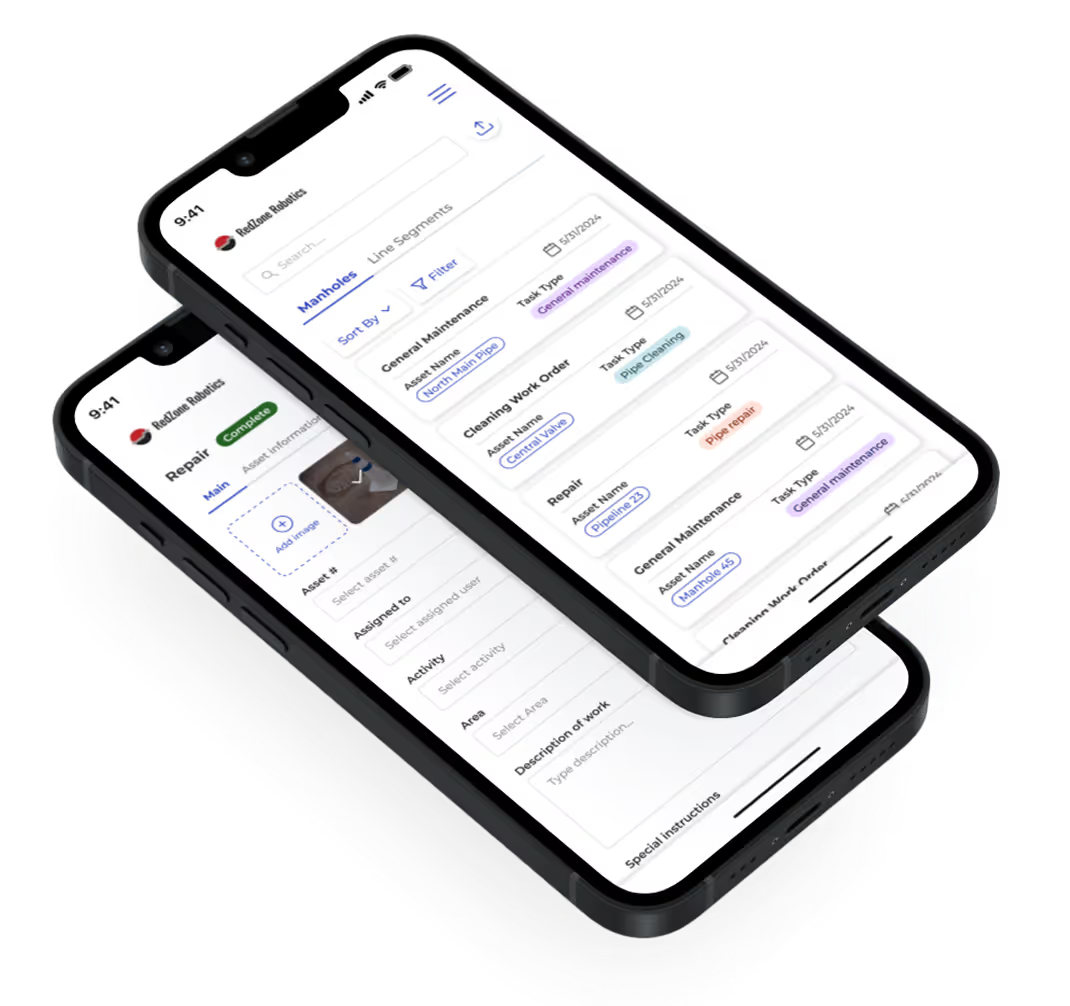

Why Should You Design Your Mobile App First?
Designing your mobile app first lets you test ideas, validate user flows, and align your team on exactly what will be built before spending money on development.
The mobile app design first approach treats design as a planning tool, not just an aesthetic exercise. When you design first, you make expensive product decisions in a cheap medium. Changing a wireframe costs nothing. Changing a coded feature costs thousands.
- User flows validated so the mobile app design first approach catches navigation problems, missing screens, and confusing interactions early before code is written.
- Stakeholder alignment happens visually because a mobile app design first process gives everyone a shared reference point instead of competing mental models.
- Development estimates become accurate when developers can see exactly what they are building through a mobile app design first handoff with detailed specifications.
- Investor presentations improve since a polished mobile app design first prototype demonstrates the product vision more convincingly than a verbal pitch or slide deck.
- Scope becomes manageable because the mobile app design first approach forces you to define every screen, revealing hidden complexity before it hits the budget.
Going design first for your mobile app creates a structured development process where every team member understands what is being built and why. The investment in design pays for itself by preventing the rework that plagues projects that skip it.
Teams that adopt mobile app design first as their standard methodology report 30% to 50% fewer change requests during development sprints compared to teams that start development first.
When Does Development First Make Sense for a Mobile App?
Development first makes sense when you are building a technical proof of concept, an API-driven product with minimal UI, or a prototype where the core value is in the backend logic rather than the user interface.
Going development first for a mobile app is the exception, not the rule. It works in narrow situations where the technical feasibility is the biggest unknown and the interface is secondary to the underlying system.
- Technical proofs of concept benefit from development first when you need to validate that an algorithm, integration, or data pipeline works before designing screens.
- API-first products can start development first since backend logic is independent of the mobile app interface and can be built and tested separately.
- Internal tools with known workflows skip design when users are your own team members who prioritize function over form in their mobile app experience.
- Hackathon-style sprints use development first to test whether an idea has legs within 48 to 72 hours before investing in a proper design process.
- Development-first rework risk is higher because building without a mobile app design means developers make interface decisions that designers later need to undo.
If your mobile app's value proposition depends on how users interact with it, which is true for 90% of consumer and business apps, then development first is the wrong approach.
Save development first for the rare cases where the technology itself is the unknown. For every other scenario, the mobile app design first approach delivers better products at lower total cost with faster time to market.
How Much Does Mobile App Design First Cost Compared to Skipping Design?
A mobile app design first phase costs $5K to $25K depending on complexity. Skipping design and going development first adds $20K to $80K in rework costs when the interface needs to be rebuilt after user testing.
The economics of mobile app design first versus development first are heavily skewed in favor of designing first. The math is straightforward: changes in design cost hours while changes in code cost weeks.
- Wireframing costs $3K-$8K and takes 1 to 2 weeks, producing a complete blueprint for every screen and user flow in the product.
- High-fidelity prototyping costs $5K to $15K and creates a clickable design first deliverable that can be tested with real users before development starts.
- Prototype user testing costs $2K to $5K and provides validated feedback that shapes the mobile app development scope before a single line of code is written.
- Rework costs 3x-5x more when skipping design, because changing coded features requires development time, QA time, and often architectural changes.
- Design phase is 5-15% of the project budget, while rework from development first approaches consumes 20% to 40% of the total project cost.
Investing in mobile app design first is the single highest-ROI decision you can make on a mobile app project. Every dollar spent on design saves three to five dollars in development rework downstream.
What Does a Mobile App Design First Process Look Like?
A mobile app design first process follows four stages: user research, wireframing, high-fidelity design, and interactive prototyping. Each stage produces deliverables that feed directly into the development phase.
The mobile app design first process is not about making things look pretty. It is a structured approach to making product decisions before those decisions become expensive to change.
- User research takes 1 to 2 weeks and identifies who your mobile app serves, what problems they have, and which workflows the design first phase must solve.
- Wireframing takes 1 to 2 weeks and produces low-fidelity screen layouts that define the mobile app structure, navigation, and content hierarchy.
- High-fidelity designs take 2 to 3 weeks and add visual styling, brand elements, and pixel-perfect detail to every screen in the design first deliverable.
- Interactive prototypes take 1 week and connect the screens into a clickable mobile app design first experience that simulates the real product for testing.
- Design handoff takes 2 to 3 days and packages the output with specifications, assets, and annotations developers need to build accurately.
This mobile app design first timeline adds 5 to 8 weeks before development begins, but it compresses the total project timeline by eliminating the back-and-forth that plagues development first projects.
The net effect is that mobile app design first projects often launch on the same date or earlier than development first projects of equal complexity because the development phase runs smoother and faster with a clear design reference.
How Does Mobile App Design First Reduce Development Risk?
Mobile app design first reduces development risk by eliminating ambiguity in requirements, catching usability problems before code is written, and creating a single source of truth that the entire team references.
Risk in mobile app development comes from uncertainty. The mobile app design first approach systematically removes uncertainty from the equation before the most expensive phase of the project begins.
- Requirements gaps surface because translating ideas into screens reveals missing features, edge cases, and workflow gaps that verbal descriptions hide.
- User testing catches problems early so the mobile app design first approach validates assumptions with real users before developers build features nobody wants.
- Scope creep becomes visible since the mobile app design first deliverable defines exactly what is included, making it obvious when new requests expand beyond the original agreement.
- Developer productivity increases because the mobile app design first handoff eliminates guesswork, so engineers spend time coding instead of asking clarifying questions.
- Stakeholder disagreements resolve before development since the mobile app design first prototype forces alignment on product decisions while changes are still cheap.
Projects that follow a mobile app design first approach have 30% to 50% fewer change requests during development. That reduction in change requests directly translates to lower development costs and shorter timelines.
Can You Combine Design First and Development First Approaches?
Yes, a parallel approach works when the design team leads by one sprint while the development team builds the previous sprint's approved designs. This keeps both teams productive without sacrificing the benefits of mobile app design first.
The mobile app design first and development first approaches do not have to be sequential. A staggered model lets you maintain the design first discipline while keeping developers active rather than waiting for the entire design phase to complete.
- Design leads development by one to two sprints so the design first work stays ahead, ensuring developers always have approved designs to build against.
- Backend starts in parallel because API development and database architecture do not depend on the mobile app design first UI deliverables.
- Parallel approach saves time cutting 2 to 4 weeks from the total project timeline while preserving the quality benefits of the design first methodology.
- It requires tight coordination between design and development teams, which is why this model works best with an integrated mobile app development agency.
- Risk stays low because the mobile app design first principle is maintained for every feature, even though design and development phases overlap in the project timeline.
The parallel model is how most professional mobile app teams operate. It captures the benefits of mobile app design first without the downside of keeping developers idle during a lengthy upfront design phase.
What Happens When You Skip Design and Go Development First?
Skipping design and going development first typically results in 2x to 3x more design revisions, developer frustration from unclear requirements, and a final product that feels cobbled together rather than cohesive.
The development first approach for mobile apps is the most common source of budget overruns and missed deadlines in the industry. When teams skip the mobile app design first phase, every product decision becomes a development decision, which is the most expensive way to iterate.
- Developers become accidental designers making UI decisions they are not trained for, which produces functional but confusing mobile app interfaces.
- Rework cycles multiply because every stakeholder review of a development first mobile app leads to change requests that require code changes instead of design edits.
- User experience suffers since the development first approach optimizes for what is easy to code rather than what is intuitive for mobile app users to navigate.
- Timeline overruns extend 30% to 60% beyond estimates because development first projects absorb the skipped design work plus the rework from doing it in the wrong order.
- Team morale drops as developers rebuild features repeatedly when the development first mobile app keeps changing direction without a stable design reference.
The evidence overwhelmingly supports mobile app design first. Development first sounds faster, but it consistently takes longer and costs more for every mobile app project type.
What Tools Support a Mobile App Design First Workflow?
Figma, Sketch, Adobe XD, and prototyping tools like ProtoPie or Maze support the mobile app design first workflow by enabling rapid creation of wireframes, high-fidelity designs, and testable interactive prototypes.
The tools you choose for your mobile app design first process affect speed, collaboration, and the quality of the handoff to your development team. Modern design tools have closed the gap between static mockups and functional prototypes.
- Figma leads the industry as the standard for mobile app design first workflows, enabling real-time collaboration between designers, developers, and stakeholders in a browser-based environment.
- Figma's developer handoff features provide CSS values, spacing measurements, and asset exports that make the mobile app design first to development transition seamless and accurate.
- ProtoPie prototypes interactions simulating real mobile app gestures, animations, and conditional logic without writing any code for validated design first testing.
- Maze enables testing so the mobile app design first approach includes validated feedback from real users before development resources are committed to building screens.
- Design systems ensure consistency across the entire mobile app design first output with reusable Figma components, color tokens, and typography scales.
- FigJam supports collaborative planning where teams map user flows, brainstorm features, and align on the mobile app design first scope before creating detailed screens.
Invest in tools that support collaboration and handoff quality. The mobile app design first workflow is only as effective as the tools that enable designers, stakeholders, and developers to work from a single source of truth.
Conclusion
Mobile app design first is the right approach for the vast majority of projects. It costs a fraction of the development budget, prevents the most common causes of budget overruns, and produces better products.
Development first has its place for technical proofs of concept, but treating it as the default is the most expensive shortcut in mobile app development. Design first, build right, and save yourself the rework.
Build Your Mobile App with LOW/CODE Agency
As AI development experts, we at LOW/CODE Agency help SMBs ship real software — web and mobile applications, intelligent chatbots, RAG pipelines, and autonomous AI agents built for businesses that need results, not platforms. We follow a mobile app design first methodology on every engagement because we have seen firsthand how it reduces cost, compresses timelines, and produces products users actually want to use.
- Integrated teams of designers and developers who collaborate daily so the mobile app design first handoff is seamless and nothing gets lost in translation.
- Full discovery phases including user research, wireframing, high-fidelity design, and interactive prototyping completed before development begins.
- Cross-platform expertise in Flutter, FlutterFlow, React Native, and Bubble so the mobile app design first approach is applied regardless of the technology stack.
- 450+ projects delivered for clients including Medtronic, American Express, Coca-Cola, Zapier, and Sotheby's, all following design first principles.
- Transparent process with sprint demos so you review design and development progress at every milestone and stay aligned throughout the engagement.
Get in touch with our team to start your mobile app project with a design first approach that sets the foundation for success.
Related Articles
Last updated on
September 3, 2026
.

Jesus is a visionary entrepreneur and tech expert. After nearly a decade working in web development, he founded LOW/CODE Agency to help businesses optimize their operations through custom software solutions.


FAQs
Should I design my mobile app before development starts?
What happens if I start mobile app development without completing design?
How detailed should mobile app designs be before development begins?
What is a mobile app prototype and should I build one before development?
Can design and development happen simultaneously in mobile app projects?
How much should I budget for mobile app design separate from development?
Related Articles

Mobile App Development
Hidden Costs in Mobile App Development (Complete Breakdown)
Discover hidden costs in mobile app development, from scope creep to maintenance and third-party tools. Plan smarter and avoid budget surprises.

Mobile App Development
eCommerce Mobile App Development Guide (2026)
Learn how to build your eCommerce mobile app faster using no-code tools. Explore features, platforms, and tips to launch on iOS, Android, or as a PWA
Mobile App Development
PWA vs Native App (No-code) | Guide for Founders
Learn the key differences between PWA and native apps, their pros and cons, and how no-code tools help you build faster and cheaper

Mobile App Development
MVP Mobile App Timeline: How Long It Takes
How long does it take to build a mobile app MVP? Get realistic timelines based on scope, features, and your development approach.

Why customers trust us for no-code development


