

Mobile Workforce Management App: What You Need
13 min
read
Thinking of building a mobile workforce management app? Learn the must-have features and what makes these apps succeed in the field.

Managing a distributed workforce with spreadsheets, phone calls, and email chains wastes hours every day. Field teams need real-time tools that work wherever they are, not desktop software they cannot access.
A mobile workforce management app puts scheduling, dispatch, tracking, and communication into one platform your team carries in their pocket. This guide covers what to build, what it costs, and how to develop it properly.
Key Takeaways
- Field teams need mobile-first tools because desk-based software fails workers who spend their days in vehicles, on sites, or at client locations.
- Core features include scheduling and dispatch along with GPS tracking, time logging, task management, and real-time communication.
- Integration with back-office systems connects field operations to payroll, invoicing, CRM, and inventory for seamless data flow.
- Offline functionality is non-negotiable since field workers frequently operate in areas with unreliable or no cellular connectivity.
- ROI comes from time savings by eliminating manual scheduling, reducing drive time, and cutting paperwork from field operations.
- Scalability matters from day one because workforce management apps must handle growing teams across expanding service territories.

Why Do Businesses Need a Mobile Workforce Management App?
Businesses with field teams, remote workers, or distributed staff need mobile workforce management apps to coordinate schedules, track progress, and communicate in real time across locations.
Companies managing ten or more field workers hit a tipping point where manual coordination becomes unsustainable. Phone calls get missed, schedules conflict, and managers lack visibility into what is happening on the ground.
- Scheduling conflicts waste productive hours when dispatchers rely on whiteboards, spreadsheets, or memory to assign field workers to jobs.
- Lack of visibility creates accountability gaps because managers cannot verify where workers are or whether tasks are completed without phone calls.
- Paper-based reporting delays invoicing when field workers submit handwritten notes days after completing jobs at customer locations.
- Communication breakdowns cause service failures when urgent schedule changes or job updates do not reach field teams in time.
- Route inefficiency burns fuel costs when workers drive unoptimized routes between job sites without intelligent scheduling assistance.
- Customer satisfaction drops measurably when appointment windows are missed, updates are delayed, and service quality varies by technician.
Organizations managing different types of mobile apps for their operations find that workforce management delivers the fastest ROI. Every minute saved in coordination translates directly to revenue.
Field service companies that switch from manual to app-based coordination typically see productivity gains of 20 to 30 percent within the first three months of deployment.
What Features Should a Mobile Workforce Management App Include?
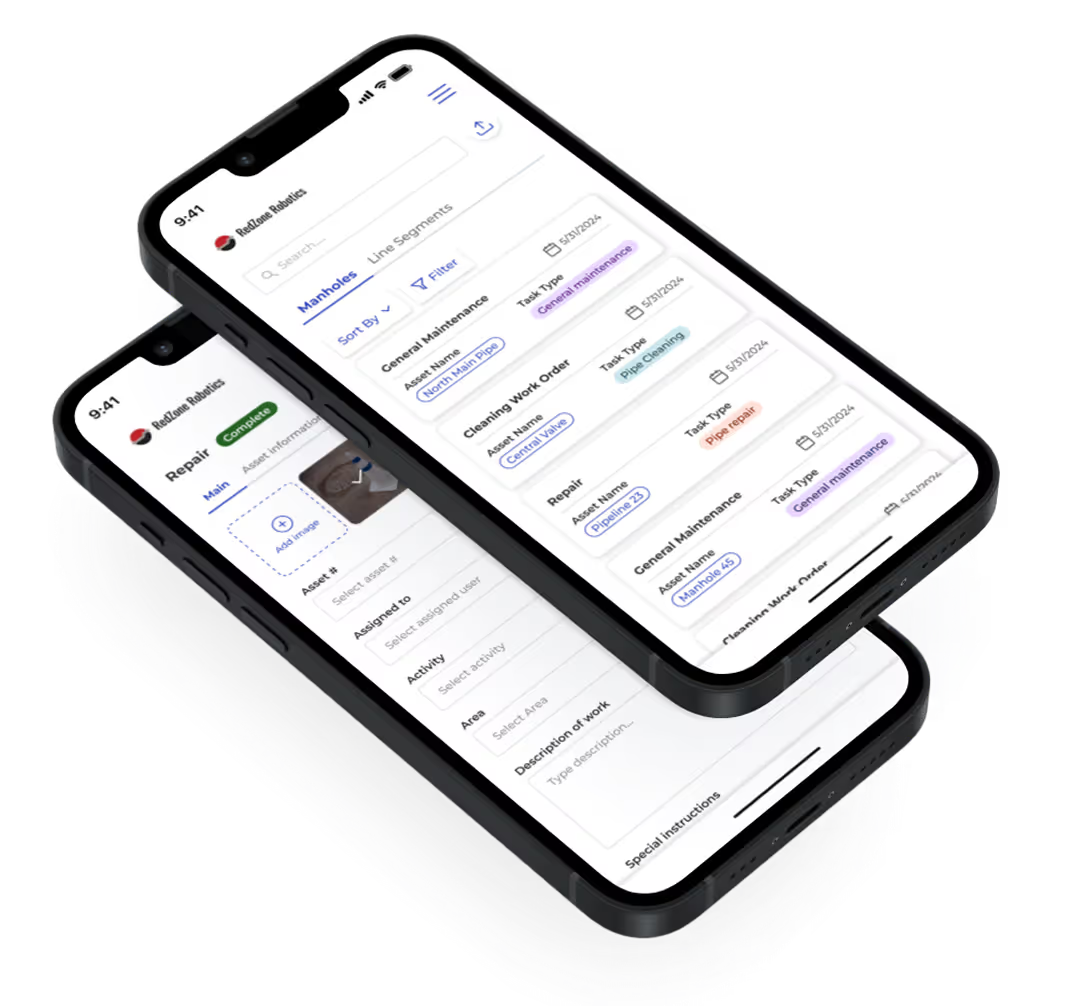
A mobile workforce management app needs job scheduling, GPS tracking, task checklists, time logging, photo documentation, and push notifications at minimum. Advanced features include route optimization and analytics.
Feature selection should mirror your field operations workflow. Every feature in the app should replace a manual process that currently wastes time, creates errors, or delays billing.
- Job scheduling and dispatch assigns workers to tasks based on availability, skills, location, and priority with drag-and-drop simplicity.
- GPS tracking shows real-time locations so dispatchers know where every team member is and can respond to changes instantly.
- Digital time logging replaces timesheets by letting workers clock in and out with GPS verification, eliminating manual time entry.
- Task checklists ensure consistency by guiding field workers through standardized procedures for every type of job they perform.
- Photo and signature capture documents completed work on-site, providing proof of service that speeds up invoicing and dispute resolution.
- Push notifications deliver instant updates when schedules change, new jobs are assigned, or urgent information needs to reach the field.
Start with the features that address your biggest operational pain points. Expanding the app after launch based on field team feedback is far better than trying to build everything at once.
Field workers will tell you exactly what they need if you ask them, and their insights are more valuable than any feature comparison with competitor products.
How Much Does a Workforce Management App Cost to Build?
A mobile workforce management app costs between $50,000 and $250,000 depending on feature scope, integration complexity, platform choice, and whether you need offline functionality and GPS tracking.
Cost depends on how complex your field operations are and how many systems the app needs to connect to. Simple scheduling apps cost less than full platforms with tracking, analytics, and ERP integration.
- Basic scheduling apps cost $50,000 to $90,000 with job assignment, time tracking, and push notifications for small field teams.
- Mid-range platforms run $90,000 to $160,000 adding GPS tracking, route optimization, photo capture, and back-office integrations.
- Enterprise solutions exceed $160,000 when they require multi-location support, advanced analytics, offline sync, and complex compliance features.
- Low-code platforms cut costs significantly by accelerating development timelines and reducing the custom engineering work required.
- Annual maintenance adds 15 to 20 percent for server hosting, security updates, OS compatibility patches, and feature improvements.
Realistic mobile app development cost planning prevents budget surprises. Factor in integration work, which often accounts for 30 to 40 percent of the total project cost for workforce management apps.
Request detailed cost breakdowns from your development partner so you understand exactly where your budget goes and can make informed trade-off decisions.
How Does a Workforce Management App Integrate With Back-Office Systems?
Integration connects your mobile workforce management app to payroll, CRM, invoicing, inventory, and ERP systems through APIs, ensuring field data flows automatically into business operations.
Field data is only valuable when it reaches the systems that act on it. Without integration, your workforce management app becomes another data silo that requires manual export and re-entry.
- Payroll integration automates wage calculation by sending verified time logs directly to your payroll system without manual entry.
- CRM connection updates customer records with service history, completion notes, and satisfaction data from every field visit automatically.
- Invoicing integration speeds billing by generating invoices from completed jobs with labor hours, materials used, and photos attached.
- Inventory management tracks materials by deducting parts and supplies used in the field from your central inventory in real time.
- ERP integration provides a single source of truth by connecting field operations data with finance, HR, and operations dashboards.
Plan your integration architecture before development begins. Defining your mobile app target audience includes understanding what back-office users need from the data your field teams generate.
Integration failures are the most common cause of delayed workforce management app launches, so invest in API design and testing early in the development process.
What Role Does Offline Functionality Play in Workforce Management Apps?
Offline functionality lets field workers access schedules, complete checklists, log time, and capture photos without internet connectivity. Data syncs automatically when connectivity returns.
Field workers regularly operate in basements, rural areas, underground facilities, and buildings with poor cellular reception. A workforce management app that requires constant connectivity fails exactly when workers need it most.
- Offline task completion keeps workers productive by letting them follow checklists and log work even without any internet connection.
- Local data storage queues updates and syncs everything to the server automatically once the device reconnects to a network.
- Conflict resolution logic handles sync issues when multiple offline changes need to merge with the central database without data loss.
- Downloaded schedules provide daily plans so workers start each day knowing their assignments regardless of current connectivity status.
- Photo caching stores documentation locally until uploads complete, ensuring no proof-of-service images are lost during connectivity gaps.
Offline capability adds development complexity and cost, but it is non-negotiable for most field service operations. Skipping it creates gaps in data collection that undermine the entire purpose of the app.
Test offline functionality extensively in real field conditions before launch, because edge cases in connectivity transitions cause the most frustrating bugs for field workers.
How Does Route Optimization Reduce Costs in Workforce Management Apps?
Route optimization reduces costs by calculating the most efficient travel paths between job sites, minimizing drive time, fuel consumption, and vehicle wear while maximizing the number of jobs each worker completes daily.
Travel time is one of the largest hidden costs in field service operations. Workers driving inefficient routes between jobs waste hours that could be spent completing additional service calls.
- Algorithm-based routing calculates optimal sequences by analyzing distances, traffic patterns, and appointment windows for each worker's daily schedule.
- Dynamic re-routing handles cancellations and additions by recalculating the best path when jobs are added, moved, or cancelled mid-day.
- Fuel cost reduction compounds over time because even small efficiency gains per route multiply across dozens of workers and hundreds of workdays.
- Customer satisfaction improves with tighter windows when optimized routing lets you offer shorter appointment ranges instead of all-day windows.
- Worker productivity increases measurably when less time behind the wheel means more time completing billable service at customer locations.
- Environmental impact decreases as fewer miles driven reduces fleet carbon emissions, supporting sustainability goals and regulatory compliance.
Route optimization typically pays for its development cost within the first year of deployment. The savings in fuel, labor, and customer satisfaction compound as your fleet size grows.
For businesses with 20 or more field workers, route optimization alone can save tens of thousands of dollars annually in reduced drive time and fuel costs while increasing the number of jobs completed per day by 15 to 25 percent.
How Does a Workforce Management App Improve Customer Experience?
A workforce management app improves customer experience by enabling faster dispatch, more accurate appointment windows, real-time arrival notifications, professional documentation, and consistent service quality across all technicians.
Workforce management apps are internal tools, but their impact is felt directly by customers. Every improvement in field team coordination translates into better service delivery that customers notice and reward with loyalty.
- Tighter appointment windows reduce wait frustration when optimized scheduling lets you offer two-hour windows instead of all-day estimates.
- Real-time technician tracking lets customers see arrival times similar to ride-sharing apps, reducing anxiety about when service will begin.
- Consistent service checklists ensure quality by guiding every technician through the same steps regardless of experience or familiarity with the job.
- Digital documentation provides service records that customers can access through portals showing what work was completed, with photos and notes.
- Faster response to urgent requests becomes possible when dispatchers see real-time availability and can redirect the nearest available worker.
- Post-service feedback collection captures satisfaction by prompting customers for ratings immediately after the technician completes the job.
Customer experience improvements driven by workforce management apps directly impact your business metrics. Companies that implement these tools consistently report higher satisfaction scores, more referrals, and stronger customer retention.
The connection between internal operational efficiency and external customer satisfaction makes workforce management apps one of the highest-ROI technology investments for service-based businesses.
How Do You Ensure Field Team Adoption of a Workforce Management App?
Ensure adoption by involving field workers in development, designing for simplicity, providing hands-on training, and demonstrating how the app makes their daily work easier rather than adding burden.
The biggest risk to any workforce management app is low adoption. If field workers find the app confusing, slow, or irrelevant to their daily work, they will revert to phone calls and paper within weeks.
- Involve field workers early by including them in discovery workshops and usability testing so the app reflects their real workflow.
- Design for gloved and outdoor use with large touch targets, high contrast screens, and minimal text entry requirements.
- On-site training builds confidence by walking workers through the app in their actual work environment, not a conference room.
- Quick wins demonstrate value when the app immediately saves time on tasks workers already find frustrating, like timesheet submission.
- Manager adoption drives team adoption because workers follow the tools their supervisors use and reference in daily operations.
- Feedback channels let workers report friction so the development team can fix usability issues that block adoption quickly.
Adoption planning should start during discovery, not after launch. The communication features you build into your workforce management app must feel natural to the people using it daily.
How Do You Monitor Performance After Launching a Workforce Management App?
Monitor performance through app analytics, field worker feedback, operational KPIs like job completion rates, and system health metrics including API response times and sync reliability.
Launching the app is just the beginning. Ongoing scaling and performance monitoring ensures the platform keeps pace with your growing workforce and evolving operational needs.
- Job completion rates reveal efficiency gains by comparing pre-app and post-app metrics for how many jobs teams complete daily.
- Time-to-dispatch improvements show coordination gains when measuring how quickly new jobs go from request to assigned worker.
- Sync reliability metrics track technical health by monitoring how often offline data successfully syncs and flagging failures immediately.
- User engagement data identifies adoption gaps by showing which features workers use frequently and which they ignore completely.
- Field worker feedback surfaces real issues because the people using the app daily know exactly what works and what needs improvement.
- Customer satisfaction scores validate service improvements by tracking whether faster response times and better communication translate to happier clients.
Set up dashboards that track operational and technical metrics from day one. Data-driven iteration keeps your workforce management app relevant and effective as your business evolves.
Share performance dashboards with operations managers and field supervisors so the entire leadership team can see the impact and identify improvement opportunities together.
Ready to Build a Mobile Workforce Management App?
A mobile workforce management app transforms field operations from reactive chaos into coordinated, data-driven efficiency. The right app pays for itself through time savings, faster billing, and better service delivery.
At LOW/CODE Agency, we help SMBs compete with AI-powered software built for them — custom web and mobile apps, RAG systems, chatbots, and intelligent agents delivered by a senior development team. We build workforce management apps that match how your field teams actually work, not how a generic platform thinks they should.
- Discovery maps your field operations so every feature in the app reflects real workflows, not theoretical process diagrams.
- Design works for the field with interfaces built for outdoor use, poor connectivity, and workers who have no time for complexity.
- Build includes offline sync with reliable data queuing, conflict resolution, and seamless reconnection that field teams can trust.
- Scalability handles team growth so your app supports expanding territories, new service lines, and growing worker counts smoothly.
- Delivery integrates with your systems connecting the app to payroll, CRM, invoicing, and inventory through tested API integrations.
- Partnership means ongoing support with performance monitoring, field feedback collection, and feature updates that keep the app effective.
Over 350 projects delivered for clients including Medtronic, American Express, Coca-Cola, Zapier, and Sotheby's. We build across FlutterFlow, Bubble, Glide, Webflow, Make, n8n, and Zapier.
Our team at LOW/CODE Agency will help you design, build, and launch a platform your field teams will actually use.
Related Articles
Last updated on
September 3, 2026
.

Jesus is a visionary entrepreneur and tech expert. After nearly a decade working in web development, he founded LOW/CODE Agency to help businesses optimize their operations through custom software solutions.


FAQs
What is a mobile workforce management app?
What features does a mobile workforce management app need?
Who needs a mobile workforce management app?
Should I build a custom mobile workforce management app or use an existing platform?
How much does a custom mobile workforce management app cost to build?
What integrations does a mobile workforce management app typically need?
Related Articles

Mobile App Development
Mobile App Testing & QA Process: Full Guide
Skipping QA is how mobile apps fail at launch. Learn how the testing and quality assurance process works and what it should include.

Mobile App Development
Mobile App Commerce Examples That Work in 2026
What does successful mobile commerce look like in 2026? Explore real examples and learn what makes them drive sales and retention.

Mobile App Development
Is the Mobile App Discovery Phase Worth It?
Should you pay for a mobile app discovery phase? Learn what it includes, what it costs, and whether it's worth it for your project.

Mobile App Development
Employee Communication Mobile App: What to Build
Thinking of building an employee communication mobile app? Learn what features matter most and what to avoid before you start.


Why customers trust us for no-code development


