

Mobile App Scope Changes & Change Orders Guide
14 min
read
Scope creep can derail any mobile app project. Learn how change orders work and how to manage scope changes without blowing your budget.


Mobile app scope changes are inevitable. No matter how thorough your planning, new requirements, market shifts, and user feedback will reshape your project. The question is not whether scope changes happen but how you manage them.
Poorly handled mobile app scope changes destroy budgets, timelines, and team morale. Well-managed ones improve the product and strengthen the client-developer relationship. The difference between the two outcomes is process, not luck.
This guide covers everything you need to know about navigating mobile app scope changes and change orders effectively so your project adapts to new information without losing control of budget or timeline.
Key Takeaways
- Scope changes are universal with 70 to 80 percent of projects seeing at least one significant change after development begins.
- Formal change orders protect both parties by documenting what changed, why, and the impact on budget and timeline before work starts.
- Scope changes cause the leading share of budget overruns, adding 20 to 50 percent to original project costs when managed informally.
- Not all changes are bad because user feedback and market insights during development often reveal improvements worth incorporating.
- Contract defines process before the project starts, not after the first disagreement about what was included in the original scope.
- Agile handles changes more naturally through sprint-based reprioritization, while waterfall requires more formal change order procedures.
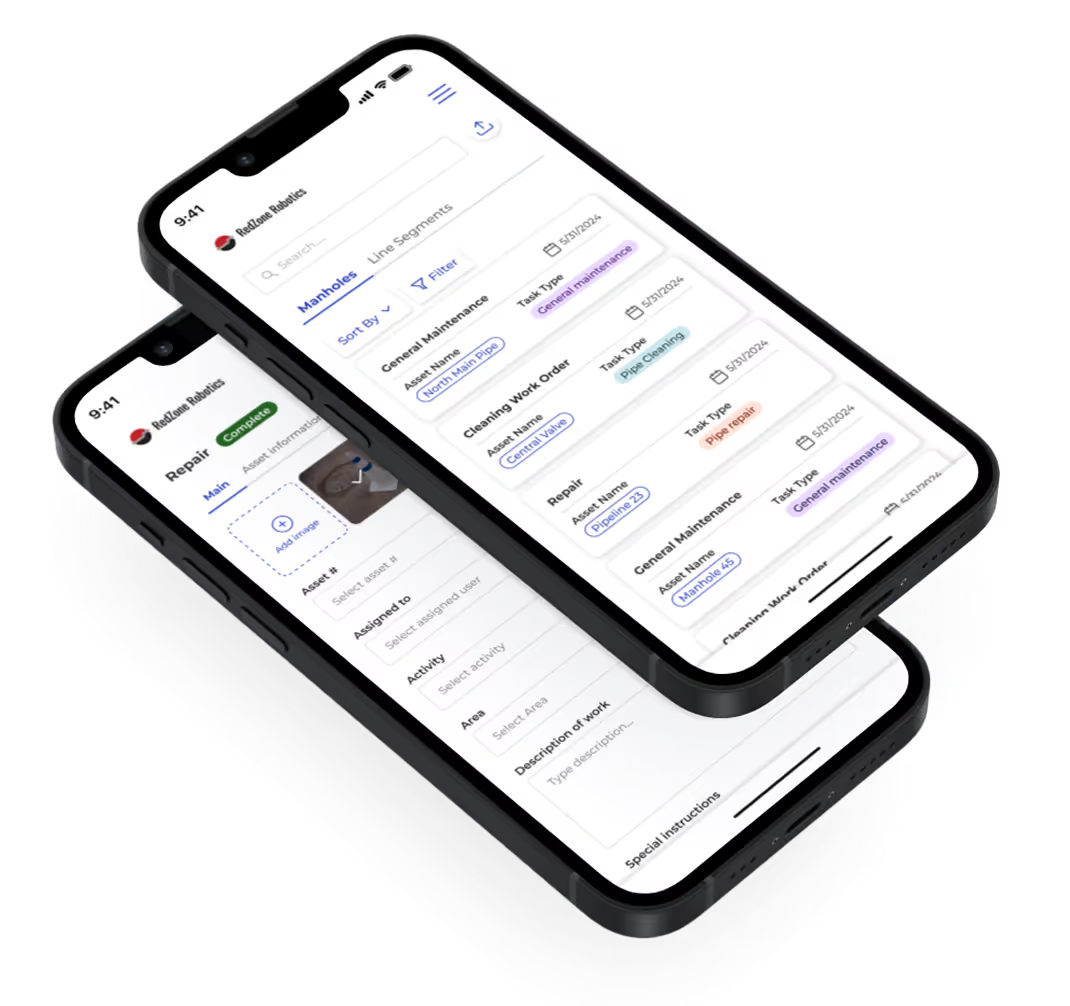

What Are Mobile App Scope Changes and Why Do They Matter?
Mobile app scope changes are modifications to the original project requirements, features, design, or technical approach that occur after the project plan has been agreed upon and development has begun.
Understanding what qualifies as a mobile app scope change versus a normal refinement helps prevent unnecessary conflict and keeps the project moving forward.
- Feature additions are the most common scope change when stakeholders request new functionality that was not included in the original requirements document.
- Design pivots change visual direction when user testing reveals the original interface concept does not resonate or when brand guidelines evolve mid-project.
- Technical requirement shifts alter the backend when integration needs change, performance targets increase, or platform constraints force a different architecture.
- Priority reordering changes the timeline when business conditions make previously low-priority features urgent and high-priority features less important.
- Scope reductions also count as changes when features get cut to preserve budget or timeline, requiring formal documentation of what was removed and why.
Mobile app scope changes exist on a spectrum. Small clarifications within existing requirements are normal refinements. New features, changed architecture, or redesigned workflows are genuine scope changes that warrant formal tracking. This distinction matters throughout your mobile app development process.
At LowCode Agency, we clearly define the boundary between refinement and scope change at the start of every project so both sides know when a formal change order is needed and when a quick conversation suffices.
Why Do Scope Changes Happen in Mobile App Projects?
Mobile app scope changes happen because users give unexpected feedback, markets shift, competitors launch new features, stakeholders discover overlooked requirements, and technology constraints emerge during development.
Expecting zero mobile app scope changes is unrealistic. Understanding why they happen helps you plan for them instead of being blindsided.
- User testing reveals surprises when real people interact with your prototype or beta and behave differently than your assumptions predicted.
- Stakeholder alignment breaks down when team members who were not involved in discovery surface new requirements after development is underway.
- Competitive pressure creates urgency when a rival launches a feature your users now expect, forcing you to add it mid-project.
- Technical discovery uncovers limitations when APIs do not work as documented, third-party services change their pricing, or device capabilities fall short.
- Business conditions evolve when funding rounds, partnerships, regulatory changes, or customer feedback shift what the app needs to accomplish.
Treating mobile app scope changes as failures discourages the honest communication that healthy projects require. Instead, treat them as a normal part of building software and manage them through a clear process.
The best client-developer relationships are built on transparency about mobile app scope changes, not on pretending they will never happen. Projects with healthy change management processes consistently deliver better outcomes than projects that treat every change as a crisis.
What Is a Change Order and How Does It Work?
A change order is a formal document that describes a proposed scope change, its impact on budget and timeline, the reason for the change, and requires approval from both parties before work begins.
Change orders protect everyone involved. They prevent misunderstandings about what is included, create an audit trail, and ensure both sides agree on the cost of modifications.
- Description of the change documents exactly what is being added, removed, or modified in specific, testable terms that leave no room for interpretation.
- Impact analysis covers budget and timeline showing how many additional hours, sprints, or dollars the change requires and how it affects the delivery date.
- Reason and justification explain why the change is necessary, helping both sides evaluate whether the modification is worth the investment.
- Approval signatures formalize agreement ensuring no work begins until both the client and the development team have acknowledged and accepted the terms.
- Integration with the existing plan shows which parts of the current roadmap are affected and whether other features need to shift to accommodate the change.
Your mobile app development contract should define the change order process before the project starts. Negotiating the process during a disagreement is far harder than establishing it upfront.
The best contracts for managing mobile app scope changes include a clear definition of what constitutes a change, the process for submitting and evaluating changes, and the pricing model for approved change orders. This clarity prevents the friction that erodes trust between clients and development teams.
How Do Scope Changes Affect Mobile App Development Cost?
Mobile app scope changes typically increase total project cost by 20 to 50 percent, with each individual change adding design, development, testing, and project management overhead beyond the direct feature cost.
The cost impact of mobile app scope changes is almost always larger than clients expect. Understanding why helps you evaluate change requests more critically.
- Direct development cost is just the starting point because every new feature also needs design work, testing across devices, documentation updates, and integration testing.
- Ripple effects multiply the impact when a scope change touches existing features, requiring regression testing and potential modifications to code that was already completed.
- Context switching costs are invisible because developers lose productivity when they stop current sprint work to analyze, estimate, and implement unplanned changes.
- Accumulated small changes compound with five minor tweaks costing more in total than one equivalent-sized feature because each carries its own overhead for scoping, testing, and deployment.
- Opportunity cost is rarely calculated because the time spent on mobile app scope changes is time not spent on original features, potentially delaying your most valuable functionality.
Tracking the true mobile app development cost requires tracking mobile app scope changes meticulously. Many projects overshoot budget not because the original estimate was wrong but because undocumented mobile app scope changes accumulated over weeks and months.
The individual changes felt small in the moment, but their compound effect on budget and timeline was significant. Rigorous tracking makes the true cost visible before it becomes a problem.
How Can You Minimize Unnecessary Scope Changes?
Minimize mobile app scope changes by investing heavily in discovery, involving all stakeholders early, documenting requirements with acceptance criteria, building prototypes for validation, and establishing a change evaluation framework.
Prevention is cheaper than management. While you cannot eliminate mobile app scope changes entirely, you can dramatically reduce the avoidable ones.
- Thorough discovery surfaces hidden requirements before development begins, eliminating the most common source of scope changes: things people forgot to mention.
- Stakeholder workshops align expectations by bringing every decision-maker into the same room to review and approve requirements before committing budget.
- Acceptance criteria define done for every feature so there is no ambiguity about what the development team agreed to build and what constitutes a new request.
- Prototypes and wireframes validate assumptions by letting stakeholders experience the app's flow before code is written, catching misalignments that would become scope changes later.
- MVP discipline keeps scope focused by forcing hard decisions about what is truly necessary for launch versus what can wait for version two.
The hidden costs of mobile app development often stem from mobile app scope changes that better planning could have prevented. Invest upfront to save downstream.
The most cost-effective mobile app scope changes are the ones you prevent by investing in thorough discovery, clear requirements, and validated prototypes before development begins. Prevention costs a fraction of what reactive change management costs during active sprints.
How Should You Evaluate Whether a Scope Change Is Worth It?
Evaluate every mobile app scope change by asking four questions: does it improve the user experience measurably, does it affect core business goals, what is the cost-to-value ratio, and can it wait until post-launch?
Not every requested change deserves immediate implementation. A disciplined evaluation process prevents scope creep while still allowing valuable improvements.
- User impact score rates how many users benefit and how significantly the change affects their experience, filtering out changes that serve edge cases.
- Business alignment check confirms strategic value by mapping the change against your original project goals and success metrics.
- Cost-to-value ratio quantifies the trade-off by comparing the change order cost against the expected revenue, retention, or efficiency improvement.
- Deferral analysis determines timing because many mobile app scope changes are good ideas that belong in version two rather than delaying the initial launch.
- Dependency mapping reveals hidden complexity since some changes appear simple in isolation but require modifications to multiple existing features.
Establish a scoring framework for mobile app scope changes at the start of your project. Having objective criteria prevents emotional decision-making when stakeholders push for their favorite features.
The discipline to say "great idea, let's put it in version two" is one of the most valuable skills in managing mobile app scope changes effectively. Not every good idea belongs in the current release.
What Does a Good Change Order Process Look Like?
A good change order process for mobile app scope changes includes a clear submission template, defined review timelines, impact analysis by the development team, approval thresholds based on size, and documentation in the project management tool.
Process without bureaucracy is the goal. Your change order workflow should be thorough enough to prevent problems but lightweight enough that it does not slow down the project.
- Standardized submission template ensures every change request includes the same information: description, justification, urgency, and any supporting materials.
- 48-hour review commitment means the development team provides an impact analysis within two business days so decisions do not stall.
- Tiered approval thresholds allow small changes under a set dollar amount to be approved by the project manager while larger changes require executive sign-off.
- Written approval before work begins is a non-negotiable rule that prevents disputes about unauthorized work and ensures both parties agree on terms.
- Backlog integration tracks everything by adding approved changes to the sprint backlog with proper priority, ensuring they get scheduled alongside existing work.
Your mobile app development risk management plan should include the change order process as a first-class risk mitigation strategy. Unmanaged mobile app scope changes are among the top three reasons projects fail.
How Do Agile and Waterfall Handle Scope Changes Differently?
Agile handles mobile app scope changes through sprint-level backlog reprioritization, while waterfall uses formal change orders that require re-planning dependent phases and adjusting the fixed-price contract.
Your development methodology directly affects how disruptive mobile app scope changes feel. Agile was designed for change. Waterfall was designed for stability.
- Agile absorbs changes at sprint boundaries by adding new items to the backlog and reprioritizing, with the trade-off that something else gets deferred to accommodate the change.
- Waterfall requires formal change requests because each phase depends on the outputs of the previous one, meaning a requirement change can cascade through design, development, and testing plans.
- Agile makes change cost visible immediately because the team shows what gets deferred in the same conversation where the new feature gets added.
- Waterfall change cost appears in documentation through detailed impact analysis that quantifies the budget and timeline adjustment required.
- Hybrid approaches offer middle ground by using sprint-level flexibility for minor mobile app scope changes while escalating significant ones to formal change orders.
Understanding how methodology affects scope management helps you make the right choice for your project. Both approaches to handling mobile app scope changes work when executed with discipline and transparency.
The worst outcomes happen when teams claim to use agile but actually have no process for managing mobile app scope changes, leading to informal feature requests that bypass estimation, approval, and trade-off analysis entirely.
Need Help Managing Mobile App Scope Changes?
Mobile app scope changes are a natural part of software development. Managing them well is the difference between a project that delivers value and one that spirals out of control.
LowCode Agency is a strategic product team, not a dev shop. We help clients navigate mobile app scope changes with clear processes, transparent communication, and disciplined execution.
- Thorough discovery minimizes avoidable changes by surfacing requirements, aligning stakeholders, and documenting acceptance criteria before development begins.
- Clear change order process from day one with standardized templates, defined review timelines, and tiered approval thresholds that keep projects moving.
- Agile sprint management absorbs change gracefully through backlog reprioritization and transparent trade-off conversations at every sprint boundary.
- Impact analysis within 48 hours so you can make informed decisions about mobile app scope changes without waiting weeks for estimates.
- Budget tracking that reflects reality with real-time visibility into how changes affect total project cost and remaining runway.
Over 350 projects delivered for clients including Medtronic, American Express, Coca-Cola, Zapier, and Sotheby's. We have managed mobile app scope changes at every scale.
If you want a development partner that handles mobile app scope changes professionally, let's start a conversation.
We will build a process that protects your budget and improves your product.
Last updated on
March 24, 2026
.

Jesus is a visionary entrepreneur and tech expert. After nearly a decade working in web development, he founded LowCode Agency to help businesses optimize their operations through custom software solutions.


FAQs
What is a change order in mobile app development?
What counts as a scope change versus a bug fix in a mobile app project?
How should scope changes be handled in a mobile app contract?
Can scope changes be avoided in mobile app development?
How do scope changes affect mobile app project timelines?
What should I do if I disagree with a scope change estimate from my agency?
Related Articles

Mobile App Development
How to Design a Mobile App Users Will Love
Good mobile app design is more than looks. Learn the key principles, process, and decisions that make users keep coming back.

Mobile App Development
Post-Launch Mobile App Maintenance Guide
Launching your mobile app is just the beginning. Learn what post-launch maintenance involves and how to keep your app running well.

Mobile App Development
Mobile App Monetization Models That Work
How will your mobile app make money? Compare the most effective monetization models and learn which one fits your product best.

Mobile App Development
Bubble
Bubble Mobile App Developer: Costs, Capabilities & Limitations
Everything you need to know before hiring a Bubble mobile app developer — real costs, what you can build, platform limitations, and when to consider alternatives.


Why customers trust us for no-code development


