

Mobile App Project Communication: Full Guide
13 min
read
Poor communication kills mobile app projects. Learn how to set up clear processes that keep your team and agency fully aligned.

Poor mobile app project communication causes more delays than bad code ever does. When feedback is late, scattered across platforms, or unclear in direction, sprints stall, rework accumulates, and timelines slip past every estimate.
Getting mobile app project communication right means choosing the right tools, setting response expectations upfront, and building a cadence that keeps designers, developers, and stakeholders aligned throughout every phase of the build.
Key Takeaways
- Single channel mandatory because splitting conversations across email, Slack, and calls creates lost context and conflicting decisions.
- 48-hour response windows protect sprint velocity since design approvals and feature decisions that wait longer stall the entire development team.
- Weekly demos replace status meetings by showing working software that stakeholders can review, test, and provide feedback on directly.
- Written decisions prevent disputes later because documented agreements eliminate "I thought we decided" conversations that waste time and erode trust.
- Async communication reduces meeting fatigue while keeping everyone informed through video updates and annotated feedback that works across time zones.
- Structured cadence beats more communication because predictable check-ins are more effective than constant ad-hoc messages throughout the day.
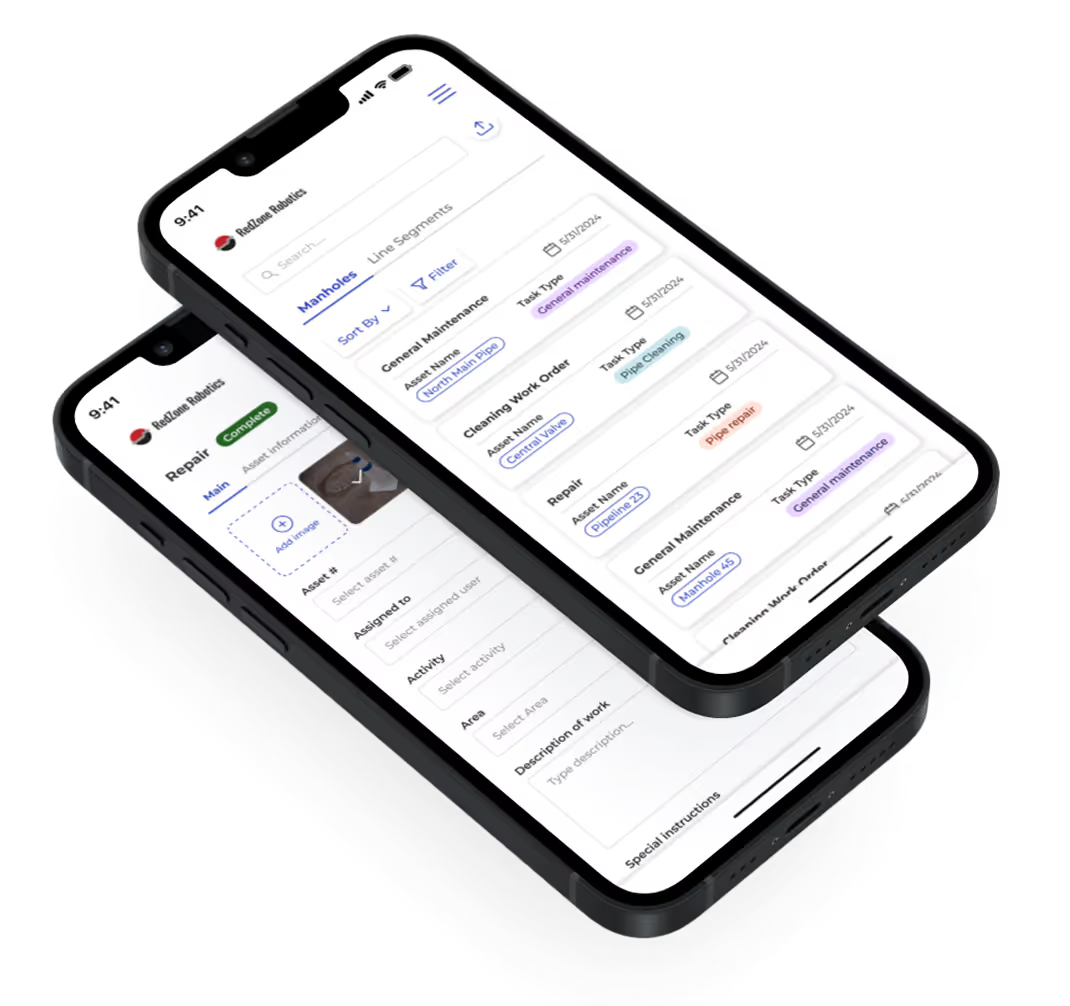

Why Does Mobile App Project Communication Break Down?
Mobile app project communication breaks down when teams use too many channels, skip regular check-ins, rely on verbal agreements, and fail to set response time expectations before the project starts.
The root cause is almost never malice or indifference. Mobile app project communication fails because nobody established the rules before development began. Without rules, everyone communicates differently and gaps appear.
- Multiple channels fragment conversations when design feedback lives in email, technical questions go to Slack, and priority decisions happen on unrecorded calls.
- No response expectations create drift because a stakeholder who takes five days to review a design does not realize they stalled the entire sprint.
- Verbal agreements get forgotten or reinterpreted when two people leave a call with different understandings of what was decided and act accordingly.
- Status updates replace real communication when the team sends weekly reports that nobody reads instead of showing working software that sparks genuine feedback.
- Cultural differences affect communication norms since some teams expect formal documentation while others rely on quick informal messages to keep moving.
- Tool overload creates notification fatigue when the team uses so many platforms that important messages get buried in noise and missed entirely.
Fixing mobile app project communication starts before the first line of code is written. Establishing rules during discovery prevents the breakdowns that make mobile app projects difficult to manage and deliver on time.
What Communication Tools Work Best for Mobile App Projects?
Slack or Microsoft Teams for daily communication, Figma for design feedback, Jira or Linear for task tracking, and Loom for async video demos. Pick one tool per function and enforce consistent use.
Mobile app project communication does not need expensive or complex tools. It needs consistent use of simple tools that the whole team actually adopts. The best communication stack is the one your team uses every day.
- Slack channels organize topics clearly with separate channels for general updates, design review, development questions, and urgent blockers.
- Figma comments keep feedback pinned on-screen so designers see exactly what you are referring to without interpreting written descriptions.
- Task boards make progress visible to everyone so team members see what is in progress, blocked, and coming next without asking for updates.
- Loom replaces unnecessary synchronous meetings by letting developers demo features in 3-minute videos that stakeholders review on their own schedule.
- Notion centralizes all decisions and specs in one searchable location that both the client team and the development team can access anytime.
- Integrations between tools reduce manual updates since task status changes in Jira can notify Slack automatically without someone needing to post.
Strong mobile app project communication depends on tool discipline above all. Choose your stack at project kickoff and document it in the contract so both sides know the expectations.
How Often Should Teams Communicate During a Mobile App Project?
Teams should communicate daily through async channels and meet live weekly for sprint demos. Urgent blockers get escalated same-day through a defined escalation channel that both sides monitor actively.
Mobile app project communication frequency should match the project phase. Discovery needs more live sessions. Active development needs more async updates. Testing needs rapid back-and-forth on specific bugs and fixes.
- Daily standups take 10 to 15 minutes and cover what was completed, what is planned, and what is blocked, keeping the entire team synchronized.
- Weekly sprint demos last 30 to 60 minutes and show working software so stakeholders validate direction and provide feedback with visual context.
- Design reviews happen 2 to 3 times per sprint during active design phases when wireframes and UI screens need client approval to proceed.
- Blocker escalations happen same-day through a designated channel so the team never sits idle waiting for a response that could be given in minutes.
- Mid-sprint check-ins catch drift early by reviewing progress halfway through the cycle before too much work is built on incorrect assumptions.
- Retrospectives improve the process itself by reviewing what worked, what failed, and what the team should change for better communication next sprint.
The cadence of your mobile app project communication determines how fast problems get solved. Teams that communicate daily ship faster than teams that check in weekly, even when the total hours spent communicating are similar. Frequency and consistency matter more than duration in mobile app project communication.
The key is finding the cadence that keeps information flowing without creating meeting fatigue. Most successful projects settle into a rhythm within the first two sprints and maintain it through launch.
How Do You Give Effective Feedback in Mobile App Project Communication?
Give effective feedback by being specific about what needs changing, referencing exact screens or features by name, labeling priority level, and consolidating all comments into one channel within the agreed response window.
Vague feedback is worse than no feedback. Telling a designer "this doesn't feel right" sends them back to guessing. Telling them "the navigation bar feels hidden on this screen" gives them a clear action to take.
- Reference specific screens by name so the team knows exactly which page, flow, or component your feedback applies to without ambiguity.
- Label feedback as blocker or preference because the team needs to know whether a change must happen before launch or can be deferred.
- Consolidate comments in batch sessions instead of sending one-off messages throughout the day that fragment the team's attention and working context.
- Use annotated screenshots when possible because visual markup eliminates ambiguity in ways that written descriptions alone simply cannot match.
- Separate opinion from requirement clearly so the team understands whether "I'd prefer blue" is a personal preference or a brand requirement.
- Explain the why behind important feedback because "users won't find this button" gives the designer context to solve the root problem effectively.
Effective mobile app project communication saves hours of rework per sprint cycle. When stakeholders give actionable feedback, developers build the right thing the first time. How you approach risk management in the development process shapes the entire project trajectory.
What Communication Cadence Works for Agile Mobile App Projects?
Agile mobile app projects work best with daily standups, sprint planning at the start of each cycle, a mid-sprint check-in, and a demo plus retrospective at the end of every sprint throughout the build.
The agile methodology structures communication around short cycles that keep everyone aligned naturally. Mobile app project communication in agile is built into the process, not bolted on as an afterthought.
- Sprint planning sets expectations upfront by defining what the team will build in the next 1 to 2 weeks and what decisions they need from stakeholders.
- Daily standups surface blockers immediately so problems get resolved in hours instead of festering for days and stalling dependent tasks downstream.
- Mid-sprint check-ins catch direction drift by reviewing progress halfway through the cycle before too much work follows an incorrect assumption.
- End-of-sprint demos validate everything by showing working software to stakeholders who can approve, redirect, or provide specific feedback with context.
- Retrospectives improve the process each cycle by identifying what worked, what did not, and what the team should change for the next sprint.
- Backlog grooming prepares future sprints so the team always has a clear, prioritized list of what comes next when the current sprint finishes.
Agile mobile app project communication creates natural checkpoints that prevent the long silence periods where misalignment compounds undetected across multiple sprints.
How Do You Handle Communication Across Time Zones in Mobile App Projects?
Handle time zone communication by establishing a 3 to 4 hour overlap window, using async video for updates, documenting all decisions in writing, and rotating meeting times when the gap between teams exceeds 6 hours.
Time zones are a reality for most mobile app project communication in 2026. The solution is not forcing everyone onto one schedule. It is building async-first communication habits that work regardless of location.
- Overlap windows of 3 to 4 hours enable live decisions by designating a daily period when both teams are available for real-time communication.
- Async video updates bridge the gap so a developer in one time zone records a demo that the client reviews 8 hours later with written notes.
- Written decision records prevent overnight drift because when decisions are documented, the team starting their day knows exactly what was agreed.
- Rotating meeting times show respect since asking one team to always take early morning or late night calls creates resentment and reduces quality.
- End-of-day handoff summaries keep continuity by documenting what was accomplished, what is blocked, and what decisions are needed by the other team.
- Shared async boards replace synchronous check-ins when time zones make daily standups impractical for everyone to attend at the same time.
Strong mobile app project communication across time zones requires more documentation, not more meetings. The teams that do this well write everything down so cost and timeline stay on track regardless of where people sit.
What Should Be Documented in Mobile App Project Communication?
Document all scope decisions, design approvals, feature priority changes, feedback from demos, blocker resolutions, and any agreement that changes timeline, budget, or scope from the original plan.
If it was not written down, it did not happen. This rule protects both sides when questions arise later about what was agreed, who approved it, and when the decision was made during the project.
- Scope decisions need written confirmation so change orders have a clear record of approval and impact assessment attached to every addition.
- Design approvals need date stamps to establish when a screen was signed off and when any subsequent changes were requested by the client.
- Priority changes need justification so the team understands why a feature moved up or down the backlog and can adjust dependencies accordingly.
- Demo feedback needs actionable items because general impressions are useful but only specific, documented comments become tasks the team can execute.
- Blocker resolutions need decision records so the same question does not resurface two sprints later when someone forgets the original answer.
- Meeting notes capture verbal agreements since decisions made on calls need written confirmation within 24 hours to prevent reinterpretation later.
Documented mobile app project communication is not bureaucracy or overhead. It is protection for both sides. Every recorded decision saves time when memory differs between two people on what was agreed.
How Do You Fix Broken Communication in a Mobile App Project?
Fix broken mobile app project communication by scheduling a reset meeting, re-establishing the communication cadence, assigning a single point of contact on each side, and implementing a 48-hour response rule immediately.
When mobile app project communication has already broken down, small incremental fixes do not work. You need a deliberate reset that acknowledges the problem openly and establishes new expectations both sides commit to.
- A reset meeting addresses the problem directly by naming what is not working and agreeing on specific changes both sides will implement immediately.
- A single point of contact on each side eliminates the confusion of multiple people sending conflicting feedback or making parallel decisions independently.
- Written communication agreements formalize expectations so response times, preferred channels, and meeting cadence are documented, not just discussed verbally.
- A trial period tests the new cadence by running two sprints under the revised communication plan and evaluating whether the improvements hold up.
- Retrospective after the trial assesses results so both sides confirm the new process works or identify further adjustments needed before continuing.
- Accountability measures prevent regression by assigning responsibility for maintaining the cadence so it does not drift back to the broken patterns.
Broken mobile app project communication can be fixed. But it requires honesty about what went wrong and genuine commitment to the new process from both the client and the development team.
Conclusion
Mobile app project communication determines whether your project ships on time or drifts into delays nobody planned for. Choose one channel, set response expectations, show up to weekly demos, and document every important decision.
The teams that communicate well do not communicate more often. They communicate consistently, clearly, and with accountability on both sides throughout every phase.
Want Structured Communication for Your Mobile App Project?
Poor communication is the silent killer of mobile app projects. A structured cadence prevents it before it gets a chance to start causing problems.
As AI development experts, we at LOW/CODE Agency help SMBs ship real software — web and mobile applications, intelligent chatbots, RAG pipelines, and autonomous AI agents built for businesses that need results, not platforms. We build mobile app project communication into every engagement with defined cadence, clear channels, and accountability that keeps projects on schedule.
- Kickoff establishes the communication plan with agreed channels, response windows, and meeting cadence documented before any development begins.
- Weekly sprint demos show real progress with working software you can test, review, and provide feedback on every single development cycle.
- Dedicated project managers coordinate everything so decisions, feedback, and deliverables flow through a single accountable contact on our side.
- Async video updates reduce your meeting load by delivering demos and progress summaries you can review and respond to on your own schedule.
- Written decision logs protect both sides with documented agreements that prevent disputes and keep the project moving forward cleanly throughout.
- Time zone management is built into the process with overlap windows, handoff summaries, and async tools that work regardless of where your team sits.
Over 350 projects delivered for clients including Medtronic, American Express, Coca-Cola, Zapier, and Sotheby's.
Related Articles
Last updated on
September 3, 2026
.

Jesus is a visionary entrepreneur and tech expert. After nearly a decade working in web development, he founded LOW/CODE Agency to help businesses optimize their operations through custom software solutions.


FAQs
How should communication be structured in a mobile app development project?
What tools work best for mobile app project communication?
How many people should be on communication channels for a mobile app project?
What information should be documented throughout a mobile app project?
How do I escalate communication issues with a mobile app agency?
What communication expectations should I set with my mobile app agency at the start?
Related Articles

Mobile App Development
Mobile App Commerce Examples That Work in 2026
What does successful mobile commerce look like in 2026? Explore real examples and learn what makes them drive sales and retention.

Mobile App Development
Mobile App Monetization Models That Work
How will your mobile app make money? Compare the most effective monetization models and learn which one fits your product best.
Mobile App Development
No-code/Low-code
How to Build a Food Delivery App with No-code
Learn how to build a food delivery app without coding using top no-code tools. Fast, affordable, and perfect for startups in 2025

Mobile App Development
How to Define Your Mobile App Target Audience
Building for the wrong users kills mobile apps. Learn how to clearly define your target audience before a single line of code is written.

Why customers trust us for no-code development


