

How to Build an Interactive Media Platform with FlutterFlow
13 min
read
Learn how to create interactive media platforms using FlutterFlow with step-by-step guidance and best practices.


A flutterflow interactive media platform can power real-time polls, live audience reactions, and quiz experiences that keep audiences engaged beyond passive viewing. The question is where the platform's real-time capabilities end and where specialist infrastructure must take over.
FlutterFlow handles the interaction and display layer effectively. Live streaming originates elsewhere. This article explains what you can build, what you must connect externally, and what it costs to deliver a production-ready interactive media experience.
Key Takeaways
- Real-time interactivity is achievable via Firestore: Polls, live reactions, and audience voting use Firestore real-time listeners effectively.
- Interactive video is not native: Branching video narratives and clickable video overlays require external platforms or custom widget injection.
- High-concurrency events need architecture planning: Thousands of simultaneous users writing to Firestore during a live event require transaction handling and sharding strategies.
- Gamification features work well: Points, leaderboards, badges, and challenges are a strong fit for FlutterFlow's data and UI capabilities.
- Live streaming is entirely external: FlutterFlow embeds live streams from platforms like Mux Live or YouTube Live. It does not originate them.

What Can FlutterFlow Build for an Interactive Media Platform?
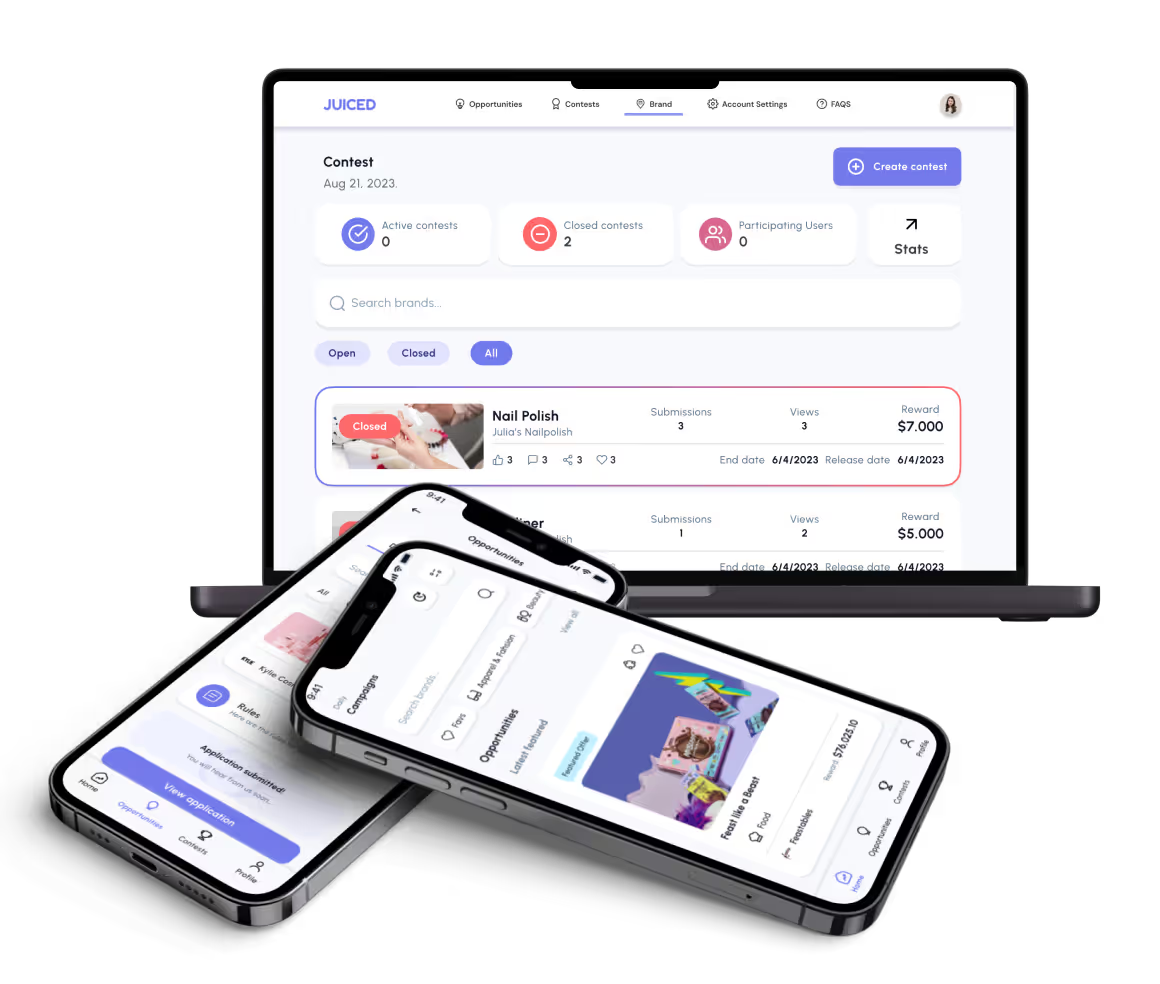
FlutterFlow builds the full audience interaction layer for interactive media: polls, quizzes, reactions, leaderboards, social feeds, live stream embeds, and achievement systems. Real-time updates run through Firestore listeners. Live video originates from external providers.
FlutterFlow covers everything the audience sees and interacts with during a live or on-demand media experience. FlutterFlow interactive app examples demonstrate how real-time features have been shipped in production interactive media contexts.
Real-Time Audience Polls and Voting
Build live polling screens where audience responses are captured in Firestore and results update in real time for all viewers simultaneously.
- Firestore real-time listeners: Poll results update instantly for all connected viewers as responses are submitted, without manual refresh.
- Multiple question formats: Binary, multiple-choice, and rating-scale polls all render as configurable FlutterFlow screen components.
- Results visualisation: Bar charts and percentage displays of live voting results render dynamically as responses accumulate in Firestore.
Interactive Quiz and Trivia Engine
Create timed quiz experiences with question sequencing, answer validation, score calculation, and live leaderboard updates.
- Timed question delivery: Each question displays for a configurable duration before automatically advancing, creating a consistent competitive experience.
- Answer validation and scoring: Correct answers are evaluated against Firestore data and scores are updated immediately after each question.
- Live leaderboard updates: Ranked leaderboards refresh in real time via Firestore listeners, showing each participant's position as scores change.
Live Audience Reaction System
Implement emoji reaction bursts or thumbs-up counters that increment in Firestore and animate on screen for all concurrent viewers.
- Emoji burst animations: Reaction taps trigger animated emoji bursts that appear on all connected viewers' screens in near real time.
- Firestore increment operations: Atomic counter increments in Firestore ensure accurate reaction counts even under high simultaneous submission volume.
- Multiple reaction types: Different emoji or icon reactions can map to different sentiment categories, giving producers richer audience signal data.
Gamification and Leaderboards
Award points for participation, streak engagement, and correct answers, displaying ranked leaderboards that update during live events.
- Points for engagement actions: Submitting poll votes, answering quiz questions, and maintaining daily streaks each contribute to a participant's point balance.
- Streak tracking: Consecutive-day participation streaks display on user profiles and reward consistent engagement with bonus point multipliers.
- Live event leaderboards: Ranked leaderboards update in real time during live events, creating competitive momentum throughout the broadcast.
Content Feed with Social Interaction
Build a media feed supporting comments, shares, saves, and user-generated polls embedded within content cards.
- Comment threads per content card: Nested comment threads attach to individual content items, keeping audience conversation contextually organised.
- Save and share actions: Bookmarked content and share actions write to Firestore and connect to native device sharing capabilities.
- User-generated polls in feed: Audience members create and embed polls in content cards, extending interactivity beyond producer-driven events.
Live Stream Embed with Interactivity Layer
Embed a live video stream from Mux Live, YouTube Live, or Agora within FlutterFlow, with the interactive polling and reaction layer displayed alongside the player.
- External stream embed: FlutterFlow embeds the stream URL from Mux Live, YouTube Live, or Agora in a video player component on screen.
- Interactivity layer overlay: Poll widgets, reaction buttons, and live leaderboards display alongside or overlaid on the embedded stream without affecting the video feed.
- Stream-synced question timing: Quiz questions and polls can be triggered by producers at specific moments during the live broadcast via Firestore writes.
User Progress and Achievement Badges
Track participation milestones, award digital badges, and display achievement histories on user profile pages.
- Milestone-triggered badge awards: Reaching point thresholds, participation streaks, or event completions automatically triggers badge awards written to user profiles.
- Badge display on profiles: Earned badges display on user profile pages, creating visible status signals within the community.
- Achievement history timeline: A chronological view of all earned badges and milestones gives users a record of their participation history.
How Long Does It Take to Build an Interactive Media Platform with FlutterFlow?
A simple interactive MVP with polls, quizzes, and a basic leaderboard takes 5–9 weeks. A full interactive media platform with live streaming integration, gamification, social feed, and achievements takes 12–20 weeks.
FlutterFlow is 45–55% faster than custom development on the interactive layer. Live streaming infrastructure setup time is similar regardless of framework.
- Phase the build by audience feature type: Launch quiz and polling first, then add live streaming integration and gamification in phase two.
- Live streaming CDN setup is a separate workstream: Mux Live, YouTube Live, or Agora each require their own integration process independent of the FlutterFlow build.
- Concurrency planning cannot be skipped: High-audience live events require Firestore write architecture decisions made before the build starts, not after.
A phased approach gets an interactive experience live quickly and adds broadcast integration once the audience engagement layer is proven.
What Does It Cost to Build a FlutterFlow Interactive Media Platform?
A FlutterFlow interactive media platform costs $18,000–$85,000 depending on scope. Ongoing costs are driven by live streaming CDN fees and Firestore real-time write volume, not the FlutterFlow platform itself.
Reviewing FlutterFlow pricing for media apps helps teams separate platform subscription costs from the live streaming and real-time database infrastructure that drives the majority of ongoing spend.
- Mux Live costs scale with broadcast hours: Stream-minute pricing from Mux Live means your CDN bill grows directly with how much content you broadcast to audiences.
- Firestore write costs scale with audience size: High-concurrency live events where thousands of users submit reactions simultaneously generate Firestore write volume that should be modelled before launch.
- FlutterFlow saves 40–60% on UI and polling logic: The interaction layer builds much faster in FlutterFlow. Live streaming infrastructure cost is the same regardless of platform.
Model your live event frequency and peak concurrent audience size before finalising the infrastructure budget. These two variables determine your ongoing operating cost.
How Does FlutterFlow Compare to Custom Development for an Interactive Media Platform?
FlutterFlow builds the interactive layer 40–60% cheaper and significantly faster than custom development. Where custom development wins is branching interactive video narratives, complex gamification economies, and AR interactive overlays.
For most interactive media use cases, FlutterFlow's Firestore-backed real-time layer delivers what audience engagement products need at a fraction of the custom development cost.
- FlutterFlow wins for live event apps: Sports second-screen experiences, interactive podcast platforms, and audience engagement tools are strong use cases.
- FlutterFlow wins for content producers: Poll questions and quiz content update without engineering involvement, giving producers direct control.
- Custom wins for broadcast integration: Interactive TV experiences with broadcast-level synchronisation and proprietary interactive video platforms require custom native development.
For teams weighing platform options, the Bubble versus FlutterFlow interactivity comparison clarifies which tool handles real-time audience features more effectively.
What Are the Limitations of FlutterFlow for an Interactive Media Platform?
FlutterFlow cannot originate or transcode live video, support branching interactive video narratives natively, or handle thousands of simultaneous Firestore writes without deliberate architecture. These are the boundaries of the platform for interactive media.
Understanding FlutterFlow real-time scale limits is critical for any interactive media platform planning a live event with thousands of simultaneous participants.
- Interactive video is not native: Branching video narratives and clickable video overlays require external platforms like Eko or Verse, or custom widget injection into FlutterFlow.
- Live streaming originates externally: FlutterFlow embeds stream URLs. It does not originate, transcode, or manage live video infrastructure under any configuration.
- Write storms require aggregation strategies: Thousands of users simultaneously submitting poll answers generate Firestore write volume that must be managed with Cloud Functions or aggregation patterns.
- Complex gamification economies push limits: Multi-currency points systems with expiry, conversion, and redemption logic push against FlutterFlow's condition builder capacity at scale.
- No offline interactive mode: Real-time features require active connectivity. There is no offline interactive mode for cached or pre-loaded event content.
Code export is available on paid plans for teams that need to extend the platform beyond its visual builder capabilities.
How Do You Get a FlutterFlow Interactive Media Platform Built?
Look for a team with Firestore real-time listener experience, live streaming CDN integration knowledge, and high-concurrency write handling skills. Generic FlutterFlow experience is not enough for interactive media at live-event scale.
Finding top FlutterFlow media app agencies with live event and real-time experience prevents the concurrency design mistakes that surface under high audience load.
- Firestore concurrency experience is mandatory: A developer who cannot explain write aggregation strategies for live events is not ready for an interactive media build.
- Live streaming vendor experience matters: Ask which CDN providers they have integrated and whether they have managed stream-synced interactive event timing.
- Red flags when hiring: Any developer claiming live streaming is handled by FlutterFlow natively, or who has no Firestore write rate management experience.
- Agency over freelancer for live event platforms: Agencies manage the multi-vendor coordination between FlutterFlow, the streaming CDN, and the gamification architecture.
- Key questions to ask: "How do you handle 5,000 users writing poll answers simultaneously?" and "Which live streaming vendor have you integrated with before?"
Expected timelines run 8–20 weeks depending on whether live streaming integration and gamification are in scope for the initial build phase.
Conclusion
FlutterFlow is a capable platform for interactive media features. Polling, quizzes, gamification, and social interaction all work well within the platform's Firestore-backed real-time capabilities.
The live streaming layer and interactive video require external infrastructure that must be scoped and budgeted separately. Identify your peak concurrent audience size and confirm whether interactive video is a launch requirement. These two decisions define where FlutterFlow ends and specialist platforms begin.
Building an Interactive Media Platform with FlutterFlow? Here Is How LOW/CODE Agency Approaches It.
Most interactive media builds underestimate two things: Firestore write volume under live-event conditions, and the time required to integrate a live streaming CDN with a production-ready interactivity layer. Both are avoidable with the right architecture decisions made before the build starts.
As AI development experts, we at LOW/CODE Agency help SMBs ship real software — web and mobile applications, intelligent chatbots, RAG pipelines, and autonomous AI agents built for businesses that need results, not platforms. We build FlutterFlow interactive media platforms with the real-time architecture scoped upfront, the streaming integration treated as a parallel workstream, and the gamification data model designed to scale before a single poll widget is placed.
- Concurrency architecture first: We design the Firestore write strategy and Cloud Function aggregation pattern before the build begins, so live events perform under high audience load.
- Live streaming vendor selection: We evaluate Mux Live, YouTube Live, and Agora against your broadcast requirements and integrate the right provider into your FlutterFlow platform.
- Real-time polling and quiz builds: We build timed quiz experiences, live polling, and leaderboard systems that update in real time for all concurrent viewers during a live event.
- Gamification system design: We architect points, badges, streak tracking, and leaderboard logic as a data model that scales with audience size and event frequency.
- Social feed development: We build content feeds with comments, saves, and user-generated polls that give audiences a reason to return between live events.
- Performance testing before launch: We simulate live-event write volume in a staging environment to confirm your Firestore and Cloud Function architecture holds under peak load.
- Full product team: Strategy, design, development, and QA from a single team that has shipped real-time interactive experiences at live-event scale.
We have built 350+ products for clients including Coca-Cola, American Express, and Sotheby's. Interactive and media experiences are some of our most technically engaging projects.
Related Articles
- How to Build an Invoice Generator App with FlutterFlow
- How to Build an Investment Tracking Dashboard with FlutterFlow
- How to Build an Inventory Scanning App with FlutterFlow
- How to Build Insurance Tech Apps with FlutterFlow
- How to Build an Insurance Quote Generator with FlutterFlow
- How to Build an Insurance Claim App with FlutterFlow
Last updated on
September 24, 2026
.

Jesus is a visionary entrepreneur and tech expert. After nearly a decade working in web development, he founded LOW/CODE Agency to help businesses optimize their operations through custom software solutions.


FAQs
What are the first steps to create a media platform in FlutterFlow?
How can I add interactive elements to my FlutterFlow app?
Is FlutterFlow suitable for building scalable media platforms?
Can I integrate video streaming features in a FlutterFlow app?
What are common challenges when building media platforms with FlutterFlow?
How do I test and deploy my FlutterFlow media platform?
Related Articles

FlutterFlow
How to Build a Rental Marketplace App with FlutterFlow
Learn how to create a rental marketplace app using FlutterFlow with step-by-step tips and best practices for smooth development.
FlutterFlow
How to Build a Spending Analytics Dashboard with FlutterFlow
Learn how to create a spending analytics dashboard using FlutterFlow with step-by-step guidance and best practices.
FlutterFlow
How to Build a Utility Billing Platform with FlutterFlow
Learn how to create a utility billing platform using FlutterFlow with step-by-step tips and best practices for efficient app development.

FlutterFlow
How to Build a Lead Tracking CRM with FlutterFlow
Learn how to create a lead tracking CRM using FlutterFlow with step-by-step guidance for efficient customer management.

Why customers trust us for no-code development


