

How to Build a Non-Profit Reporting App with Bubble
12 min
read
Create a non-profit reporting app in Bubble without coding. Automate impact reports, track grants, and share results with stakeholders in minutes.

Compiling program outcomes, donor metrics, and grant data into board-ready reports from spreadsheets and shared folders takes hours every month. Bubble lets you build a custom reporting platform where data flows from program staff to executive dashboards to board presentations without manual assembly.
Nonprofits that operate multiple programs, manage grants, and report to boards have reporting needs that generic tools do not serve well. A purpose-built Bubble app centralizes the data and automates the distribution.
Key Takeaways
- Bubble centralizes program data, donor metrics, and impact reporting in one custom platform without custom code
- Core data types include Program, ImpactMetric, Report, Donor, Grant, and ReportSection
- Chart elements and visualization tools display KPIs and trend data without external BI tools
- Role-based access separates what program staff, executives, and board members can view and edit
- Realistic build time is 6 to 10 weeks at a cost of $9,000 to $18,000
- Required plugins include Bubble's chart element, PDF Conjurer, and SendGrid

What Is a Non-Profit Reporting App — and Why Build It with Bubble?
A non-profit reporting app is a platform that collects program performance data, donor and grant metrics, and impact outcomes. It then compiles them into structured reports for internal leadership, boards, and funders. Bubble is a strong fit because its database, conditional logic, and PDF generation capabilities handle the full data-to-report pipeline.
Generic tools like Excel templates or Canva annual reports require manual data entry every cycle. A Bubble reporting app connects directly to the organization's operational data so reports reflect current numbers without copy-paste assembly.
- Program data tracking: Staff enter program outcomes, beneficiary counts, and milestone completions directly into the platform throughout the reporting period.
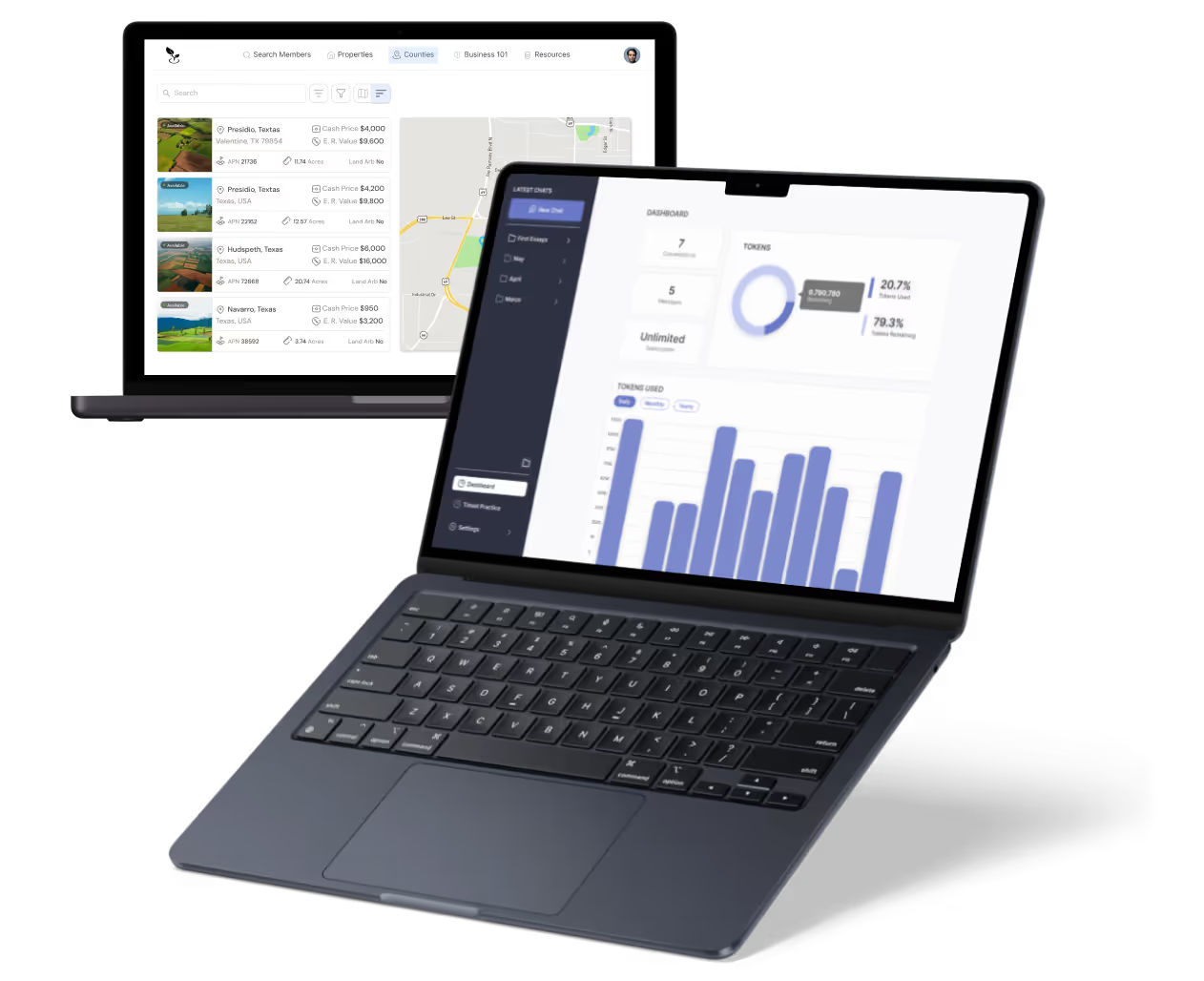
- KPI dashboards: Executive directors and board members view real-time dashboards with donation totals, program reach, grant utilization, and year-over-year comparisons.
- Automated report generation: A backend workflow compiles data into a structured report document and generates a downloadable PDF at the end of each reporting period.
- Donor impact summaries: Automated reports show individual donors how their contributions were used, broken down by program and outcome.
- Grant compliance reports: Grant-specific reports pull spending data and program outcomes tied to that grant's requirements for funder submission.
Understanding Bubble's trade-offs before committing to this build is important. Review Bubble's pros and cons to confirm the platform fits your reporting complexity.
Bubble replaces the manual monthly reporting cycle with a data-driven system that gives leadership accurate information when they need it.
What Features Should a Non-Profit Reporting App Include?
A nonprofit reporting app needs metric input interfaces for program staff, visualization dashboards for leadership, automated report generation, and controlled access for board members. Each user role interacts with the system differently.
Build the metric input forms and dashboard before the report generation workflow.
- Metric input forms: Program staff enter quantitative outcomes (people served, services delivered, milestones reached) through structured forms tied to specific programs and reporting periods.
- KPI dashboard: A role-specific dashboard shows donation totals, program reach, grant burn rate, and trend charts by month or quarter. Updates in real time as new data is entered.
- Report builder: Admins configure which metrics, programs, and time periods appear in each report type. Reports can be board reports, grant reports, or donor impact summaries.
- PDF export: A one-click export generates a formatted PDF report using PDF Conjurer with the organization's branding, current data, and any charts included in the report layout.
- Scheduled email distribution: A backend workflow sends the generated PDF report to a configured distribution list (board members, funders, donors) on a monthly or quarterly schedule.
- Board portal: Board members access a read-only dashboard showing the latest report data, historical comparisons, and upcoming board meeting materials.
Start with two or three programs and one report type in the first build. Add additional programs, grant compliance modules, and donor-facing reports in subsequent phases.
How Do You Structure the Database for a Non-Profit Reporting App in Bubble?
Seven data types are needed for a complete nonprofit reporting app: Program, ImpactMetric, Report, Donor, Grant, ReportSection, and BoardMember. The ImpactMetric type is the core building block because all reporting aggregates from individual metric entries.
Design ImpactMetric with time-period tagging before building any other data types.
- Program: Stores program name, description, start date, status (option set: active/completed/planned), goal (text), and a list of linked ImpactMetrics.
- ImpactMetric: Stores metric name, value (number), unit (text), reporting period (date or option set: Q1/Q2/Q3/Q4/Annual), linked Program, entered by (User), and entry date.
- Report: Stores report title, report type (option set: board/grant/donor impact/annual), reporting period, status (draft/published), generated PDF URL, and distribution date.
- ReportSection: Stores section title, section order (number), content type (option set: text/chart/metric table), linked Report, and display data (list of ImpactMetrics or text content).
- Donor: Stores name, email, total lifetime giving (number), and linked donation records. Used for donor impact report generation.
- Grant: Stores grant name, funder name, award amount, start date, end date, linked Program, reporting frequency (option set), and utilization percentage (number).
- BoardMember (User): A User role with read-only access to the board portal. Stores name, email, term start, term end, and committee assignments.
The reporting period field on ImpactMetric is what enables accurate time-based aggregation. Use a consistent option set (Q1 2026, Q2 2026, etc.) rather than raw dates to simplify report queries.
How Do You Build the Core Workflows for a Non-Profit Reporting App in Bubble?
Five workflow categories drive a nonprofit reporting app: metric entry and validation, report compilation, PDF generation, scheduled distribution, and grant compliance tracking. Each workflow serves a different user role and reporting cadence.
Build the metric entry and report compilation workflows before the PDF generation workflow.
- Metric entry and validation: When a program staff member submits a metric form, a workflow checks that the value is numeric and the reporting period is selected. On validation, create an ImpactMetric record linked to the correct Program. Trigger a success message and log the entry timestamp.
- Report compilation: When an admin initiates a report generation, a workflow queries all ImpactMetric records for the selected reporting period and linked Programs. Aggregate values by program and metric name. Populate ReportSection records with the aggregated data.
- PDF generation workflow: After report sections are populated, trigger PDF Conjurer to render the report template with the current data. Store the generated PDF URL on the Report record. Update Report status to "published."
- Scheduled distribution workflow: A Bubble backend scheduled workflow runs on the report distribution date. Query the distribution list (BoardMembers or Donors depending on report type). Send a SendGrid email to each recipient with the PDF attached or linked.
- Grant compliance tracking: A separate dashboard view filters ImpactMetrics by linked Grant. Display utilization percentage as a calculated field (grant spend to date divided by award amount). Trigger an alert email to the grants manager when utilization exceeds 80 percent.
For organizations planning to grow reporting volume significantly, the platform needs to handle larger data sets efficiently. Review Bubble's scalability before designing queries that aggregate across many metric records.
Aggregate metrics at the time of report compilation rather than calculating them live on every dashboard load. Storing pre-calculated totals on the Report record makes dashboards load faster.
What Security and Data Requirements Apply to a Non-Profit Reporting App?
A nonprofit reporting app handles donor contact data, grant financials, and organizational performance data. Each category requires access controls that prevent unauthorized viewing or editing.
Configure privacy rules by role before building any dashboard pages.
- Role-based privacy rules: Program Staff can enter and edit metrics for their own programs only. Executive Directors can view all programs and generate reports. Board Members have read-only access to published reports. Admins have full access.
- Donor data protection: Donor records are never visible to Program Staff or Board Members. Only Executive Directors and Admins can access the full donor list or export donor contact data.
- Grant data confidentiality: Grant financial details (award amounts, utilization rates) are visible only to Executive Directors and Admins, not to Program Staff or Board Members without explicit access assignment.
- Report access control: Draft reports are visible only to the report creator and admins. Published reports are visible to the distribution list roles. Revoked board members lose access immediately when their user role is updated.
- Audit logging: An AuditLog data type records who generated which report, who distributed it, and when. This supports governance reviews and grant audits.
For a complete guide to Bubble's data access configuration, review securing data in Bubble.
Role-based privacy rules for a reporting app must be tested with each user role before launch. Data leakage between roles is the most common security failure in Bubble apps with multiple user types.
What Plugins and Integrations Does a Non-Profit Reporting App Need?
Four plugins cover the core reporting needs. The chart visualization and PDF generation plugins do the heaviest lifting and should be configured early in the build.
Test PDF generation with real metric data before finalizing the report template design.
- Bubble's chart element or Bubble Charts plugin: Renders bar charts, line charts, and pie charts for KPI dashboards and report sections. Configure dynamic data sources linked to ImpactMetric aggregations.
- PDF Conjurer: Generates formatted, branded report PDFs from Bubble data. Build report templates in PDF Conjurer's interface, then trigger generation via a backend workflow. Supports custom fonts, logos, and data tables.
- SendGrid plugin: Powers scheduled report distribution emails, metric entry confirmation messages, and grant deadline reminders. Configure separate email templates for each notification type.
- Google Sheets API via API Connector (optional): Allows program staff to import bulk metric data from existing spreadsheets rather than entering records one by one. Useful during the transition from a spreadsheet-based reporting system.
- Airtable API via API Connector (optional): Syncs program data from an Airtable base that program staff already use for operational tracking into the Bubble reporting system.
- Zapier (optional): Connects metric entry events to Slack notifications for the reporting manager or triggers data pulls from external program management tools.
PDF Conjurer is the most important plugin choice for a reporting app. Invest time in building clean report templates before the first board presentation to avoid last-minute redesign work.
How Long Does It Take and What Does It Cost to Build a Non-Profit Reporting App with Bubble?
A nonprofit reporting app with metric input, KPI dashboards, PDF report generation, and role-based access takes 6 to 10 weeks and costs between $9,000 and $18,000. Complexity increases with the number of programs tracked, grant compliance requirements, and visualization depth.
The data model design and PDF template work are the most time-intensive phases.
The Bubble Growth plan at $119/month handles most nonprofit reporting workloads. Organizations with large historical data sets or complex grant compliance queries across many programs may benefit from the Team plan's additional capacity.
Conclusion
Bubble gives nonprofits a practical way to replace manual reporting cycles with a structured, data-driven system. It serves every stakeholder from program staff entering metrics to board members reviewing final reports.
Plan your data model around the ImpactMetric type first. Design report templates before building workflows, and test with real program data before the first board presentation.
Ready to Build Your Non-Profit Reporting App?
Nonprofit reporting apps involve multi-role data access, complex metric aggregation across programs, and PDF generation tied to grant-specific compliance requirements. Misconfigured privacy rules or poorly structured ImpactMetric queries produce inaccurate reports that damage funder trust.
At LOW/CODE Agency, we build AI-powered products for SMBs — custom web apps, mobile apps, chatbots, RAG systems, and AI agents, delivered with the depth and standards of a specialist software team. We scope the architecture, engineer the workflows, and stay involved through launch and beyond.
- Data architecture: We design your data types, option sets, and privacy rules before writing a single element on the canvas.
- Workflow engineering: We build backend workflows, scheduled jobs, and API integrations with proper logic and error handling.
- Plugin configuration: We select and configure the right Bubble plugins for your feature set without unnecessary bloat.
- Role-based access: We implement privacy rules at the database level, not just conditional UI visibility.
- Integration setup: We connect your Bubble app to Stripe, SendGrid, Twilio, and other services correctly from day one.
- Pre-launch testing: We test against real data before deployment so every workflow performs correctly under live conditions.
- Post-launch support: We stay involved after go-live to optimize as real usage data shapes the app.
We have built 350+ products for clients including Coca-Cola, American Express, Sotheby's, and Medtronic. We know exactly where Bubble builds fail and we address those problems before they surface.
Related Articles
- How to Build an Online Course Platform App with Bubble
- How to Build a Nutrition Tracker App with Bubble
- How to Build a Volunteer Management App for Nonprofits with Bubble
- How to Build a Non-Profit CRM App with Bubble
- How to Build a Non-Profit Compliance App with Bubble
- How to Build a Non-Profit Analytics App with Bubble
Last updated on
September 24, 2026
.

Jesus is a visionary entrepreneur and tech expert. After nearly a decade working in web development, he founded LOW/CODE Agency to help businesses optimize their operations through custom software solutions.


FAQs
Can you build a non-profit reporting app without coding using Bubble?
How do you build impact dashboards in a Bubble non-profit reporting app?
How do you automate annual report generation in a Bubble non-profit reporting app?
How do you track grant spending against budgets in a Bubble non-profit reporting app?
How do you allow program staff to submit outcome data in a Bubble reporting app?
How do you share reports with external stakeholders in a Bubble non-profit reporting app?
Related Articles

Bubble
How to Build an Alumni Network App with Bubble
Launch an alumni network app with Bubble without coding. Connect graduates, share opportunities & host events step-by-step using no-code tools.

Bubble
How to Build a POS System App With Bubble
Build a POS system with Bubble. Process sales, manage inventory, and track revenue in a custom interface — no code, no expensive POS hardware lock-in.
Bubble
How to Build an Accounting Firm Management App with Bubble
Run your accounting firm smarter with Bubble. Build a no-code management app step-by-step track clients, tasks & invoices without coding.

Bubble
How to Build a Microlearning Platform App with Bubble
Build a microlearning platform with Bubble no coding required. Deliver bite-sized lessons, track progress, and engage learners step-by-step.


Why customers trust us for no-code development


