

What is a Progressive Web App (PWA)?
15 min
read
What is a PWA? Learn how Progressive Web Apps work, key features, benefits, and when you should use a PWA instead of a native mobile app.

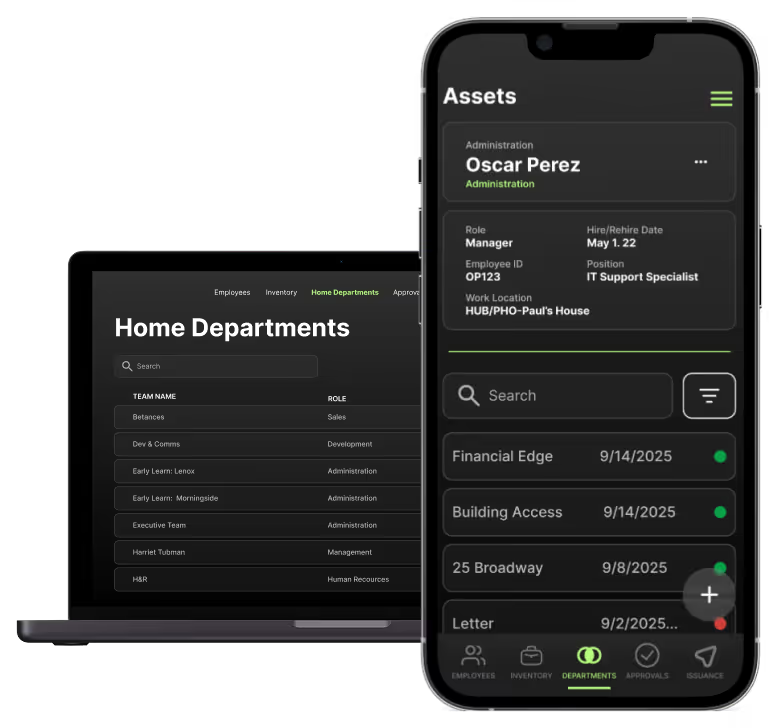
A Progressive Web App is a website that behaves like a native mobile app. It installs on your home screen, works offline, sends push notifications, and runs full-screen without browser chrome, all from a single web codebase that works across every device.
Understanding what a PWA actually is and where it breaks down is the decision that saves thousands of dollars and months of build time for the right product at the right stage.
Key Takeaways
- A progressive web app combines website and native app behavior: a PWA is installable, offline-capable, and full-screen without requiring an app store submission or native development team.
- One PWA codebase covers iOS, Android, and desktop: cross-platform reach is the clearest cost advantage of progressive web apps over building separate native apps for each platform.
- iOS PWA support is genuinely limited: Apple restricts progressive web app capabilities on Safari affecting push notifications, install behavior, and offline functionality compared to Android.
- A progressive web app is a strategic product choice: PWA suits validation, content-heavy products, and SaaS dashboards far better than performance-heavy or hardware-dependent applications.
- Starting with a PWA and moving to native later is a legitimate path: many successful products validate on a progressive web app and invest in native development once scale and use case justify the cost.

What Is a Progressive Web App in Simple Terms?
A progressive web app is a website that installs and behaves like a mobile app without going through an app store. A PWA runs in the browser but delivers an experience users cannot distinguish from a downloaded application for most standard use cases.
- Installable on any device: users add a progressive web app to their home screen directly from the browser without visiting the App Store or Google Play, removing the installation friction that reduces native app conversion rates.
- Works across mobile and desktop: one PWA codebase delivers a consistent experience on iOS, Android, Windows, and macOS without platform-specific development for each device type.
- No app store required for a PWA: distribution happens through a URL rather than an app store listing, removing submission processes, review delays, and the 30 percent revenue cut that native app stores charge.
- Runs in the browser but looks like an app: full-screen display, custom icons, splash screens, and native-matching navigation patterns make a progressive web app feel installed rather than web-based.
No-code mobile app development covers where progressive web apps fit within the broader mobile development landscape alongside native and hybrid approaches.
Why Do PWA Exist? (What Problem PWA Solves)
Progressive web apps were created to solve the cost and complexity of building separate native apps for iOS and Android while delivering an experience closer to native than a standard mobile website provides.
- Removes the need for separate iOS and Android builds: one PWA codebase replaces two separate native development projects, reducing build cost, maintenance overhead, and team size required to ship across both platforms.
- Avoids app store friction for users: users who find a progressive web app through a link or search can install and use it immediately without leaving the browser to complete a separate app store download.
- PWA works on slow or unstable internet: service worker caching allows progressive web apps to load previously visited content even when network connectivity is poor or completely unavailable.
- Faster to launch than native apps: a progressive web app ships without app store review delays, reducing time to first user from weeks to days compared to the iOS and Android submission and approval process.
What Actually Makes a PWA Feel Like a Native App?
Several specific technical capabilities working together separate a real progressive web app from a standard mobile website with a responsive layout.
- PWA home screen installation: the browser prompts users to add the progressive web app to their home screen, creating an icon and launch experience visually identical to a downloaded native app.
- Offline functionality: service workers cache resources and data so the progressive web app loads and functions without network connectivity, which is the capability users most associate with native apps over websites.
- Push notifications in a PWA: progressive web apps send re-engagement notifications even when the browser is closed, matching one of the highest-value engagement mechanics that native apps use consistently.
- Full-screen PWA experience: the browser address bar disappears when a progressive web app launches from the home screen, producing a distraction-free interface that feels native rather than web-based.
- Fast PWA loading through caching: pre-cached assets load instantly on repeat visits regardless of network speed, eliminating the perceived latency gap between web and native app performance.
How Does a PWA Work Behind the Scenes?
Three core technical components working together transform a standard website into a progressive web app with genuine app-like behavior.
Service Worker: The Core Engine of Every PWA
The service worker is a JavaScript file that runs in the background independently of the web page. It is the component responsible for everything that separates a progressive web app from a standard website.
- Handles PWA caching and offline support: intercepts network requests and serves cached responses when connectivity is unavailable, which is the mechanism behind all progressive web app offline functionality.
- Manages background sync in a PWA: queues actions taken offline and executes them automatically when connectivity restores, ensuring no user action is lost due to network interruption.
- Enables PWA push notifications: receives and displays notifications even when the progressive web app is not open, requiring the service worker to run independently of any active browsing session.
Without a properly implemented service worker, none of the capabilities that define a real progressive web app exist regardless of how the rest of the application is built.
Web App Manifest: The Progressive Web App Identity
The web app manifest is a JSON file that tells the browser how the progressive web app should appear and behave when installed on a device.
- Controls PWA icon and splash screen: defines the icons displayed on the home screen and the splash screen shown while the progressive web app loads, determining how it appears alongside native apps.
- Sets PWA display mode and orientation: configures whether the progressive web app launches full-screen or standalone and whether it locks to portrait or landscape orientation on mobile devices.
- Defines PWA install behavior: the manifest triggers the browser's install prompt; without it the browser cannot offer users the option to add the progressive web app to their home screen.
The manifest alone does not make a progressive web app functional. It is one of three required components working together rather than a shortcut to app-like behavior on its own.
HTTPS: The Security Layer Every PWA Requires
Progressive web apps require HTTPS to function. This is not optional and cannot be worked around during production deployment for any PWA feature that matters.
- Enables PWA service worker registration: browsers only allow service workers on secure origins; HTTP sites cannot access the service worker API regardless of how the JavaScript is written.
- Ensures progressive web app data integrity: HTTPS prevents attacks from intercepting or modifying the PWA's cached resources and user data in transit between device and server.
- Required for all modern PWA browser APIs: push notifications, geolocation, and camera access all require HTTPS; a progressive web app without it cannot access the device features that differentiate it from a standard website.
What Can a Progressive Web App Do and Where Does PWA Fall Short?
Progressive web app capabilities have expanded significantly but a specific set of limitations remain relevant for product decisions in 2026.
- PWA can access notifications, location, and camera: the most commonly needed device features work reliably in modern progressive web apps on Android and desktop, covering the majority of standard business and consumer app use cases.
- Progressive web apps cannot fully access deep hardware: Bluetooth, NFC, advanced sensor data, and background processing capabilities that native apps use for specialized integration remain inaccessible or unreliable in PWAs across most platforms.
- PWA performance is strong for standard use cases: content apps, dashboards, SaaS tools, and ecommerce perform well as progressive web apps; graphically intensive applications show measurable performance gaps versus native.
- Browser support determines PWA feature availability: not every progressive web app feature works equally across Safari, Chrome, and Firefox; the browser your users run determines what your PWA can actually deliver.
PWA vs Website vs Native App
Progressive Web App vs Traditional Website
A traditional website requires network connectivity for every interaction and cannot be installed on a device. A PWA adds installation, offline functionality, and push notifications on top of the same web technology foundation.
- Website has no install or offline capability: every interaction requires a network request; there is no home screen presence, no cached content, and no background PWA functionality available between sessions.
- Progressive web app is installable and offline-capable: the service worker and manifest together create the install experience and offline behavior that make a PWA meaningfully different from a responsive website.
The practical difference is that a website is something you visit while a progressive web app is something you use, which drives higher engagement and return visit rates for the right product types.
Progressive Web App vs Native App
Native apps deliver the best possible performance, full hardware access, and the deepest device integration available. Progressive web apps deliver cross-platform reach and lower build cost without app store dependency.
- Native delivers peak performance and full hardware access: gaming, AR, Bluetooth peripherals, and advanced sensor integration require native architecture that progressive web app browser delivery cannot match reliably.
- PWA delivers speed, cost, and reach advantages: cross-platform coverage, no app store submission, and significantly lower development cost make progressive web apps the right choice for products where native capabilities are not required.
The decision is not about which is technically superior. It is about whether your product requirements justify the cost and complexity of native development over a progressive web app.
Progressive Web App vs Hybrid App
Hybrid apps wrap web content in a native shell and distribute through app stores. Progressive web apps deliver web content directly through the browser without a native shell or app store submission.
- Hybrid suits app store presence requirements: products needing App Store and Google Play discoverability benefit from hybrid app distribution that a progressive web app cannot replicate through URL-based distribution alone.
- PWA suits direct distribution without review delays: products wanting to bypass the app store entirely and distribute through any URL without review timelines or platform revenue cuts benefit from progressive web app architecture.
When Should You Choose a PWA?
A progressive web app is the right choice when speed to market, cross-platform reach, and cost efficiency matter more than peak performance and hardware depth.
- Fast PWA MVP launch without heavy investment:building a no-code MVP on a progressive web app foundation gets a working product in front of real users in weeks rather than the months that separate native builds require.
- Content-heavy or SaaS dashboard products: news apps, project management tools, ecommerce platforms, and SaaS interfaces perform excellently as progressive web apps where content delivery is the core value rather than hardware interaction.
- Cross-platform PWA reach without separate builds: one progressive web app codebase reaches iOS, Android, and desktop users simultaneously, fundamentally changing the economics of early-stage product development.
- Idea validation before native investment: validating that users want the product and will return consistently is the most valuable thing progressive web app build speed enables before committing to native development cost.
When Should You NOT Choose a PWA?
A progressive web app is the wrong choice when your product's core value depends on capabilities that browser-based delivery cannot reliably provide.
- High-performance apps like gaming and AR/VR: frame-rate requirements and real-time rendering demands exceed what progressive web app architecture delivers reliably across device types at any implementation quality level.
- Deep hardware integration requirements: Bluetooth peripherals, NFC payments, advanced sensor access, and background processing that native apps use remain unreliable in progressive web app environments across most platforms.
- Full offline-first enterprise PWA applications: enterprise-grade offline functionality with complex data synchronization and conflict resolution at scale requires native architecture that PWA service workers cannot replicate.
- App store distribution and discoverability strategy: products whose growth depends on App Store and Google Play category browsing need native or hybrid apps; progressive web app URL distribution does not reach users who search app stores for new products.
What Most People Misunderstand About PWA
Several widespread misconceptions lead teams to either dismiss progressive web apps prematurely or adopt PWA for use cases it cannot support.
- A PWA is not just a responsive website: responsive design adapts layout to screen size; a progressive web app adds offline capability, installation, push notifications, and service worker caching that responsive websites have no access to.
- Adding a manifest alone does not create a real PWA: the manifest is one of three required progressive web app components; without a properly implemented service worker the installation and offline capabilities that define PWA do not exist.
- Progressive web app offline support depends on implementation: having a service worker registered does not guarantee offline functionality; caching strategy and fallback behavior require deliberate implementation that many PWA builds skip entirely.
- Not all browsers support all PWA features equally: Chrome on Android delivers the fullest progressive web app experience; Safari on iOS restricts push notifications and install prompts in ways that create meaningfully different experiences for iPhone users.
Real PWA Limitations You Should Know Before Deciding
These PWA limitations are consistently underestimated in adoption conversations and worth understanding explicitly before committing to the approach.
- iOS progressive web app restrictions are significant: Apple limits PWA capabilities on Safari including push notification delivery, background sync reliability, and the install prompt behavior that drives home screen adoption on Android.
- Browser dependency creates inconsistent PWA experiences: the feature set your progressive web app can access is determined by the browser your users run rather than what you built, which native apps are never subject to.
- Limited native API access affects specific PWA use cases: biometric authentication, advanced camera controls, contactless payment hardware, and Bluetooth peripherals work inconsistently or not at all in progressive web app environments across different devices.
- PWA architecture quality determines whether benefits materialize: a poorly implemented progressive web app delivers none of the offline, performance, or engagement advantages; the benefits require deliberate implementation discipline to appear in production.
The capabilities and limitations of no-code covers similar trade-off analysis that applies directly to progressive web app architecture decisions for teams evaluating mobile approaches.
Should You Build a Progressive Web App or a Native App First?
Progressive web app first is the right default for most early-stage products. Native first is the right choice for products where the core value proposition cannot be delivered any other way.
- PWA is ideal for validation and early traction: speed and cost advantages allow teams to test product-market fit before committing the budget and timeline that native development requires over a progressive web app build.
- Native apps are better for scaling performance-heavy products: once a product has proven its market and identified that native performance is a genuine user requirement, native investment is clearly justified over continuing with a PWA.
- Many teams start with a PWA and move to native: the transition is straightforward for products with clean progressive web app architecture because business logic, workflows, and validated features transfer completely to the native build.
- Decision depends on use case, not trend: a productivity SaaS tool and a mobile gaming application have fundamentally different requirements; the right mobile strategy follows from what the product needs to deliver, not from PWA versus native popularity cycles.
Traditional development vs no-code covers the broader decision framework that applies to the progressive web app versus native choice for teams evaluating build approaches at different product stages.
Conclusion
A progressive web app is not just a technology choice. It is a strategic product decision that affects launch speed, distribution reach, build cost, and the experience ceiling your product can reach on mobile.
A PWA is the right choice for the right product at the right stage. The real question is never what a progressive web app is. It is whether PWA capabilities are sufficient for what your specific product needs to deliver to the users it is trying to serve.
Want to Build a PWA or Mobile App That Fits Your Product Stage?
At LOW/CODE Agency, we design and build progressive web apps, native mobile apps, and no-code mobile products for founders and growing businesses who need the right approach for their specific use case.
- Progressive web app development: we build production-grade PWAs with proper service worker architecture, offline functionality, and push notification implementation that actually delivers the benefits the approach promises.
- FlutterFlow native apps: our FlutterFlow development service builds native iOS and Android apps for products that have outgrown progressive web app capabilities and need production mobile performance.
- No-code mobile development: our mobile app development service covers platform selection, data architecture, and full production builds for mobile products where speed and cost are the priority.
- Architecture before build: we evaluate your use case and growth stage before recommending PWA, native, or hybrid, preventing the platform mistakes that create expensive rebuilds when the wrong progressive web app approach hits its ceiling.
We have shipped 350+ products across 20+ industries. Clients include Medtronic, American Express, Coca-Cola, and Zapier.
Related Articles
- Build a B2B Marketplace App with Bubble
- Build an API-as-a-Service App with Bubble
- Web Portal Development (Types, Costs, and When to Build One)
- Claude Code Source Code Leaked? Here’s what it contains
- LOW/CODE Agency Joins Anthropic's Claude Partner Network
- How to Deploy AI Across Your Company Without Paying Per Seat
Want to learn more? Explore our services.
Last updated on
September 24, 2026
.

Jesus is a visionary entrepreneur and tech expert. After nearly a decade working in web development, he founded LOW/CODE Agency to help businesses optimize their operations through custom software solutions.


FAQs
Is a PWA better than a native app?
Can a PWA work offline completely?
Do PWAs work on iPhone?
Can you publish a PWA on the App Store?
Is PWA good for startups?
What are examples of PWAs?

Why customers trust us for no-code development


