

Can You Build Mobile Apps With Replit?
10 min
read
Can Replit build native mobile apps? Learn what's possible, what's not, and the best alternatives for mobile development when using Replit as your platform.


Replit supports 50+ programming languages, but building a native mobile app and publishing it to the App Store is not one of its capabilities. Replit mobile app development has clear limits.
If you need a mobile app, you need to understand exactly what Replit mobile app development can and cannot do. This guide covers the real use cases, the workarounds, and the alternatives that actually get apps into users' hands.
Key Takeaways
- No native mobile builds because Replit mobile app development cannot compile, test, or publish iOS or Android apps.
- PWAs work well as the closest Replit mobile app development option for apps that do not need App Store presence.
- Backend APIs excel on Replit, making it a strong choice for the server side of your mobile app architecture.
- FlutterFlow and Expo handle what Replit mobile app development cannot, including native builds and App Store submission.
- Hybrid approaches combine Replit for backend and prototyping with specialized tools for the native mobile frontend.
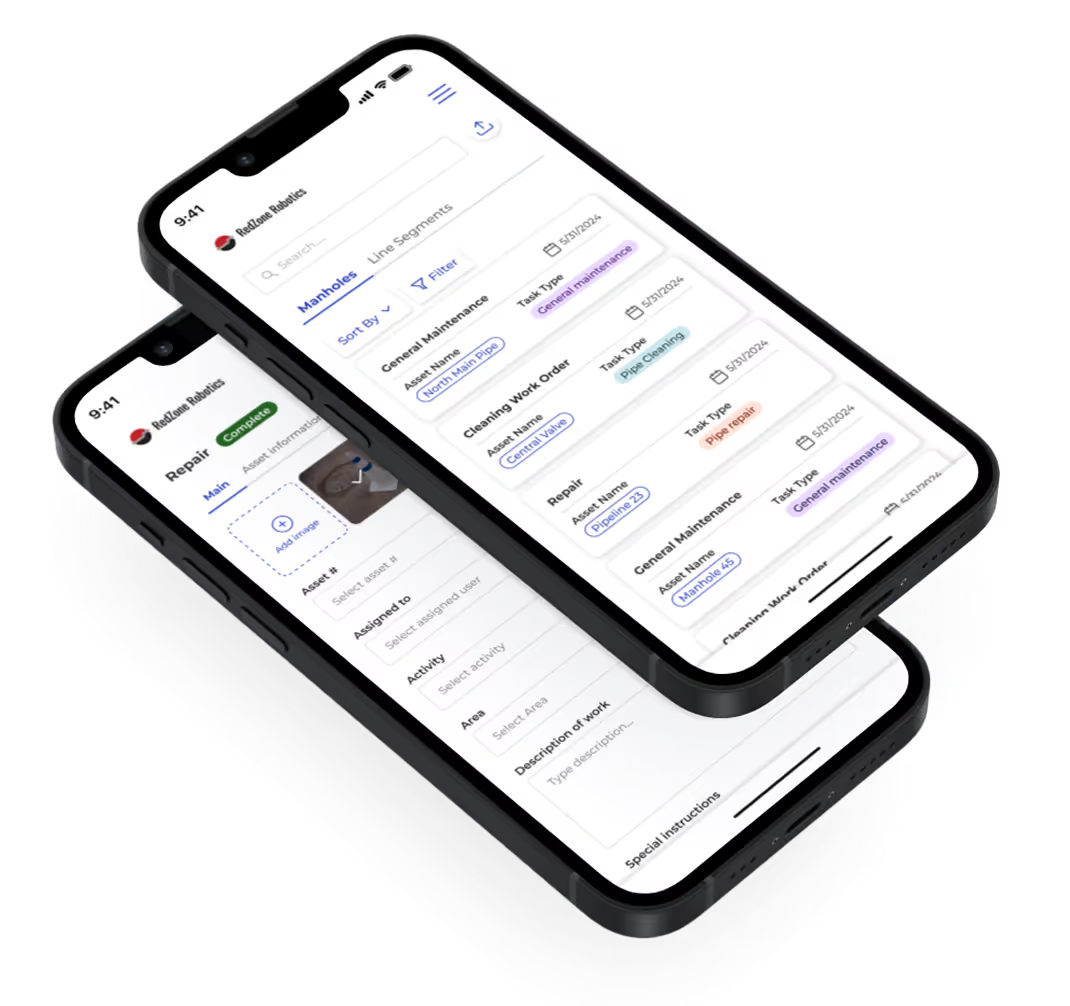

Can Replit Actually Build Native Mobile Apps?
Replit mobile app development cannot build, compile, test, or publish native iOS or Android applications to the App Store or Google Play.
You can write React Native or Flutter code on Replit. But you cannot turn that code into an installable app that users download from an app store.
- No iOS builds because Replit mobile app development lacks Xcode, Apple Developer certificates, and macOS build tools.
- No Android builds because compiling APKs requires the Android SDK, Gradle, and signing keys that Replit does not support.
- No device simulators for testing how your app looks and performs on different phone models and screen sizes.
- No App Store submission because the publishing process requires platform-specific toolchains beyond what cloud IDEs provide.
- Code-only capability means you can write mobile framework code on Replit but cannot do anything with it natively.
Replit mobile app development stops at writing code. Everything else in the native mobile pipeline requires different tools entirely.
What Mobile-Related Projects Can You Build With Replit?
Replit mobile app development supports Progressive Web Apps, mobile-responsive websites, and backend APIs that native mobile apps consume.
These are not workarounds. They are legitimate project types where Replit mobile app development delivers real value for mobile use cases.
- Progressive Web Apps built with HTML, CSS, and JavaScript deploy on Replit and install on phones through the browser.
- Mobile-responsive web apps look and feel like native apps when accessed through a phone's browser on any platform.
- Backend APIs power native mobile apps by handling data, authentication, and business logic on Replit servers.
- Prototype web versions validate mobile app concepts quickly before investing in native development tools and timelines.
- WebSocket servers built on Replit provide real-time features like chat, notifications, and live updates for mobile clients.
Replit mobile app development works for the web layer and the server layer. The native app layer needs specialized platforms.
How Do You Build a Progressive Web App Using Replit?
Create a web app with HTML, CSS, and JavaScript, add a manifest.json file, implement a service worker, and deploy through Replit hosting.
PWAs are the closest thing to Replit mobile app development that actually reaches users' home screens without going through an app store.
- Standard web technologies like HTML, CSS, and JavaScript are all you need to build a PWA on Replit.
- Manifest.json defines your app name, icon, colors, and display mode so the phone treats it like an installed app.
- Service worker handles offline caching and background sync so your PWA works without constant internet connectivity.
- Replit deployment hosts your PWA and provides the HTTPS URL required for service worker registration and installation.
- Add to Home Screen lets users install your PWA directly from their browser without visiting any app store.
Replit mobile app development through PWAs works for content apps, tools, and internal business applications. It skips the app store entirely.
When Are PWAs Good Enough Instead of Native Mobile Apps?
PWAs work for content-driven apps, internal tools, and utilities that do not need deep device hardware access or App Store discovery.
Many projects that start as "we need a mobile app" actually need "users should access this from their phones." Those are different requirements.
- Internal business tools perform well as PWAs because employees install them directly without IT managing app store distribution.
- Content-driven apps like news readers, recipe collections, and reference guides work smoothly as PWAs on all platforms.
- Simple utilities including calculators, converters, and trackers run effectively as PWAs without native device features.
- Cross-platform needs favor PWAs because one codebase works on iOS, Android, and desktop browsers simultaneously.
- Instant updates deploy immediately without waiting for App Store review cycles that delay native app releases.
PWAs built through Replit mobile app development skip the app store process entirely. For many projects, that is an advantage, not a limitation.
How Can Replit Handle the Backend for a Native Mobile App?
Replit excels at hosting APIs, WebSocket servers, and business logic that native mobile apps built with other tools consume over the network.
Replit mobile app development shines on the server side. Your mobile frontend lives elsewhere while Replit handles everything behind the scenes.
- REST API endpoints built with Node.js or Python on Replit serve data to your native iOS or Android application.
- Authentication services handle user registration, login, and token management for your mobile app's security layer.
- Database management through PostgreSQL or external services like Supabase stores and retrieves your app's data.
- Business logic processing runs complex calculations, validations, and workflows on Replit servers instead of on the device.
- Third-party integrations connect payment processors, email services, and external APIs to your mobile app through Replit.
Replit mobile app development as a backend platform is a legitimate production strategy. Many mobile apps separate their frontend and backend this way.
What Tools Should You Use Instead of Replit for Native Mobile Apps?
FlutterFlow, Expo with React Native, Xcode, and Android Studio handle what Replit mobile app development cannot, including native builds and App Store publishing.
Each tool serves a different skill level and project type. Choose based on your team's experience and your app's requirements.
- FlutterFlow provides visual mobile app development with drag-and-drop building and direct App Store publishing capability.
- Expo wraps React Native with cloud build services, letting JavaScript developers create native apps without local SDKs.
- Xcode is required for iOS-specific features and gives complete control over the Apple development and publishing process.
- Android Studio provides full Android development capability with emulators, debugging, and Google Play publishing tools.
- Capacitor converts existing web apps into native mobile apps, bridging the gap between Replit web projects and app stores.
Replit mobile app development handles code and backend. These tools handle everything from compilation to app store submission.
What Does the App Store Publishing Process Involve?
Publishing requires developer accounts, compliance with store guidelines, review submission, asset preparation, and ongoing maintenance that goes beyond writing code.
Many teams underestimate the publishing process. Replit mobile app development cannot help with any of these requirements.
- Apple Developer Program costs $99 per year and requires App Store Connect setup, privacy policies, and review compliance.
- Google Play Developer costs $25 one-time and requires Play Console setup, content ratings, and store listing preparation.
- Review processes can take days on Apple and hours on Google, with potential rejections requiring code changes and resubmission.
- Store assets including screenshots, descriptions, keywords, and promotional graphics need creation for each platform separately.
- Ongoing maintenance includes updating for new OS versions, responding to user reviews, and submitting compliance updates.
App Store publishing is a process, not a one-time task. It requires ongoing attention that Replit mobile app development does not address.
How Do You Combine Replit With Native Mobile Development Tools?
Use Replit for backend APIs and web prototyping, then build the native frontend with , Expo, or native code using specialized tools.
A hybrid approach gives you the best of both worlds. Replit mobile app development handles the server while native tools handle the device.
- Backend on Replit runs your APIs, database connections, and business logic in a cloud environment you already know.
- Prototype on Replit by building a web version first to validate the concept before committing to native development costs.
- Native frontend elsewhere using FlutterFlow for visual building, Expo for React Native, or Xcode and Android Studio for full native.
- Shared API layer means your Replit backend serves both the web prototype and the native mobile app simultaneously.
- Phased approach starts with a Replit PWA to validate demand, then invests in native deployment once users confirm the need.
- Professional backend builds through a Replit development service give mobile teams a reliable, scalable API layer on Replit without managing cloud infrastructure themselves.
Replit mobile app development is one piece of a larger strategy. Combine it with the right native tools for a complete mobile product.
Can You Code on Replit From Your Phone?
Replit offers iOS and Android apps that let you edit code, run projects, and check on deployments from your mobile device.
This is different from Replit mobile app development. This is about using Replit itself on a phone for quick edits and monitoring.
- Quick fixes work well when you need to change a variable, fix a typo, or update a configuration value remotely.
- Project monitoring lets you check whether your deployed applications are running correctly from anywhere.
- Code review on a phone screen is functional for reading through small changes but uncomfortable for long sessions.
- Emergency response lets you push a critical fix from your phone when you are away from your computer.
- Extended coding is impractical on a phone screen with a touch keyboard regardless of how good the Replit mobile app is.
The Replit mobile app is a companion tool, not a primary development environment. Use it for quick access, not sustained work.
Conclusion
Replit mobile app development supports PWAs, mobile backends, and web prototypes but cannot build or publish native iOS or Android applications. Use Replit for what it does well and choose FlutterFlow, Expo, or native tools for everything that requires app store presence. A hybrid approach combining Replit backend services with native mobile frontends covers most project requirements effectively.
Ready to Build a Real Mobile App?
Replit handles the backend and prototyping layers. But building a native mobile app that users download, trust, and use daily requires deep mobile development expertise and App Store publishing experience.
At LOW/CODE Agency, we help SMBs compete with AI-powered software built for them — custom web and mobile apps, RAG systems, chatbots, and intelligent agents delivered by a senior development team. We build native mobile apps from concept through App Store launch and beyond, handling the entire process so you focus on your business.
- Native mobile development using FlutterFlow for iOS and Android apps that perform like fully custom-built software.
- App Store publishing handling Apple and Google review processes, store listings, and compliance requirements end to end.
- Backend architecture designed to power mobile apps with reliable APIs, real-time features, and scalable data infrastructure.
- AI integration embedding intelligent features, automation, and personalization directly into your mobile app experience.
- Strategic product planning ensuring your mobile app solves a real user problem before committing development resources.
- Post-launch support including updates, performance monitoring, and feature iteration based on real user behavior data.
We have completed 450+ projects for clients including Medtronic, American Express, Coca-Cola, Zapier, and Sotheby's.
Related Articles
Last updated on
September 3, 2026
.

Jesus is a visionary entrepreneur and tech expert. After nearly a decade working in web development, he founded LOW/CODE Agency to help businesses optimize their operations through custom software solutions.


FAQs
Can you build a native mobile app on Replit?
Can you build a React Native app on Replit?
What is the closest you can get to a mobile app on Replit?
Can you use Flutter on Replit?
What mobile app features can a Replit web app support?
What should I use instead of Replit for mobile app development?
Related Articles
Replit
Replit vs v0: AI Development Platform Comparison
Replit vs v0 — compare AI-generated UI quality, full-stack support, and deployment. Learn how to combine both for stunning frontends and complete apps.
Replit
Replit and ChatGPT Integration: Build AI Apps Easily
Learn how to integrate ChatGPT into a Replit app using the OpenAI API. Build chatbots, AI tools, and smart apps — and deploy them live with one click.
Replit
Replit vs Kaggle: Which Platform Should You Use?
Replit vs Kaggle — app development vs data science platform. Compare GPU access, datasets, deployment, and use cases to pick the right tool for your work.
Replit
Replit vs Vercel: Deployment Platforms
Replit vs Vercel — compare CDN performance, Next.js support, deployment simplicity, and pricing to decide which hosting platform your app actually needs.


Why customers trust us for no-code development


