

How to Build a Property Listing Platform App with Bubble
12 min
read
Launch a property listing platform with Bubble no code required. Add listings, filter results, and connect buyers and sellers with this no-code guide.


Building a property listing platform used to require a full development team, six months of work, and a significant engineering budget. Bubble changes that equation. A working listing platform with search, maps, inquiries, and agent dashboards is now a realistic solo or small-team project.
The opportunity is in niche markets. Student housing portals, rural property directories, commercial-only platforms, and regional alternatives to national portals all have unmet demand. Bubble lets you build exactly that.
Key Takeaways
- Bubble handles listing platforms: Bubble's database, file storage, and workflow engine cover the full listing lifecycle from submission to expiry.
- Search is the central feature: Map-based and filter-based property search determines whether buyers return to the platform.
- Data model must handle media: Property records need image galleries, geographic coordinates, and document attachments from day one.
- Roles drive the architecture: Buyers, agents or sellers, and admins each need distinct views and permission sets.
- Scaling requires planning: High listing volumes benefit from Algolia search and CDN-hosted images rather than Bubble's native search alone.
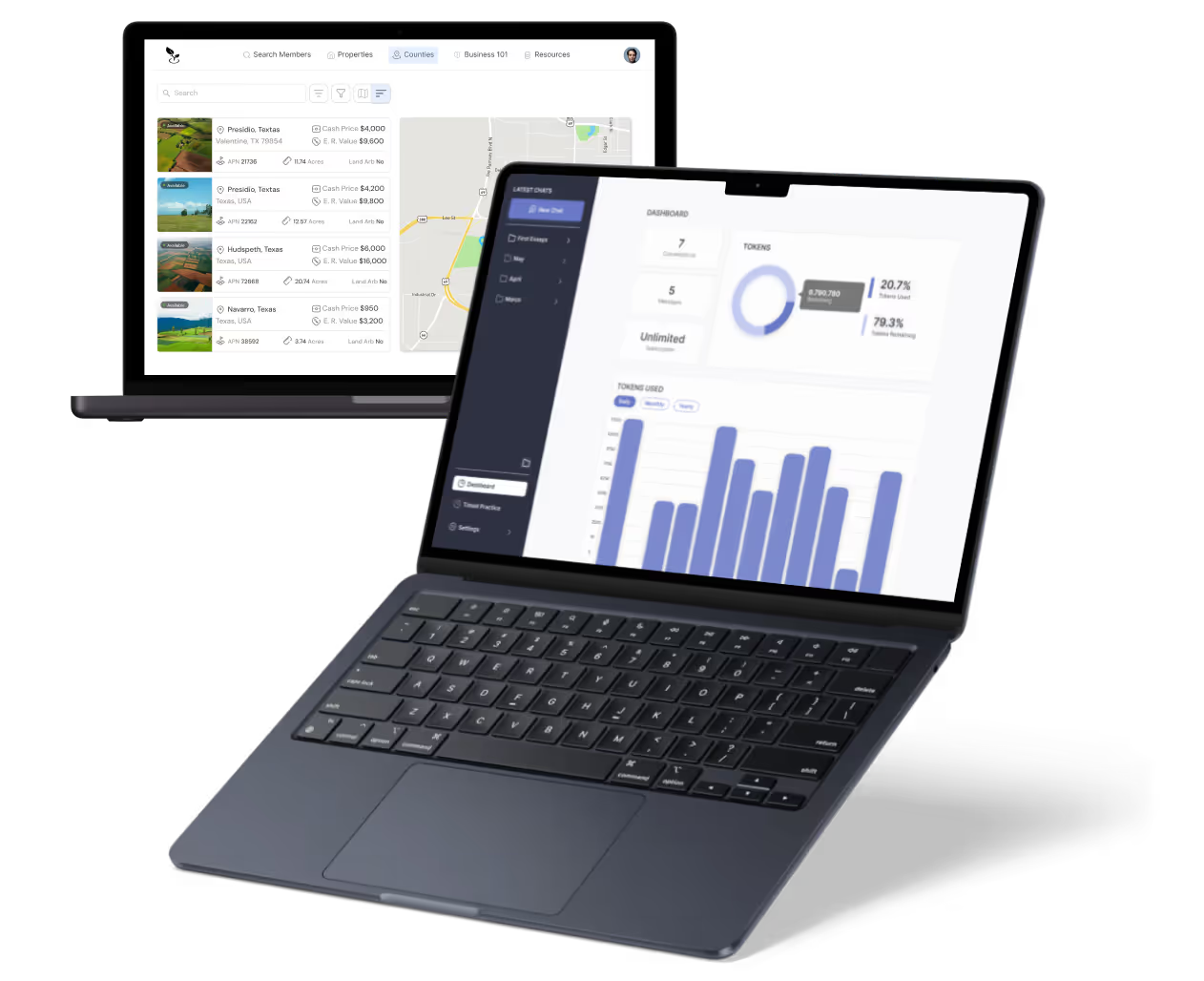

What Is a Property Listing Platform — and Why Build It with Bubble?
A property listing platform is a marketplace where properties are listed, searched, and inquired upon. It connects buyers or renters with sellers or agents through structured listings and a lead capture layer.
The interesting builds are not competing with Zillow or Rightmove. They are filling niches: commercial-only portals, rural land marketplaces, student housing directories, or regional platforms with local search advantages.
Before committing to Bubble for this type of project, it is worth examining Bubble's pros and cons, especially around search performance, image handling, and the complexity of building a two-sided marketplace.
- Marketplace architecture: Bubble natively supports multi-role apps where agents, buyers, and admins operate in the same database with distinct permissions.
- Map integration: Google Maps and Mapbox both connect via Bubble plugins, enabling the map-based search experience users expect from property platforms.
- Custom listing fields: You define exactly which fields appear on a listing. Commercial zoning data, land acreage, or student-specific amenities are all configurable without template constraints.
- Lead routing logic: Inquiry workflows can route buyer messages to the right agent, send confirmation emails, and log contact details automatically.
White-label real estate platforms restrict your fields, your branding, and your business model. Bubble gives you full ownership of the product.
What Features Should a Property Listing Platform Include?
The MVP must cover two sides of the marketplace: the tools agents use to post and manage listings, and the search experience buyers use to find and inquire. Build both sides simultaneously or neither works.
Prioritize search and inquiry above everything else. Those are the two moments that define whether the platform is useful.
- Listing creation form: Agent or seller submits a detailed form with property info, price, location, type, and image uploads stored in Bubble's file system.
- Map-based search: Properties display as pins on a Google Maps or Mapbox element, filterable by price range, property type, and bedroom count.
- Filter-based search: A sidebar or header filter panel lets buyers narrow by price, type, size, location radius, and availability status.
- Saved searches and favorites: Buyers save search criteria for email alerts and bookmark specific listings to a watchlist for later comparison.
- Inquiry and lead capture: Each listing page has a contact form that creates an Inquiry record and notifies the agent by email with the buyer's details.
- Agent dashboard: Agents manage their listings from a private dashboard showing status, inquiry count, and listing expiry dates.
- Admin approval panel: Admins review new listings before they go live, with the ability to request edits or reject submissions.
- Featured placement: Agents or admins can mark a listing as featured, which surfaces it at the top of search results for a defined period.
Buyers need search and inquiry from day one. Agents need the submission form and dashboard. Admins need the approval queue. Everything else is enhancement.
How Do You Structure the Database for a Property Listing Platform in Bubble?
The data model for a property listing platform must support both the search experience (fast filtering by multiple fields) and the media layer (images, documents, virtual tour links). These two requirements shape every field decision.
Build the Property data type first. Every other data type in the system links back to it.
- Property: Fields include title, description, price (number), property type (option set), status (Pending/Active/Expired/Sold), bedrooms (number), bathrooms (number), square footage (number), address (text), latitude (number), longitude (number), images (list of images), agent (linked to User), and featured expiry date.
- Agent/Seller: Fields include full name, company name, phone, email, license number (text), bio, profile photo, and active listings count (number - updated by workflow).
- Inquiry: Links Property and a buyer User. Fields include message (text), inquiry date, status (New/Responded/Archived), and agent notified (yes/no boolean).
- Saved Search: Links to a User. Fields include filter snapshot (stored as text or JSON via API Connector), last alerted date, and alert frequency (option set: Daily/Weekly).
- Favorite: Links User and Property. Fields include saved date. Used to display a buyer's watchlist.
- Review/Rating: Links Agent and a reviewer User. Fields include star rating (number 1–5), comment (text), and review date. Displayed on agent profile pages.
Use option sets for property type and status. Bubble's filtering is faster and more reliable when comparing option sets than when comparing text strings.
How Do You Build the Core Workflows for a Property Listing Platform in Bubble?
Property listing platform workflows fall into two categories: agent-side (creating and managing listings) and buyer-side (searching, saving, and inquiring). Build the agent-side first so there is content to search against.
Each workflow below maps to a specific user action. Keep conditions tight so status-based bugs do not create phantom listings in search results.
- Listing submission workflow: Agent submits the creation form, triggering the creation of a Property record with status set to "Pending" and an admin notification email via SendGrid.
- Admin approval workflow: Admin clicks "Approve" in the admin panel, a workflow sets Property status to "Active" and sends a confirmation email to the agent with their live listing URL.
- Inquiry submission workflow: Buyer submits the contact form on a listing page. A workflow creates an Inquiry record, sets agent-notified to "No," sends a SendGrid email to the agent, then updates agent-notified to "Yes."
- Saved search alert: A scheduled API workflow runs daily, iterates through all Saved Search records, filters active Properties against each search's stored criteria, and emails matching results to the user if new listings exist.
- Multi-image upload workflow: An image uploader element allows up to 10 images. On submission, the workflow stores each image in Bubble's file system and appends it to the Property's image list field.
- Featured listing activation: An admin action or Stripe payment webhook triggers a workflow that sets a Property's featured flag to "Yes" and sets the featured expiry date to 30 days from today.
- Listing expiry workflow: A scheduled workflow runs daily, searches for Properties with status "Active" and expiry date before today, and updates their status to "Expired" - removing them from search results automatically.
Test the inquiry workflow end-to-end first. It is the primary value exchange in the platform and must work flawlessly at launch.
What Security and Data Requirements Apply to a Property Listing Platform?
A property listing platform stores buyer contact details, agent license information, and inquiry conversations. All of this is sensitive data that requires structured access control.
Getting securing data in Bubble right protects both sides of your marketplace and reduces legal exposure if a data breach occurs.
- Agent listing scope: Privacy rules restrict agents to viewing and editing only their own Property records. An agent cannot access another agent's inquiry data or listing analytics.
- Buyer contact protection: Inquiry records containing buyer phone numbers and email addresses are visible only to the relevant agent and admins. Not to other buyers or unauthenticated users.
- Public vs. authenticated access: Active property listings are publicly visible. Saved searches, favorites, and inquiry history require authentication. Set this via Bubble's privacy rules per data type.
- Image URL security: Bubble stores uploaded files at public URLs by default. For sensitive documents (owner agreements, tax records), use Bubble's "Make private" file option or store via external storage with signed URLs.
- GDPR compliance: If operating in the EU, implement a buyer data deletion workflow that removes or anonymizes Inquiry records and Saved Search data on request.
- Data API lockdown: Disable Bubble's Data API in settings to prevent unauthenticated data access. Only enable specific workflow API endpoints that your integrations require.
Run your privacy rules through Bubble's "Run as" test mode before launch. Test as an unauthenticated user, a buyer, and an agent to confirm each role sees exactly what it should.
What Plugins and Integrations Does a Property Listing Platform Need?
A property listing platform has more integration requirements than most Bubble apps because it needs mapping, fast search, image handling, and communication tools working in parallel.
Install integrations in order of priority: map first, search second, email third. Payments and chat come after the core experience works.
- Google Maps or Mapbox plugin: Displays property pins on a map element, supports geocoding (converting address to lat/lng on submission), and enables radius-based filtering.
- Algolia Search plugin: Replaces Bubble's native search for platforms with more than 2,000 listings. Algolia delivers fast, typo-tolerant search across title, location, and description fields.
- SendGrid plugin: Sends inquiry notifications to agents, listing approval confirmations, saved search alert emails, and welcome emails to new users.
- Stripe plugin: Handles featured listing payments and premium agent subscriptions. Webhook confirms payment before the featured flag is activated.
- Cloudinary via API Connector: Resizes and optimizes listing images on upload, serving responsive versions to buyers without degrading page load speed.
- Air Geolocation plugin: Detects a buyer's location and pre-fills the search radius around their current position for a faster search experience.
- Bubble native repeating groups: Powers the listing grid view, search results list, and agent dashboard without additional plugins.
- Intercom or Crisp plugin: Adds buyer-to-agent live chat on listing pages for platforms where direct messaging is a key differentiator.
The Google Maps plugin and SendGrid cover the minimum viable integration set. Add Algolia when listing count grows beyond what Bubble's native search handles comfortably.
How Long Does It Take and What Does It Cost to Build a Property Listing Platform with Bubble?
Build time for a listing platform is longer than a simple management tool because you are building two experiences simultaneously: the agent side and the buyer side. Map integration and Algolia setup add meaningful complexity.
Understanding Bubble's scalability matters here. A listing platform with active traffic and growing inventory needs a plan that supports concurrent users and workflow execution volume.
- Bubble plan: Growth plan ($119/month) for a small-to-medium platform. Team plan ($349/month) once listing volume or concurrent user load increases.
- Google Maps API cost: Billed per geocoding call and map load. Budget $50–$200/month depending on traffic volume.
- Algolia cost: Free up to 10,000 records and searches/month. Paid plans from $10/month for growing platforms.
- Cloudinary cost: Free tier handles up to 25GB storage and 25GB bandwidth monthly. Sufficient for early-stage platforms.
- Stripe fees: 2.9% + $0.30 per transaction for featured listing payments.
- Ongoing maintenance: 8–15 hours/month for a live marketplace with active listings, user growth, and feature iterations.
A freelancer can build the MVP effectively. Agency involvement makes sense when the map integration, Algolia setup, image optimization pipeline, and admin approval system all need to work together correctly from launch.
Conclusion
Bubble handles the two-sided marketplace architecture, map integration, and workflow automation that niche property listing platforms require. The key is scoping the right property types and buyer filters before building.
Start by defining your property types and the filters buyers will use most. Those two decisions shape the entire data model and search architecture.
Need Help Building Your Property Listing Platform in Bubble?
A two-sided property marketplace involves more moving parts than a standard app. Agent tools, buyer search, map integration, and media handling all need to work in sync from day one.
Algolia misconfiguration produces broken search results that drive buyers away immediately. Map geocoding errors silently place listings in the wrong location. These failures are expensive to fix after launch.
- Data architecture: We design your data types, option sets, and privacy rules before writing a single element on the canvas.
- Workflow engineering: We build backend workflows, scheduled jobs, and API integrations with proper logic and error handling.
- Plugin configuration: We select and configure the right Bubble plugins for your feature set without unnecessary bloat.
- Role-based access: We implement privacy rules at the database level, not just conditional UI visibility.
- Integration setup: We connect your Bubble app to Stripe, SendGrid, Twilio, and other services correctly from day one.
- Pre-launch testing: We test against real data before deployment so every workflow performs correctly under live conditions.
- Post-launch support: We stay involved after go-live to optimize as real usage data shapes the app.
We have built 350+ products for clients including Coca-Cola, American Express, Sotheby's, and Medtronic. We know exactly where Bubble builds fail and we address those problems before they surface.
Related Articles
- How to Build a Property Portfolio Management App with Bubble
- How to Build a Property Management App with Bubble
- How to Build a Property Maintenance App with Bubble
- How to Build a Property Inspection App with Bubble
- How to Build a Nonprofit Program Management App with Bubble
- How to Build a Profit and Loss Tracker App with Bubble
Last updated on
September 24, 2026
.

Jesus is a visionary entrepreneur and tech expert. After nearly a decade working in web development, he founded LOW/CODE Agency to help businesses optimize their operations through custom software solutions.


FAQs
Can you build a property listing platform app without coding using Bubble?
How do you build property search and filtering in a Bubble property listing platform?
How do you display property photo galleries in a Bubble property listing platform?
How do you let agents create and manage listings in a Bubble property listing platform?
How do you handle buyer inquiries on listings in a Bubble property listing platform?
How do you implement a featured listing system in a Bubble property listing platform?
Related Articles

Bubble
How to Build a Purchase Order Management App with Bubble
Launch a purchase order management app with Bubble no code required. Create, approve, and track POs efficiently with this no-code step-by-step guide.

Bubble
How to Build a Training Management App With Bubble
Build a training management app with Bubble. Schedule sessions, track completion, and manage certifications — a custom L&D tool, no code needed.

Bubble
Bubble Pros and Cons Explained (When to Use It and Avoid)
Explore Bubble’s pros and cons, including when it makes sense to use it, when to avoid it, and how it fits MVPs, startups, and scaling apps.

Bubble
How to Build a Payment Gateway Integration App with Bubble
Integrate payment gateways into your Bubble app without coding. Accept payments securely, build fast, and go live with this step-by-step no-code guide.

.avif)
Why customers trust us for no-code development


