

How to Build a Marketing Agency Management App with Bubble
14 min
read
Run your agency smarter with a Bubble management app no coding needed. Track clients, campaigns, and results in one no-code platform. Build fast.


Marketing agencies juggle clients, campaigns, deliverables, and retainers across project management, reporting, and billing tools that do not talk to each other. Data gets duplicated and reporting takes hours every week.
Bubble lets you build a unified agency management platform with campaign tracking, client reporting dashboards, retainer billing, and a client portal. It is a system owned entirely by your agency with no per-seat licensing.
Key Takeaways
- Client and Campaign are the two foundation data types: Every workflow, deliverable management, reporting, and billing, links back to these two records.
- Retainer billing logic is distinct from project-based invoicing: Retainer cycles require a scheduled backend workflow; project invoices are generated on completion. Build them as separate workflows.
- Campaign performance data can be pulled via API Connector from ad platforms: Google Ads and Meta Ads APIs feed campaign metrics directly into Bubble without manual reporting.
- Client portal gives clients self-service access to reports and deliverable status: Agencies that offer a client portal reduce status-update calls and improve client retention.
- Privacy rules must isolate each client's campaign and reporting data from other clients: A client user should never be able to search or view another client's campaigns, budgets, or performance data.

What Is a Marketing Agency Management App — and Why Build It with Bubble?
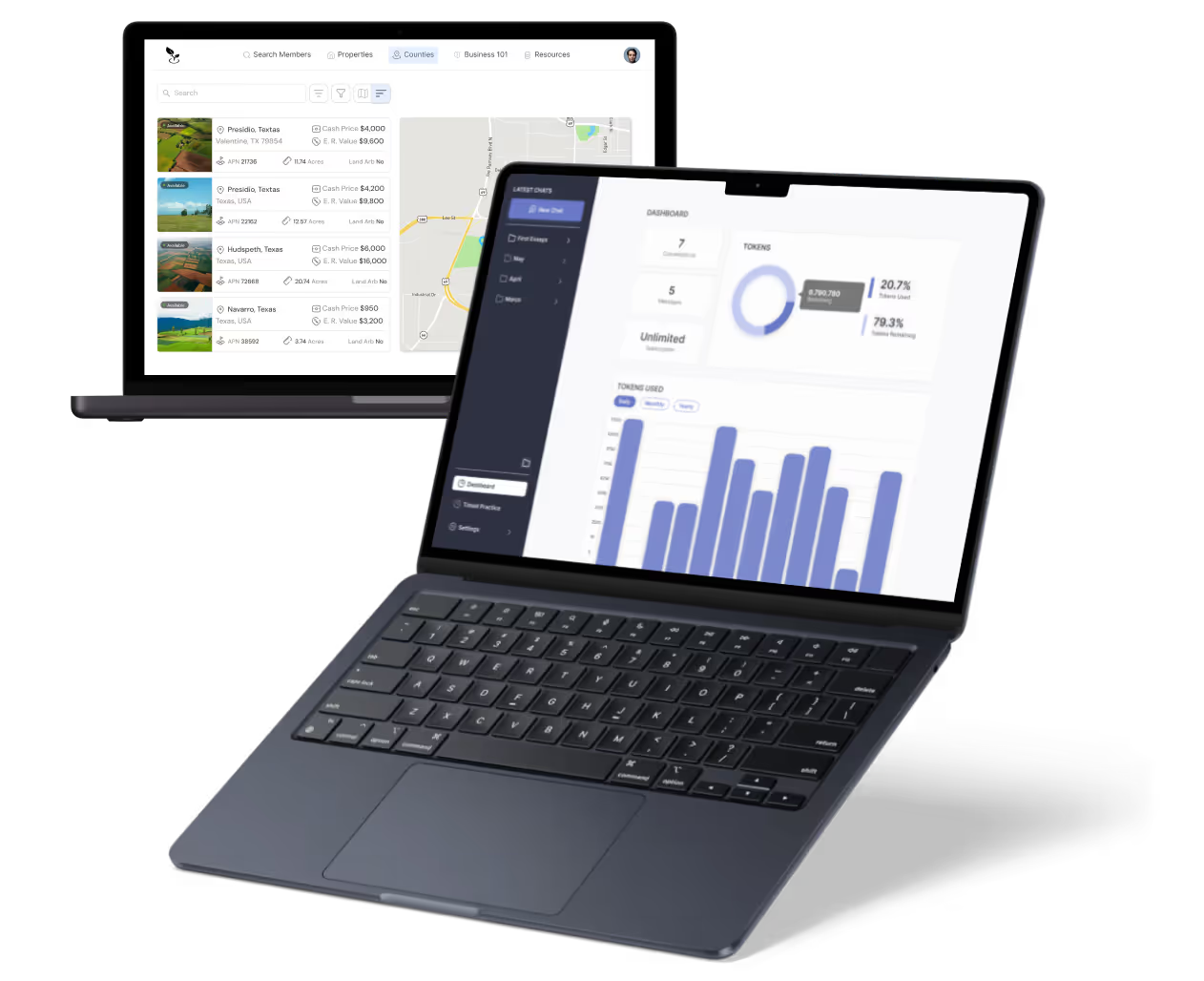
A marketing agency management app is a unified platform that manages client relationships, campaign delivery, team assignments, billing, and reporting. It replaces the fragmented stack of project management, CRM, and reporting tools most agencies operate across.
Core user roles are the account manager, campaign manager, designer or content creator, creative director, agency admin, and client. Each needs a different scope of project access and reporting visibility.
- Unified campaign and billing data: Most agencies track campaigns in Asana or Monday, billing in QuickBooks, and performance in Google Data Studio. A Bubble app connects these into one system with relational data.
- Custom reporting logic: Agency reporting requirements vary by client. Some need weekly performance summaries, others need monthly board-level reports. A Bubble app generates the format each client needs without manual compilation.
- No per-seat licensing: Platforms like Teamwork, Function Point, or WorkflowMax charge per user; a Bubble agency app has a fixed monthly cost regardless of team size.
- Retainer management built in: Monthly retainer billing, scope tracking, and overage alerts are native features in a Bubble build. Not add-ons or workarounds in a generic tool.
- Client portal without a third-party product: A Bubble app exposes a client-facing view with campaign dashboards, pending approvals, and invoice history without paying for a separate portal platform.
The range of apps you can build with Bubble includes multi-client agency management platforms with real-time performance data, automated billing, and role-based access. This is a well-proven Bubble use case.
What Features Should a Marketing Agency Management App Include?
A complete marketing agency management feature set covers client management, campaign delivery, team operations, billing, and client reporting. Mapping the full feature set before building prevents the common mistake of discovering that the Campaign data type cannot support retainer billing after it is already built.
Each feature maps to specific Bubble data types and workflows. None require custom backend code.
- Client and campaign management: Client profiles with assigned account manager, active campaigns list, retainer status, and billing contact; Campaign records with type option set (paid search, SEO, social, content, email), status, budget, and assigned team.
- Deliverable and task tracking: Deliverable records per campaign with type option set, due date, assigned team member, status option set (not started, in progress, in review, approved, published), and client approval status.
- Retainer and project billing: Retainer records with monthly fee, billing day, scope hours, and hours used to date; Invoice records generated per billing cycle or per project milestone with Stripe payment collection.
- Campaign performance reporting: CampaignReport records populated via API Connector from Google Ads, Meta Ads, or Google Analytics. Displayed as charts and KPI cards in the client portal.
- Client portal with self-service reports: A client-facing view showing active campaign dashboards, deliverables awaiting approval, monthly reports, and invoice history. Scoped to the authenticated client's data only.
- Time tracking and resource allocation: TimeEntry records per team member per campaign for agencies tracking utilization; Assignment records per campaign per team member with estimated hours and actual hours for capacity planning.
- Approval and feedback workflows: When a deliverable is submitted for client review, the client receives a notification and can approve or leave structured feedback. This reduces untracked email feedback loops.
The approval and feedback workflow is the feature that most directly reduces revision cycles. Build it early so the agency benefits from structured feedback from the first client using the portal.
How Do You Structure the Database for a Marketing Agency Management App in Bubble?
A marketing agency database must support relational links between clients, campaigns, deliverables, time entries, and billing records. It must also keep each client's data completely isolated from other clients. Building the schema before writing any workflow prevents structural rework mid-project.
Nine core data types support the full feature set: Client, Campaign, Deliverable, Task, TimeEntry, Retainer, Invoice, CampaignReport, and User.
- Client fields: company_name, primary_contact_name, primary_contact_email, assigned_account_manager user link, industry option set, billing_contact_email, billing_currency, status option set (active, inactive, prospect), portal_enabled yes/no, and client_since date.
- Campaign fields: client link, campaign_name, campaign_type option set (paid search, SEO, social media, content, email, influencer), status option set (planning, active, paused, complete), start_date, end_date, budget, budget_spent, assigned_team user list, and linked Retainer.
- Deliverable fields: campaign link, deliverable_name, deliverable_type option set (ad copy, design asset, blog post, report, video), assigned_to user link, due_date, status option set, client_approved yes/no, client_feedback text, and file_upload.
- Retainer fields: client link, monthly_fee, billing_day_of_month number, included_hours number, hours_used number, billing_currency, status option set (active, paused, cancelled), and start_date.
- Invoice fields: client link, campaign or retainer link, invoice_number, invoice_date, due_date, line_items list, total_amount, status option set (draft, sent, paid, overdue), stripe_payment_intent, and paid_date.
- CampaignReport fields: campaign link, report_period_start date, report_period_end date, impressions number, clicks number, conversions number, spend number, revenue number, roas number, report_source option set (Google Ads, Meta Ads, GA4, manual), and created_date.
- TimeEntry fields: staff_member user link, campaign link, entry_date, hours, activity_type option set, is_billable yes/no, and description.
The Retainer data type is separate from Campaign and Invoice. It stores the recurring billing contract terms independently so that monthly invoices can be generated from the Retainer record without needing to query individual campaign records each billing cycle.
Understanding Bubble's pros and cons helps agency owners make informed decisions about where to build natively in Bubble versus which data-heavy reporting features benefit from an external analytics integration.
How Do You Build the Core Workflows for a Marketing Agency Management App in Bubble?
Agency management workflows fall into three categories: client and campaign setup flows, operational delivery flows (deliverables, approvals, time tracking), and billing flows (retainer cycles, project invoices, payment collection). Build client and campaign setup first. Every downstream workflow depends on these records existing.
- Campaign creation and team assignment: Account manager creates a Campaign record, selects client, campaign type, budget, and team members; workflow creates Assignment records per team member, sets status to "planning," and sends a kickoff notification to the team via SendGrid.
- Retainer billing cycle automation: A scheduled monthly backend workflow runs on the billing_day_of_month for each active Retainer record; creates an Invoice record with the monthly fee, sends the invoice to the client billing contact via SendGrid with a Stripe payment link; updates the Retainer's current_month_hours_used to zero for the new cycle.
- Deliverable submission and client approval: Team member marks a Deliverable as ready for review; workflow sends a client portal notification and email with a review link; client approves or submits feedback; on approval, workflow updates Deliverable status to "approved" and notifies the account manager.
- Campaign performance report sync: A scheduled daily backend workflow calls the Google Ads API or Meta Ads API via API Connector for each active Campaign; creates or updates a CampaignReport record with the latest impression, click, conversion, and spend data; updates the Campaign's budget_spent field.
- Project invoice generation: When a Campaign is marked "complete," workflow collects all unbilled TimeEntry records linked to the campaign (if hourly) or uses the fixed project fee; creates an Invoice record; notifies the account manager for review before sending to client.
- Hours overage alert: A daily backend workflow checks each active Retainer where hours_used is greater than 85% of included_hours; sends an alert to the account manager with current usage so they can proactively notify the client before exceeding the included scope.
- Overdue invoice escalation: A daily backend workflow searches for Invoice records where due_date is in the past and status is not "paid"; sends an escalation notification to the account manager and the client billing contact.
The retainer hours overage alert is the workflow that most directly protects agency revenue. It triggers a proactive client conversation about scope expansion before billable hours are lost or disputed.
What Security and Data Requirements Apply to a Marketing Agency Management App?
A marketing agency app stores client campaign strategy, budget data, performance metrics, and billing records. All of this is competitive information that must be strictly isolated between clients and accessible only to the right team members.
- Client data isolation via privacy rules: Bubble Privacy Rules must ensure Client, Campaign, Deliverable, and CampaignReport records are only searchable by users assigned to that client's campaign team or holding an account manager or admin role.
- Client portal data scoping: The portal view must restrict each authenticated client user to only their own Client record, linked Campaigns, and Deliverables. No other client's performance data or budgets should appear in any query result.
- Financial data access by role: Invoice totals, retainer fees, and budget data should be visible only to account managers, directors, and admin roles. Junior team members do not need client billing visibility.
- Campaign performance data sensitivity: Some clients treat campaign performance data as proprietary. Ensure CampaignReport records are covered by the same Privacy Rules as Campaign records, not left as broadly accessible.
- Approval audit trail: Every Deliverable status change and client approval action should be logged with a timestamp and user in an AuditLog data type. This provides evidence of approvals if scope disputes arise.
- API key security: Google Ads, Meta Ads, Stripe, and SendGrid API keys must be stored in Bubble's environment settings, never hardcoded in workflow steps visible in the editor.
Properly securing data in Bubble for a multi-client agency app requires privacy rules at the data type level. Not just conditional visibility on UI elements, because API calls and search queries bypass interface-layer controls.
What Plugins and Integrations Does a Marketing Agency Management App Need?
A marketing agency app needs payment processing, email delivery, ad platform data ingestion, and optionally project notification integrations. Plugin selection should reflect which ad platforms your clients run and whether accounting software sync is needed.
- Stripe plugin: Handles retainer and project invoice payment with saved payment methods for recurring billing, and Stripe Webhooks to automatically update Invoice status in Bubble on payment confirmation.
- SendGrid plugin: Delivers campaign kickoff notifications, deliverable review requests, retainer invoices, overage alerts, and payment confirmations. Use dynamic templates for personalised client-facing content.
- Google Ads API via API Connector: Pulls campaign-level performance data (impressions, clicks, conversions, spend) directly into CampaignReport records on a daily schedule without manual reporting.
- Meta Ads API via API Connector: Same function for Facebook and Instagram ad campaigns. Automated daily sync keeps client-facing dashboards current without manual metric compilation.
- Google Analytics 4 API via API Connector: Pulls web traffic, goal completion, and conversion data for campaigns with SEO or content components. Feeds into CampaignReport records alongside paid performance data.
- Slack via API Connector: Sends internal team notifications when deliverables are submitted for review, when client approvals come through, and when invoices are paid. This keeps the team loop tight without email overload.
For agencies that use HubSpot or Salesforce as their CRM for prospect and client management, an API Connector integration that syncs Client and Campaign records with the CRM ensures sales pipeline and delivery data stay aligned without manual updates in both systems.
How Long Does It Take and What Does It Cost to Build a Marketing Agency Management App with Bubble?
Marketing agency management apps are mid-to-high complexity Bubble builds. Timeline is driven by whether ad platform API integrations are included, whether the client portal has performance dashboards, and how many billing models are supported.
- Bubble plan: Growth plan is recommended. It supports scheduled backend workflows for retainer billing and ad platform sync, custom domains, and the workflow capacity needed for daily API calls across multiple client campaigns.
- Stripe fees: 2.9% plus $0.30 per transaction for card payments; no monthly fee for basic usage.
- Google Ads and Meta Ads APIs: API access is included with active ad account management. No additional licensing cost for the data pull.
- SendGrid costs: Free tier handles low email volumes; paid plans from $20/month for higher notification and invoice volumes.
- Total monthly running cost: $75–$200/month depending on Bubble plan, email volume, and number of active campaign API syncs.
- Build complexity drivers: Number of ad platform integrations, client portal dashboard complexity, billing model variety, and whether accounting software sync is required are the four main cost variables.
A phased build works well here. Launch with campaign management, deliverable tracking, and retainer billing in phase one. Add ad platform API sync and client portal dashboards in phase two after validating the core data model with real client engagements.
Conclusion
A Bubble marketing agency management app unifies client management, campaign delivery, billing, and reporting in one platform your agency owns. Client and Campaign records anchor every deliverable, time entry, retainer, and invoice.
Build campaign management and retainer billing first. Validate the billing logic with a real retainer client before adding ad platform sync and portal dashboards.
Ready to Build Your Marketing Agency Management App with Bubble?
Marketing agency builds require careful attention to multi-client data isolation and retainer billing automation. A misconfigured privacy rule that leaks one client's campaign budget or performance data to another client is a serious breach of trust and a business risk.
At LOW/CODE Agency, we build AI-powered products for SMBs — custom web apps, mobile apps, chatbots, RAG systems, and AI agents, delivered with the depth and standards of a specialist software team. We scope the architecture, engineer the workflows, and stay involved through launch and beyond.
- Data architecture: We design your data types, option sets, and privacy rules before writing a single element on the canvas.
- Workflow engineering: We build backend workflows, scheduled jobs, and API integrations with proper logic and error handling.
- Plugin configuration: We select and configure the right Bubble plugins for your feature set without unnecessary bloat.
- Role-based access: We implement privacy rules at the database level, not just conditional UI visibility.
- Integration setup: We connect your Bubble app to Stripe, SendGrid, Twilio, and other services correctly from day one.
- Pre-launch testing: We test against real data before deployment so every workflow performs correctly under live conditions.
- Post-launch support: We stay involved after go-live to optimize as real usage data shapes the app.
We have built 350+ products for clients including Coca-Cola, American Express, Sotheby's, and Medtronic. We know exactly where Bubble builds fail and we address those problems before they surface.
Related Articles
Last updated on
September 24, 2026
.

Jesus is a visionary entrepreneur and tech expert. After nearly a decade working in web development, he founded LOW/CODE Agency to help businesses optimize their operations through custom software solutions.


FAQs
Can you build a marketing agency management app without coding using Bubble?
How do you manage client campaigns and creative briefs in a Bubble agency app?
How do you track campaign budgets and actual spend in a Bubble agency management app?
How do you manage creative asset approvals in a Bubble marketing agency app?
How do you track team time and project profitability in a Bubble agency app?
How do you manage client reporting in a Bubble marketing agency management app?
Related Articles

Bubble
How to Build a Ghost Kitchen Management App with Bubble
Stay GDPR-compliant with a Bubble app you build without coding. Manage consent, data requests, and audits step-by-step no developer needed.

Bubble
How to Build an Electronic Health Records App with Bubble
Build an EHR app with Bubble without coding. Store patient records, manage visits & streamline clinical workflows step-by-step using no-code tools.

Bubble
How to Build a Healthcare Analytics App with Bubble
Create a health screening app with Bubble without writing code. Collect data, flag risks, and protect your community step-by-step, fast.

Bubble
How to Build a Time Tracking App with Bubble
Build a time tracking app with Bubble. Log hours, track by project, and generate timesheets automatically — a custom tool that fits your billing workflow.

Why customers trust us for no-code development


