

Lovable vs FlutterFlow: Which One to Choose?
10 min
read
Compare Lovable and FlutterFlow to find out which platform fits your app development needs best. Discover key differences and benefits.


Lovable vs FlutterFlow starts with a question about your users, not the tools. Are they opening a URL in a browser, or downloading an app from the app store? Lovable generates web applications that run in a browser. FlutterFlow generates cross-platform mobile apps using Flutter.
This distinction matters more than any feature comparison. Your platform choice - web or mobile - should determine your tool before anything else.
Key Takeaways
- Web vs Mobile First: Lovable builds web apps that run in a browser; FlutterFlow builds cross-platform apps for iOS, Android, and web from one codebase.
- AI vs Visual Canvas: Lovable generates complete apps from text prompts; FlutterFlow uses a drag-and-drop visual canvas with AI assistance.
- Speed to First App: Lovable is significantly faster to a first working product; FlutterFlow has a steeper learning curve before you can build efficiently.
- Native Mobile Wins: FlutterFlow's Flutter output provides genuine native mobile UI and device feature access that a web app cannot match.
- Code Ownership: FlutterFlow exports real Dart and Flutter code; Lovable exports React and Supabase code to a GitHub repository.
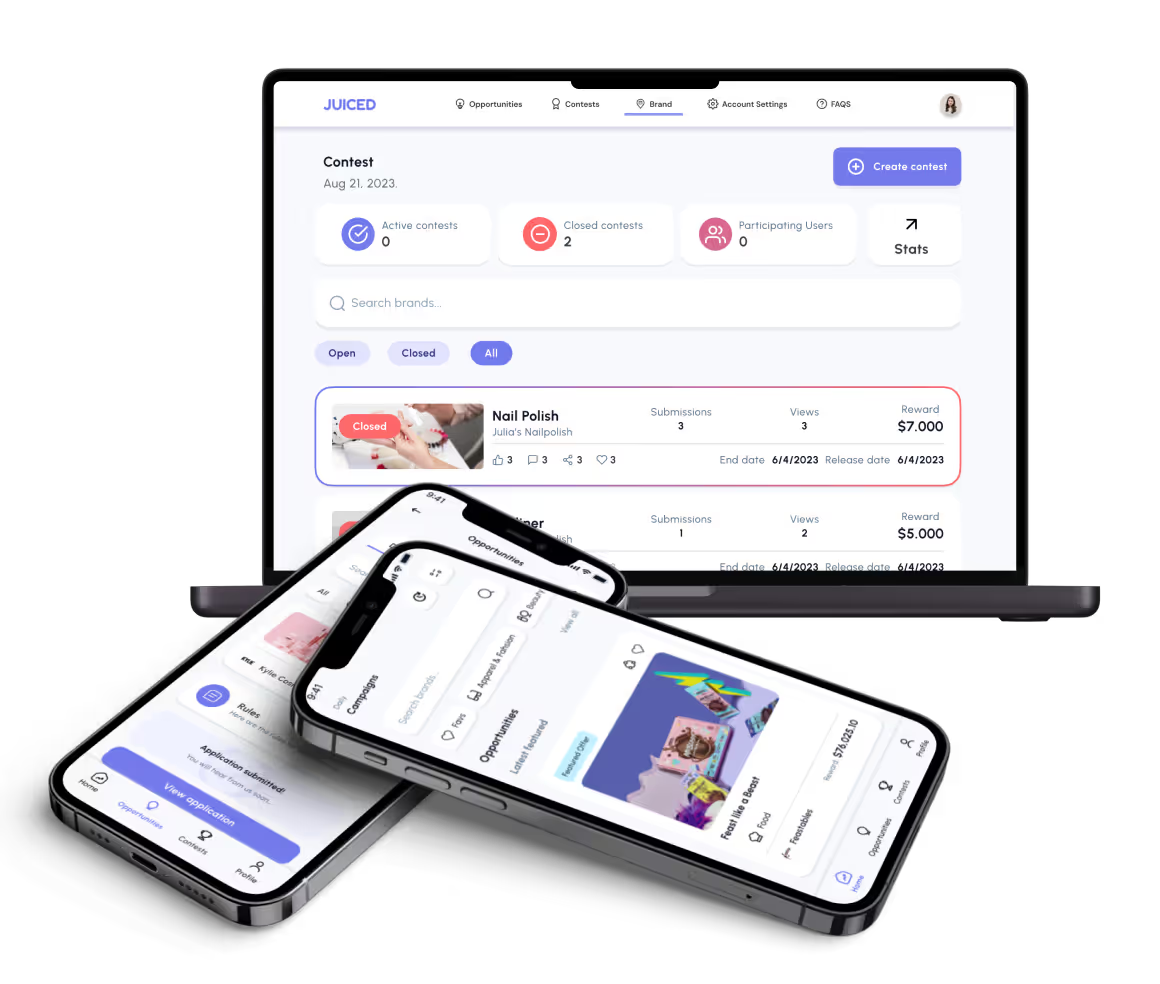

What Is FlutterFlow and What Is It Built For?
FlutterFlow is a visual no-code and low-code builder for Google's Flutter framework. It lets founders, designers, and non-developers build cross-platform mobile and web apps using a drag-and-drop canvas, generating real Flutter code behind the scenes.
Before comparing the two, it helps to understand how Lovable builds apps - because Lovable and FlutterFlow target different platforms and reflect different approaches to building without code.
- Visual Canvas Builder: FlutterFlow provides a component-based drag-and-drop canvas where you place and configure UI elements visually.
- Cross-Platform Output: A single FlutterFlow project compiles to iOS, Android, and web - three platforms from one codebase.
- Mobile-First Use Cases: Native features like camera access, GPS, biometrics, push notifications, and platform UI conventions are core to FlutterFlow.
- Firebase Integration: FlutterFlow is optimized for Firebase as a backend, though it also supports Supabase and other data sources.
- Technical Comfort Required: The typical FlutterFlow user understands data models, Firebase configuration, and app logic concepts even without writing Dart code.
FlutterFlow is a serious mobile development tool. It requires genuine time investment to learn before you can build efficiently.
How Do Lovable and FlutterFlow Differ in Core Approach?
The most important difference is platform target. Lovable generates React web applications deployed to a URL. FlutterFlow generates Flutter apps compiled for iOS, Android, and web from a single project.
Understanding Lovable's core features is key to seeing where the two tools diverge - particularly the AI generation model versus FlutterFlow's visual canvas approach.
- Input Model: Lovable takes a natural language prompt and generates a full application; FlutterFlow requires manual component placement on a visual canvas.
- Platform Target: Lovable produces a web application accessible via URL; FlutterFlow compiles to native iOS, Android, and web from a single project.
- Backend Setup: Lovable generates a Supabase backend automatically; FlutterFlow requires manual Firebase or Supabase configuration for each project.
- Speed Difference: Lovable delivers a working prototype in hours; FlutterFlow requires learning the visual builder before building efficiently.
- Code Language: Lovable generates React and TypeScript; FlutterFlow generates Dart and Flutter code that a developer can extend.
The choice between them is really a choice about platform. Web-first or mobile-first defines which tool is appropriate before any other consideration.
Where Does Lovable Outperform FlutterFlow?
Lovable is dramatically faster to a first working application. FlutterFlow's learning curve means several days of setup and exploration before a project takes useful shape.
For a clearer picture of what Lovable can build across web app types - and why web may be the right starting platform before committing to mobile - that article covers the full scope.
- Speed to First Product: Lovable delivers a working, shareable URL in hours; FlutterFlow setup involves component configuration, data model setup, and Firebase integration.
- No Prior Knowledge Required: Lovable works for founders and PMs with no technical background; FlutterFlow works best with understanding of data models and app logic.
- Web Performance Advantage: For web-only products, Lovable's React output has better SEO and smaller bundle size than FlutterFlow's web compilation target.
- Clean Code Export: Lovable's GitHub integration and React codebase are straightforward for a developer to take over; FlutterFlow's exported Dart code can be complex.
- Lower Concept Validation Cost: Lovable reduces the time and cost of testing a product idea before committing to full mobile development.
For web-first products or early-stage concept validation, Lovable removes every major barrier between idea and working product.
Where Does FlutterFlow Have the Advantage Over Lovable?
Understanding Lovable's capability limits - particularly the absence of native mobile output - helps clarify exactly where FlutterFlow's cross-platform compilation becomes the necessary choice.
When your product genuinely requires native mobile - app store distribution, device features, or platform UI conventions - FlutterFlow is the right builder.
- Native Mobile Output: FlutterFlow compiles to genuine native iOS and Android apps with platform-appropriate UI conventions and performance characteristics.
- Device Feature Access: Camera, GPS, biometrics, push notifications, and offline storage are native to FlutterFlow's output and not replicable in a web app.
- Visual Component Library: FlutterFlow's mobile-specific component library includes bottom navigation, swipe gestures, native modals, and platform-standard UI elements.
- Cross-Platform from One Build: One FlutterFlow codebase deploys to iOS, Android, and web - Lovable would require a completely separate mobile effort.
- Real Code Export: FlutterFlow exports clean Dart and Flutter code that a Flutter developer can extend, maintaining code ownership throughout the process.
For products that need app store distribution or native device feature access, FlutterFlow is the more capable builder by a significant margin.
How Do Lovable and FlutterFlow Compare on Pricing?
For the full breakdown of Lovable's pricing tiers, that page goes deeper on credit costs and what each plan includes.
FlutterFlow's paid tiers are slightly higher than Lovable's equivalent plans, and mobile deployment adds platform costs on top of the subscription.
- FlutterFlow Is Pricier: FlutterFlow Standard at $30 per month and Pro at $70 per month are higher than Lovable's equivalent tiers.
- App Store Costs Added: Publishing to iOS requires an Apple Developer account at $99 per year, on top of the FlutterFlow subscription fee.
- Learning Curve Cost: FlutterFlow's steeper setup means more time before you build efficiently - time investment is a real and often underestimated cost.
- Lovable Deployment Included: Lovable includes web deployment through its hosting pipeline; FlutterFlow web deployment adds its own configuration steps.
- Backend Costs Both Ways: Both tools incur backend costs at scale - Supabase for Lovable projects, Firebase for most FlutterFlow projects.
Teams evaluating AI-assisted app development across platforms should factor in app store deployment costs and learning curve time - both add meaningfully to the real cost of choosing FlutterFlow.
Which Should You Choose - Lovable or FlutterFlow?
Ask whether native mobile features are core to your product or a nice-to-have. That single question often determines the right platform before any other consideration.
For a broader view of the platform beyond this web-vs-mobile comparison, Lovable's full pros and cons covers the full evaluation.
- Choose Lovable If: You need a web application, you want to validate a concept quickly, or your users are primarily on desktop and laptop browsers.
- Choose FlutterFlow If: Your product is genuinely mobile-first, requires app store distribution, or depends on native device features like camera or GPS.
- Hybrid Strategy: Build the web version in Lovable first to validate the concept, then build the mobile app in FlutterFlow once user demand is confirmed.
- Web-First Is Smarter Early: Web validation is faster, cheaper, and gives you real user feedback before committing to native mobile development costs.
- The Mobile Test: If camera, GPS, offline access, or push notifications are core product features, FlutterFlow is worth the learning curve investment.
The web-first validation approach is the right default for most early-stage products before committing to native mobile development.
Conclusion
Lovable and FlutterFlow serve genuinely different platforms and different user needs. For web-first products, Lovable is faster and simpler. For native mobile apps with real platform integration and app store distribution, FlutterFlow is the more capable builder.
The clearest practical advice: if you are unsure which platform you need, build web first with Lovable. It is faster, cheaper, and gives you real user feedback before you decide whether native mobile is worth the additional investment. If device features and the app store are core to your product today, FlutterFlow is worth the learning curve.
Building a Web App with Lovable Before Committing to Mobile?
Starting with web validation is the smartest sequence for most products. LOW/CODE Agency helps you build that web version properly and can advise on the right move toward mobile once the concept is proven.
SMBs do not need a no-code tool. They need an AI product team. At LOW/CODE Agency, we build custom web apps, mobile apps, chatbots, and AI agents — software that actually scales with your business. We help clients build with Lovable for rapid web app validation and advise on the right path to native mobile when the product is ready.
- Scoping: We define the web product scope first so the Lovable build validates the right assumptions before mobile is considered.
- Design: We direct UI generation to produce web applications that work well across devices, including mobile browsers.
- Build: We prompt, review, and extend Lovable applications with custom code when the platform reaches its natural limits.
- Scalability: We configure Supabase, authentication, and integrations that can serve growing user bases without rearchitecting.
- Delivery: We ship to a live URL with version control, staging environments, and a clean handoff process.
- Post-launch: We support iterations, feature additions, and performance improvements after the initial deployment is complete.
- Full team: You get a product manager, developer, and QA resource working together on your build throughout.
We have built 450+ products for clients including Coca-Cola, American Express, and Medtronic.
Explore our Lovable development services or talk to our Lovable team.
Related Articles
Last updated on
October 16, 2026
.

Jesus is a visionary entrepreneur and tech expert. After nearly a decade working in web development, he founded LOW/CODE Agency to help businesses optimize their operations through custom software solutions.


FAQs
What are the main differences between Lovable and FlutterFlow?
Which platform is better for beginners, Lovable or FlutterFlow?
Can I build complex apps with Lovable compared to FlutterFlow?
How do pricing plans compare between Lovable and FlutterFlow?
Is it easier to export and customize code in Lovable or FlutterFlow?
What are the risks of choosing Lovable over FlutterFlow for app development?
Related Articles
Lovable
Lovable vs Webflow: Which Platform Is Best?
Compare Lovable and Webflow to find the best website builder for your needs. Discover key differences and benefits.
Lovable
Lovable vs 10Web: Which Platform Fits You Best?
Compare Lovable and 10Web features, pricing, ease of use, and support to decide which platform suits your needs.

Lovable
How to Successfully Hand Off an App to a Developer
Learn key steps to smoothly transfer your app to a developer with clear communication and proper documentation.

Lovable
Lovable vs Airtable: Which One Fits Your Needs?
Compare Lovable and Airtable to find the best tool for your project management and collaboration needs.


Why customers trust us for no-code development


