

App Store Review Time for Mobile Apps in 2026
13 min
read
How long does App Store review actually take in 2026? Learn what affects review times and how to speed up your mobile app approval.


Apple's App Store review time averages 24 to 48 hours for most submissions. Google Play reviews typically complete within a few hours to 3 days. But rejections can add weeks to your launch when you are not prepared.
Planning for app store review time means understanding what triggers delays, what causes rejections, and how to prepare your submission so it clears review on the first attempt without surprises.
Key Takeaways
- Apple reviews take 24 to 48 hours on average, though first-time submissions and major updates may take longer during peak periods.
- Google Play reviews run faster with most approvals completing within hours, though policy-related reviews can extend to 7 business days.
- Rejections are the real timeline risk because each rejection and resubmission cycle adds days or weeks to your total app store review time.
- Metadata issues cause preventable delays since incorrect screenshots, missing privacy policies, or vague descriptions trigger rejections before code review.
- Expedited review is available from Apple for critical bug fixes and time-sensitive launches, though approval is never guaranteed.
- Category matters for review duration since health, finance, and kids apps face additional scrutiny that adds days to the standard process.
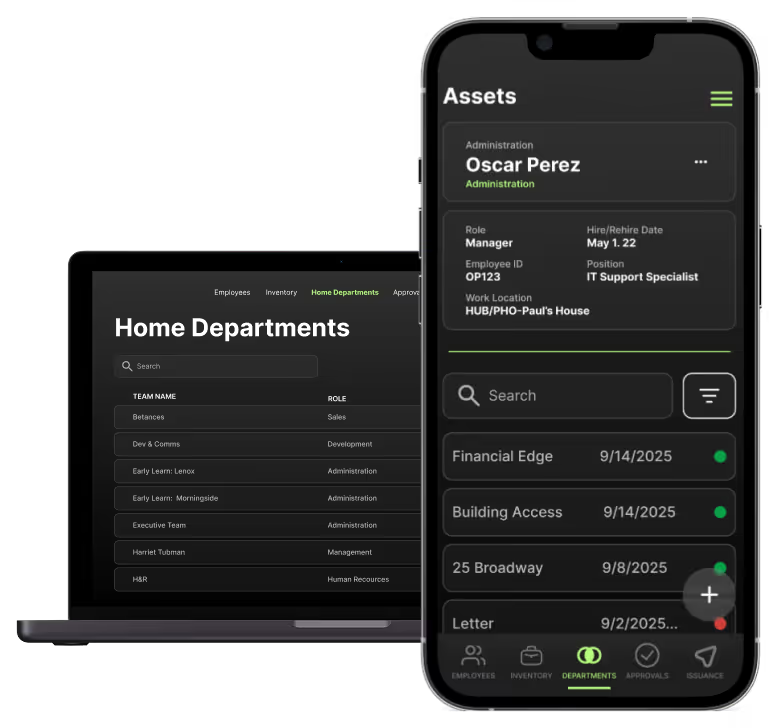

How Long Does Apple App Store Review Time Take?
Apple's app store review time averages 24 to 48 hours from submission to decision. First-time apps and major updates sometimes take up to 72 hours. During peak periods like September and December, reviews can extend beyond 3 days.
Apple employs a combination of automated scanning and human review. The automated check runs first and catches technical violations within hours. Human reviewers then evaluate guidelines compliance manually.
- New app submissions take slightly longer because first-time reviews include a more thorough evaluation of business model, content category, and policy compliance.
- Updates to existing apps review faster since the reviewer has prior context and only needs to evaluate changes from the previous approved version.
- Holiday spikes cause submission delays particularly around WWDC in June and new iPhone launches in September when volume surges dramatically.
- Binary processing adds hours before review starts because Apple must compile, scan, and validate the build before a human reviewer sees it.
- Status updates show review progress through App Store Connect so you can track whether your submission is waiting, in review, or requires action.
- Resubmissions restart the clock after rejection, meaning your second review takes another 24 to 48 hours on top of time spent fixing the issue.
Apple's app store review time is relatively predictable for clean submissions. The real variable is whether your app triggers a rejection that forces a resubmission cycle and adds days to launch.
How Long Does Google Play Store Review Time Take?
Google Play store review time typically ranges from a few hours to 3 days. New developer accounts face longer initial reviews, sometimes up to 7 days, while established accounts with good track records see faster turnaround times.
Google's review process relies more heavily on automated policy checks than Apple's manual approach. This makes it faster for straightforward apps but less predictable when automated policy flags get triggered.
- Established developers get faster reviews because Google's trust system prioritizes accounts with a clean policy history and consistent update patterns.
- New accounts face extended scrutiny with first submissions sometimes taking 7 or more days as Google verifies account legitimacy and app quality.
- Policy flags pause the entire review and resolving them requires correspondence with Google's team, which can add 5 to 10 business days.
- Internal testing tracks skip full review entirely so you can distribute builds to testers immediately while the production release goes through standard review.
- Staged rollouts do not require additional reviews once the initial version is approved, allowing incremental release to percentages of users.
- Appeal processes for rejected apps take additional time since Google's policy team reviews appeals separately and response times vary from days to weeks.
Google Play app store review time is faster on average but less transparent when issues arise. Preparing your listing and policies thoroughly before submission prevents the delays that policy flags create.
What Causes App Store Review Rejections That Extend Review Time?
The most common causes of rejection that extend app store review time are guideline violations, incomplete metadata, broken functionality, misleading descriptions, and missing privacy documentation that platforms require.
Rejections are where app store review time compounds most painfully. Each rejection requires you to fix the issue, resubmit, and wait for another full review cycle. Two rejections can easily add 1 to 2 weeks to your launch.
- Crashes during review cause immediate rejection because reviewers test core flows and any crash, freeze, or unresponsive screen fails the submission.
- Missing privacy policies block approval entirely since both Apple and Google require clear privacy documentation accessible from within the app itself.
- Login requirements without demo credentials result in rejection when reviewers cannot access features behind authentication to evaluate them fully.
- Misleading screenshots or descriptions trigger flags when the marketing materials do not accurately represent what the actual app experience delivers.
- In-app purchase implementation errors reject if pricing, subscription terms, or restoration flows do not comply with platform-specific billing requirements.
- Incomplete accessibility features cause rejection on Apple particularly, when VoiceOver labels are missing or contrast ratios fall below minimum standards.
Most rejections are preventable with preparation. Understanding common submission pitfalls and how to avoid them saves you from the resubmission cycles that turn a 48-hour review into a multi-week ordeal.
How Can You Reduce Your App Store Review Time?
Reduce your app store review time by testing thoroughly before submission, preparing all metadata correctly, including demo credentials for reviewers, following current guidelines, and avoiding last-minute changes to your binary.
The fastest path through app store review time is a clean first submission. Every resubmission resets the clock entirely, so getting it right the first time is always faster than fixing issues after rejection.
- Pre-submission testing catches crash-level bugs that would cause immediate rejection and force you to start the entire review cycle over from scratch.
- Complete metadata on first submit saves days because missing screenshots, descriptions, or category selections delay processing before review begins.
- Demo accounts let reviewers test everything so features behind login screens get evaluated properly instead of triggering an access-related rejection.
- Guidelines review before each submission prevents violations since Apple and Google update their rules regularly and last year's compliant app may not pass today.
- Avoid peak periods to improve timing because submitting in January or March faces significantly less volume than September or December windows.
- Review notes explain anything unusual, and a brief explanation about special features or required setup prevents confusion-based rejections.
Your app store review time is largely in your control. A well-prepared submission with thorough testing clears review significantly faster than one requiring multiple rounds of corrections and resubmissions.
Does App Store Review Time Differ by App Category?
App store review time can differ significantly by category. Apps in health, finance, gambling, and children's categories face additional scrutiny and may take 2 to 7 days longer due to regulatory and policy compliance checks.
Certain categories trigger specialized review processes that go beyond standard guidelines evaluation. If your app handles sensitive data or targets regulated industries, factor extra app store review time into your launch plan.
- Health apps require evidence for medical claims because Apple and Google reject apps that make health statements without proper documentation or disclaimers.
- Finance apps must verify regulatory licensing since both platforms require proof of compliance before approving banking, lending, or investment features.
- Kids apps face COPPA review to ensure data collection, advertising placement, and content meet children's privacy protection standards globally.
- Gambling apps need regional licensing documentation and are restricted or banned in many countries, requiring per-market submission strategies.
- UGC apps need moderation plans because both platforms require evidence that inappropriate content will be filtered and reported.
- Crypto apps face evolving rules since platform policies on cryptocurrency features change frequently and vary between Apple and Google.
If your app falls into a regulated category, add 3 to 7 extra days to your expected app store review time. At LOW/CODE Agency, we factor category-specific review requirements into every mobile app project timeline from the start.
Can You Expedite App Store Review Time?
Apple offers an expedited review request for critical bug fixes, security patches, and time-sensitive launches. Google Play does not offer a formal expedited process but prioritizes critical updates through its automated review systems.
Expedited review is not a shortcut for poor planning. Apple grants it selectively, typically for apps with active users affected by a critical bug or a launch tied to a real-world event with a fixed date.
- Apple's expedited review typically processes in 24 hours when approved, but each request is evaluated individually and approval is never guaranteed.
- Legitimate reasons include critical bug fixes affecting active users, security vulnerabilities in production, or launches tied to events with immovable dates.
- Convenience requests get denied for expedited review because Apple reserves this process for genuine urgency, not schedule pressure from poor planning.
- Google escalation paths exist for policy disputes through the Play Console appeals process, though response times vary from days to several weeks.
- Overusing expedited requests damages your standing since Apple tracks how often you request it and may deny future requests from frequent requesters.
- Buffer planning eliminates the need for expedited requests entirely, since teams that submit 2 weeks before launch never need special treatment from reviewers.
Expedited review should be your safety net, not your plan. Build realistic app store review time into your marketing and launch schedule so you never depend on favors from platform reviewers.
How Should You Plan Your Launch Around App Store Review Time?
Plan your launch by submitting at least 2 weeks before your target date. This gives you one full rejection-and-resubmission cycle as buffer while still hitting your public launch window reliably.
App store review time is the last gate before your users see the product. Planning backward from your launch date with buffer for at least one rejection keeps your marketing timeline intact.
- Submit 10 to 14 days before launch so a single rejection still leaves enough time to fix, resubmit, and get approved before your go-live date.
- Coordinate with your marketing calendar because iOS app development launches need press, social, and email campaigns aligned to approval timing.
- Pre-order listings on Apple build anticipation by letting users see and save your app on the store before the actual release date goes live.
- Staged rollouts on Google reduce launch risk by releasing to 10 to 20 percent of users first to catch issues before full audience access.
- Have a hotfix plan ready for post-launch because the first week after launch often surfaces issues that need an update submission with its own review.
- Both platforms need parallel planning since Android app development and iOS submissions have different review timelines and requirements.
Your app store review time strategy should assume at least one rejection. Teams that build for both platforms simultaneously need to account for both review timelines running in parallel with different outcomes.
What Happens After Your App Passes Store Review?
After your app passes store review, it becomes available within 24 hours on the App Store and almost immediately on Google Play. Post-approval, you shift focus to monitoring, user feedback, analytics, and planning your first update cycle.
Clearing app store review time is a milestone, not a finish line. The first 30 days after launch determine your app's visibility, ratings trajectory, and user retention baseline that shapes everything after.
- Store propagation takes up to 24 hours from approval before the app appears in search results and category listings for all users worldwide.
- Google Play availability is nearly instant with most approved apps appearing in search results within hours of the review completion notification.
- First reviews shape your store presence because early ratings heavily influence whether new users download or skip your app when browsing.
- Crash monitoring starts immediately after launch since real-world usage across thousands of device configurations surfaces issues testing could not replicate.
- First update submission restarts the review cycle, so planning it before launch means you are ready to improve based on real user data quickly.
- ASO optimization begins with real data because keyword targeting, screenshot strategy, and descriptions all improve with actual download and search data.
App store review time is a recurring part of your mobile app development lifecycle, not a one-time event. Every update goes through review again, so building clean submission habits from day one pays dividends long-term.
Read more | Best Mobile App Development Agencies
Conclusion
App store review time runs 24 to 48 hours for Apple and a few hours to 3 days for Google Play. Rejections, regulated categories, and peak submission periods are what actually extend your timeline past the standard window.
Plan your launch with 2 weeks of buffer, prepare clean submissions with complete metadata, and treat app store review time as a scheduled phase rather than an afterthought.
Want to Launch Your App Without Store Review Surprises?
Rejections are the hidden timeline risk that most teams fail to plan for. A clean submission process eliminates that risk before it has a chance to start.
At LOW/CODE Agency, we build AI-powered products for SMBs — custom web apps, mobile apps, chatbots, RAG systems, and AI agents, delivered with the depth and standards of a specialist software team. We handle the full journey from development through store submission, including the review preparation that prevents costly rejections and resubmission delays.
- Pre-submission audits catch rejection triggers by reviewing metadata, screenshots, privacy policies, and guidelines compliance before you hit submit.
- Demo accounts and test flows are prepared so reviewers can access every feature without hitting login walls that cause automatic rejections.
- Category-specific requirements are built in from day one for health, finance, kids, and other regulated categories that face extended review scrutiny.
- Parallel iOS and Android submissions save time by preparing both store listings simultaneously so neither platform delays the other at launch.
- Post-launch monitoring and update cycles keep your app compliant with evolving store policies and responsive to real user feedback from day one.
- Store optimization starts at submission with keyword research, screenshot strategy, and description optimization built into the launch preparation process.
Over 350 projects delivered for clients including Medtronic, American Express, Coca-Cola, Zapier, and Sotheby's.
Related Articles
Last updated on
September 3, 2026
.

Jesus is a visionary entrepreneur and tech expert. After nearly a decade working in web development, he founded LOW/CODE Agency to help businesses optimize their operations through custom software solutions.


FAQs
How long does Apple App Store review take in 2026?
What factors affect App Store review time for mobile apps?
Can I speed up the App Store review process for my mobile app?
Why do some mobile apps take longer to get App Store approval?
Does Google Play review mobile apps faster than Apple?
What should I do while waiting for App Store review on my mobile app?
Related Articles

Mobile App Development
Cross Platform App Development: Tools, Costs & Challenges
Learn what cross platform app development is, how it compares to native apps, key challenges, costs, and when it’s the right choice for your product.
Mobile App Development
Mobile App Escrow, Code Ownership & Exit
Who owns your mobile app code? Learn how escrow, IP ownership, and exit clauses work before you sign with any development agency.
Mobile App Development
Best Mobile App Analytics Tools in 2026
Not sure which analytics tool fits your mobile app? Compare the best platforms in 2026 to track users, retention, and performance.
Mobile App Development
How to Increase Mobile App Downloads in 2026
Struggling to grow your mobile app downloads? Discover proven strategies that actually drive installs and long-term user growth.
Why customers trust us for no-code development


